The Gift Not Taken
පිළිනොගත් තෑග්ග
Fablewings · ages 6–11
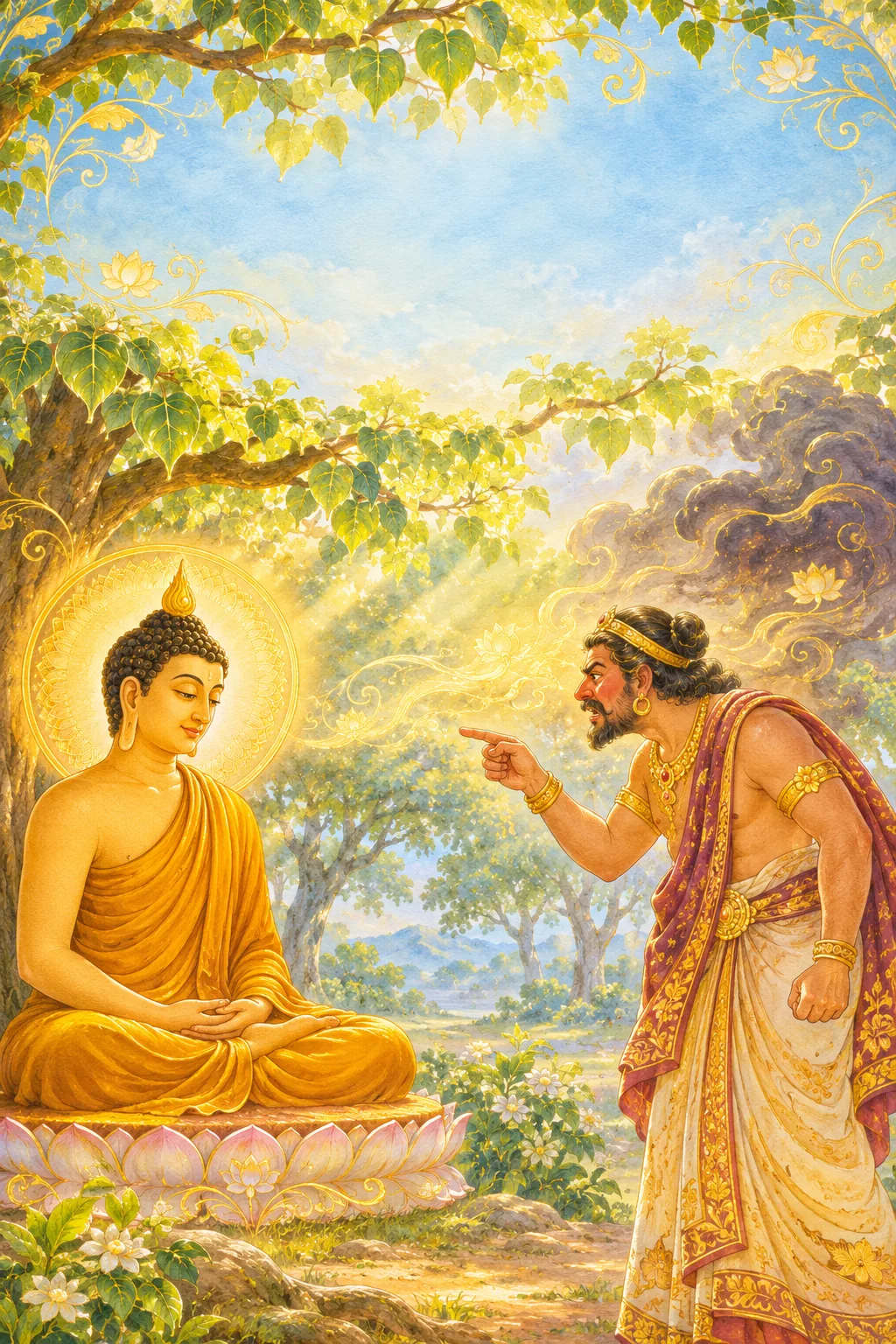
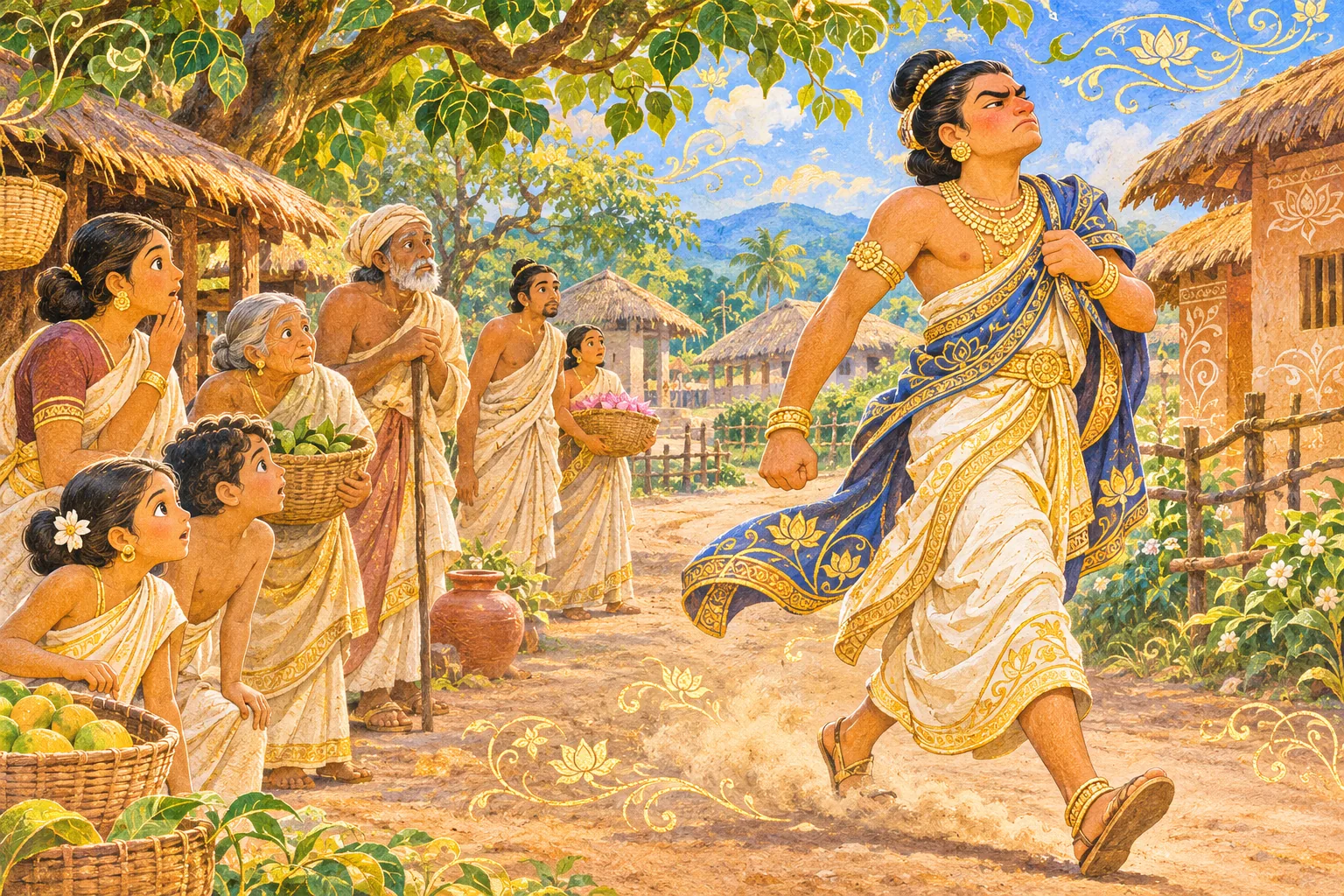
One day, a proud man named Akkosaka heard that his brother had become a follower of the Buddha. He was very angry.
එක් දිනක් අක්කෝසක නම් උඩඟු මිනිසෙක් තම සහෝදරයා බුදුරජාණන් වහන්සේගේ අනුගාමිකයෙක් වූ බව ඇසුවා. ඔහු ඉතා තරහ වුණා.
“How dare my brother follow this teacher!” he shouted, and he stormed off to find the Buddha.
“මගේ සහෝදරයා කොහොමද මේ ශාස්තෘවරයා අනුගමනය කරන්නේ!” ඔහු කෑගසා බුදුරජාණන් වහන්සේ සොයාගෙන ගියා.
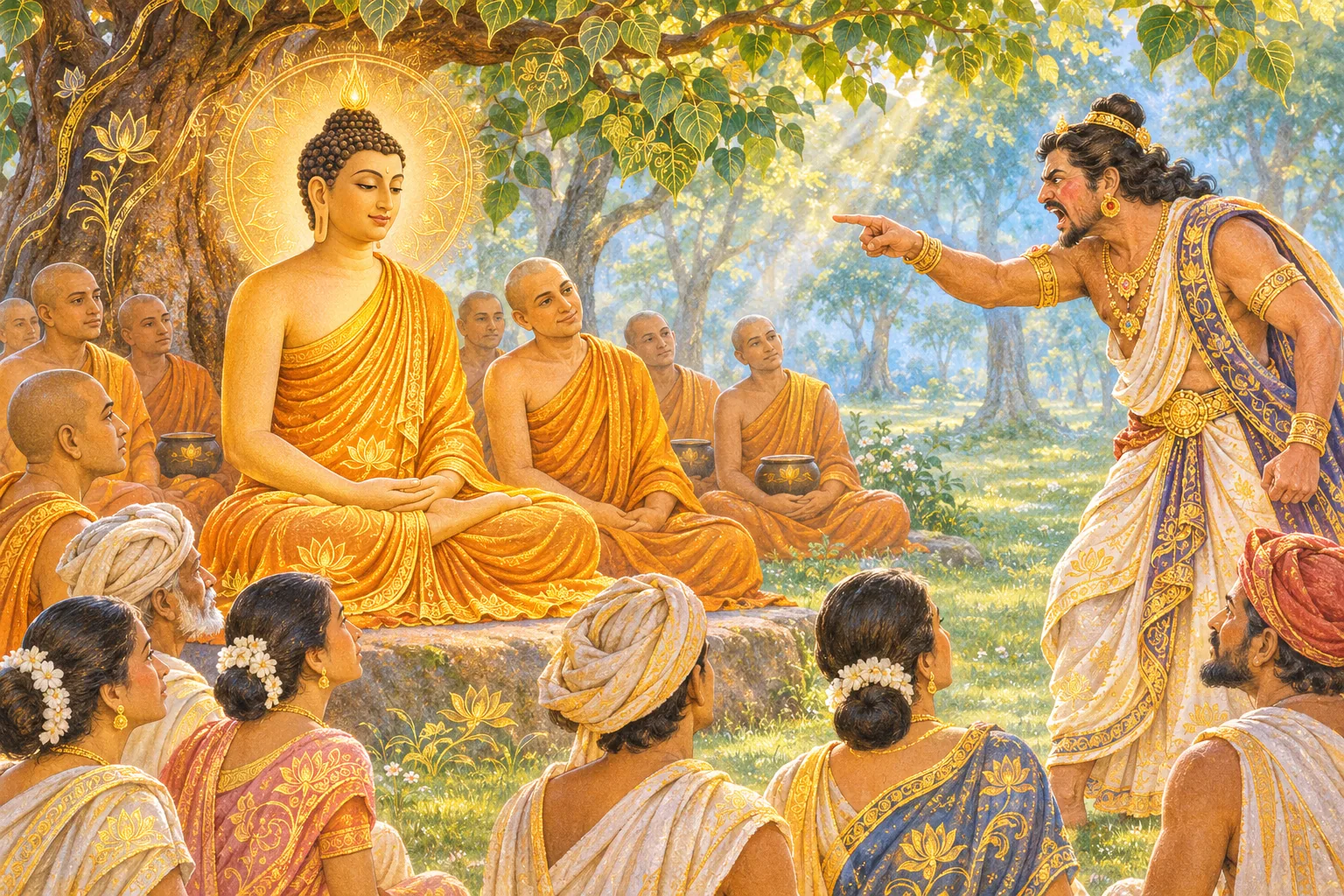
He found the Buddha sitting peacefully in the shade of a grove, with monks and villagers around him.
ඔහු වනයක සෙවණේ, භික්ෂූන් සහ ගම්වැසියන් පිරිවරාගෙන ශාන්තව වැඩ සිටි බුදුරජාණන් වහන්සේ සොයාගත්තා.
Akkosaka stood in front of him and began to shout rude and unkind words, one after another.
අක්කෝසක උන්වහන්සේ ඉදිරියේ සිට එකින් එක රළු, අකාරුණික වචන කෑගසන්න පටන් ගත්තා.
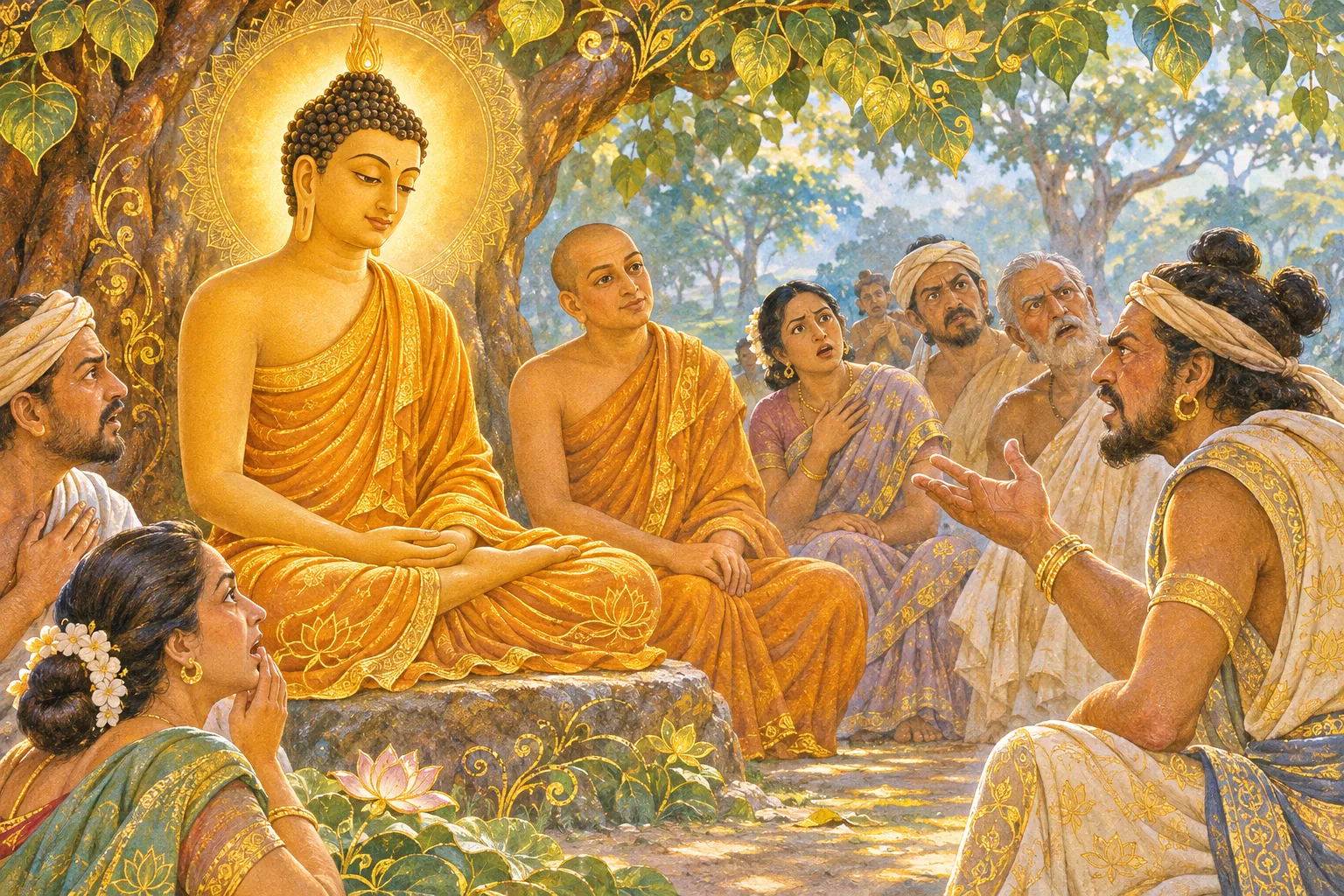
Everyone was shocked. Some of the villagers felt angry too.
හැමෝම කම්පා වුණා. සමහර ගම්වැසියන්ටත් තරහ ගියා.
But the Buddha sat calmly, his face gentle and still. He listened quietly until the man had nothing left to say.
නමුත් බුදුරජාණන් වහන්සේ මෘදු, නිසල මුහුණින් සන්සුන්ව වැඩ සිටියා. ඒ මිනිසාට කියන්න දෙයක් නැති වන තුරු උන්වහන්සේ නිහඬව ඇහුම්කන් දුන්නා.
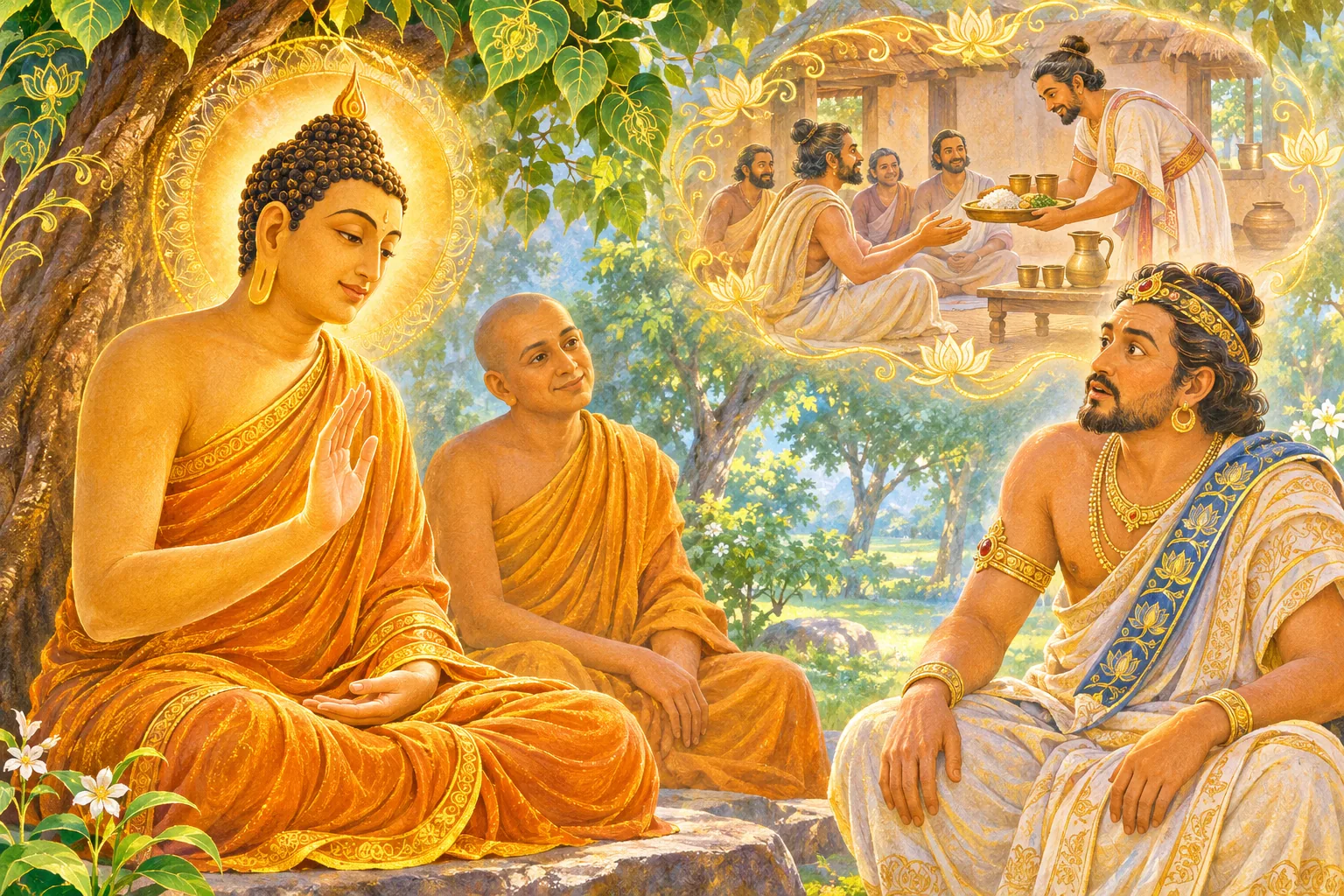
Then the Buddha asked kindly, “Tell me, friend. When visitors come to your home, do you offer them food and drink?”
ඉන්පසු බුදුරජාණන් වහන්සේ කරුණාවෙන් ඇසුවා, “මිත්රය, කියන්න. අමුත්තන් ඔබේ නිවසට ආ විට, ඔබ ඔවුන්ට කෑම බීම පිළිගන්වනවාද?”
“Of course I do,” said Akkosaka, surprised.
“ඇත්තෙන්ම,” පුදුමයට පත් අක්කෝසක කිව්වා.
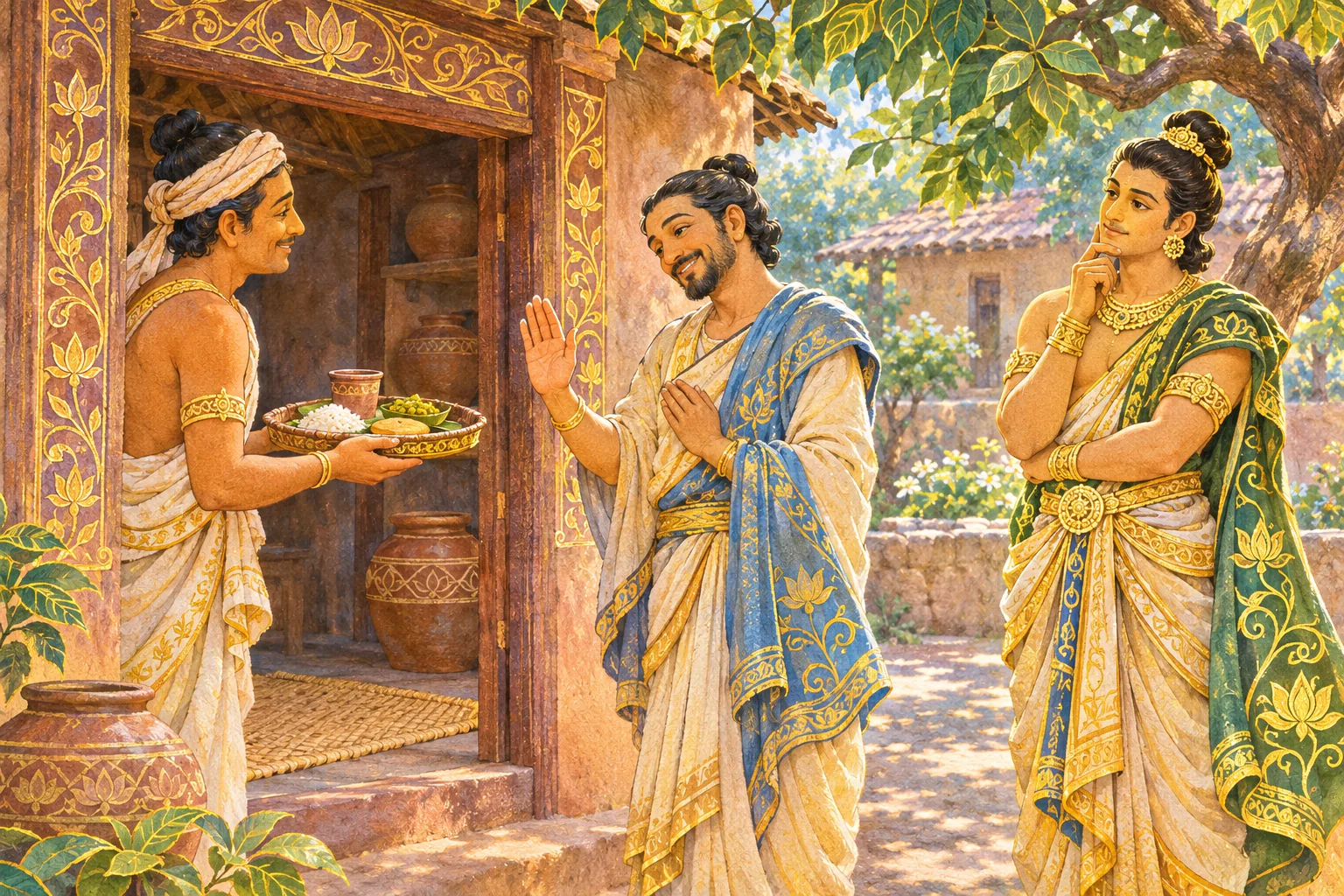
“And if your visitors do not accept the food, who does it belong to?”
“ඔබේ අමුත්තන් ඒ කෑම පිළිනොගත්තොත්, ඒක අයිති කාටද?”
Akkosaka thought for a moment. “Well, then it stays with me. It is still mine.”
අක්කෝසක මොහොතක් කල්පනා කළා. “එහෙනම් ඒක මට ඉතිරි වෙනවා. ඒක තවමත් මගේ.”
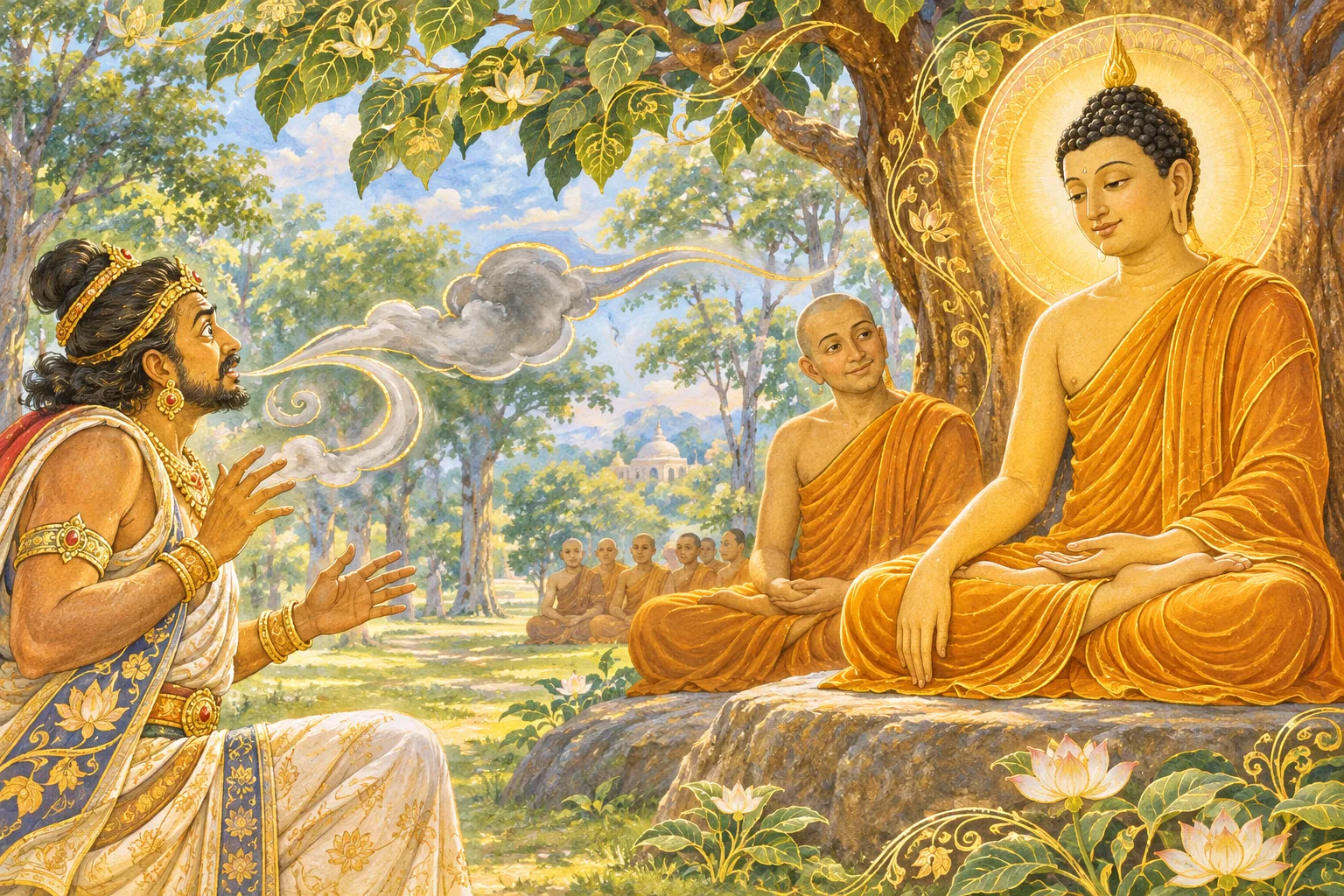
The Buddha smiled gently. “In the same way, friend, you have offered me angry words. I do not accept them.
බුදුරජාණන් වහන්සේ මෘදුව සිනාසුණා. “එලෙසම, මිත්රය, ඔබ මට තරහ වචන පිළිගැන්වූවා. මම ඒවා පිළිගන්නේ නැහැ.
So they stay with you. They are still yours.”
එබැවින් ඒවා ඔබ ළඟම ඉතිරි වෙනවා. ඒවා තවමත් ඔබේ.”
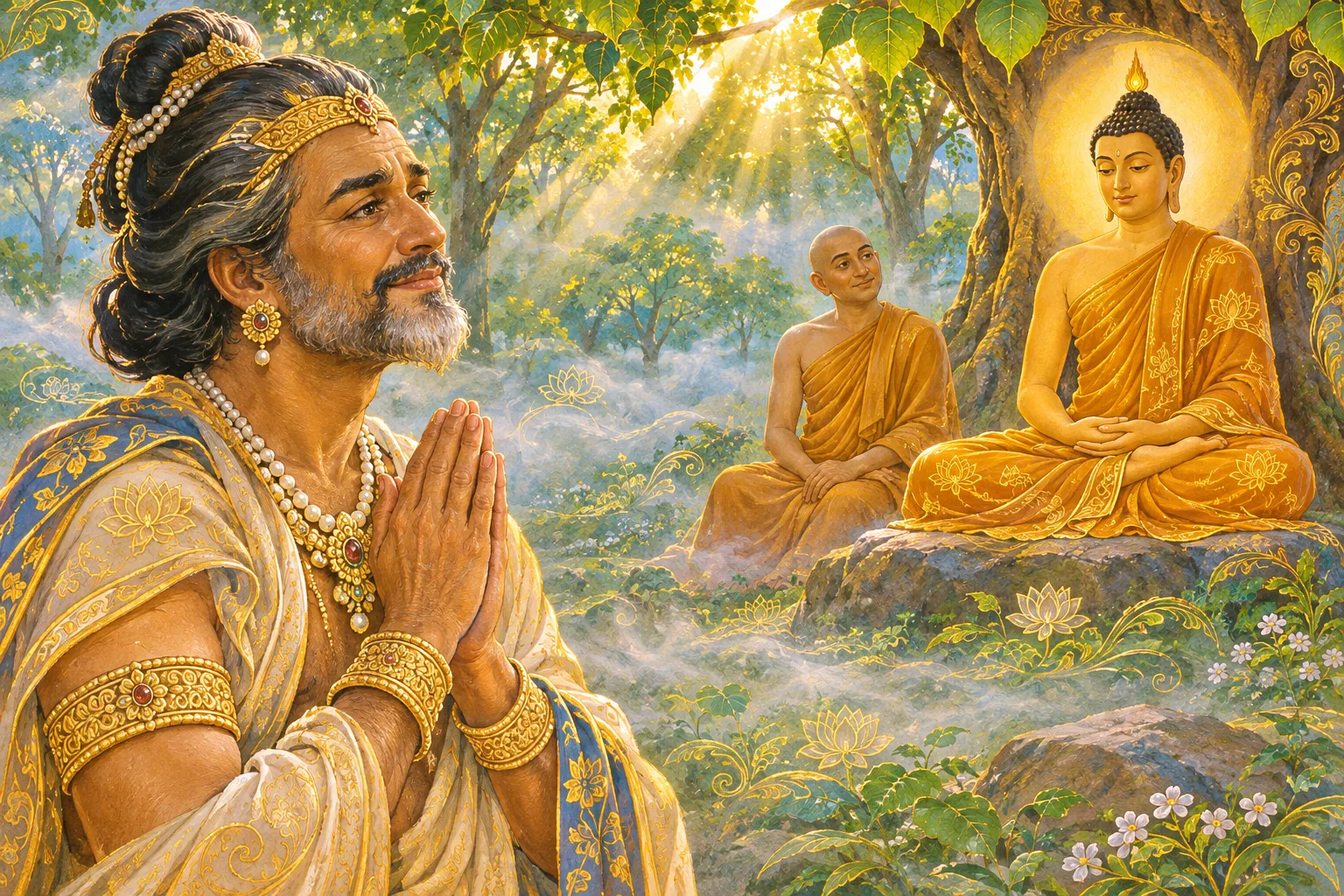
Akkosaka was silent. Nobody had ever answered his anger with such calm and kindness.
අක්කෝසක නිහඬ වුණා. කිසිවෙක් කවදාවත් ඔහුගේ තරහට මෙතරම් සන්සුන්කමින්, කරුණාවෙන් පිළිතුරු දී තිබුණේ නැහැ.
He looked at the Buddha's peaceful face, and slowly his own anger melted away like morning mist.
ඔහු බුදුරජාණන් වහන්සේගේ ශාන්ත මුහුණ දෙස බැලුවා, ඔහුගේ තරහ උදෑසන මීදුමක් මෙන් සෙමින් දියවී ගියා.
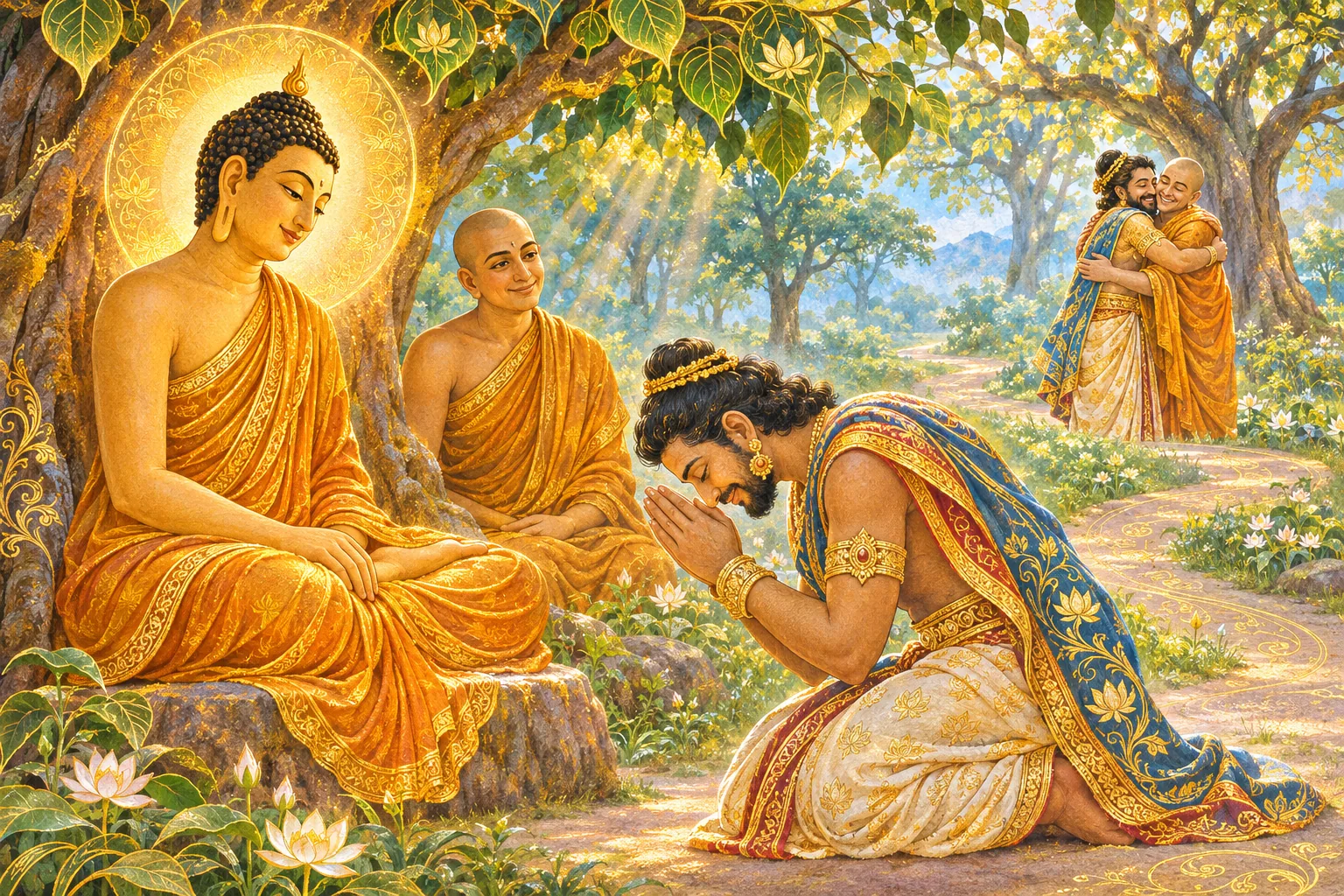
He bowed low. “Please forgive me,” he said softly. “I would like to learn from you too.”
ඔහු පහත් වී වැන්දා. “කරුණාකර මට සමාව දෙන්න,” ඔහු මෘදුව කිව්වා. “මටත් ඔබවහන්සේගෙන් ඉගෙන ගන්න ඕනේ.”
From that day he became a gentle and peaceful man, and he and his brother were close friends again.
ඒ දවසේ සිට ඔහු මෘදු, සාමකාමී මිනිසෙක් වුණා, ඔහුත් සහෝදරයාත් නැවතත් කිට්ටු මිතුරන් වුණා.
About this story
This story comes from the Akkosa Sutta in the Saṃyutta Nikāya, where a man named Akkosaka Bhāradvāja insults the Buddha and the Buddha answers with the example of food a guest does not accept.
The lesson
We do not have to accept angry words. When someone is unkind, we can stay calm and kind, and their anger often melts away.
Let's talk
- How do you feel when someone says something unkind to you?
- What does it mean to 'not accept' angry words?
- What could you say or do to stay calm next time?
මේ කතාව ගැන
මෙම කතාව සංයුත්ත නිකායේ අක්කෝස සූත්රයෙන් ගත් එකකි. අක්කෝසක භාරද්වාජ නම් මිනිසෙක් බුදුරජාණන් වහන්සේට නින්දා කළ විට, අමුත්තෙකු පිළිනොගත් කෑම පිළිබඳ උපමාවෙන් උන්වහන්සේ පිළිතුරු දෙති.
පාඩම
තරහ වචන පිළිගන්න අපට අවශ්ය නැහැ. කවුරුහරි අකාරුණික වූ විට අපට සන්සුන්ව, කරුණාවෙන් ඉන්න පුළුවන්, බොහෝ විට ඔවුන්ගේ තරහ දියවී යනවා.
අපි කතා කරමු
- කවුරුහරි ඔබට අකාරුණික දෙයක් කියන විට ඔබට දැනෙන්නේ කොහොමද?
- තරහ වචන 'පිළිනොගැනීම' යනු කුමක්ද?
- ඊළඟ වතාවේ සන්සුන්ව සිටීමට ඔබට කියන්න හෝ කරන්න පුළුවන් මොනවාද?
Retold for children by Fablewings from the traditional life of the Buddha in the Pali texts and their commentaries (including the Saṃyutta Nikāya), and the Sinhala Buddhist tradition. Illustrations made with AI assistance for Fablewings.