The Banyan Deer
නුග මුව රජු
Nigrodhamiga Jātaka (No. 12) · නිග්රෝධමිග ජාතකය (අංක 12)
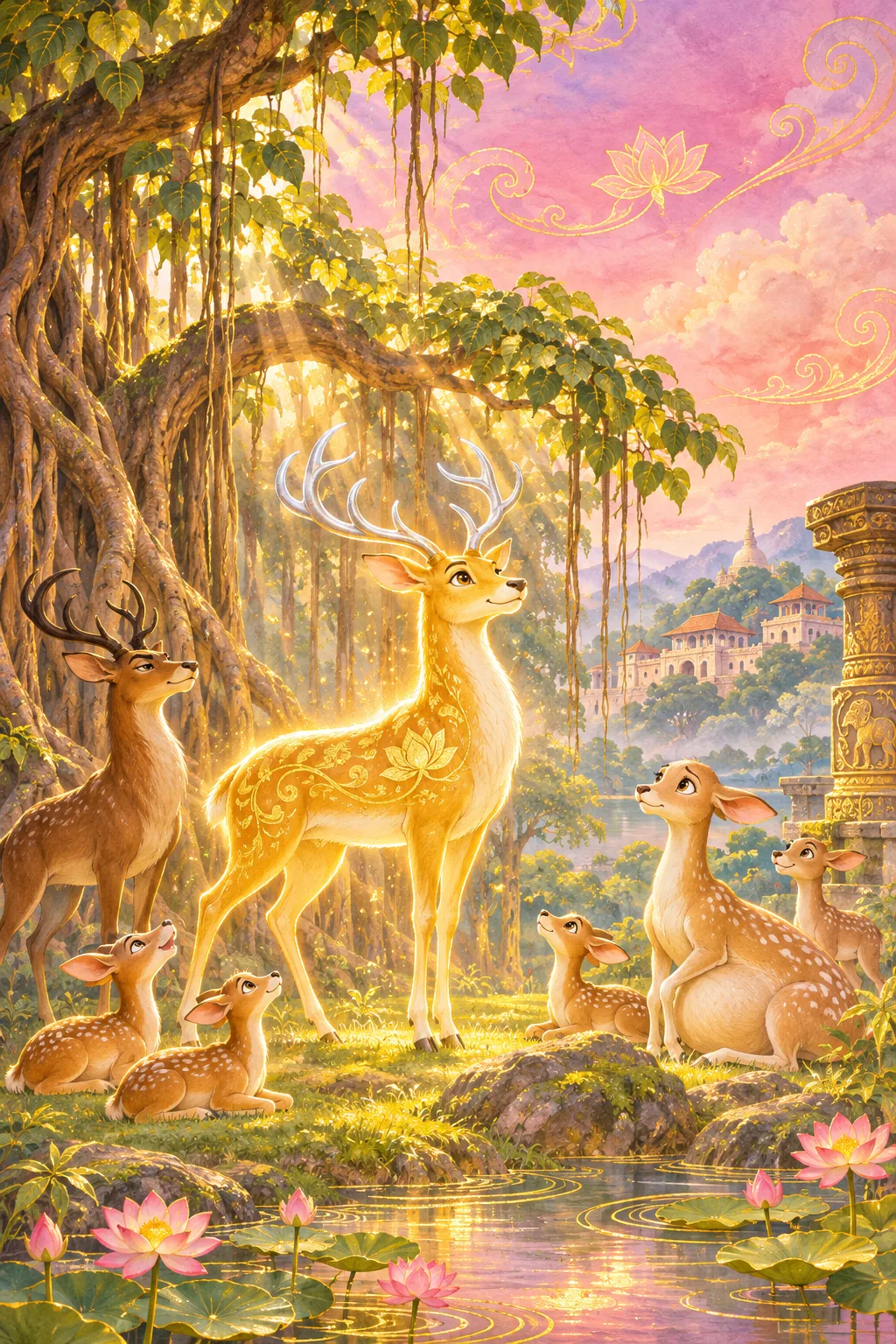
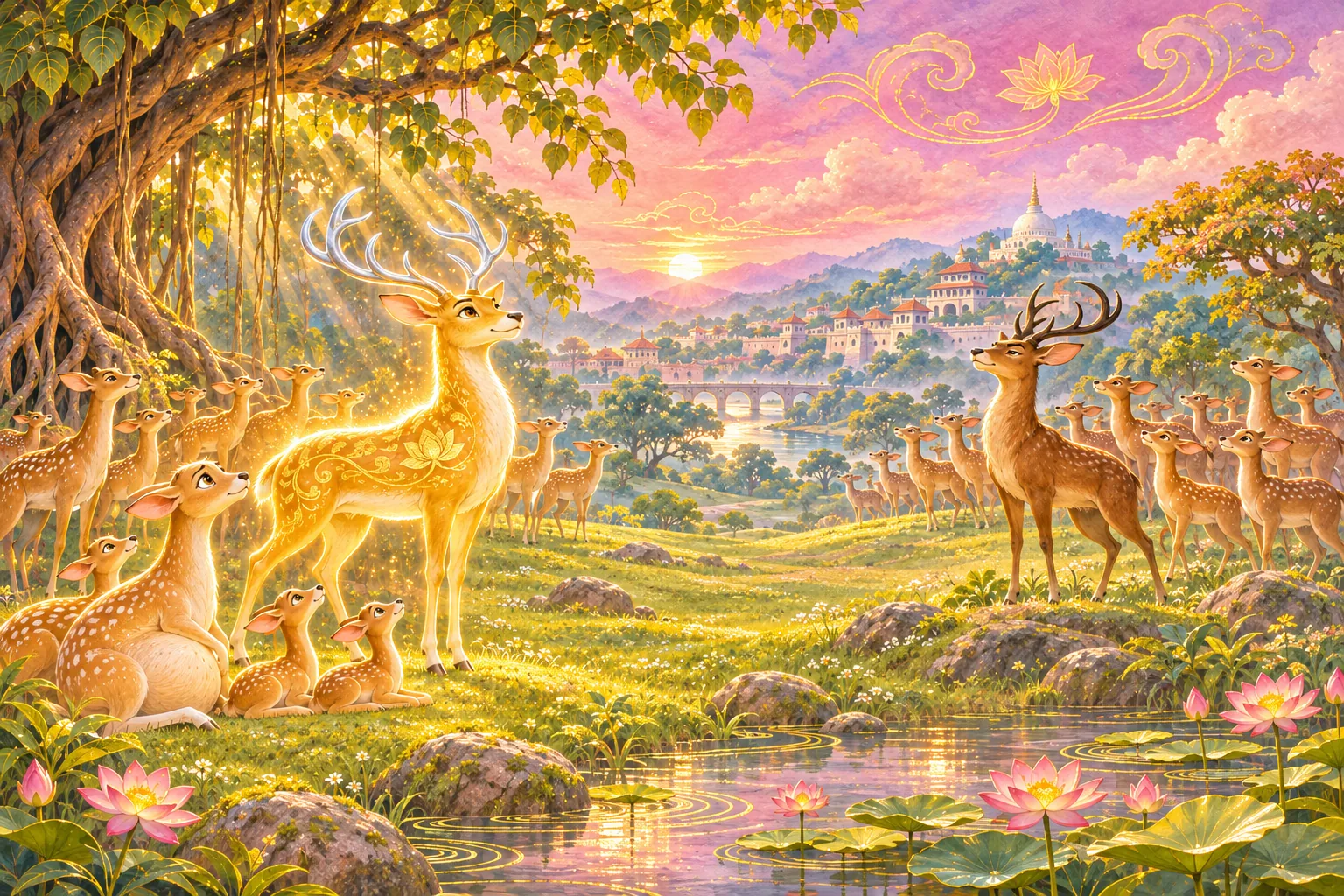
Long ago, near the city of Benares, there lived two herds of deer. One was led by the Banyan Deer, whose coat shone like gold and whose antlers gleamed like silver.
බොහෝ කාලෙකට පෙර, බරණැස් නුවර අසල, මුව රංචු දෙකක් ජීවත් වුණා. එකක නායකයා නුග මුවා. ඔහුගේ සම රන් වගේ දිලිසුණා, අං රිදී වගේ බැබළුණා.
The other was led by the Branch Deer, who was just as beautiful, but not nearly as kind.
අනෙක් රංචුවේ නායකයා සාඛ මුවා. ඔහුත් ඒ තරම්ම ලස්සනයි, නමුත් ඒ තරම් කරුණාවන්ත නැහැ.
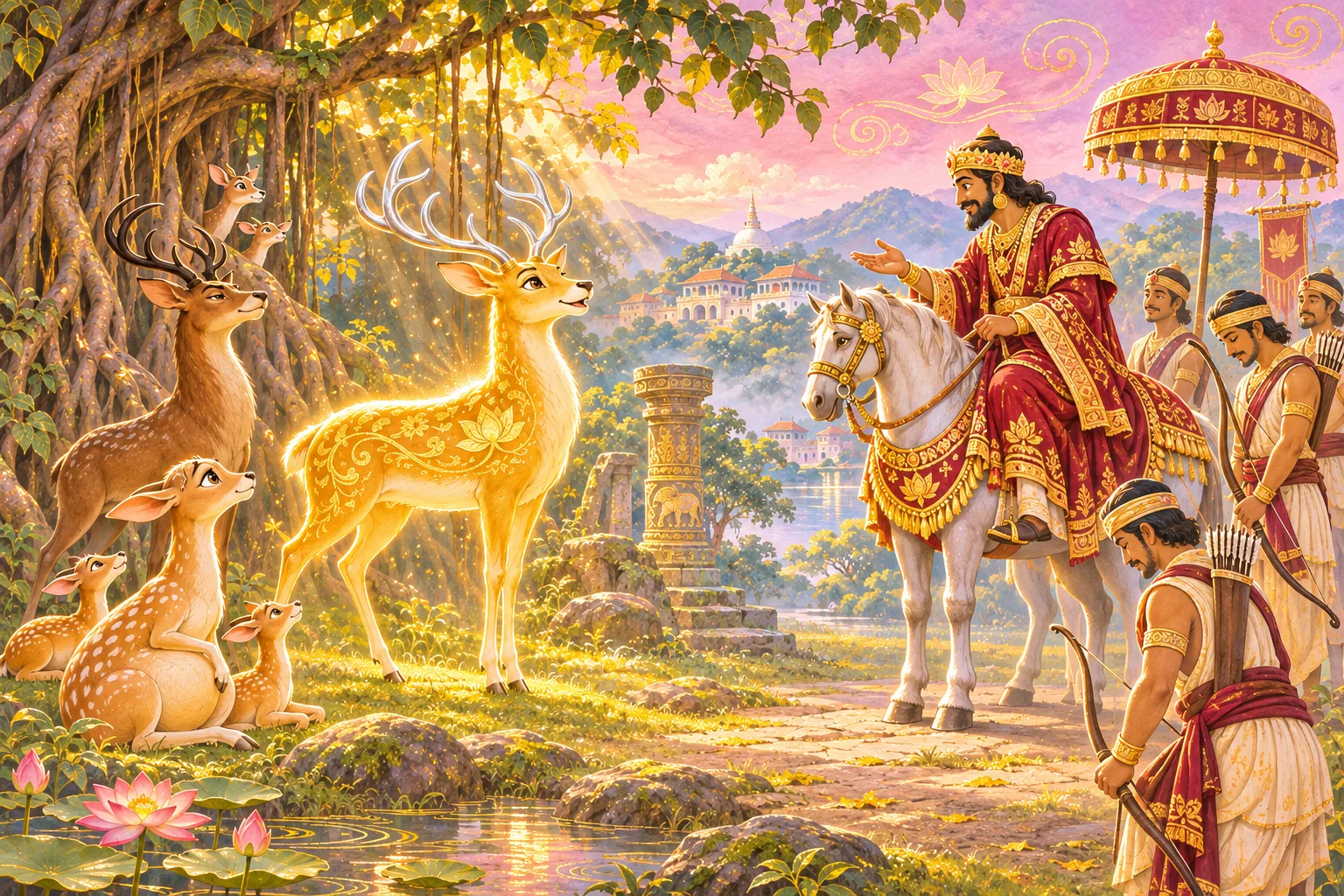
The King of Benares loved to hunt, and every day the deer ran in terror. Many were hurt in the chase.
බරණැස් රජුට දඩයම් කිරීමට ආසයි. හැමදාම මුවෝ බියෙන් දිව්වා. ලුහුබැඳීමේදී බොහෝ දෙනෙකුට තුවාල වුණා.
So the Banyan Deer made a sad bargain. “Each day,” he said, “one deer will come to the palace kitchen by turn, and the others will be left in peace.”
ඉතින් නුග මුවා දුක්බර එකඟතාවක් ඇති කළා. “හැමදාම,” ඔහු කීවා, “වාරයෙන් වාරයට එක මුවෙක් මාලිගාවේ මුළුතැන්ගෙට එයි. අනෙක් අයට සාමයෙන් ඉන්න දෙන්න.”
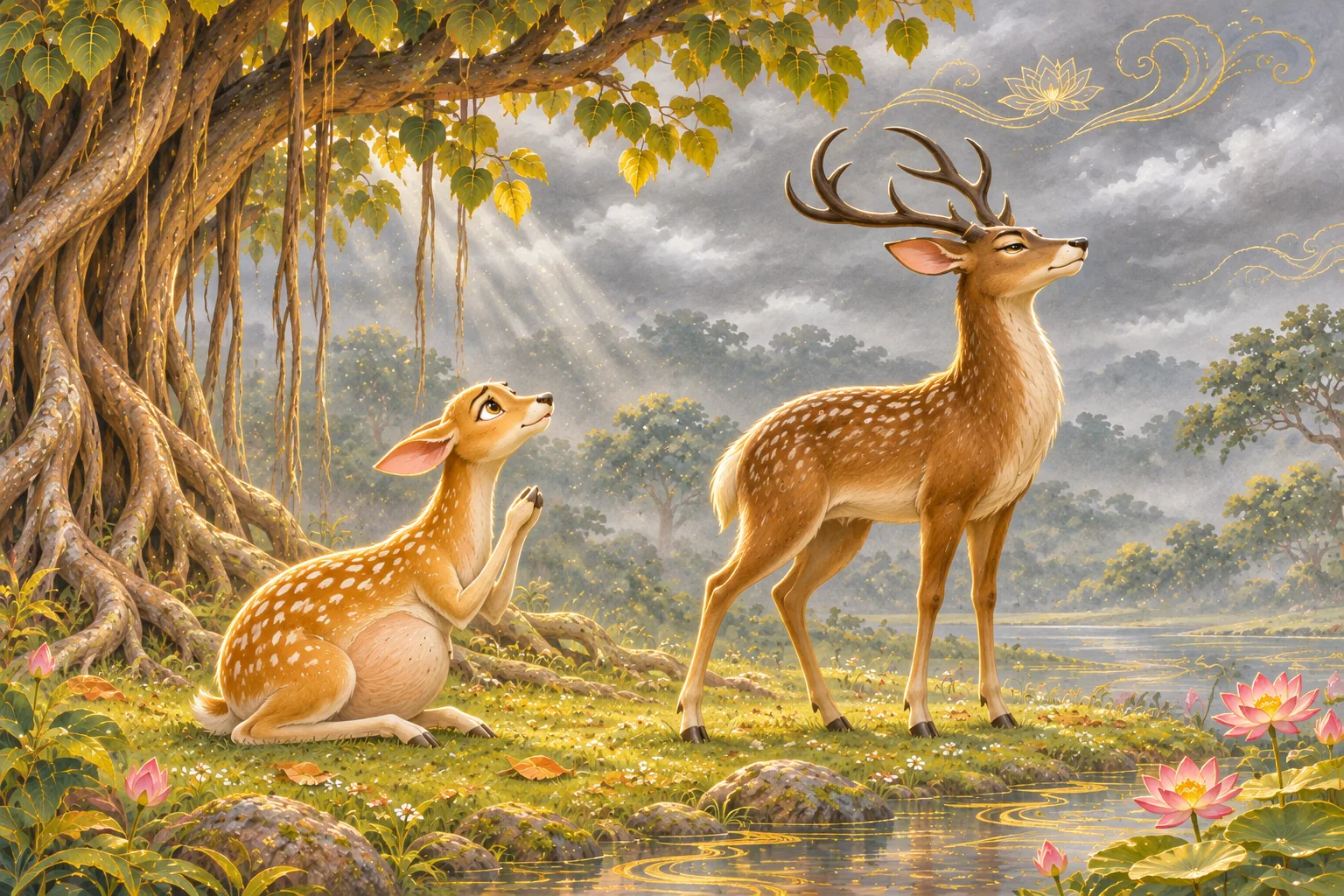
One day the turn fell on a doe from the Branch herd who was soon to have a baby. She went to the Branch Deer. “Please,” she begged, “let me wait until my baby is born.”
එක දවසක වාරය ආවේ ළඟදීම පැටියෙක් ලැබීමට සිටි සාඛ රංචුවේ මුව දෙනකට. ඇය සාඛ මුවා ළඟට ගියා. “කරුණාකරලා,” ඇය අයැද්දා, “මගේ පැටියා ඉපදෙනකම් මට ඉන්න දෙන්න.”
“Rules are rules,” he said coldly. “Go.”
“නීතිය නීතියමයි,” ඔහු සීතල හඬින් කීවා. “යන්න.”

Weeping, the doe ran to the Banyan Deer and told him everything.
හඬමින් මුව දෙන නුග මුවා ළඟට දිවගොස් සියල්ල කීවා.
He listened gently. “Go home, little mother,” he said. “Rest. I will take your place.”
ඔහු කරුණාවෙන් ඇහුම්කන් දුන්නා. “ගෙදර යන්න, පුංචි අම්මේ,” ඔහු කීවා. “විවේක ගන්න. ඔබේ තැනට මම යන්නම්.”
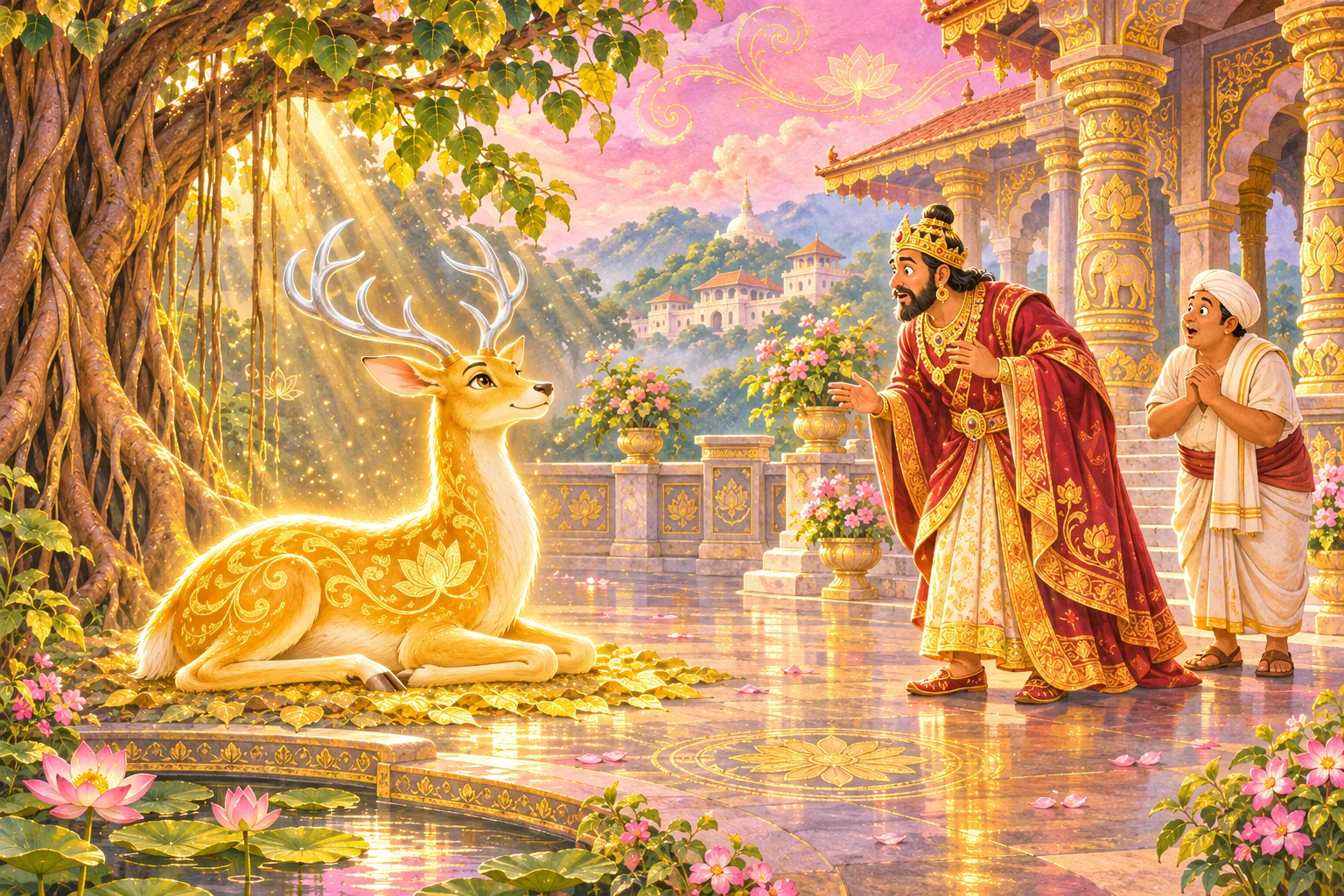
The cook at the palace saw the golden deer king lying down in the kitchen yard and ran to fetch the king.
මාලිගාවේ අරක්කැමියා මුළුතැන්ගෙයි මිදුලේ වැතිරී සිටි රන්වන් මුව රජු දැක රජු කැඳවන්න දිව්වා.
“Why are you here?” asked the King of Benares. “I promised you safety!”
“ඔබ මෙහි ආවේ ඇයි?” බරණැස් රජු ඇසුවා. “මම ඔබට ආරක්ෂාව පොරොන්දු වුණා!”
“A mother was due to have her baby,” said the Banyan Deer. “I could not send another to take her place, so I came myself.”
“පැටියෙක් ලැබෙන්න සිටි අම්මා කෙනෙක් හිටියා,” නුග මුවා කීවා. “ඇය වෙනුවට තවත් කෙනෙක් එවන්න මට බැරි වුණා. ඒ නිසා මම ආවා.”
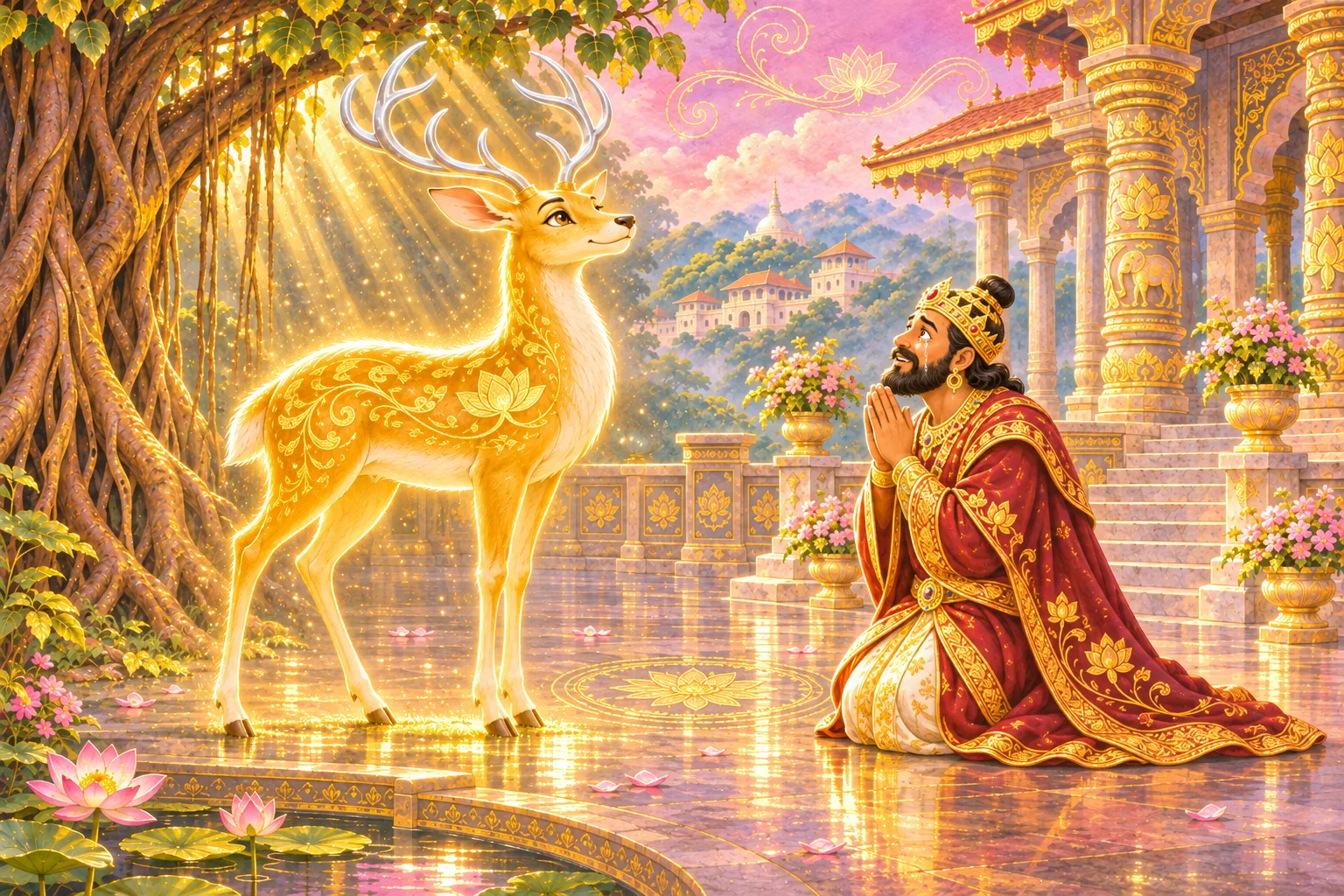
The king’s eyes filled with tears. “I have never seen such kindness, not even among people,” he said. “You and the mother are both free.”
රජුගේ ඇස් කඳුළින් පිරුණා. “මිනිසුන් අතරවත් මම මෙවැනි කරුණාවක් දැකලා නැහැ,” ඔහු කීවා. “ඔබත් ඒ අම්මාත් දෙන්නම නිදහස්.”
“And the rest of my deer?” asked the Banyan Deer. “They are free too,” said the king.
“මගේ අනෙක් මුවන්?” නුග මුවා ඇසුවා. “ඔවුනුත් නිදහස්,” රජු කීවා.
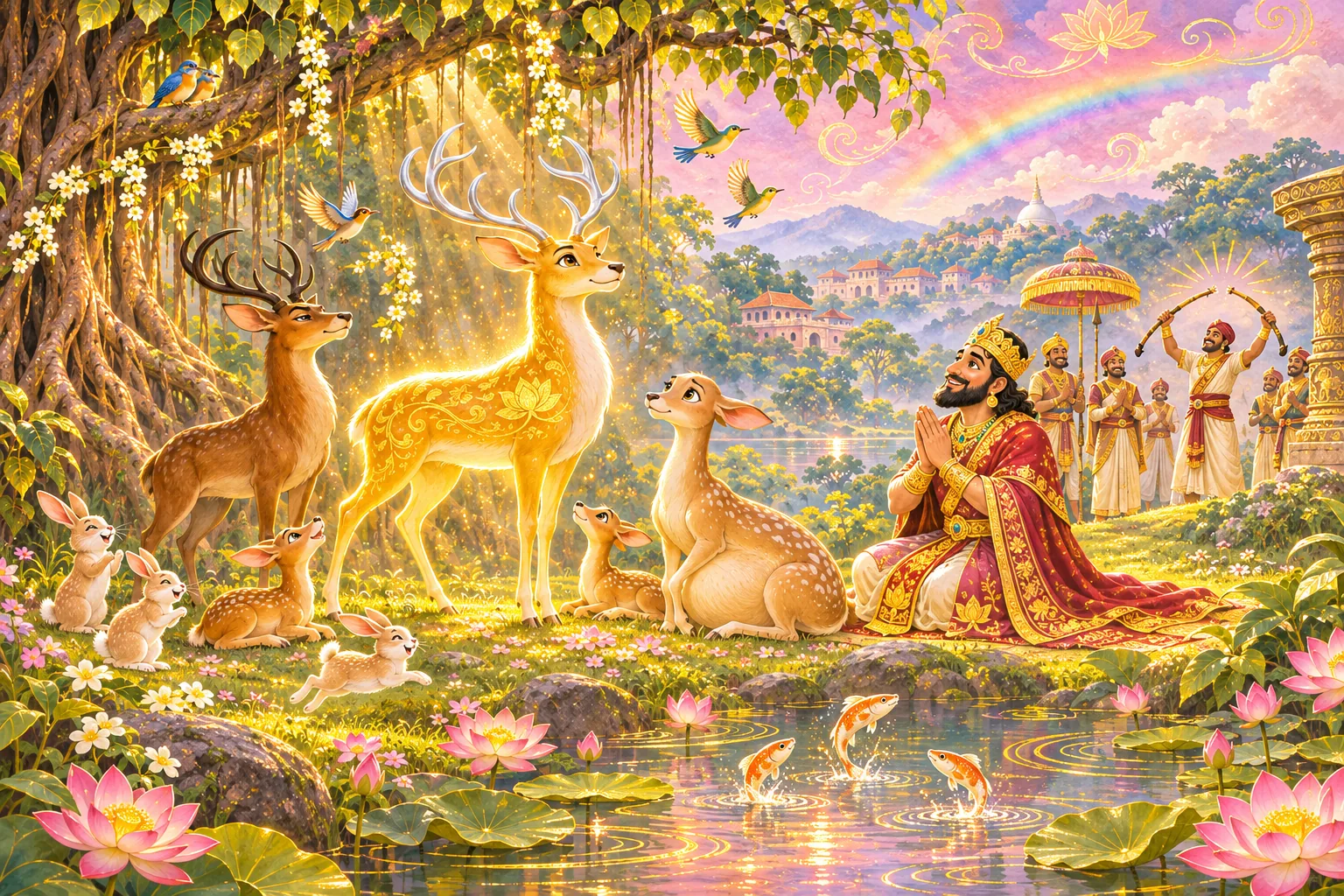
“And the other animals of the forest?” “Free.” “And the birds of the air, and the fish in the water?”
“වනයේ අනෙක් සතුන්?” “නිදහස්.” “අහසේ කුරුල්ලන්, ජලයේ මසුන්?”
The king smiled. “Free, all of them. No one in my kingdom will hunt them again.”
රජු සිනාසුණා. “හැමෝම නිදහස්. මගේ රාජ්යයේ කවුරුවත් ආයෙත් ඔවුන්ව දඩයම් කරන්නේ නැහැ.”

The Banyan Deer bowed and returned to the forest, where all the animals lived in peace.
නුග මුවා හිස නමා වනයට ආපසු ගියා. එහි සියලු සතුන් සාමයෙන් ජීවත් වුණා.
And the little doe’s baby was born under the great banyan tree, safe and loved.
පුංචි මුව දෙනගේ පැටියා මහා නුග ගස යට, ආරක්ෂිතව, ආදරය ලබමින් ඉපදුණා.
Who was who?
The Buddha told this story to show the power of compassion. The Banyan Deer was the Bodhisatta. The Branch Deer was Devadatta, the King of Benares was Ānanda, and the doe was the mother of the monk Kumāra Kassapa.
The lesson
Real kindness means helping someone even when it costs you something.
Let's talk
- Why did the Branch Deer refuse to help the mother?
- What did the Banyan Deer do instead?
- Can you think of a time someone was kind to you when they didn’t have to be?
කවුද කවුරුන් වූයේ?
කරුණාවේ බලය පෙන්වීමට බුදුරජාණන් වහන්සේ මේ කතාව වදාළා. නුග මුවා වූයේ බෝසතාණන් වහන්සේයි. සාඛ මුවා දේවදත්ත, බරණැස් රජු ආනන්ද හිමියන්, මුව දෙන කුමාර කස්සප හිමියන්ගේ මව විය.
පාඩම
සැබෑ කරුණාව යනු තමන්ට යමක් වැය වුණත් කෙනෙකුට උදව් කිරීමයි.
අපි කතා කරමු
- සාඛ මුවා ඒ අම්මාට උදව් නොකළේ ඇයි?
- ඒ වෙනුවට නුග මුවා මොකද කළේ?
- කෙනෙක් ඔබට කරුණාව පෙන්වූ වෙලාවක් ඔබට මතකද?
Retold for children by Fablewings from the Nigrodhamiga Jātaka (Jātaka No. 12; English translation ed. E. B. Cowell, vol. I, 1895, public domain) and the Sinhala Pansiya Panas Jātaka tradition. Illustrations made with AI assistance for Fablewings.