The Peacock Who Danced Too Much
ඕනෑවට වඩා නැටූ මොණරා
Nacca Jātaka (No. 32) · නච්ච ජාතකය (අංක 32)
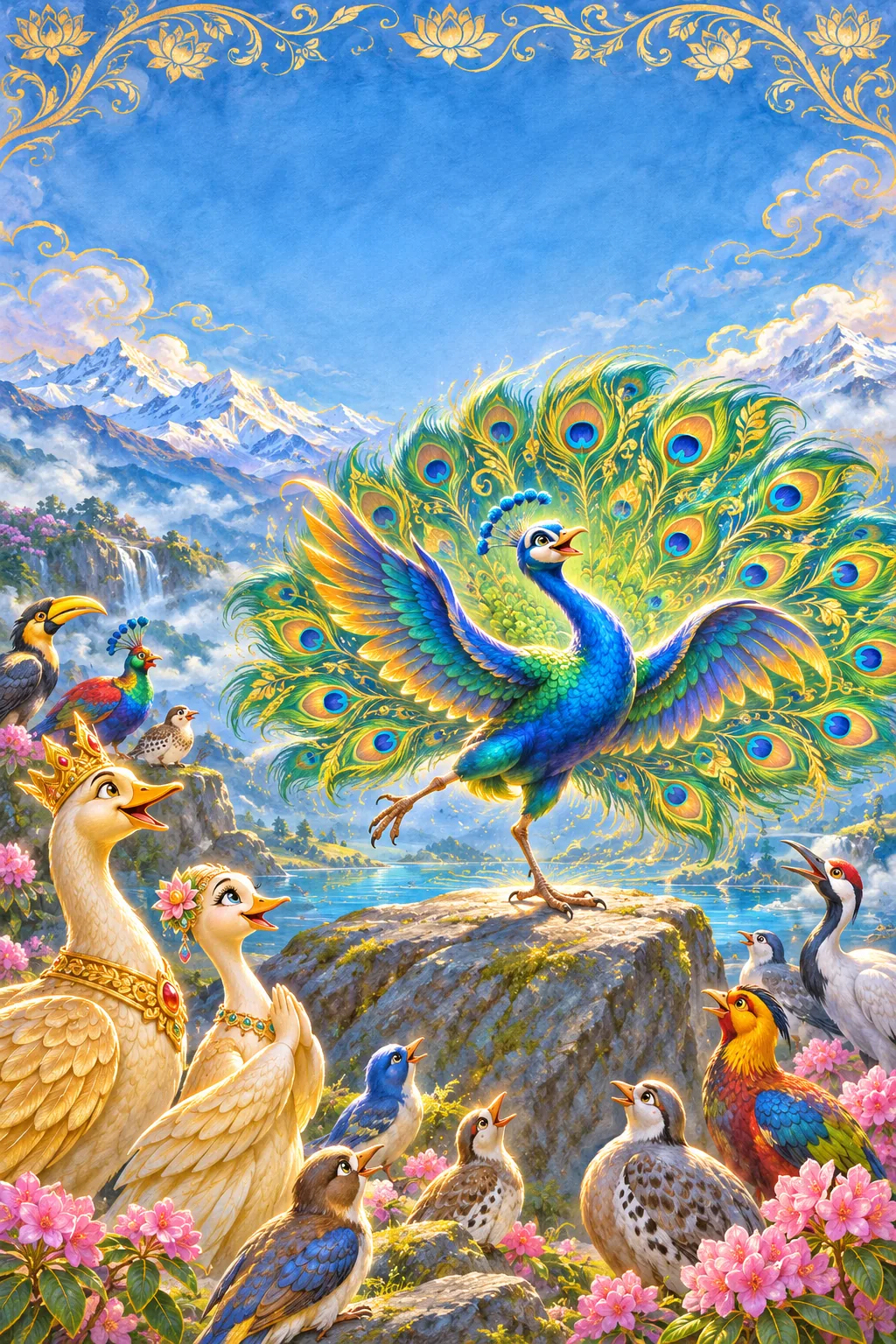
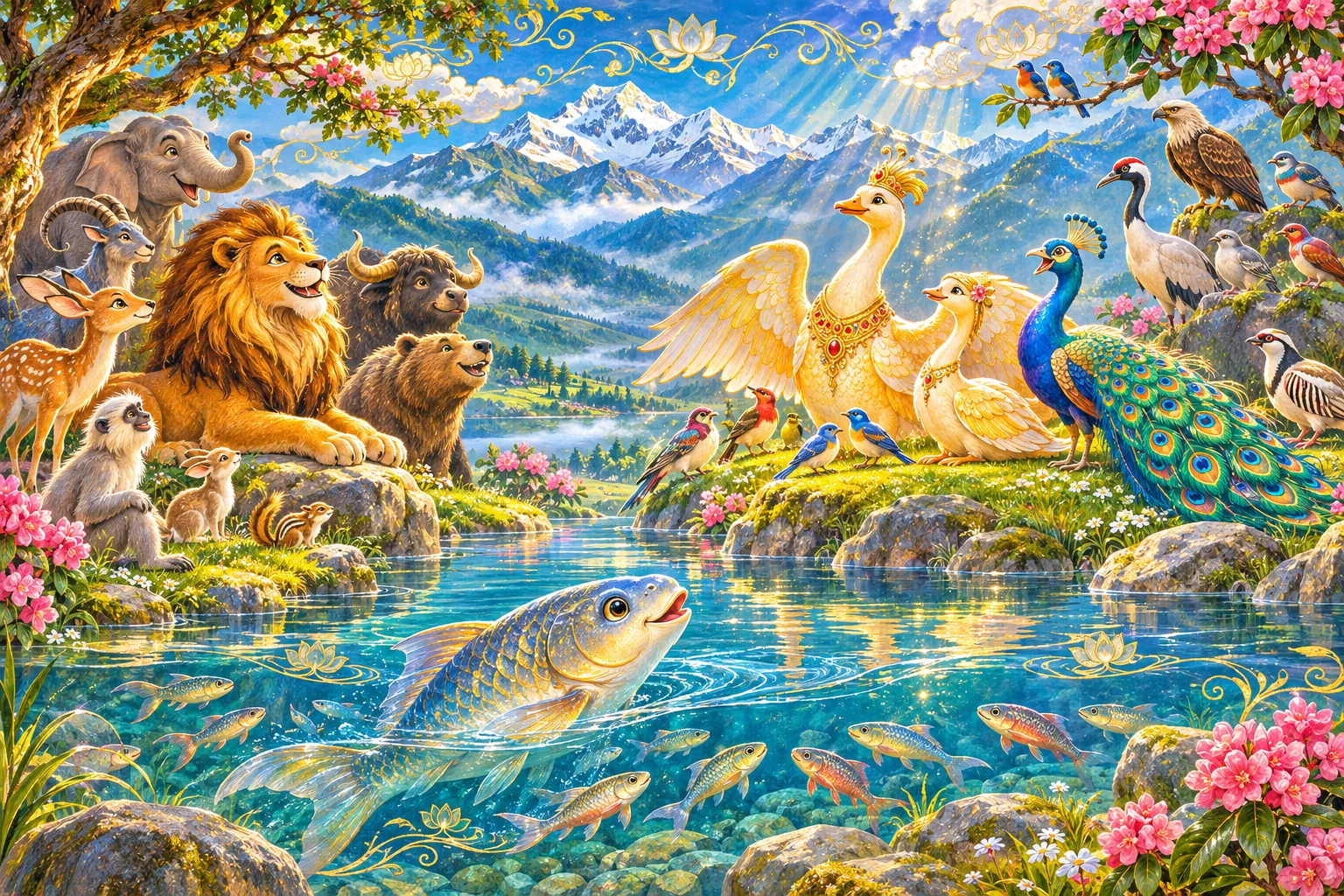
At the very beginning of the world, the four-footed animals chose the lion as their king, the fish chose a great fish, and the birds chose the golden goose.
ලෝකයේ මුල්ම කාලයේ සිව්පාවුන් සිංහයා තම රජු ලෙස තෝරා ගත්තා. මාළුවෝ මහා මාළුවෙකු තෝරා ගත්තා. කුරුල්ලෝ රන් හංසයා තෝරා ගත්තා.
The golden goose king had a lovely daughter, and he told her she could choose any husband she liked.
රන් හංස රජුට ලස්සන දුවක් හිටියා. තමාට කැමති ඕනෑම සැමියෙක් තෝරාගන්න පුළුවන් බව ඔහු ඇයට කීවා.
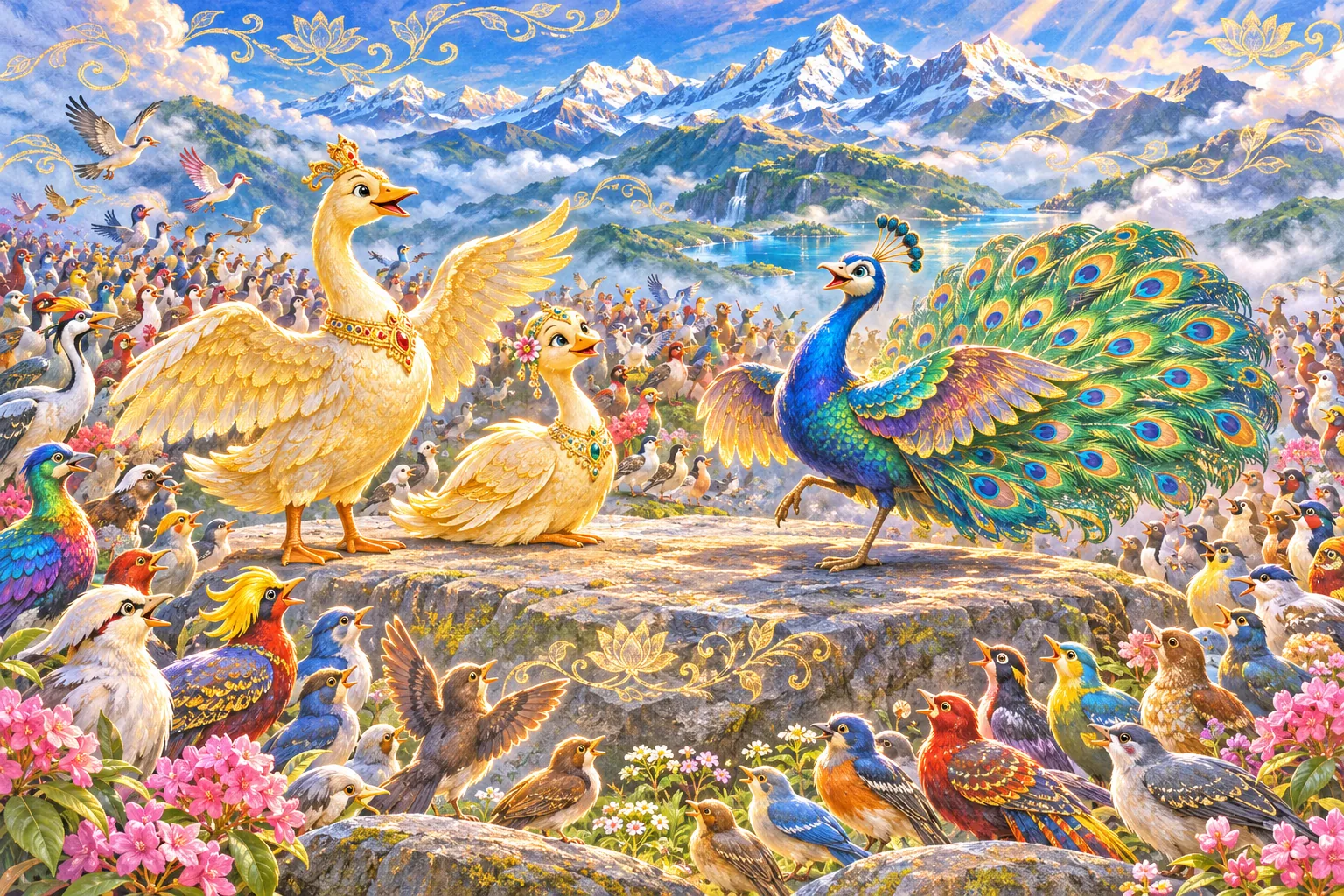
So the goose king called all the birds of the Himalayas together on a great flat rock. Geese, peacocks, parrots, cranes and many more came in their finest feathers.
ඉතින් හංස රජු හිමාලයේ සියලු කුරුල්ලන් ලොකු පැතලි ගලක් මතට කැඳෙව්වා. හංසයෝ, මොණරු, ගිරවු, කොකුන් සහ තවත් බොහෝ දෙනා තම හොඳම පිහාටු පැළඳගෙන ආවා.
“Now, my daughter,” he said, “choose.”
“දැන් දුවේ,” ඔහු කීවා, “තෝරාගන්න.”
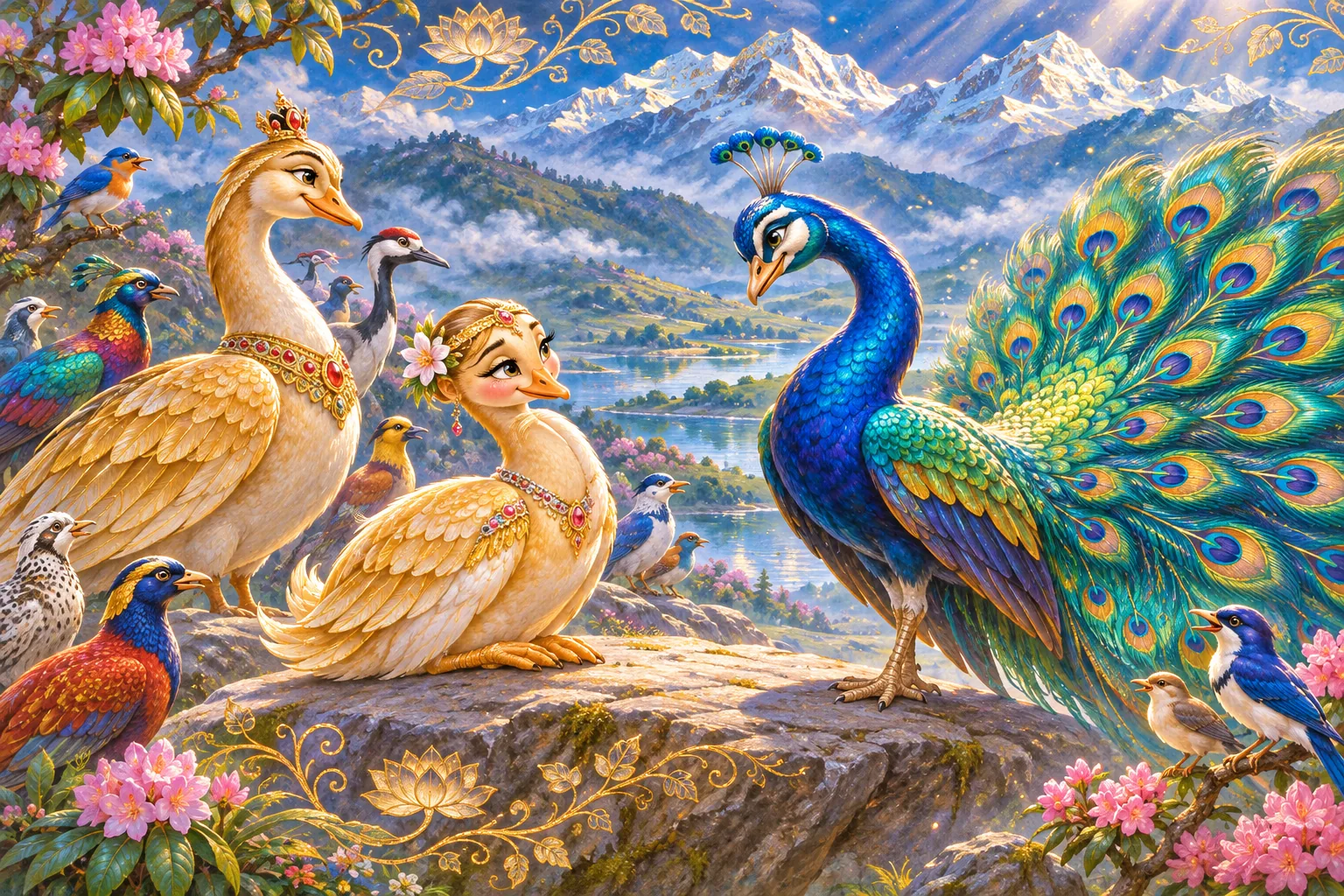
The young goose looked at all the birds, and then she saw the peacock. His neck shone like a jewel and his long tail glittered with eyes of blue and green.
තරුණ හංසිය සියලු කුරුල්ලන් දෙස බැලුවා. ඉන්පසු ඇයට මොණරා පෙනුණා. ඔහුගේ බෙල්ල මැණිකක් වගේ බැබළුණා. ඔහුගේ දිග වලිගය නිල් සහ කොළ ඇස්වලින් දිදුලුණා.
“I choose him,” she said.
“මම එයාව තෝරා ගන්නවා,” ඇය කීවා.
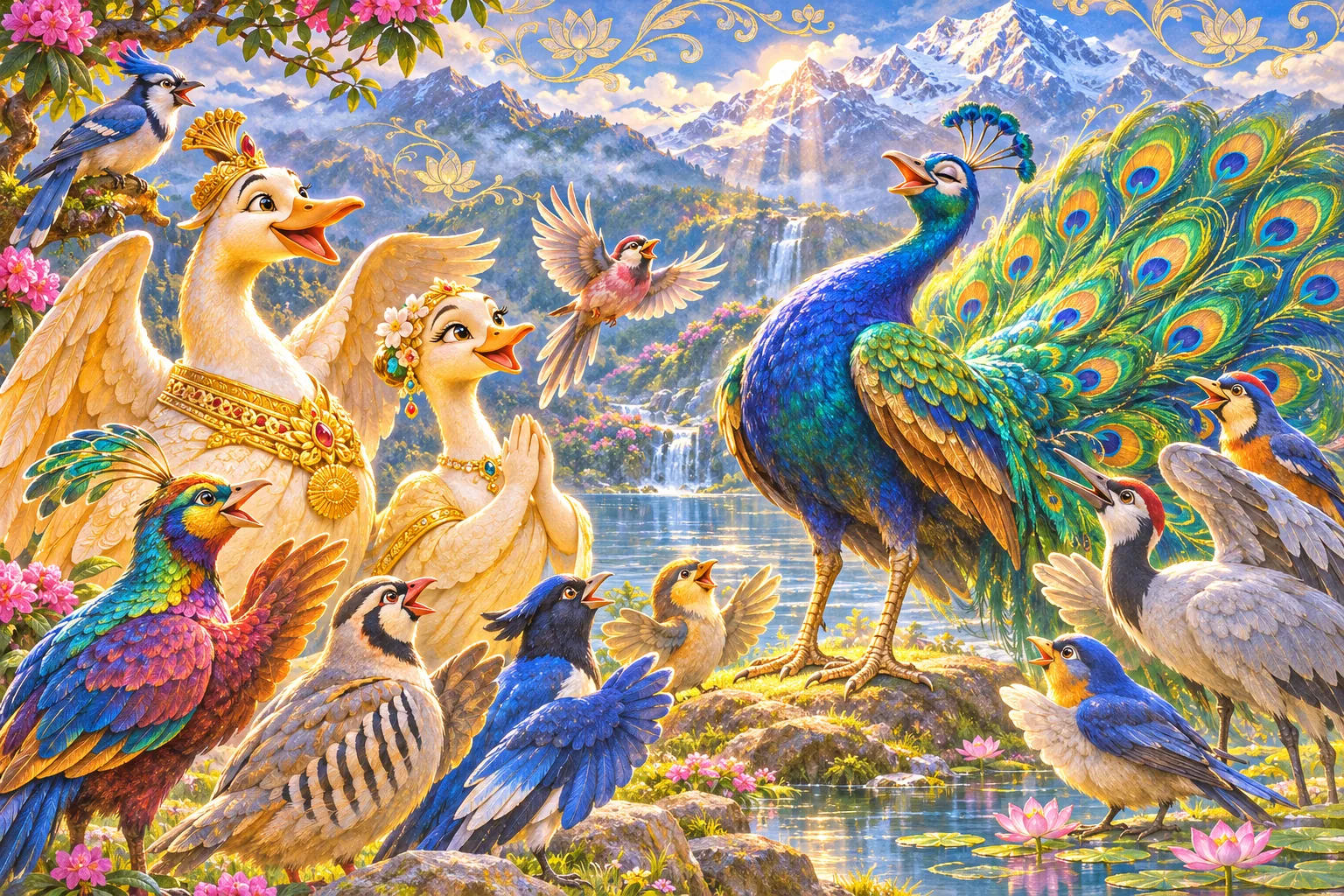
All the birds went to the peacock. “Congratulations!” they said. “The goose king’s daughter has chosen you!”
සියලු කුරුල්ලෝ මොණරා ළඟට ගියා. “සුබ පැතුම්!” ඔවුන් කීවා. “හංස රජුගේ දුව ඔයාව තෝරා ගත්තා!”
The peacock was so excited that he puffed out his chest. “Until today, nobody has seen how magnificent I really am!” he cried.
මොණරා කොතරම් උද්දාමයට පත් වුණාද කියනවා නම්, ඔහු පපුව පුම්බා ගත්තා. “අද වෙනකම් මම ඇත්තටම කොච්චර අපූරුද කියලා කවුරුත් දැකලා නැහැ!” ඔහු කෑ ගැසුවා.
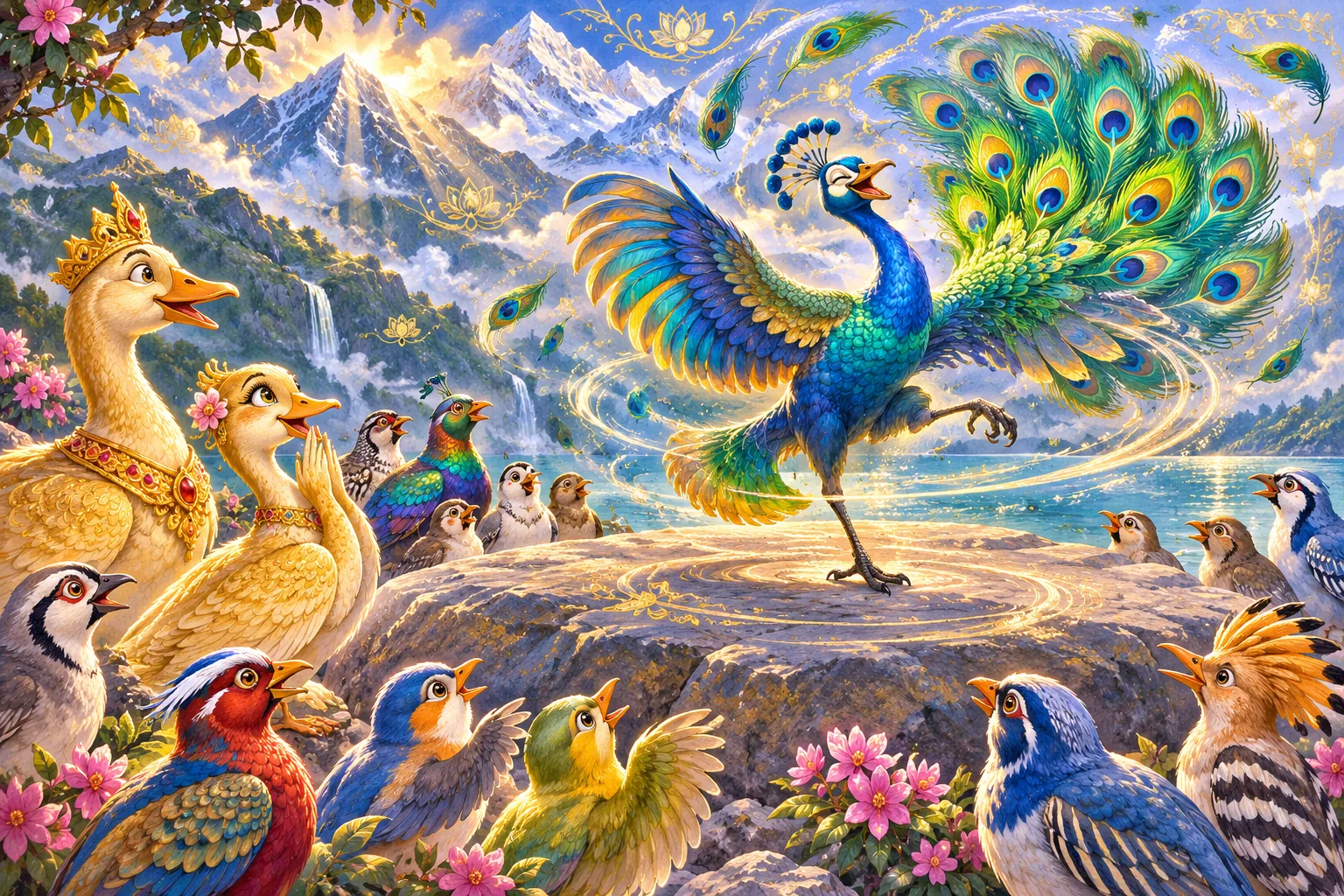
And right there in front of everyone, he spread his great tail and began to dance, spinning and strutting and showing off, wilder and wilder.
සියල්ලන් ඉදිරියේම ඔහු තම ලොකු වලිගය විහිදා නටන්න පටන් ගත්තා. කැරකෙමින්, උඩඟුවෙන් ඇවිදිමින්, පෙන්නමින්, වඩ වඩාත් වල්ව.
He danced so wildly that he forgot all his manners.
ඔහු කොතරම් වල්ව නැටුවාද කියනවා නම්, ඔහුට සියලු ගුණ යහපත් අමතක වුණා.
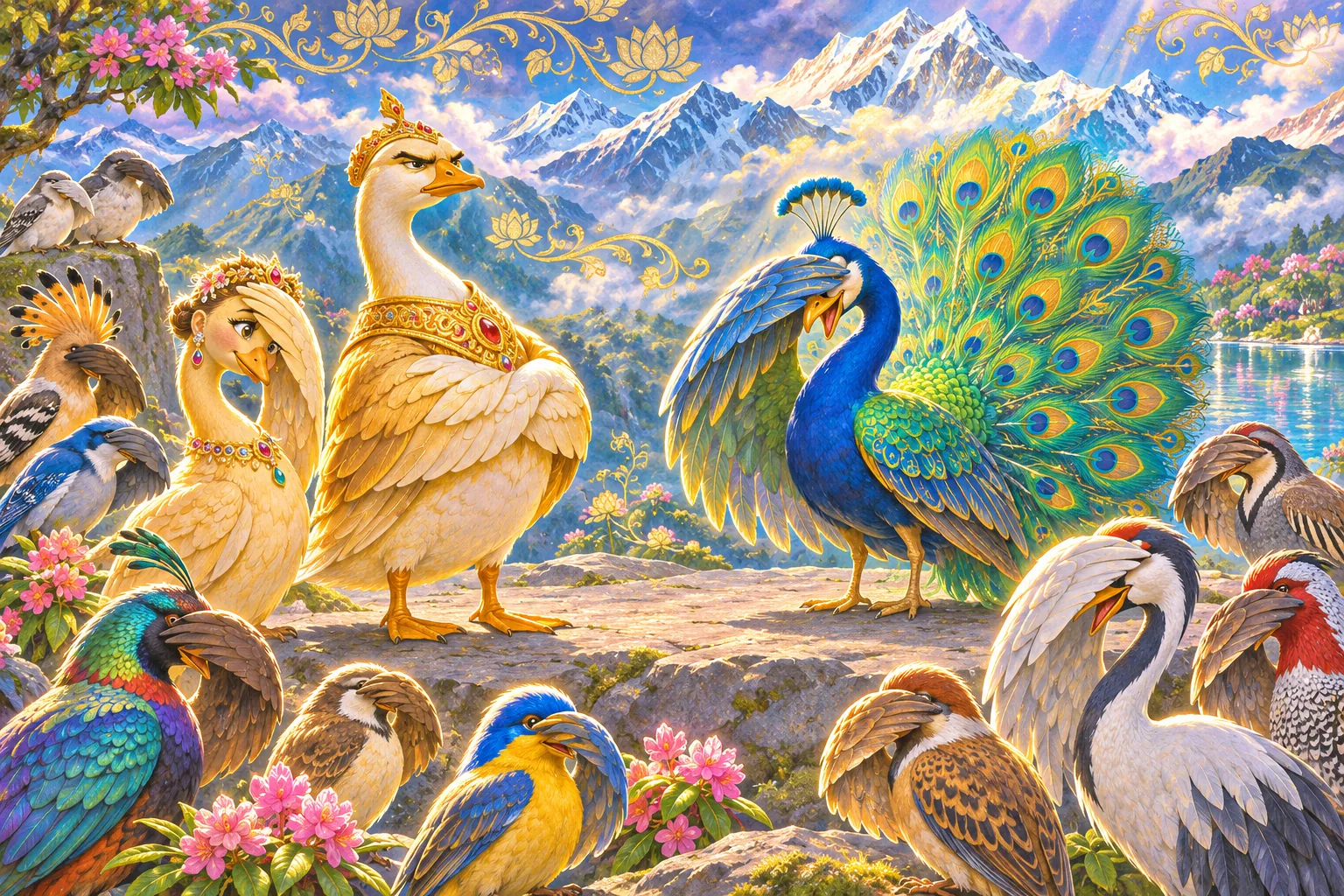
The goose king watched in silence. All the birds stopped and stared. Some covered their eyes with their wings.
හංස රජු නිහඬව බලා සිටියා. සියලු කුරුල්ලෝ නැවතී බලාගෙන හිටියා. සමහරු පියාපත්වලින් ඇස් වසා ගත්තා.
“This bird has fine feathers,” said the goose king at last, “but he has no modesty and no good manners.”
“මේ කුරුල්ලාට ලස්සන පිහාටු තියෙනවා,” අන්තිමට හංස රජු කීවා, “ඒත් එයාට නිහතමානිකමක්, හොඳ ගුණ යහපත්කමක් නැහැ.”
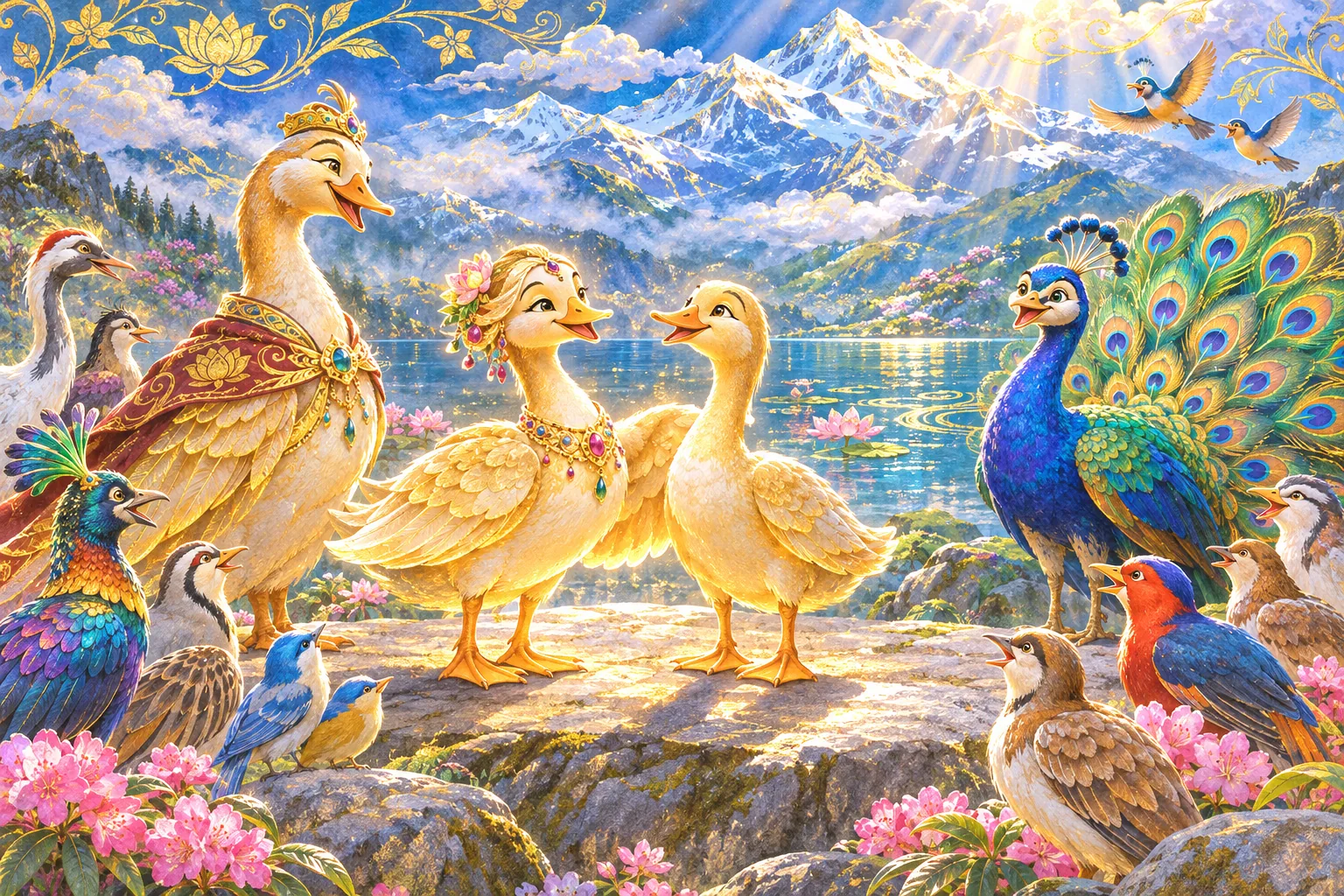
“I will not give my daughter to someone who shows off like this,” he said kindly but firmly.
“මෙහෙම පෙන්නන කෙනෙකුට මම මගේ දුව දෙන්නේ නැහැ,” ඔහු කරුණාවෙන් නමුත් ස්ථිරව කීවා.
And he gave his daughter instead to a young goose who was gentle and kind, and she was happy with her choice.
ඒ වෙනුවට ඔහු තම දුව මෘදු, කාරුණික තරුණ හංසයෙකුට දුන්නා. ඇය ඒ තේරීම ගැන සතුටු වුණා.
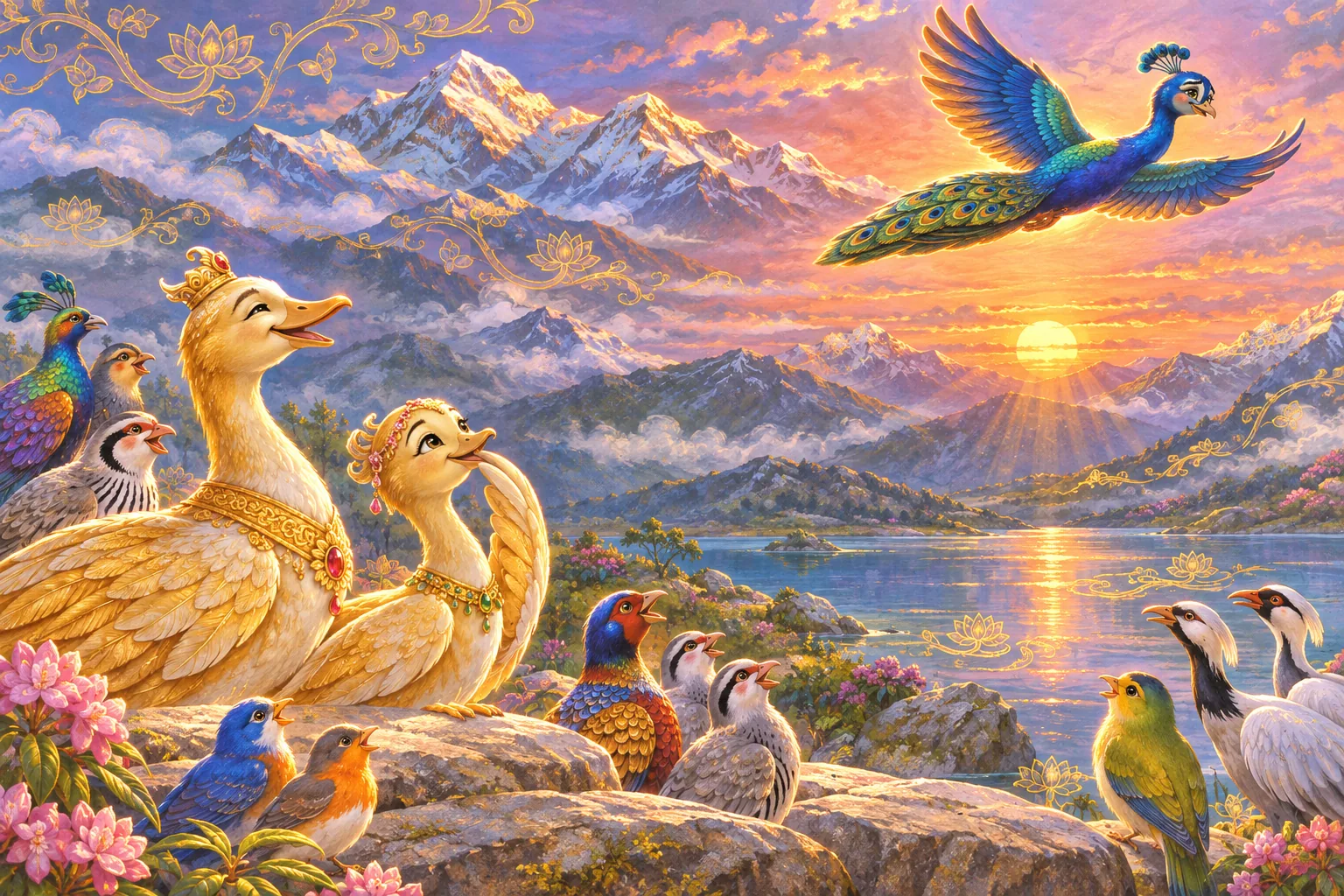
The peacock folded his tail and flew away, very embarrassed. He had lost his chance by showing off.
මොණරා වලිගය හකුළාගෙන ඉතා ලැජ්ජාවෙන් පියාඹා ගියා. පෙන්නන්න ගිහින් ඔහුට තම අවස්ථාව නැති වුණා.
All the birds remembered: beautiful feathers are nice, but a good heart and good manners matter more.
සියලු කුරුල්ලන්ට මතක් වුණා: ලස්සන පිහාටු හොඳයි, ඒත් හොඳ හදවතක් සහ හොඳ ගුණ ඊටත් වඩා වැදගත්.
Who was who?
The Buddha told this story about a monk who was too proud of his many fine things. The golden goose king was the Bodhisatta.
The lesson
Don’t show off. Being humble and kind is more beautiful than any feathers.
Let's talk
- Why did the young goose choose the peacock?
- What did the peacock do wrong?
- Why is it better to be humble than to show off?
කවුද කවුරුන් වූයේ?
තමන්ගේ බොහෝ හොඳ දේවල් ගැන අධික ආඩම්බරයක් තිබූ භික්ෂුවක් ගැන බුදුරජාණන් වහන්සේ මේ කතාව වදාළා. රන් හංස රජු වූයේ බෝසතාණන් වහන්සේයි.
පාඩම
පෙන්නන්න එපා. නිහතමානී, කාරුණික වීම ඕනෑම පිහාටුවකට වඩා ලස්සනයි.
අපි කතා කරමු
- තරුණ හංසිය මොණරාව තෝරා ගත්තේ ඇයි?
- මොණරා කළ වැරැද්ද මොකක්ද?
- පෙන්නනවාට වඩා නිහතමානී වීම හොඳ ඇයි?
Retold for children by Fablewings from the Nacca Jātaka (Jātaka No. 32; English translation ed. E. B. Cowell, vol. I, 1895, public domain) and the Sinhala Pansiya Panas Jātaka tradition. Illustrations made with AI assistance for Fablewings.