The Donkey in the Lion's Skin
සිංහ සම පෙරවූ බූරුවා
Sīhacamma Jātaka (No. 189) · සීහචම්ම ජාතකය (අංක 189)
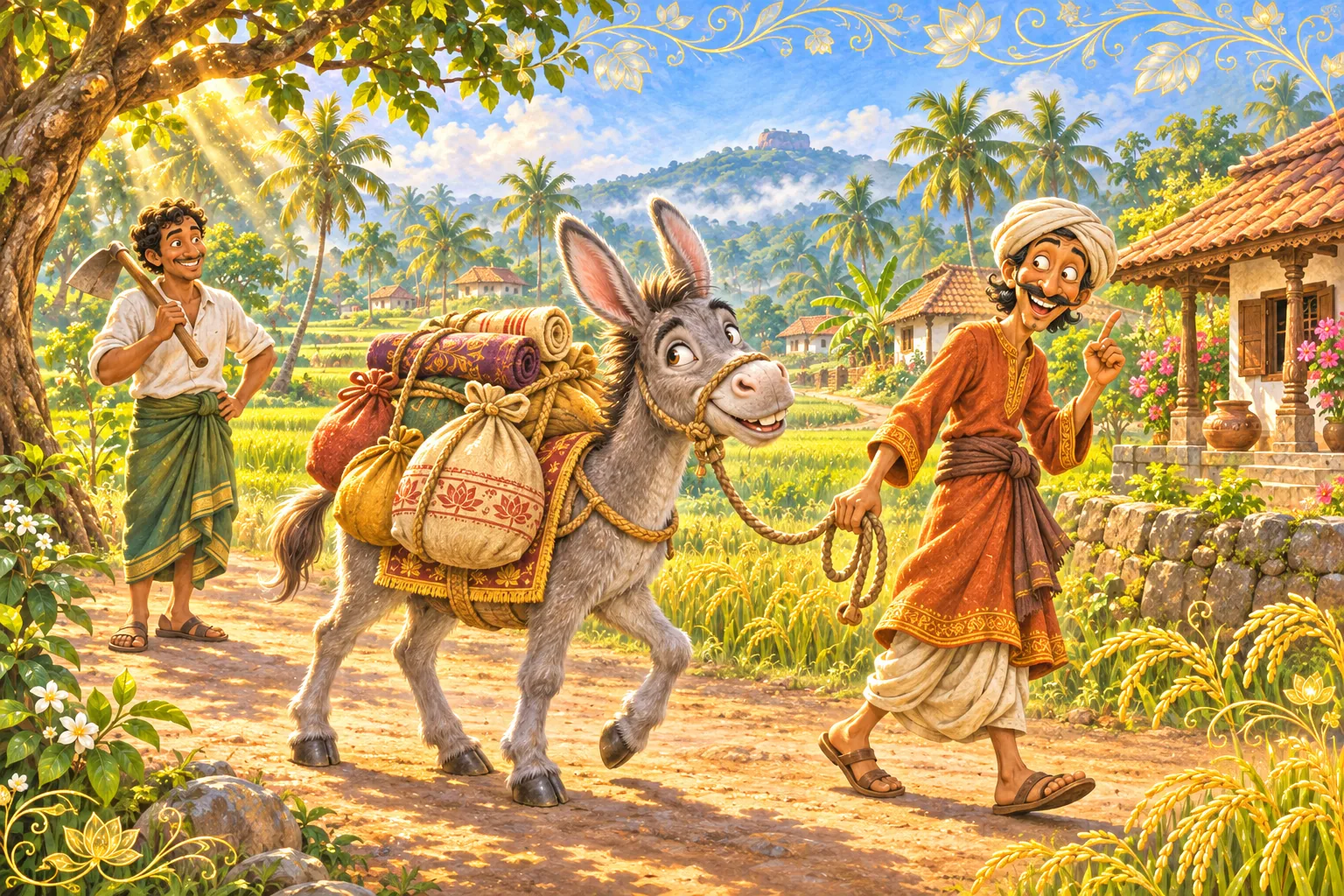
Long ago a travelling merchant went from village to village, selling goods that he carried on the back of his donkey.
බොහෝ කාලෙකට පෙර, ගමින් ගමට ගිය වෙළෙන්දෙක් තම බූරුවාගේ පිටේ පටවාගත් බඩු විකුණුවා.
At each village he would unload the bags, and then he had a clever, sneaky trick.
හැම ගමකදීම ඔහු බඩු බාලා, ඉන්පසු ඔහුට දක්ෂ, කපටි උපක්රමයක් තිබුණා.
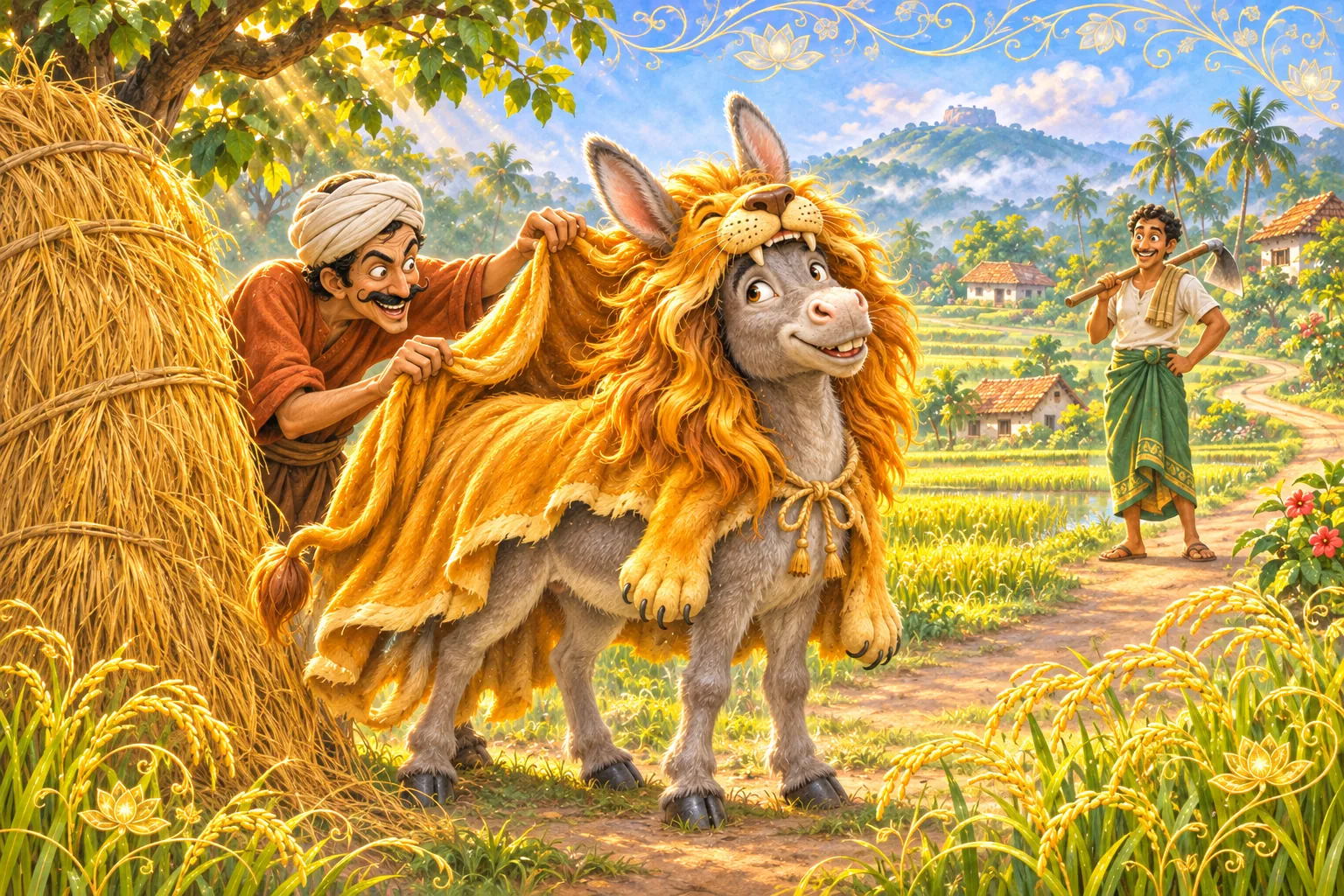
He would cover the donkey with a lion’s skin and turn him loose in the farmers’ fields of rice and barley.
ඔහු සිංහ සමක් බූරුවා උඩින් පොරවලා ගොවීන්ගේ වී, බාර්ලි කෙත්වලට ඇරලා යැව්වා.
The donkey ate and ate, as much as he liked.
බූරුවා කැමති තරම් කෑවා, කෑවා.
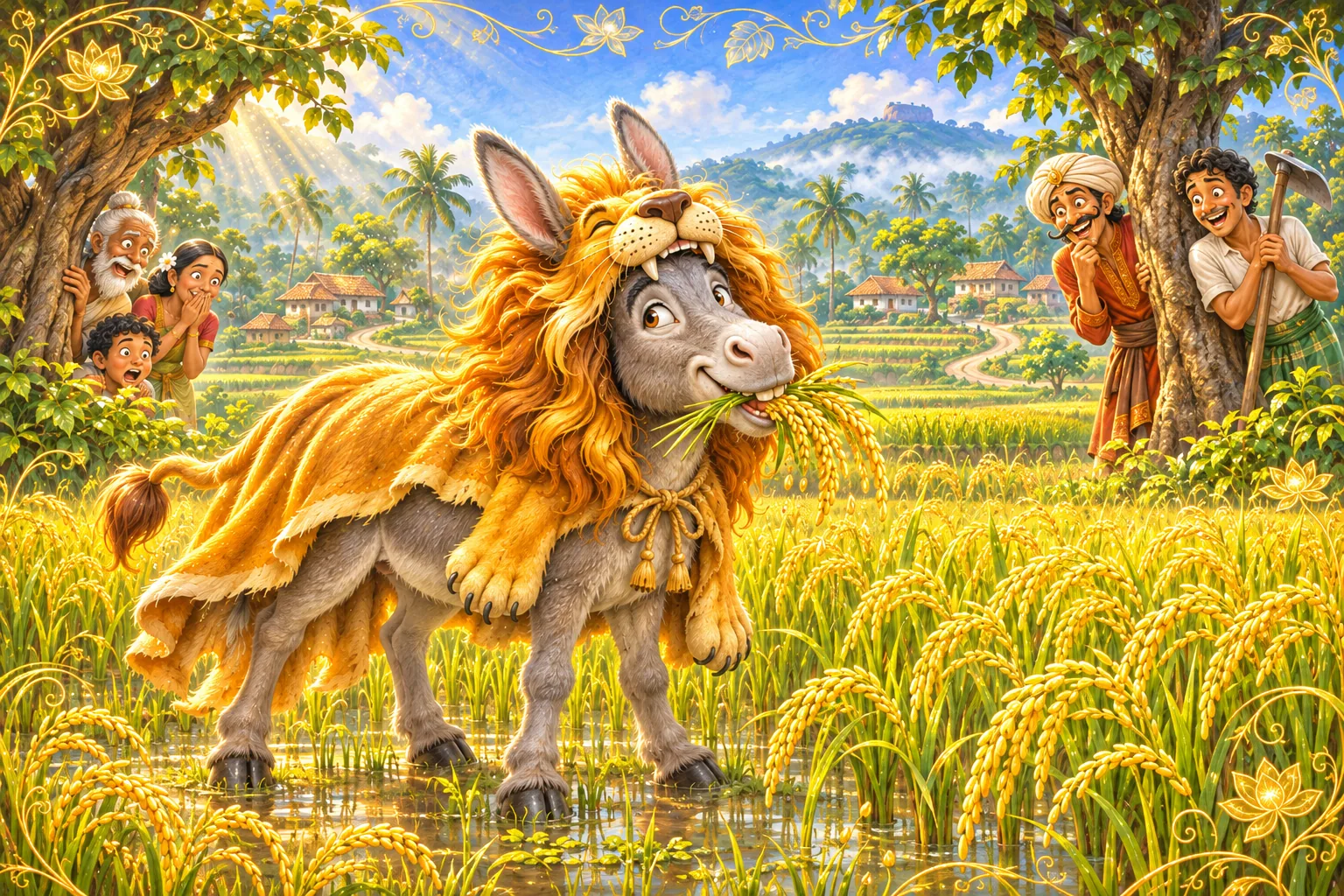
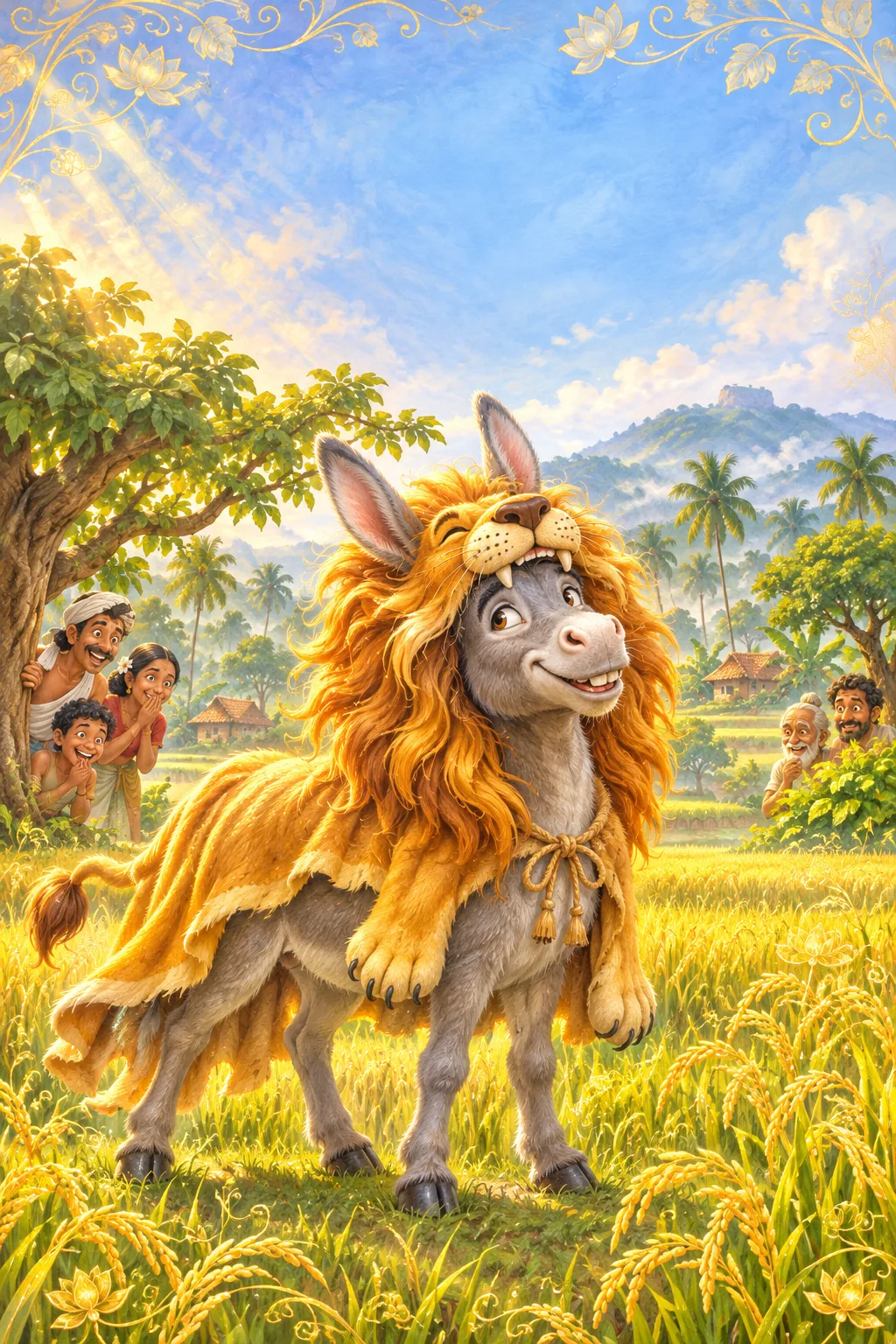
The farmers saw the “lion” in their fields and were far too frightened to go near.
ගොවීන් තම කෙත්වල “සිංහයා” දැකලා ළඟට යන්නවත් බය වුණා.
“A lion is eating our crops!” they whispered from behind the trees. And nobody dared to chase it away.
“සිංහයෙක් අපේ අස්වැන්න කනවා!” ඔවුන් ගස් පිටිපස්සේ ඉඳන් මිමිණුවා. කිසිවෙක් එය පන්නන්න නිර්භීත වුණේ නැහැ.
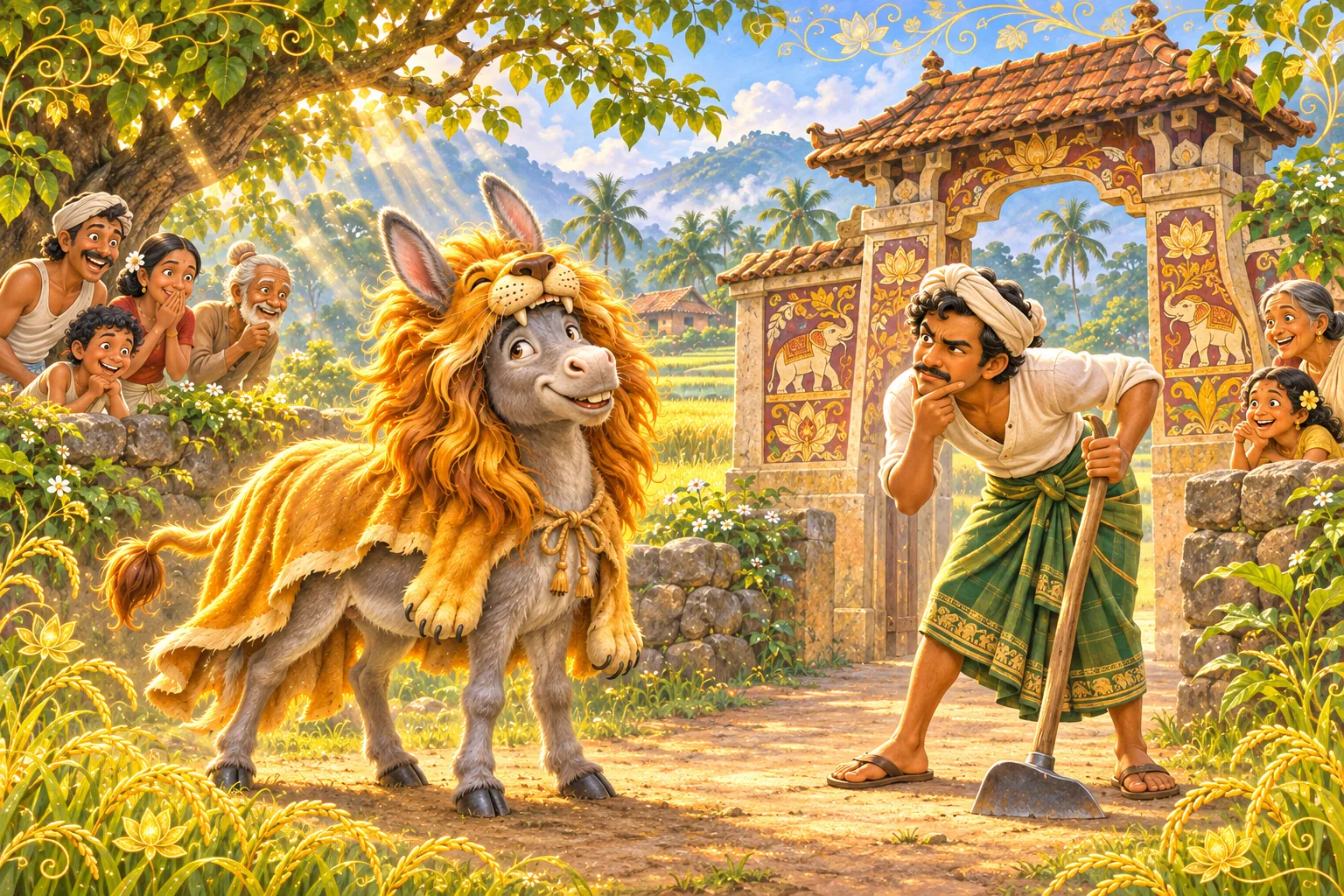
One morning the merchant stopped at a village gate and turned the donkey loose again. But this time a wise young farmer was watching.
එක උදෑසනක වෙළෙන්දා ගම් දොරටුවක නැවතී නැවතත් බූරුවා ඇරලා යැව්වා. නමුත් මේ වතාවේ නුවණැති තරුණ ගොවියෙක් බලාගෙන හිටියා.
“That lion walks strangely,” he said. “Let us call everyone together.”
“ඒ සිංහයා ඇවිදින්නේ අමුතු විදිහට,” ඔහු කීවා. “අපි හැමෝම එකතු කරමු.”
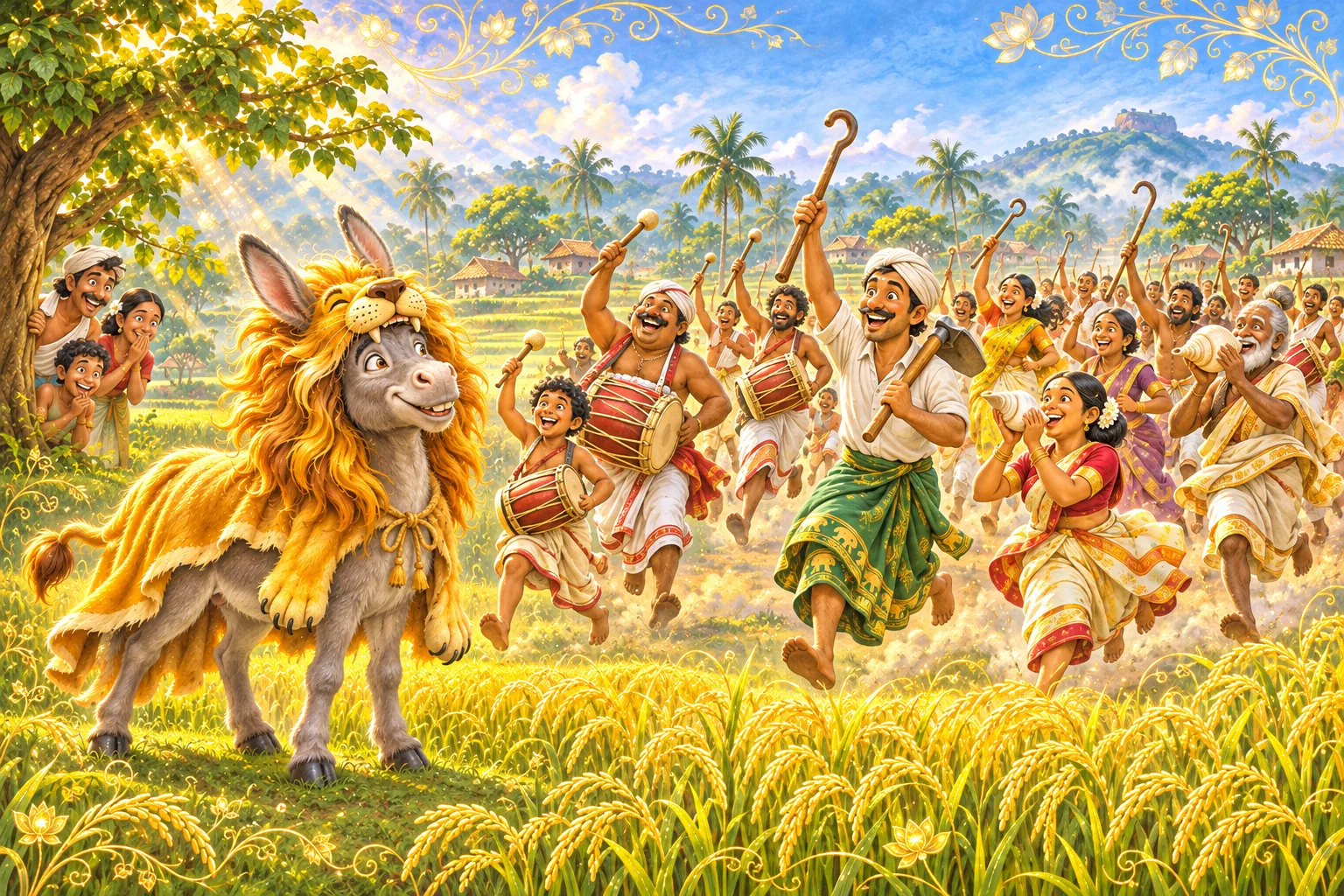
The villagers came running with drums and conch shells and sticks, shouting as loud as they could.
ගම්මු බෙර, හක්ගෙඩි, කෝටු අරගෙන හැකි තරම් ලොකුවට කෑ ගසමින් දුවගෙන ආවා.
The donkey was terrified. He lifted his head and let out the loudest sound he knew…
බූරුවා බියෙන් ගැහුණා. ඔහු හිස ඔසවා තමා දන්නා ලොකුම හඬ නැගුවා…
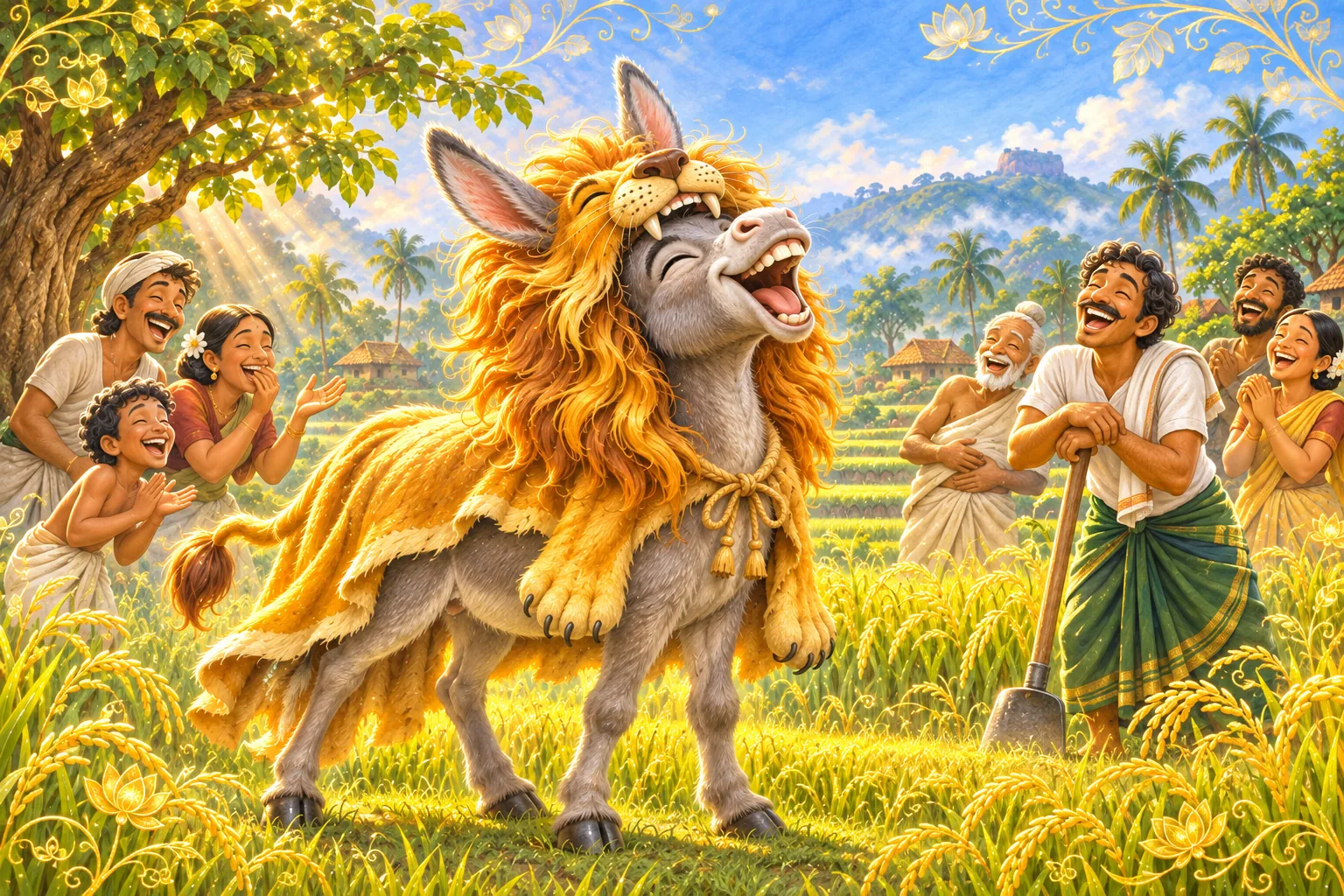
“HEE-HAW! HEE-HAW!”
“හී-හෝ! හී-හෝ!”
Everyone stopped. Then they burst out laughing. “That’s no lion! That’s a donkey!”
හැමෝම නැවතුණා. ඉන්පසු ඔවුන් සිනාසුණා. “ඒ සිංහයෙක් නෙවෙයි! ඒ බූරුවෙක්!”
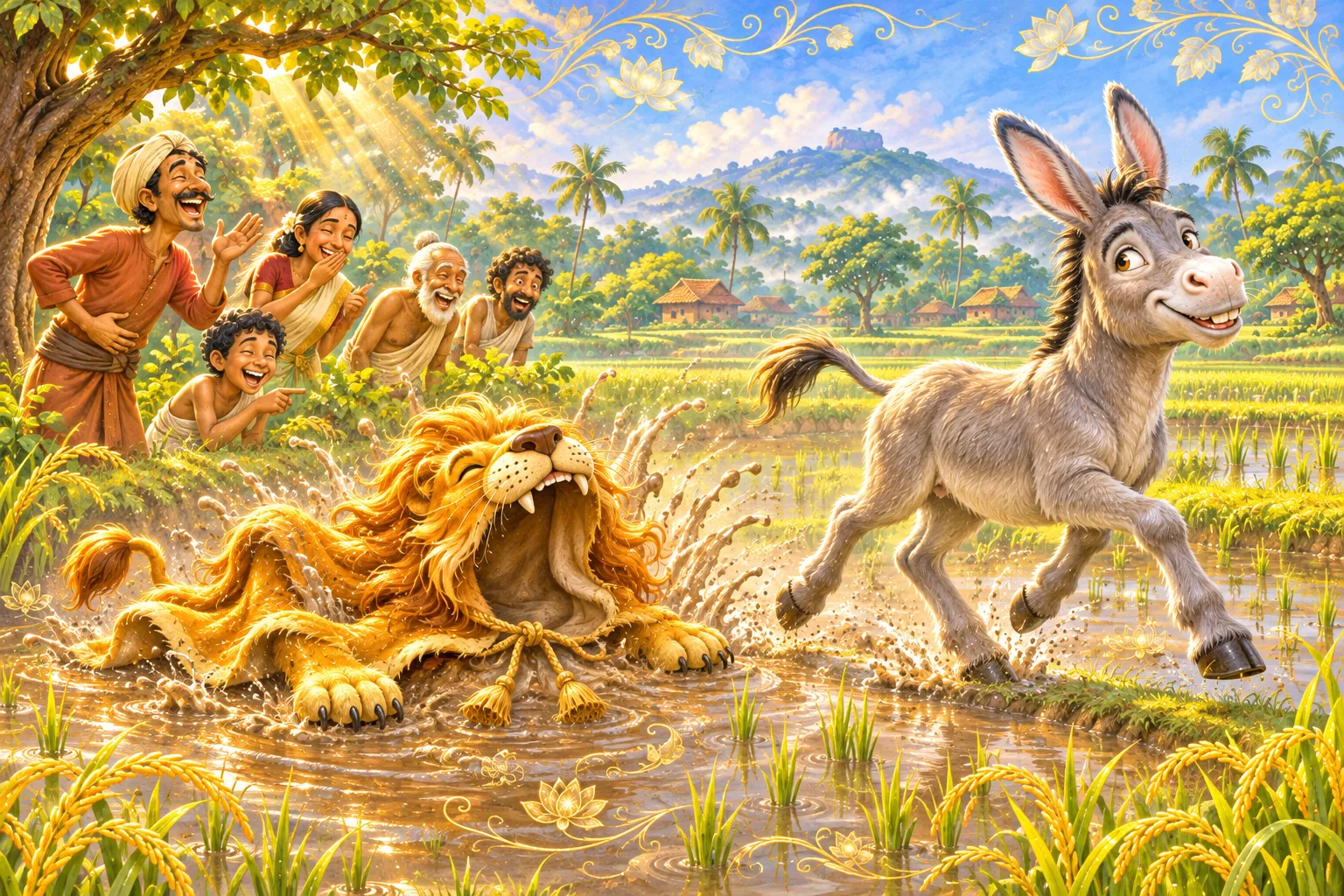
The wise young farmer said: “The skin was a lion’s, but the voice was a donkey’s. A lion would never have brayed.”
නුවණැති තරුණ ගොවියා කීවා: “සම සිංහයෙකුගේ, ඒත් හඬ බූරුවෙකුගේ. සිංහයෙක් කවදාවත් බූරුවෙක් වගේ කෑ ගහන්නේ නැහැ.”
The villagers chased the donkey out of their fields, and the lion’s skin fell off in the mud.
ගම්මු බූරුවා කෙත්වලින් එළියට පැන්නුවා. සිංහ සම මඩේ වැටුණා.
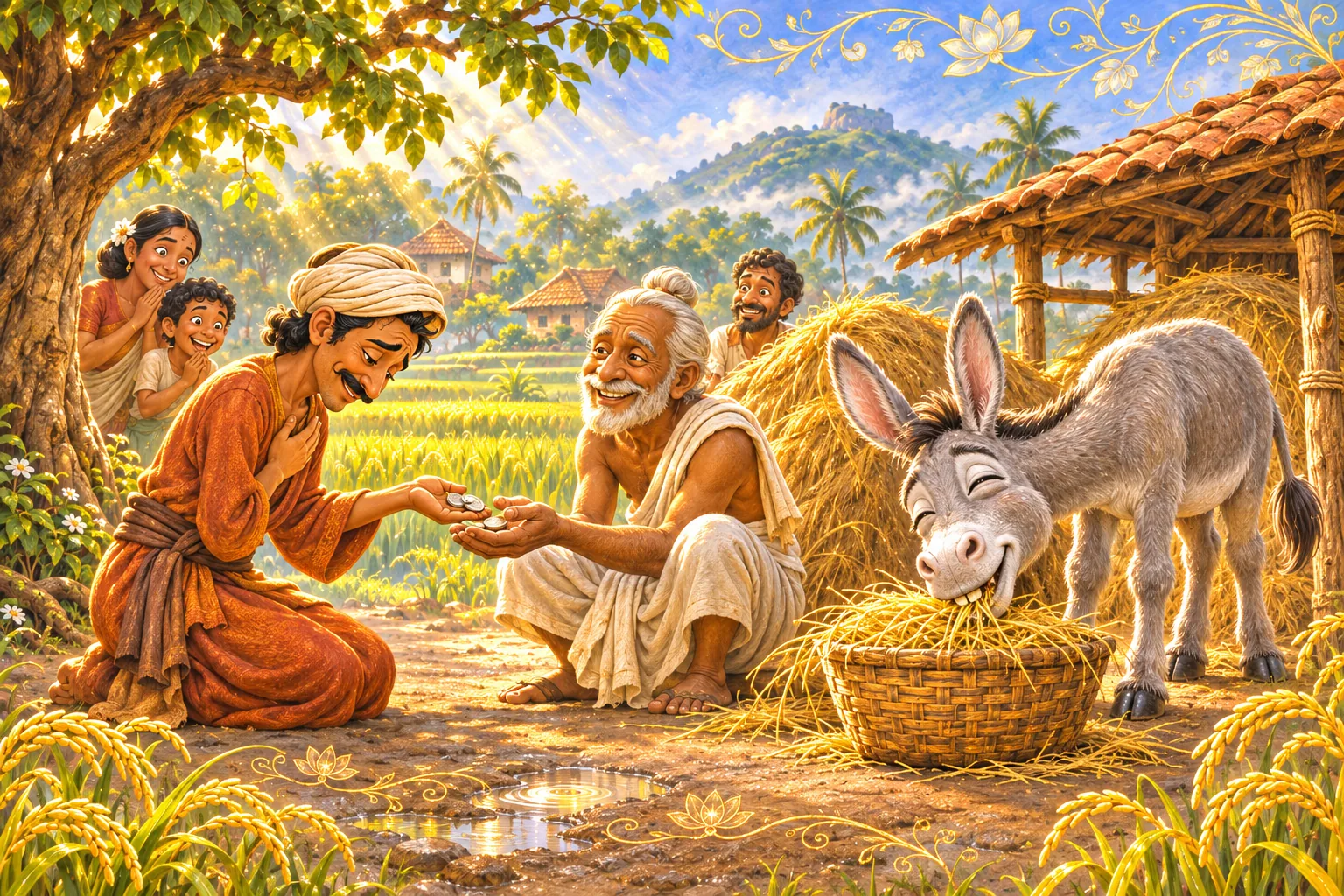
The merchant hung his head in shame. “I tried to make my donkey something he was not,” he said.
වෙළෙන්දා ලැජ්ජාවෙන් හිස පහත් කළා. “මම මගේ බූරුවා එයා නොවන දෙයක් කරන්න හැදුවා,” ඔහු කීවා.
From then on he paid for the donkey’s food honestly, and the donkey was much happier just being a donkey.
එදා සිට ඔහු බූරුවාගේ කෑමට අවංකව ගෙව්වා. බූරුවා බූරුවෙක් විදිහටම ඉන්න එකට වඩාත් සතුටු වුණා.
Who was who?
The Buddha told this story about a monk who pretended to be wiser than he was. The wise young farmer was the Bodhisatta.
The lesson
You can dress up as something you are not, but the truth always comes out. Be honest, and be yourself.
Let's talk
- Why did the merchant put a lion’s skin on the donkey?
- How did the villagers find out the truth?
- Why is it better to be yourself than to pretend?
කවුද කවුරුන් වූයේ?
තමන් සැබැවින්ම සිටි තත්ත්වයට වඩා නුවණැති බව පෙන්වීමට උත්සාහ කළ භික්ෂුවක් ගැන බුදුරජාණන් වහන්සේ මේ කතාව වදාළා. නුවණැති තරුණ ගොවියා වූයේ බෝසතාණන් වහන්සේයි.
පාඩම
ඔබට ඔබ නොවන දෙයක් ලෙස සැරසෙන්න පුළුවන්, ඒත් ඇත්ත හැමදාම එළියට එනවා. අවංක වෙන්න, ඔබ ඔබ ලෙසම ඉන්න.
අපි කතා කරමු
- වෙළෙන්දා බූරුවාට සිංහ සමක් පෙරෙව්වේ ඇයි?
- ගම්මු ඇත්ත දැනගත්තේ කොහොමද?
- රඟපානවාට වඩා ඔබ ඔබ ලෙසම සිටීම හොඳ ඇයි?
Retold for children by Fablewings from the Sīhacamma Jātaka (Jātaka No. 189; English translation ed. E. B. Cowell, vol. II, 1895, public domain) and the Sinhala Pansiya Panas Jātaka tradition. Illustrations made with AI assistance for Fablewings.