The Golden Bowl
රන් තැටිය
Serivāṇija Jātaka (No. 3) · සේරිවාණිජ ජාතකය (අංක 3)
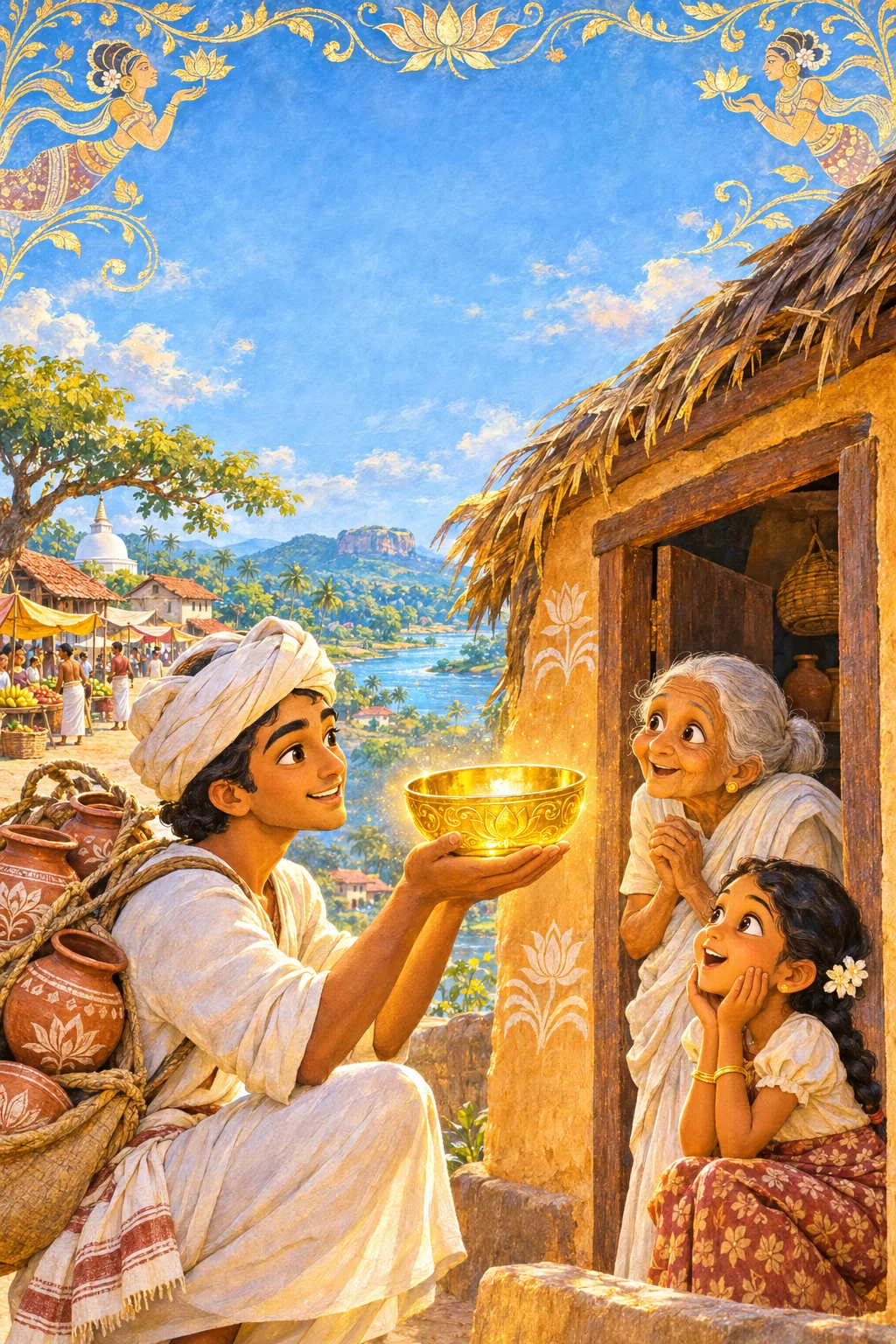
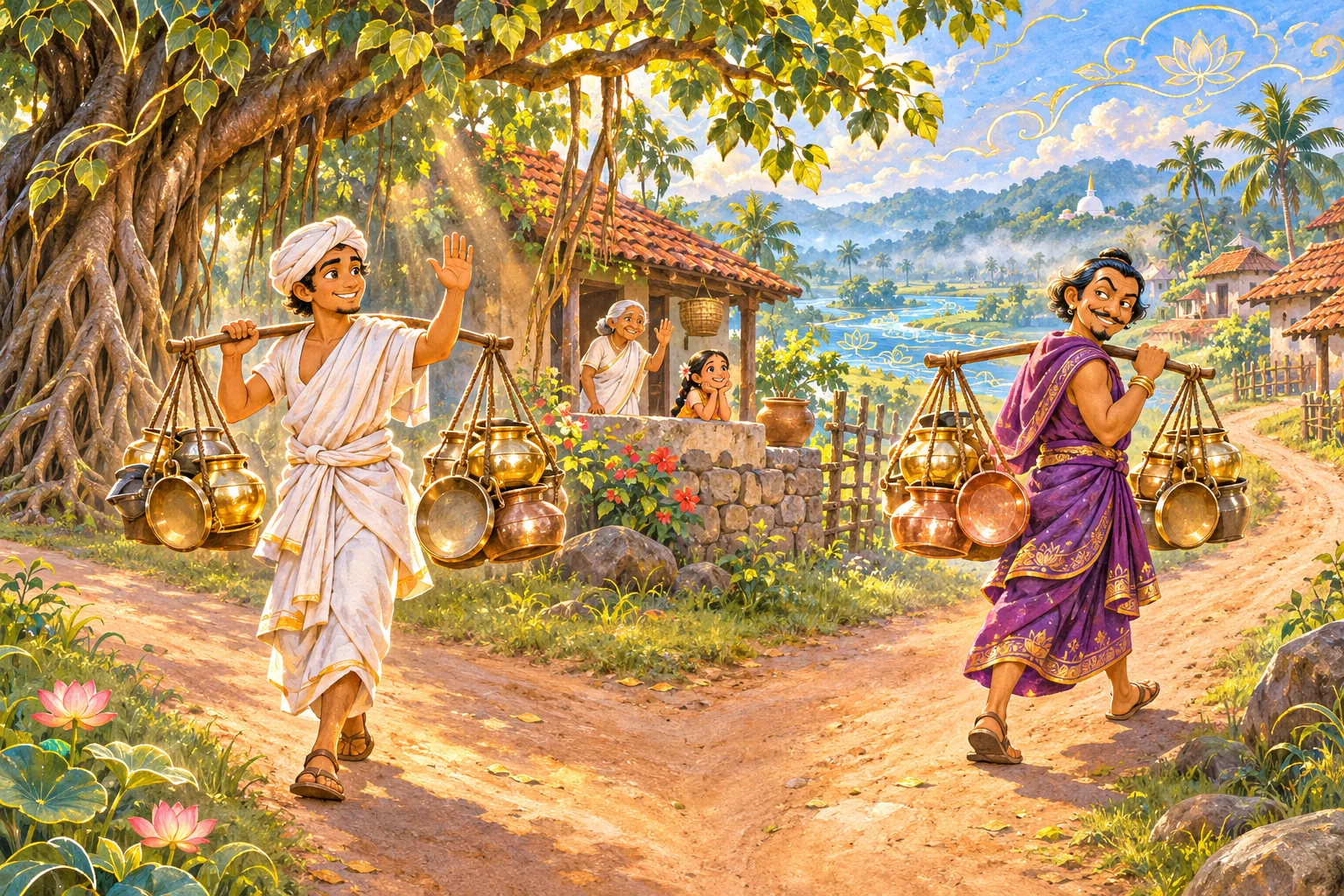
Long ago, two merchants travelled from village to village selling pots and pans. One was honest and kind. The other was greedy.
බොහෝ කලකට පෙර වෙළෙන්දන් දෙදෙනෙක් භාජන විකුණමින් ගමින් ගමට ගියා. එක් අයෙක් අවංක, කාරුණික කෙනෙක්. අනිකා කෑදරයි.
They agreed to visit different streets, so as not to get in each other’s way.
එකිනෙකාට බාධා නොවන්න ඔවුන් වෙනස් වීදිවලට යන්න එකඟ වුණා.
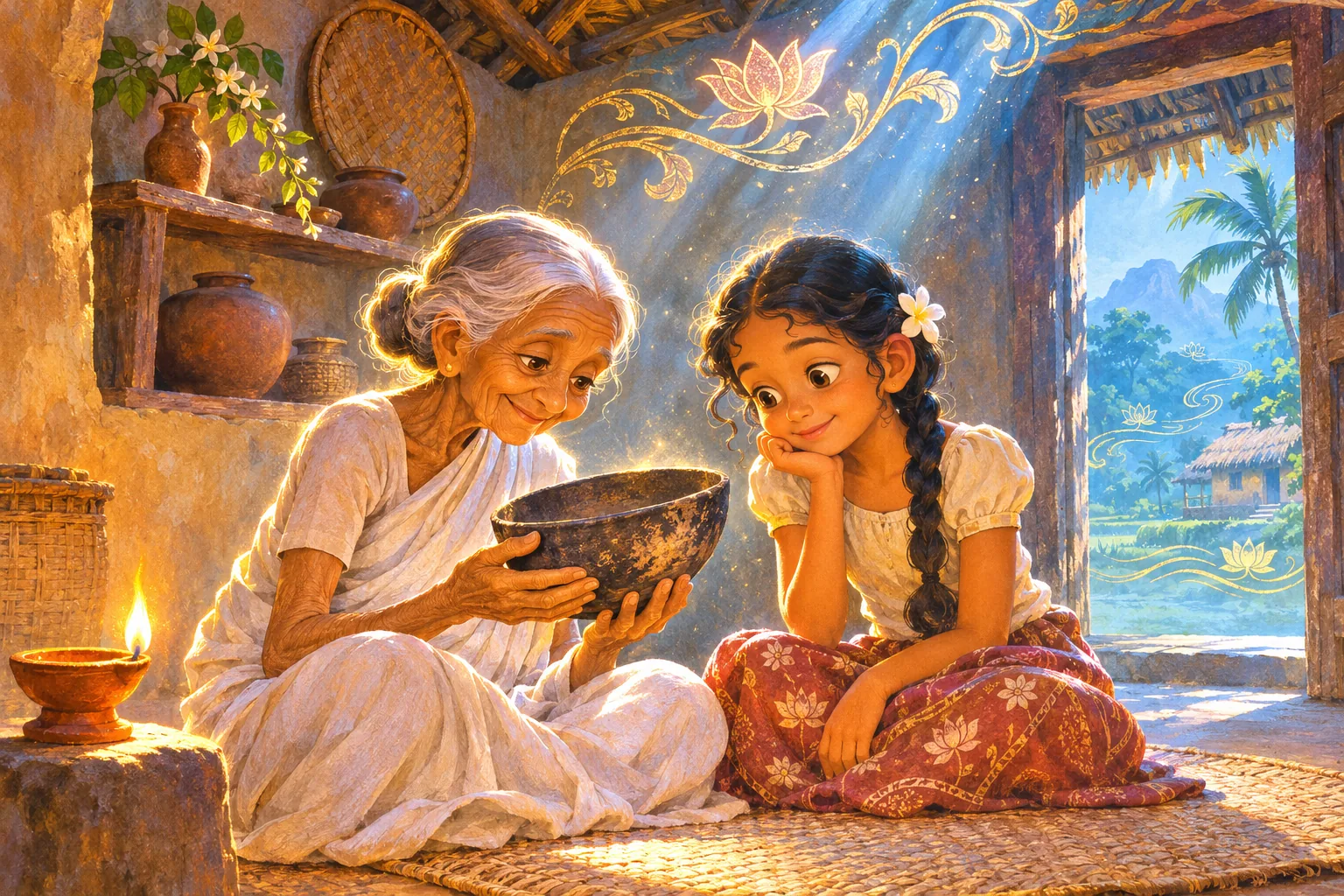
In one poor house lived an old grandmother and her granddaughter. Once their family had been rich, but now they had nothing left except an old, dirty bowl, black with dust.
එක් දුප්පත් නිවසක මහලු ආච්චි කෙනෙක් සහ ඇගේ මිණිබිරිය ජීවත් වුණා. වරෙක ඔවුන්ගේ පවුල ධනවත් වුණත්, දැන් ඔවුන් ළඟ දූවිලිවලින් කළු වූ පැරණි, අපිරිසිදු තැටියක් හැර කිසිවක් ඉතිරි වී තිබුණේ නැහැ.
They did not know it was really made of pure gold.
එය ඇත්තටම පිරිසිදු රත්තරන්වලින් හැදූ එකක් බව ඔවුන් දැන සිටියේ නැහැ.
The greedy merchant came first. The little girl asked, “Grandma, can we swap our old bowl for a pretty bracelet?”
කෑදර වෙළෙන්දා මුලින්ම ආවා. පුංචි ගැහැනු ළමයා ඇසුවා, “ආච්චි, අපේ පරණ තැටිය ලස්සන වළල්ලකට මාරු කරමුද?”
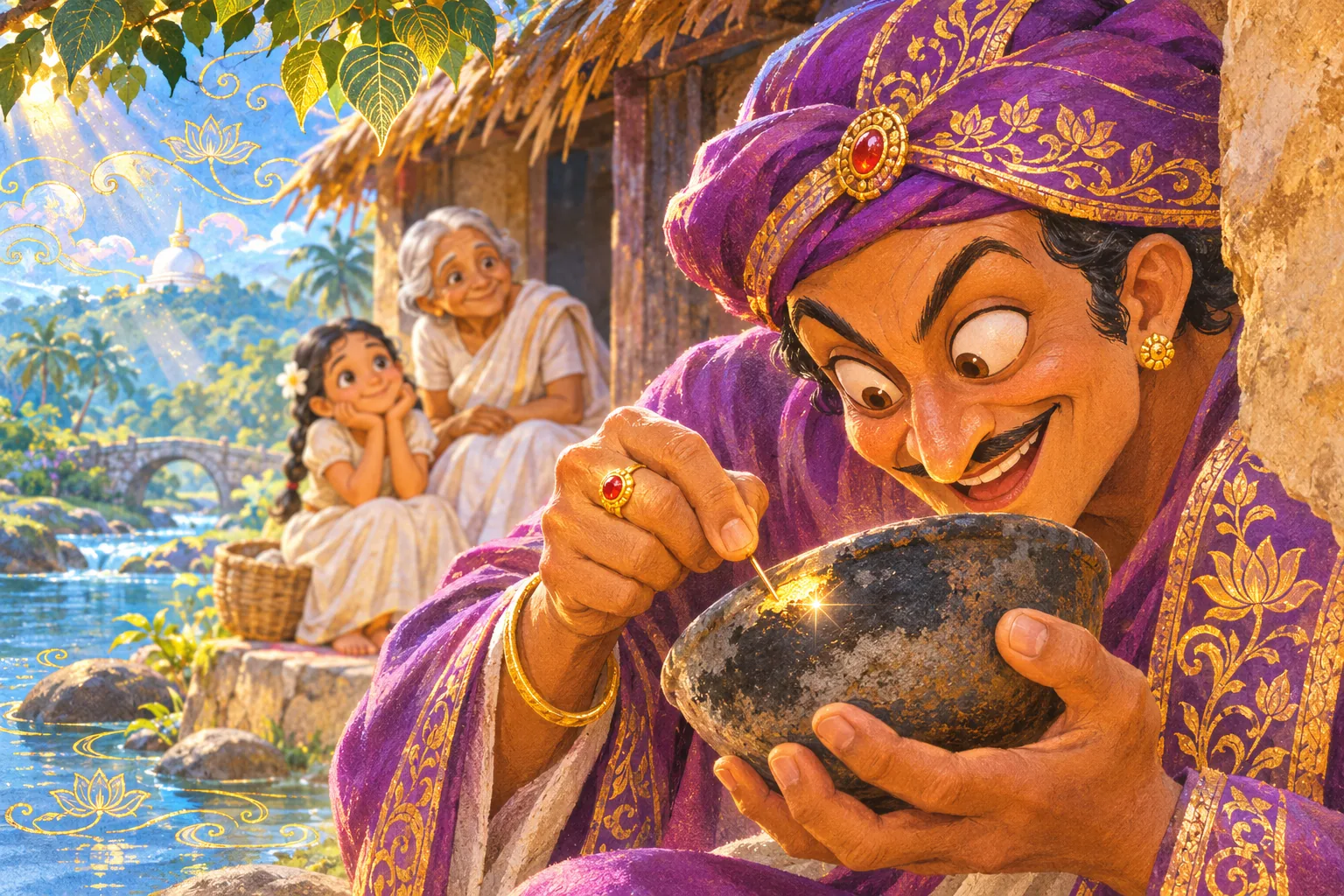
The merchant scratched the bowl with a needle and saw gold underneath. “I must trick them,” he thought.
වෙළෙන්දා ඉඳිකටුවකින් තැටිය සීරුවා. යටින් රත්තරන් පෙනුණා. “මට මේගොල්ලන්ව රවට්ටන්න ඕනෑ,” ඔහු හිතුවා.
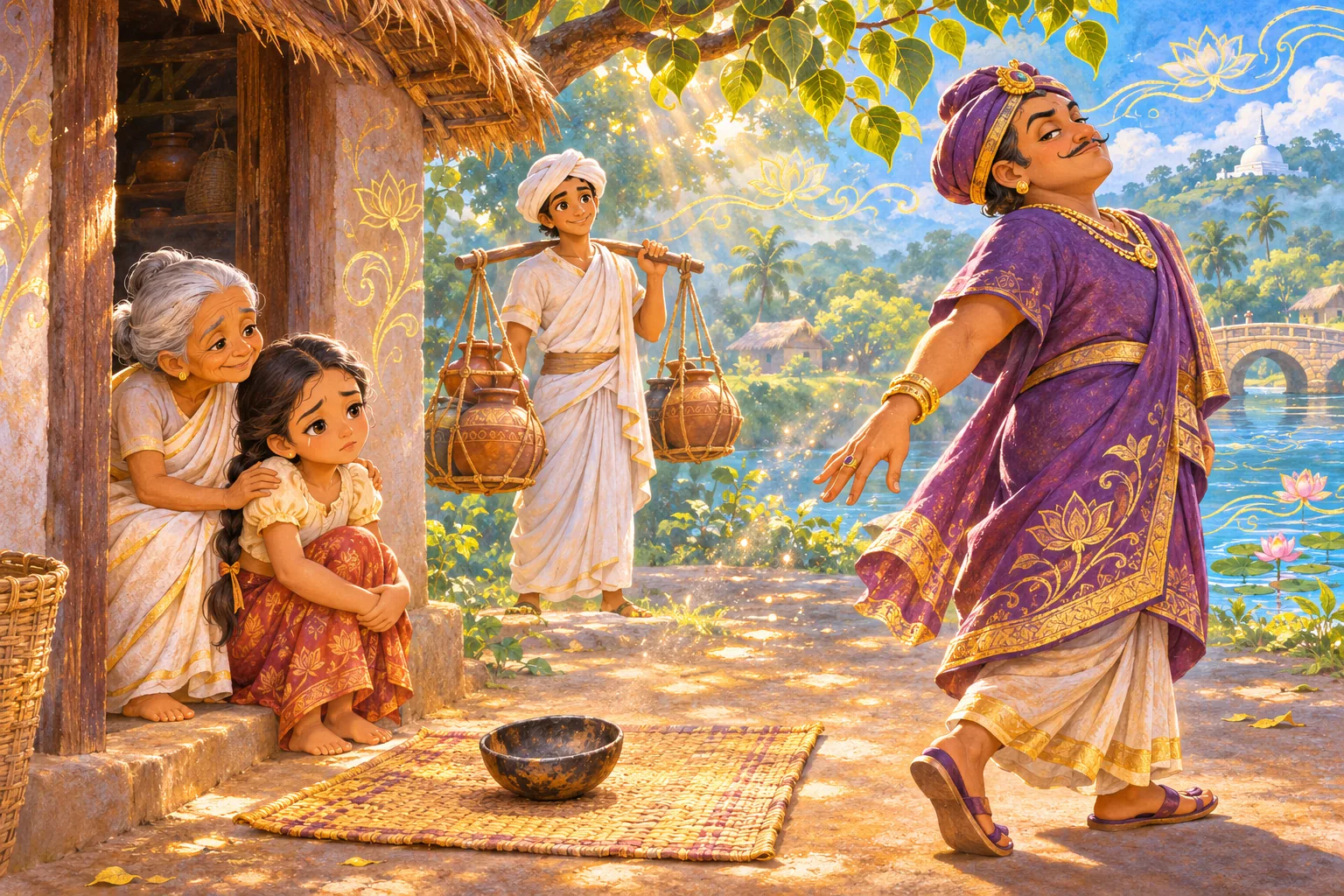
“This old thing? It’s worth nothing at all!” he said, and he threw it on the floor and walked away, planning to come back later and get it for almost nothing.
“මේ පරණ එකද? මේකට කිසිම වටිනාකමක් නැහැ!” ඔහු කියා, එය බිම විසි කර ඉවතට ගියා. පසුව ඇවිත් එය නොමිලේ වගේ ගන්න ඔහු සැලසුම් කළා.
The grandmother and the girl were sad.
ආච්චිට සහ ළමයාට දුක හිතුණා.
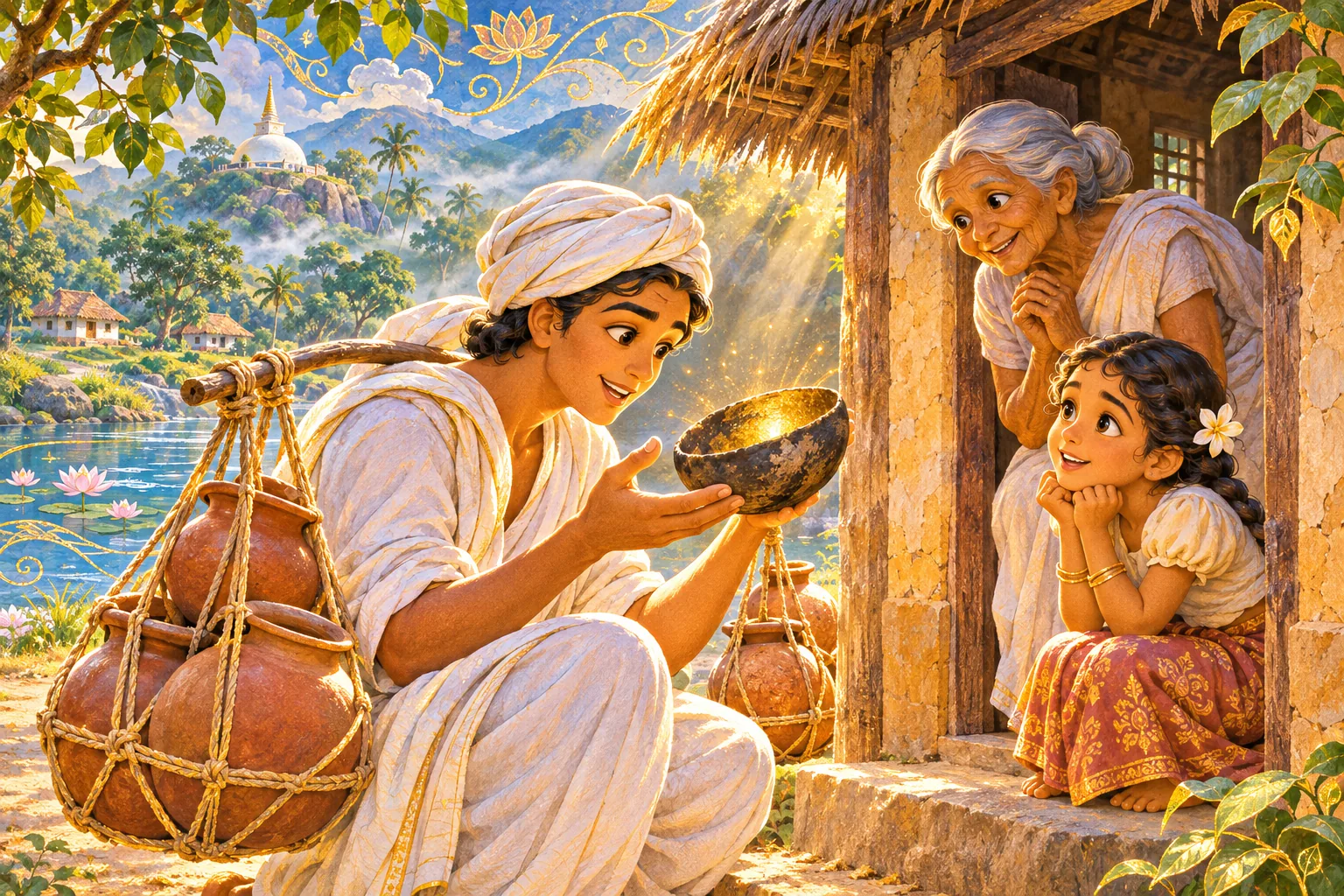
Later, the honest merchant came down the same street. The girl shyly showed him the old bowl.
පසුව අවංක වෙළෙන්දා එම වීදියටම ආවා. ගැහැනු ළමයා ලැජ්ජාවෙන් ඔහුට පරණ තැටිය පෙන්නුවා.
He looked closely and gasped. “Grandmother,” he said kindly, “this bowl is made of gold. It is worth a hundred thousand coins. I do not have enough money to pay what it is worth.”
ඔහු හොඳින් බලා විස්මයට පත් වුණා. “ආච්චියේ,” ඔහු කරුණාවෙන් කීවා, “මේ තැටිය රත්තරන්. මේකට කහවණු ලක්ෂයක් වටිනවා. මේකේ වටිනාකමට ගෙවන්න තරම් මුදල් මා ළඟ නැහැ.”
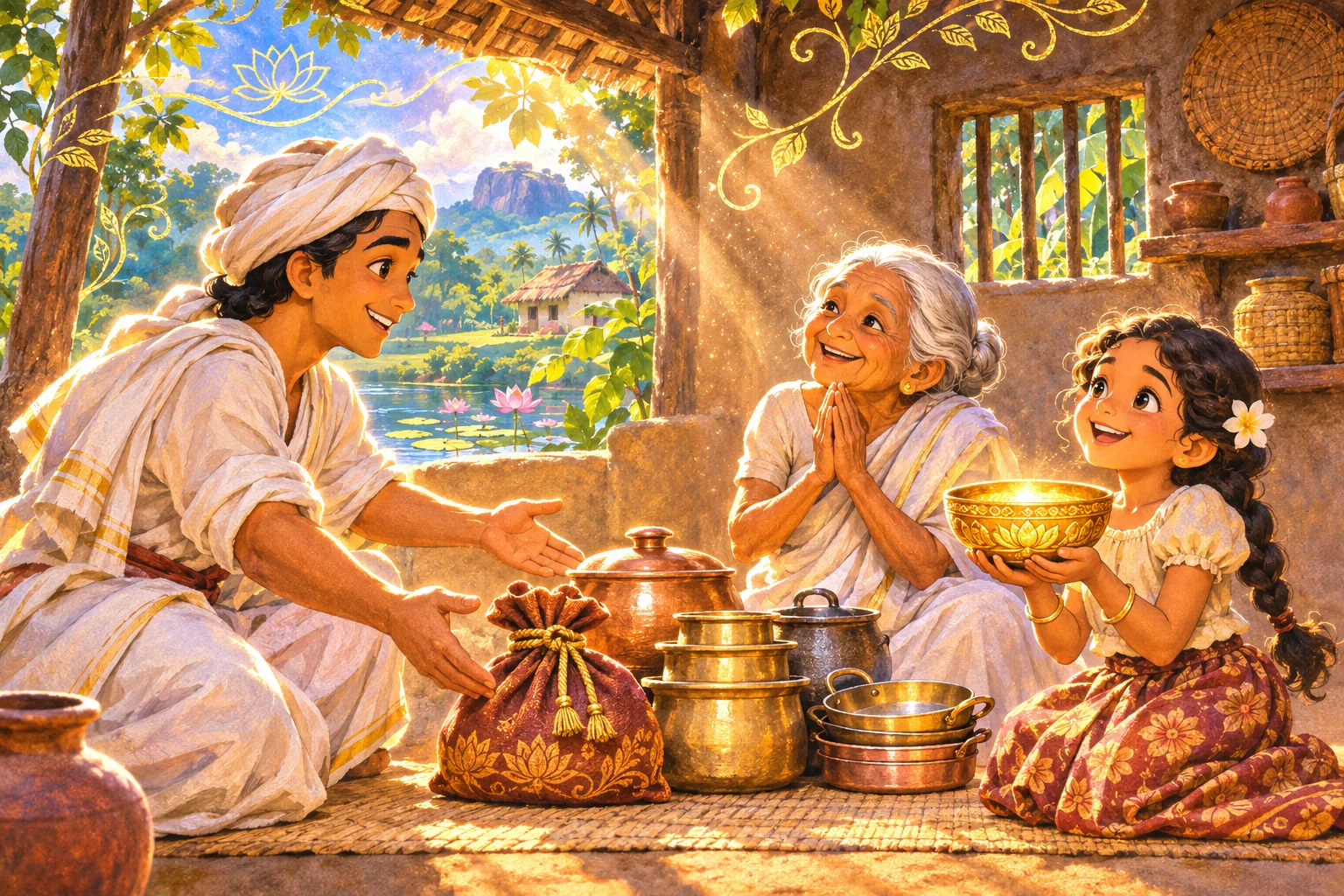
The grandmother was amazed. “The other man said it was worth nothing,” she said. “You are honest. Please take it, and give us whatever you can.”
ආච්චි විස්මයට පත් වුණා. “අනිත් මිනිසා කීවේ මේකට කිසිම වටිනාකමක් නැහැ කියලා,” ඇය කීවා. “ඔබ අවංකයි. කරුණාකර මේක අරන්, ඔබට පුළුවන් දෙයක් අපට දෙන්න.”
So the honest merchant gave them all the money he had, and all his pots and pans too, keeping only eight coins for his journey home.
ඉතින් අවංක වෙළෙන්දා තමා ළඟ තිබූ සියලු මුදල් සහ සියලු භාජනත් ඔවුන්ට දී, ගෙදර යන ගමනට කහවණු අටක් පමණක් තබා ගත්තා.
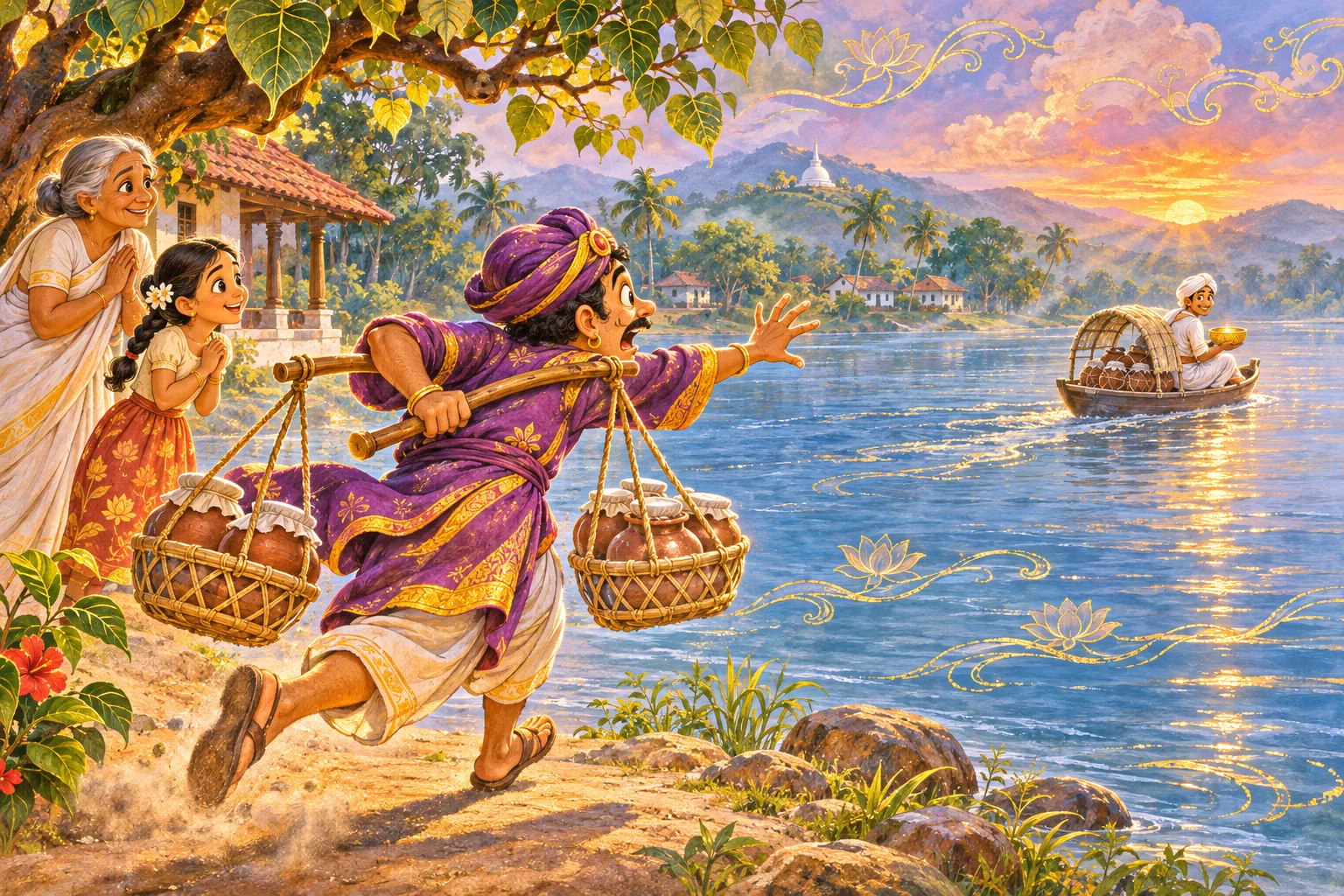
Soon after, the greedy merchant came hurrying back. “Give me that worthless old bowl,” he said.
ටික වේලාවකින් කෑදර වෙළෙන්දා ඉක්මනින් ආපසු ආවා. “ඒ වැඩකට නැති පරණ තැටිය මට දෙන්න,” ඔහු කීවා.
“The honest merchant has bought it,” said the grandmother, “and paid us well.” The greedy man rushed to the river, but the honest merchant’s boat was already far away.
“අවංක වෙළෙන්දා එය මිලදී අරන්, අපට හොඳට ගෙව්වා,” ආච්චි කීවා. කෑදර මිනිසා ගඟට දිව ගියා. නමුත් අවංක වෙළෙන්දාගේ ඔරුව දැනටමත් ඈතට ගිහින්.

The greedy merchant had lost everything by trying to cheat. The honest merchant went home happy, and the grandmother and the girl had enough to live well for the rest of their lives.
වංචා කරන්න ගිහින් කෑදර වෙළෙන්දාට සියල්ල අහිමි වුණා. අවංක වෙළෙන්දා සතුටින් ගෙදර ගියා. ආච්චිට සහ ළමයාට තම ජීවිත කාලය පුරාම හොඳින් ජීවත් වෙන්න ඇති තරම් මුදල් ලැබුණා.
Honesty had made everyone richer, except the one who would not be honest.
අවංක වීමට අකමැති වූ තැනැත්තා හැර, අවංකභාවය හැමෝම ධනවත් කළා.
Who was who?
The Buddha told this story to encourage a monk who was about to give up his practice. The honest merchant was the Bodhisatta, and the greedy merchant was Devadatta.
The lesson
Be honest, even when no one would know. Cheating others in the end cheats yourself.
Let's talk
- What did the greedy merchant say about the bowl?
- What did the honest merchant do?
- Why is it important to be honest?
කවුද කවුරුන් වූයේ?
තම පුහුණුව අත්හැරීමට සූදානම් වූ භික්ෂුවක් දිරිමත් කිරීමට බුදුරජාණන් වහන්සේ මේ කතාව වදාළා. අවංක වෙළෙන්දා වූයේ බෝසතාණන් වහන්සේයි. කෑදර වෙළෙන්දා දේවදත්ත විය.
පාඩම
කිසිවෙකු නොදැන සිටියත් අවංක වන්න. අන් අයට වංචා කිරීම අවසානයේ තමාටම වංචා කිරීමකි.
අපි කතා කරමු
- කෑදර වෙළෙන්දා තැටිය ගැන කීවේ මොකක්ද?
- අවංක වෙළෙන්දා කළේ මොකක්ද?
- අවංක වීම වැදගත් ඇයි?
Retold for children by Fablewings from the Serivāṇija Jātaka (Jātaka No. 3; English translation ed. E. B. Cowell, vol. I, 1895, public domain) and the Sinhala Pansiya Panas Jātaka tradition. Illustrations made with AI assistance for Fablewings.