What Brings Good Luck?
වාසනාව ගෙනෙන්නේ මොකක්ද?
Mahāmaṅgala Jātaka (No. 453) · මහාමංගල ජාතකය (අංක 453)
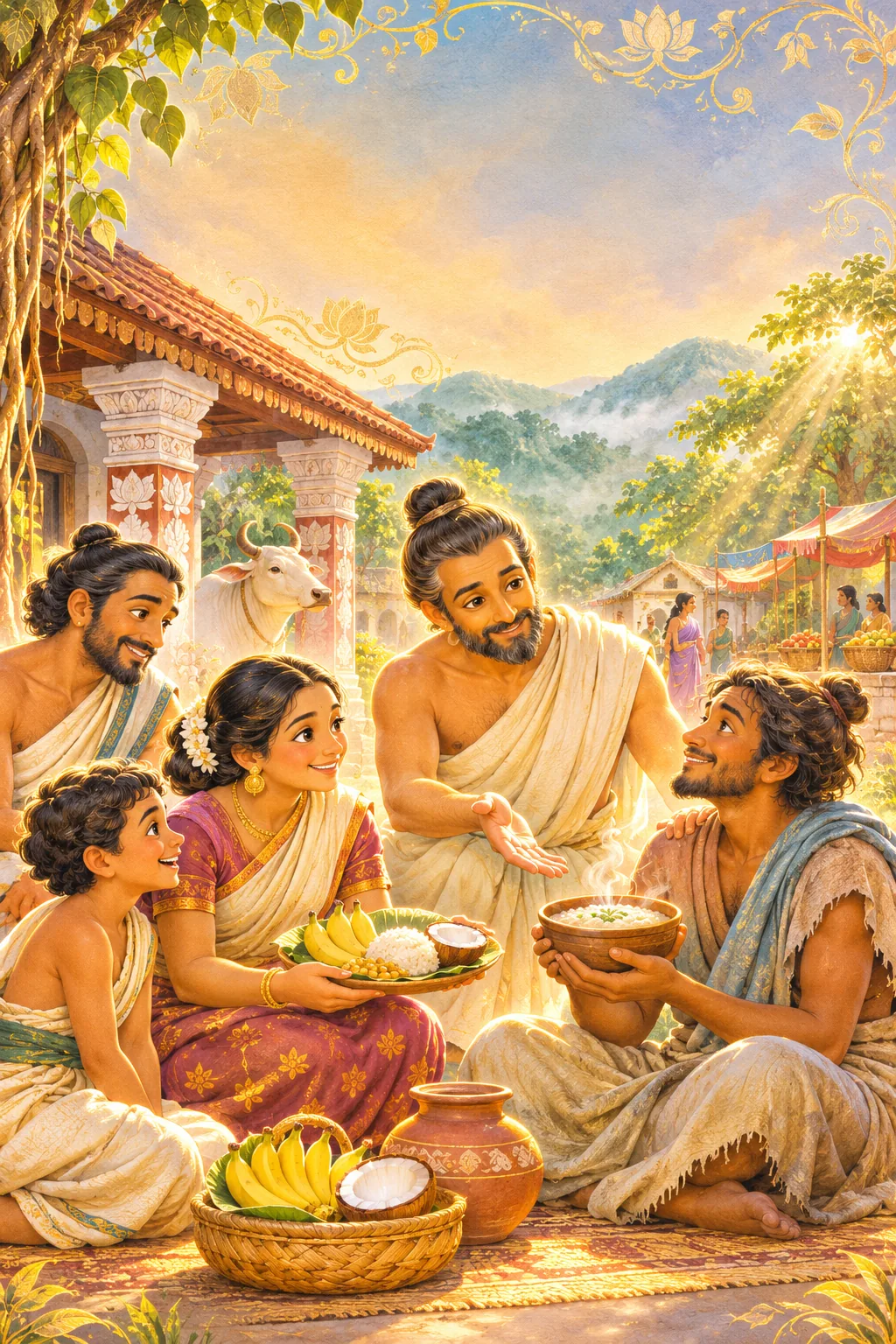
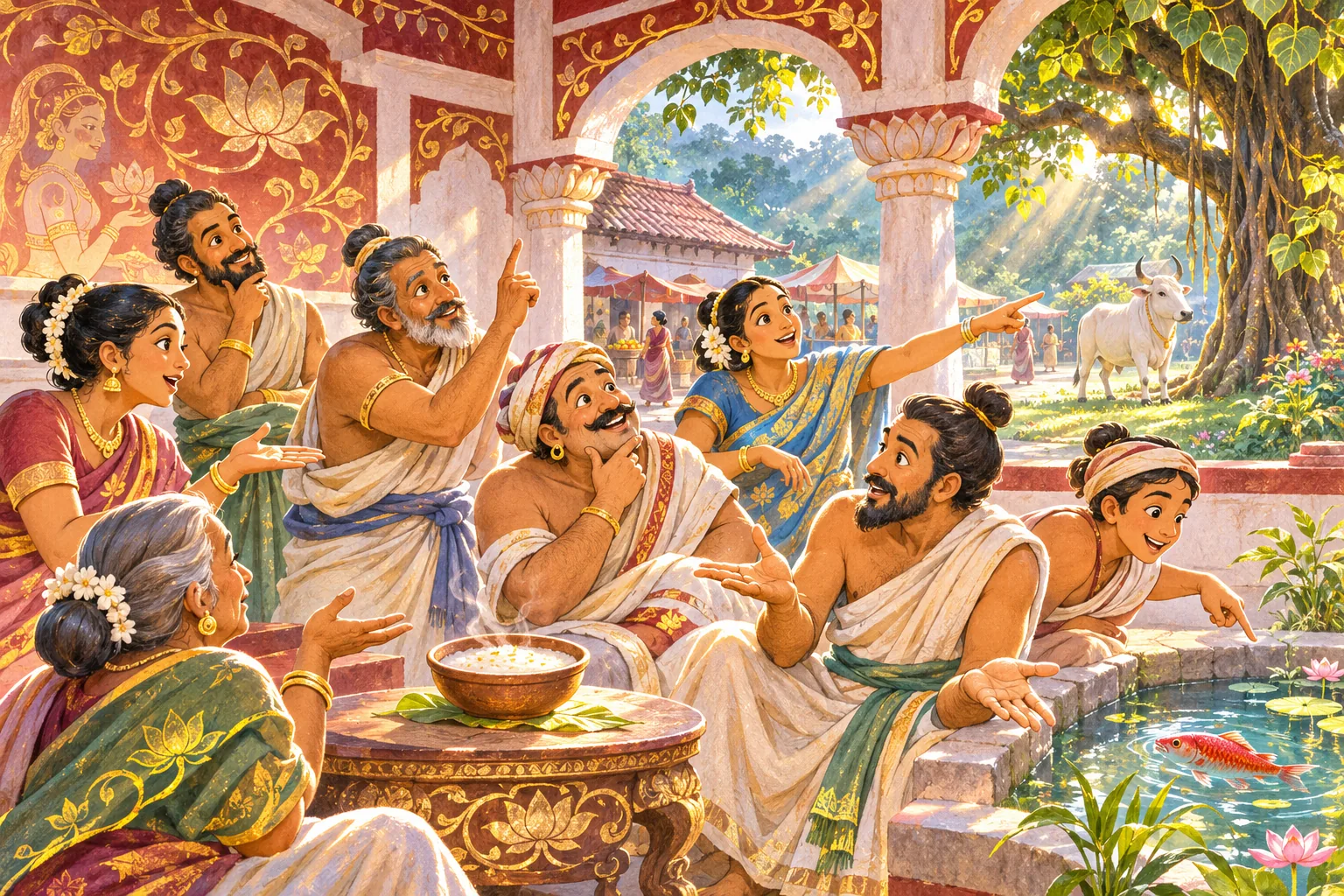
Long ago, in a royal rest house, a group of townspeople began to argue. “What is a sign of good luck?” one asked. Nobody could agree.
බොහෝ කලකට පෙර, රාජකීය විශ්රාම ශාලාවක නගරවාසීන් පිරිසක් වාද කරන්න පටන් ගත්තා. “වාසනාවේ ලකුණ මොකක්ද?” එක් අයෙක් ඇසුවා. කාටවත් එකඟ වෙන්න බැරි වුණා.
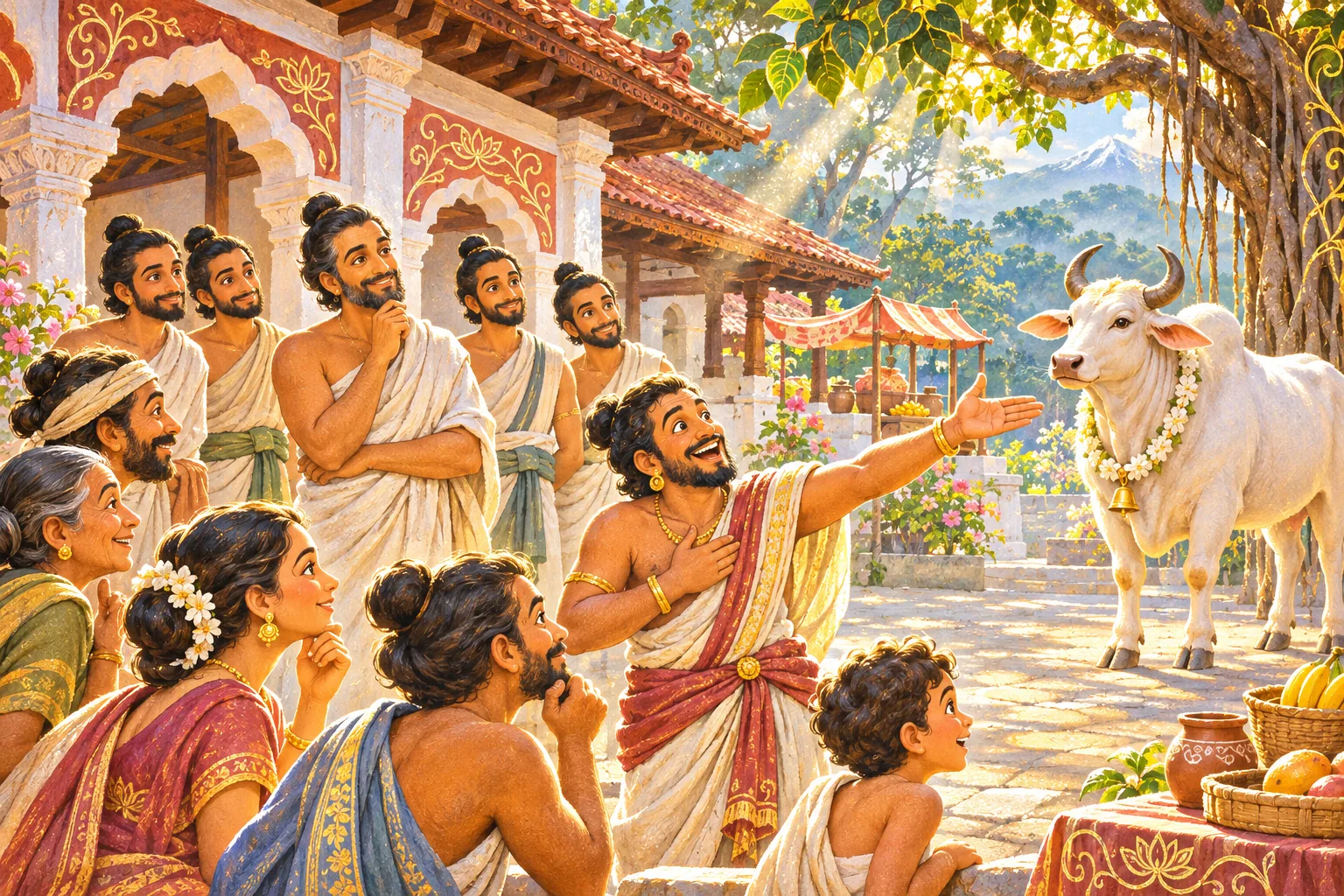
One man pointed. “Seeing something special brings luck, like a white bull, a red fish or a bowl of rice porridge!”
එක් මිනිසෙක් ඇඟිල්ල දිගු කළා. “විශේෂ දෙයක් දැකීමෙන් වාසනාව ලැබෙනවා, සුදු ගොනෙක්, රතු මාළුවෙක් හෝ කිරිබත් පිඟානක් වගේ!”
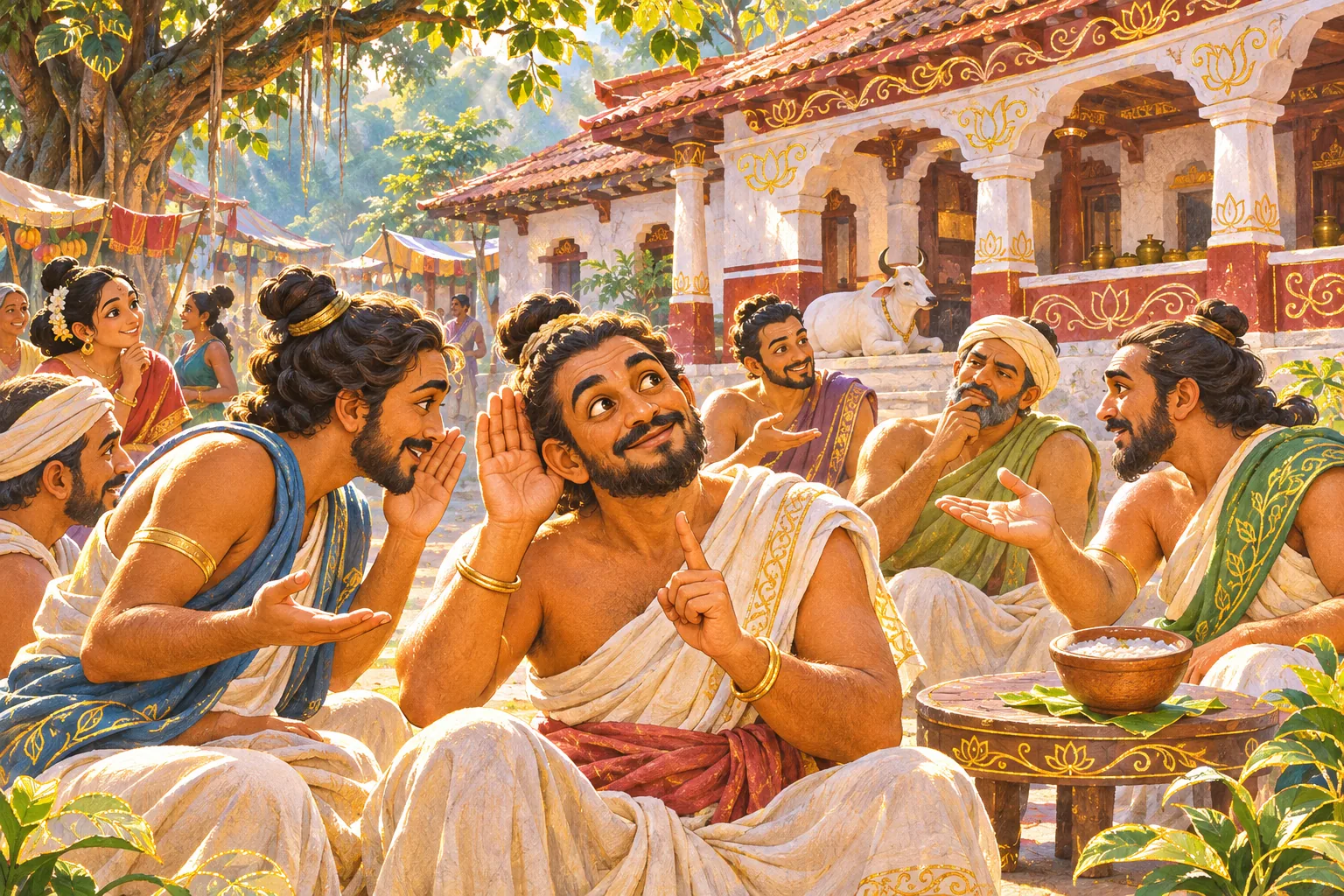
“No,” said another, cupping his ear. “Hearing a lucky word, like ‘growing’ or ‘plenty’, brings luck!”
“නැහැ,” තවත් කෙනෙක් කනට අත තියාගෙන කීවා. “‘වැඩෙනවා’ හෝ ‘බොහෝ’ වගේ වාසනාවන්ත වචනයක් ඇසීමෙන් වාසනාව ලැබෙනවා!”
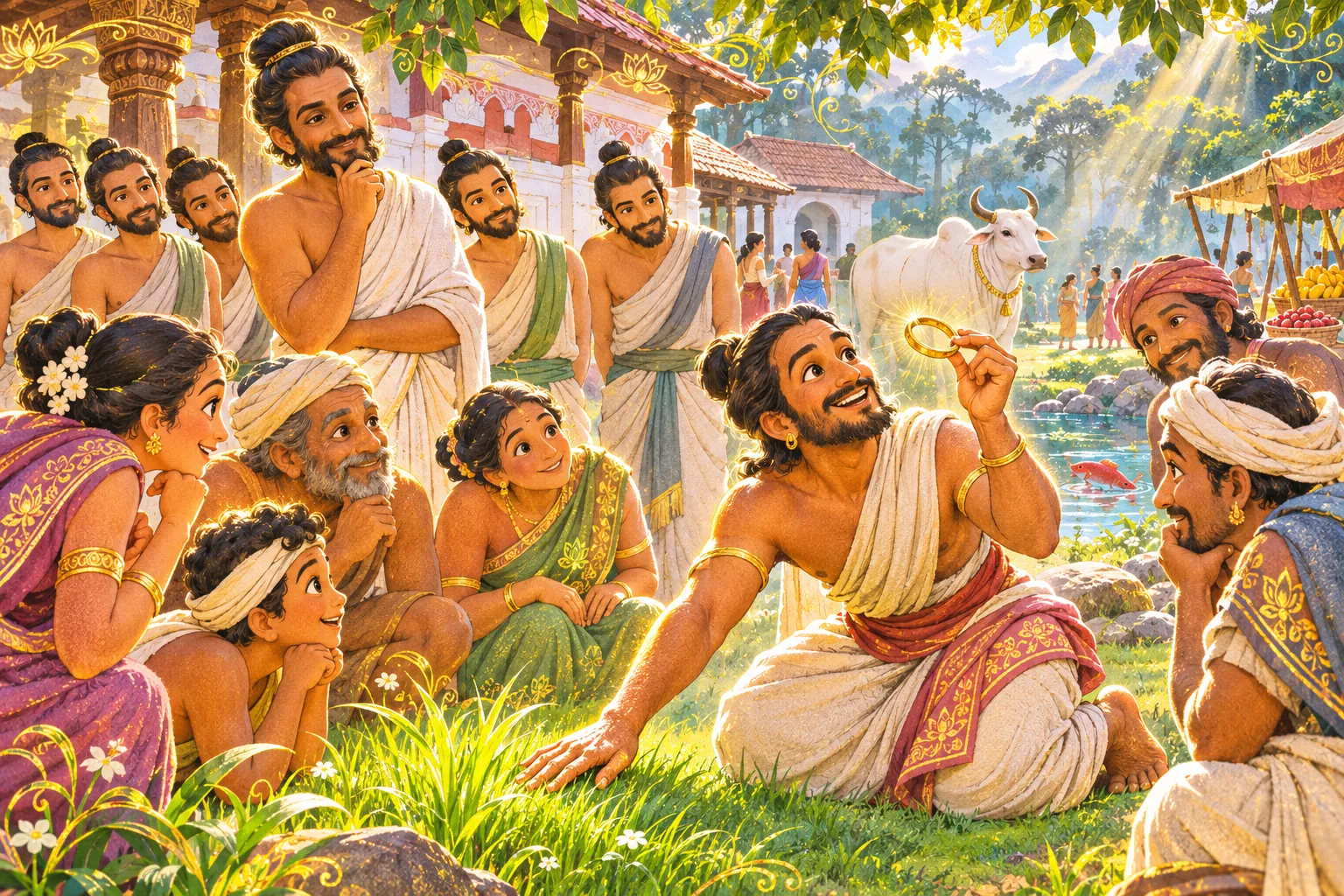
“You’re both wrong!” said a third, touching some green grass. “Touching something lucky, like fresh grass or gold, brings luck!”
“ඔයාලා දෙන්නම වැරදියි!” තුන්වැන්නෙක් කොළ පාට තණකොළ ස්පර්ශ කරමින් කීවා. “නැවුම් තණකොළ හෝ රත්තරන් වගේ වාසනාවන්ත දෙයක් ස්පර්ශ කිරීමෙන් වාසනාව ලැබෙනවා!”
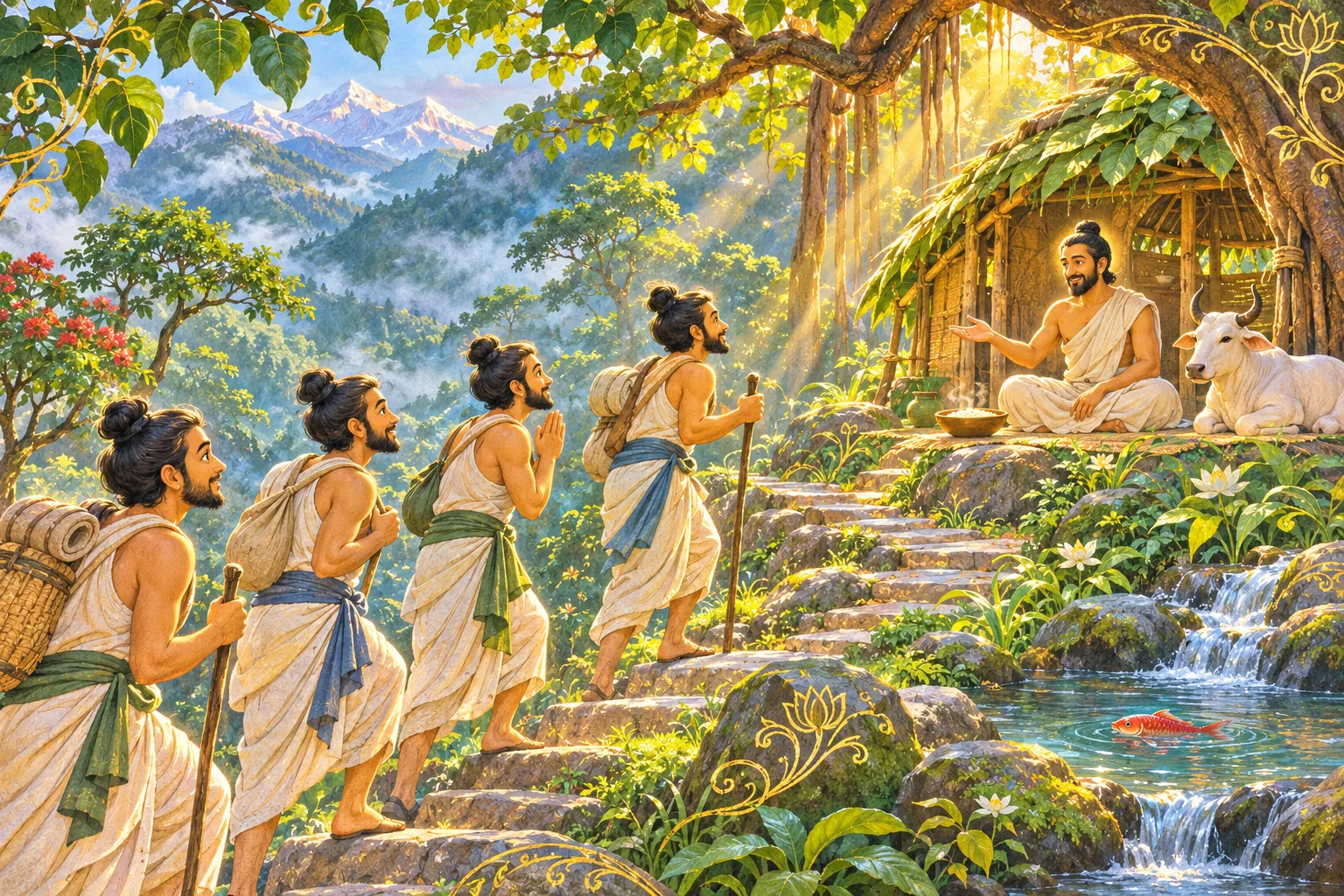
Some young students of a wise hermit were staying nearby. They didn’t know the answer either, so they travelled up into the mountains to ask their teacher.
නුවණැති තවුසෙකුගේ තරුණ ශිෂ්යයන් කීපදෙනෙක් අසල නතර වෙලා හිටියා. ඔවුන්ටත් පිළිතුර දැනගෙන හිටියේ නැති නිසා, තම ගුරුවරයාගෙන් අහන්න ඔවුන් කඳුකරයට ගියා.
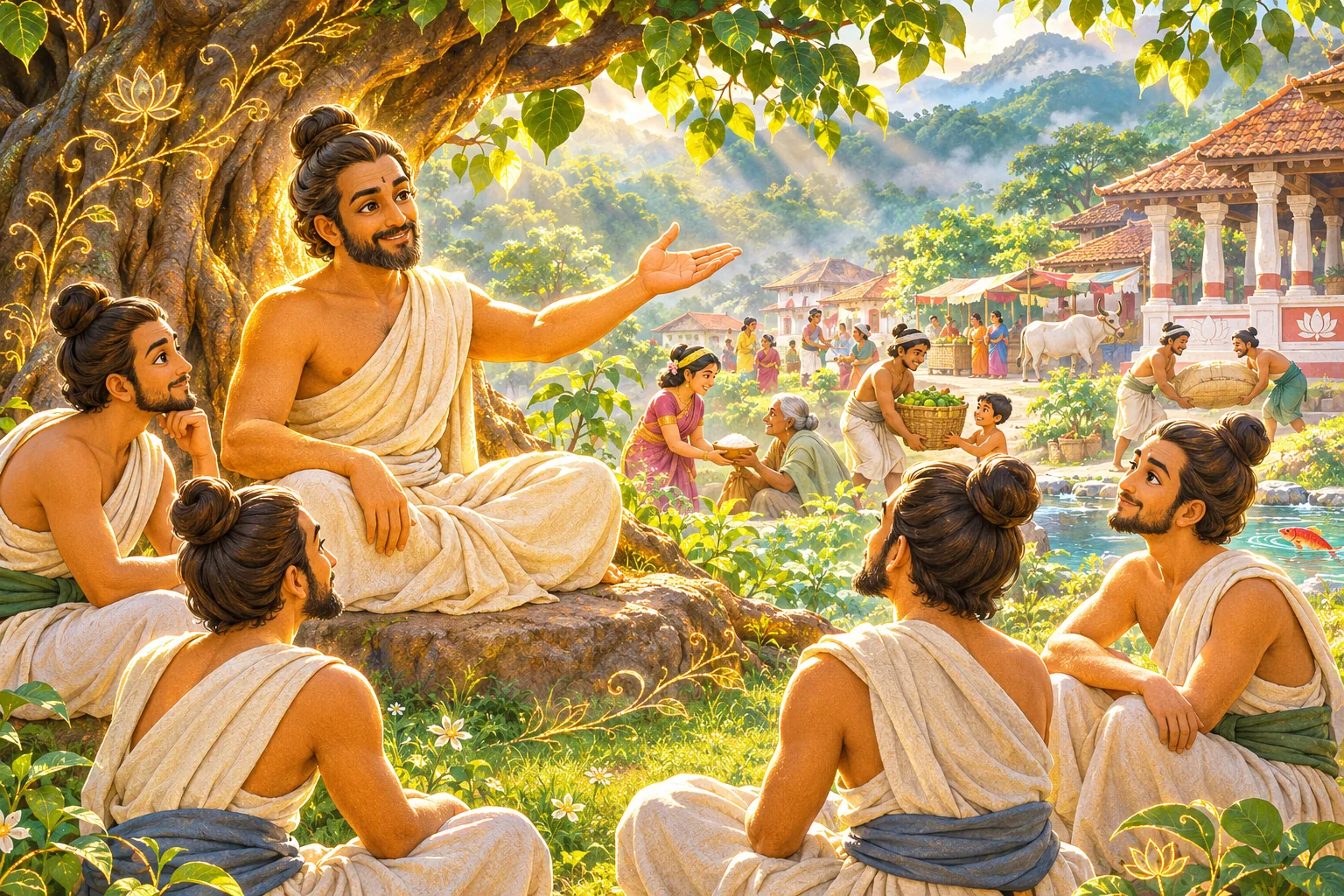
The wise hermit smiled. “Good luck doesn’t come from what we see, hear or touch,” he said. “It comes from how we live.”
නුවණැති තවුසා සිනාසුණා. “වාසනාව ලැබෙන්නේ අප දකින, අසන හෝ ස්පර්ශ කරන දෙයින් නෙවෙයි,” ඔහු කීවා. “ඒක ලැබෙන්නේ අප ජීවත් වන ආකාරයෙන්.”
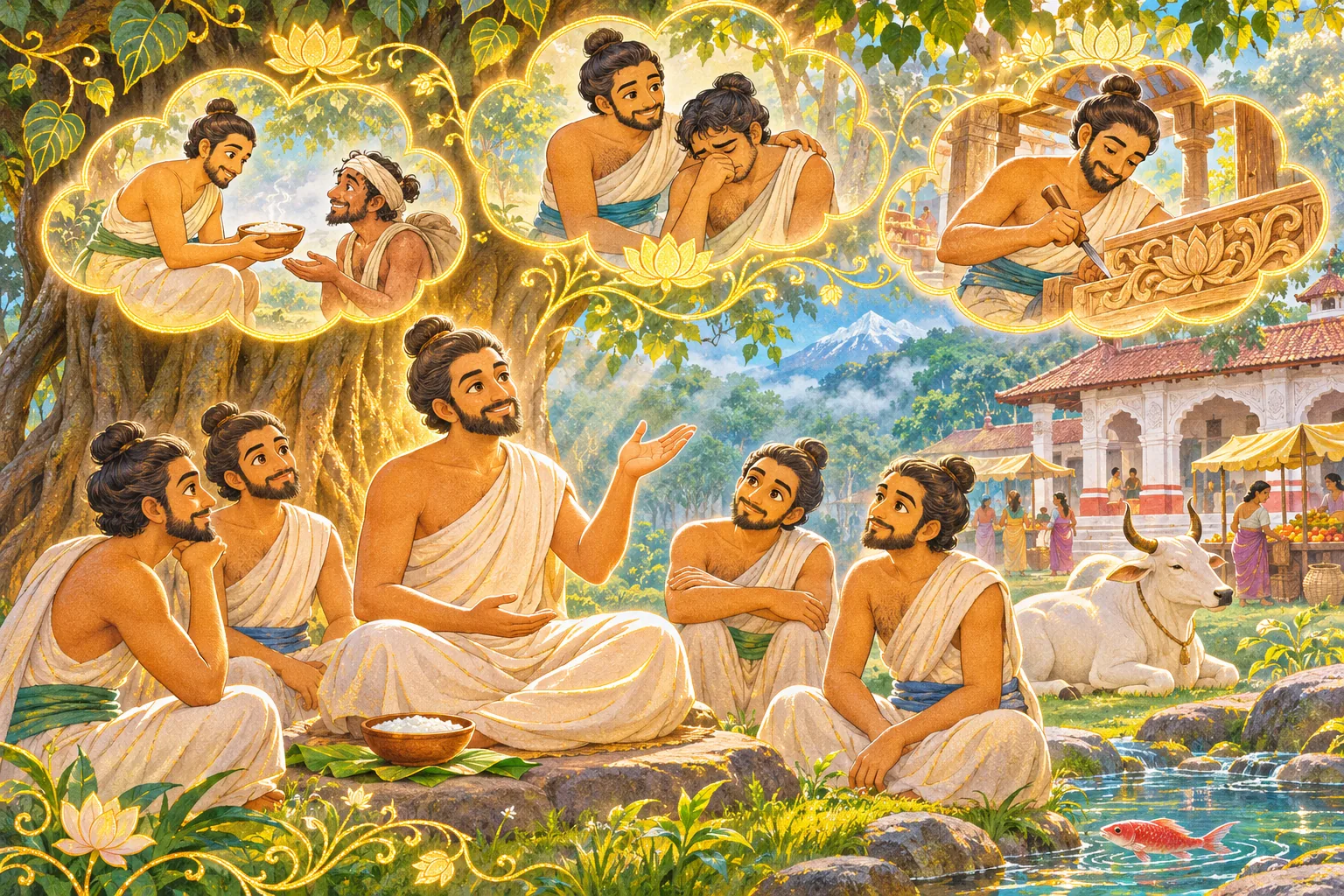
“Respecting kind people, being humble with friends, sharing generously, bringing joy to others and trying hard to be good: these are the true blessings.”
“කාරුණික අයට ගෞරව කිරීම, යාළුවන් සමඟ නිහතමානී වීම, ත්යාගශීලීව බෙදාගැනීම, අනිත් අයට සතුට ගෙන ඒම සහ හොඳ වෙන්න මහන්සි වීම: මේ තමයි සැබෑ මංගල.”
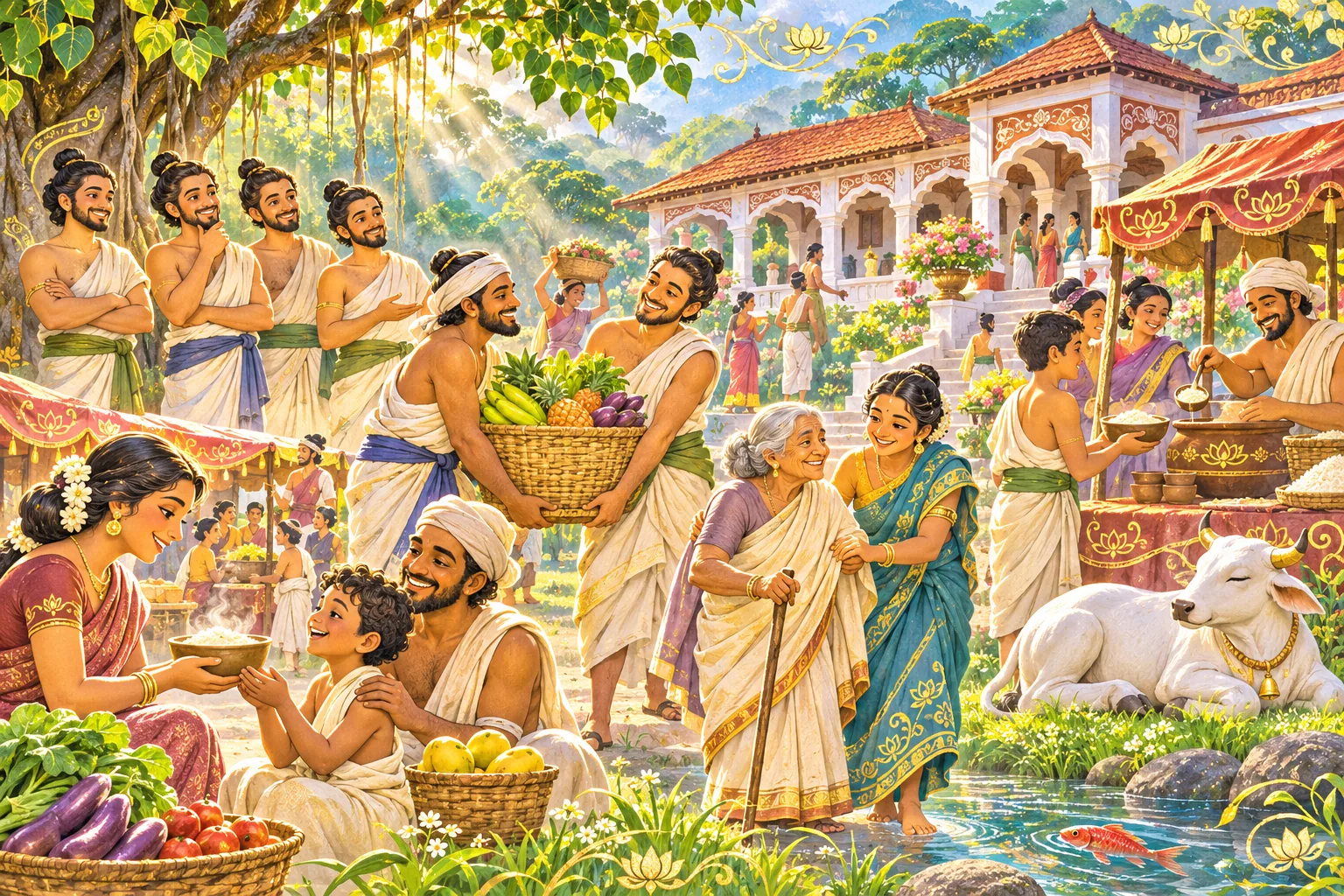
The students hurried back and shared his words. The townspeople stopped arguing and began helping one another, and they found their lives filled with good luck.
ශිෂ්යයෝ ඉක්මනින් ආපසු ගිහින් ඔහුගේ වචන බෙදාගත්තා. නගරවාසීන් වාද කිරීම නවත්වලා එකිනෙකාට උදව් කරන්න පටන් ගත්තා. ඔවුන්ගේ ජීවිත වාසනාවෙන් පිරුණා.
Who was who?
In the story, the wise hermit was the Bodhisatta, the Buddha in one of his past lives. The Buddha later taught the famous Maṅgala Sutta (Discourse on Blessings), which lists thirty-eight true blessings.
The lesson
Good fortune doesn't come from lucky signs. It grows from kindness, generosity, humility and trying to do good.
Let's talk
- What did the townspeople argue about?
- What did the wise hermit say brings real good luck?
- Which of the true blessings could you practise today?
කවුද කවුරුන් වූයේ?
කතාවේ නුවණැති තවුසා බෝසතාණන් වහන්සේ, එනම් පෙර ආත්මයක බුදුරජාණන් වහන්සේයි. පසුව බුදුරජාණන් වහන්සේ සැබෑ මංගල තිස් අටක් සඳහන් කරන ප්රසිද්ධ මංගල සූත්රය දේශනා කළා.
පාඩම
වාසනාව ලැබෙන්නේ වාසනාවන්ත ලකුණුවලින් නෙවෙයි. ඒක වැඩෙන්නේ කරුණාව, ත්යාගශීලීකම, නිහතමානීකම සහ හොඳ දේ කරන්න උත්සාහ කිරීමෙන්.
අපි කතා කරමු
- නගරවාසීන් වාද කළේ මොනවා ගැනද?
- සැබෑ වාසනාව ගෙනෙනවා කියා නුවණැති තවුසා කීවේ මොනවාද?
- අද ඔබට පුරුදු කරන්න පුළුවන් සැබෑ මංගලය මොකක්ද?
Retold for children by Fablewings from the Mahāmaṅgala Jātaka (Jātaka No. 453; English translation ed. E. B. Cowell, vol. IV, 1901, public domain) and the Sinhala Pansiya Panas Jātaka tradition. Illustrations made with AI assistance for Fablewings.