The Bowl of Sour Gruel
ඇඹුල් කැඳ පාත්රය
Kummāsapiṇḍa Jātaka (No. 415) · කුම්මාසපිණ්ඩ ජාතකය (අංක 415)
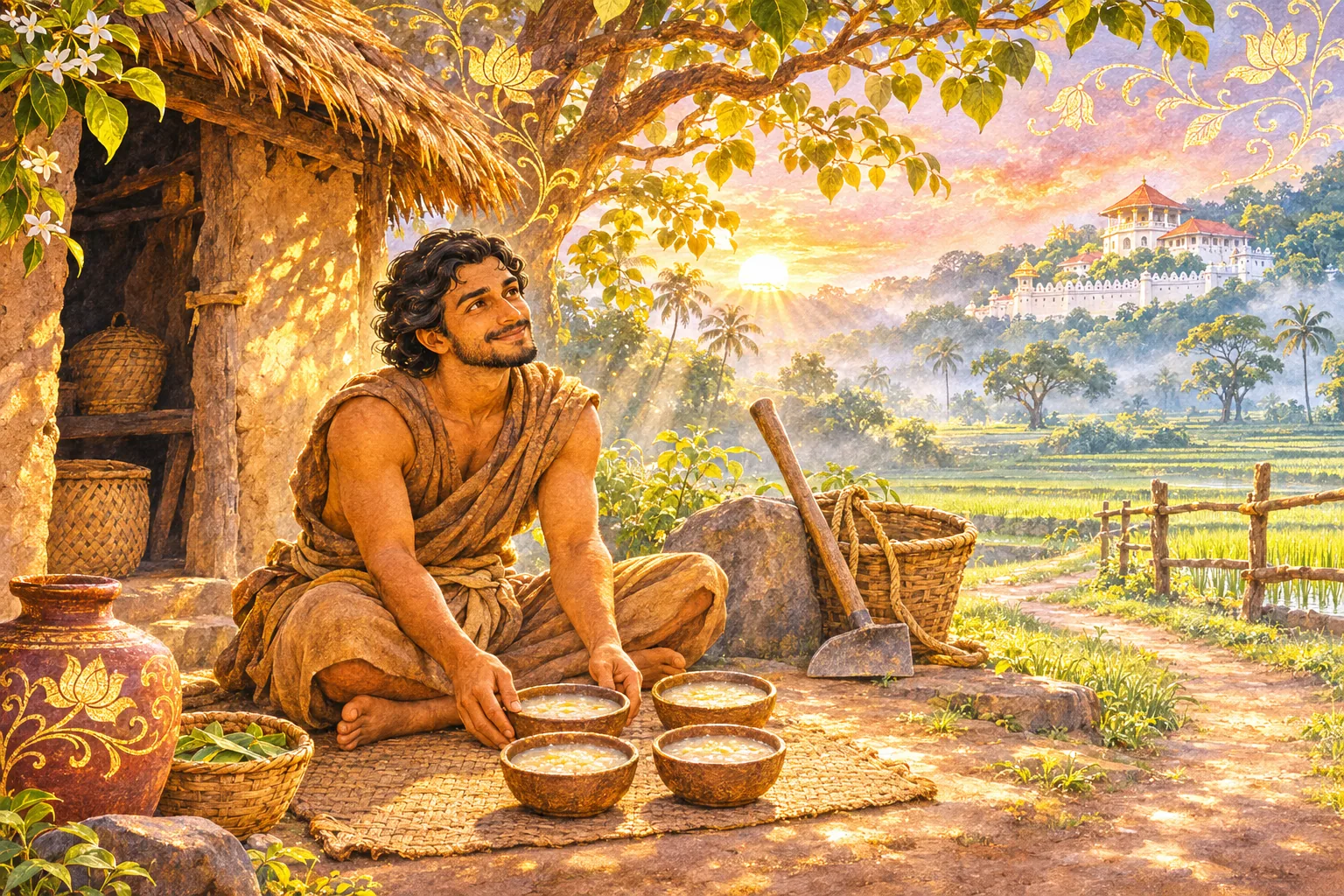
Long ago, a poor labourer had only four small bowls of plain sour gruel to eat before a long day’s work in the fields.
බොහෝ කලකට පෙර, දුප්පත් කම්කරුවෙකුට කෙත්වල දිගු දවසක වැඩට කලින් කන්න තිබුණේ නිකම් ඇඹුල් කැඳ පුංචි පාත්ර හතරක් විතරයි.
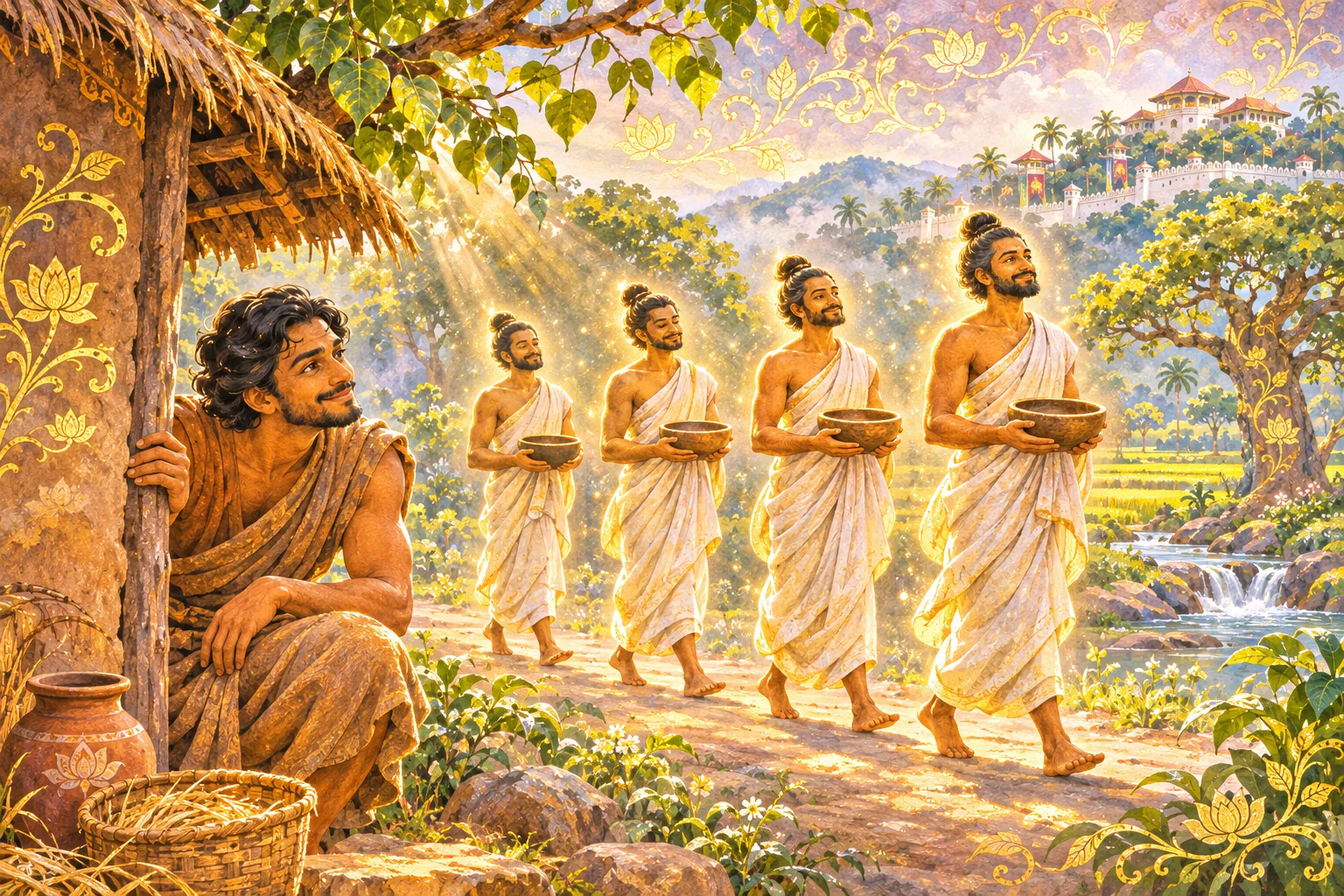
As he sat down to eat, he saw four calm holy wanderers, Pacceka Buddhas, walking past with empty bowls.
ඔහු කන්න ඉඳගන්න කොට, හිස් පාත්ර අරගෙන යන සන්සුන් ශුද්ධ සංචාරකයන් හතර දෙනෙක්, පසේබුදුවරුන්, ඔහු දැක්කා.
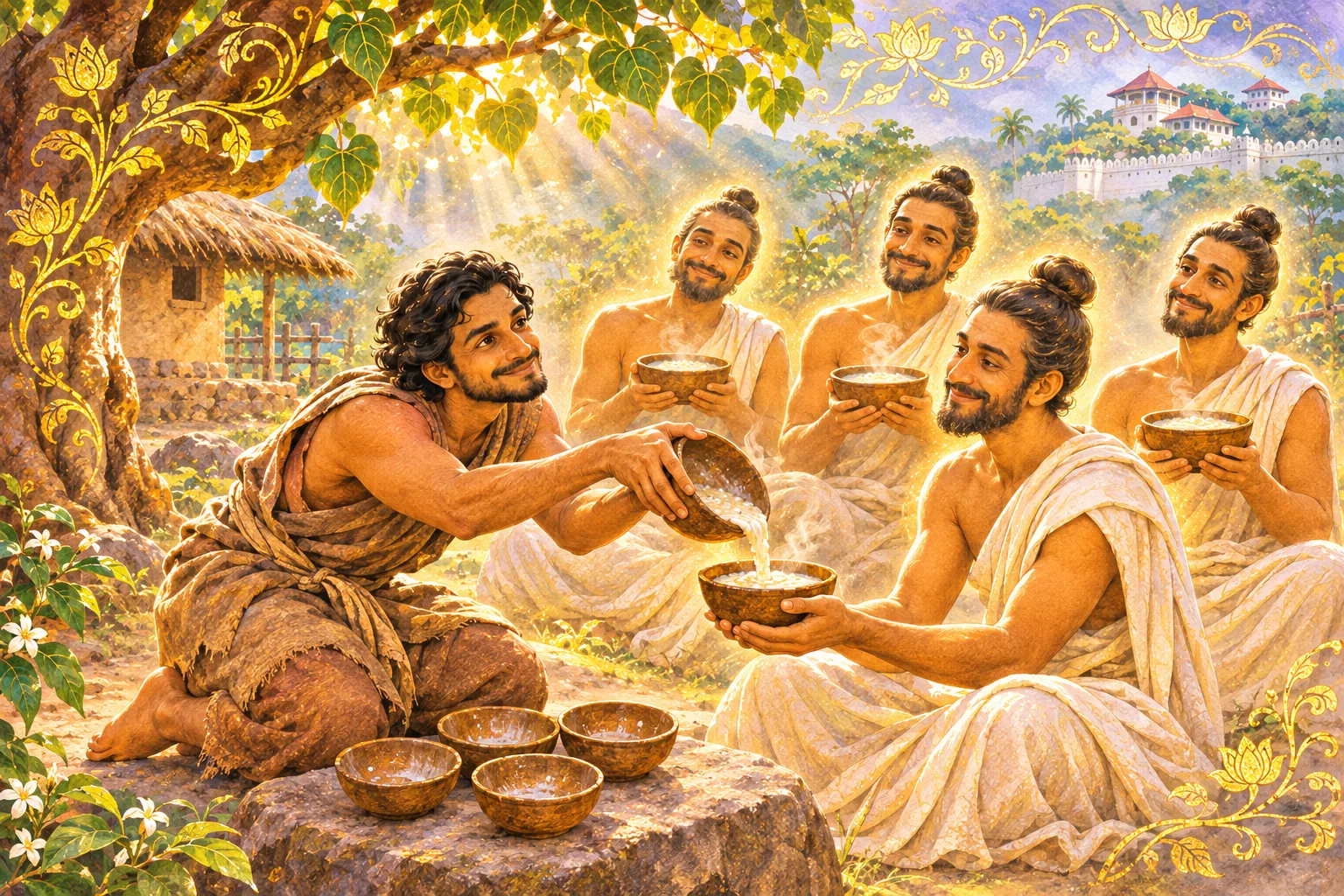
Without a second thought, he poured his gruel into their bowls, all four portions, and happily went to work without breakfast.
දෙවරක් නොසිතා, ඔහු තම කැඳ, කොටස් හතරම, ඔවුන්ගේ පාත්රවලට වත් කර, උදේ කෑම නැතිව සතුටින් වැඩට ගියා.
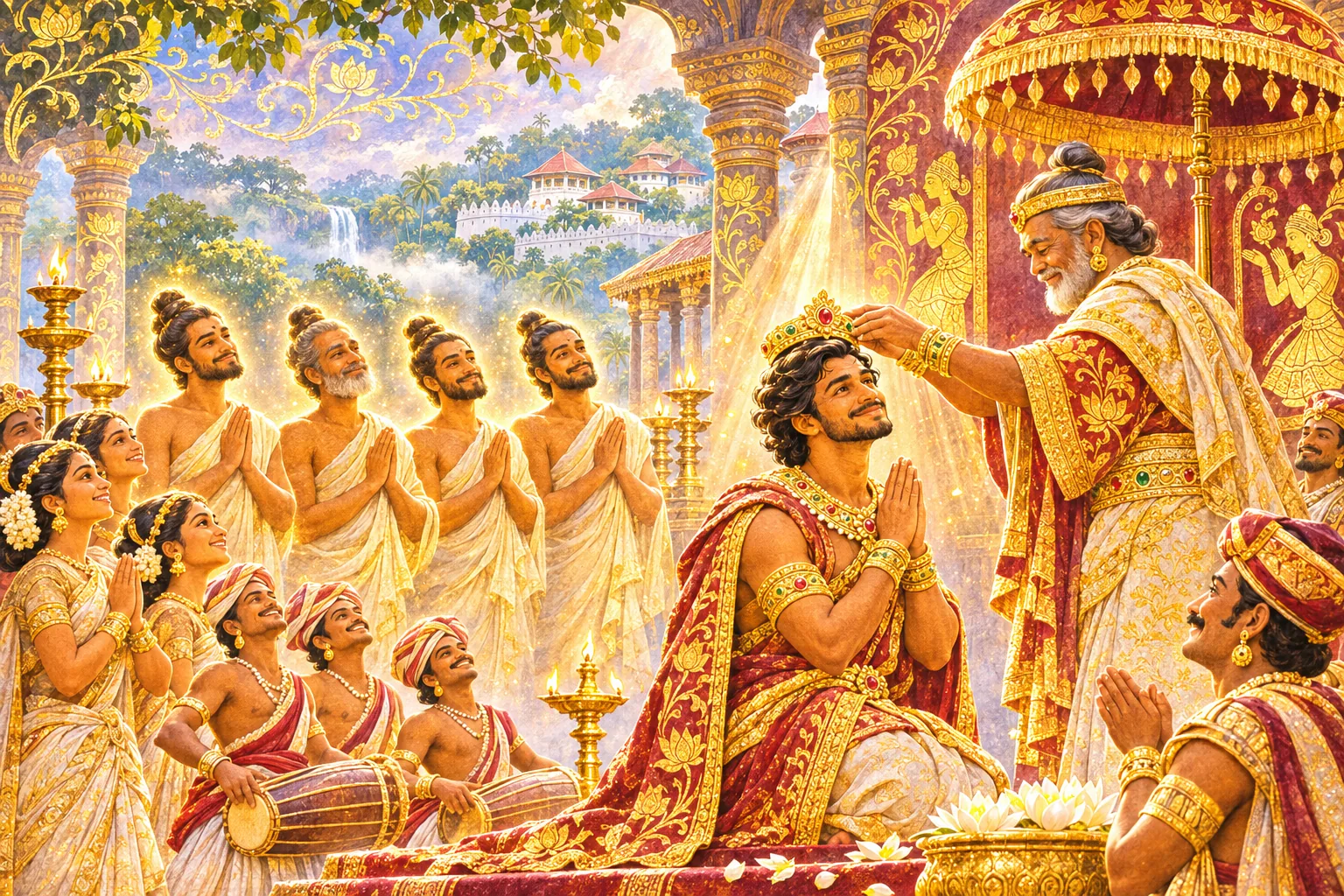
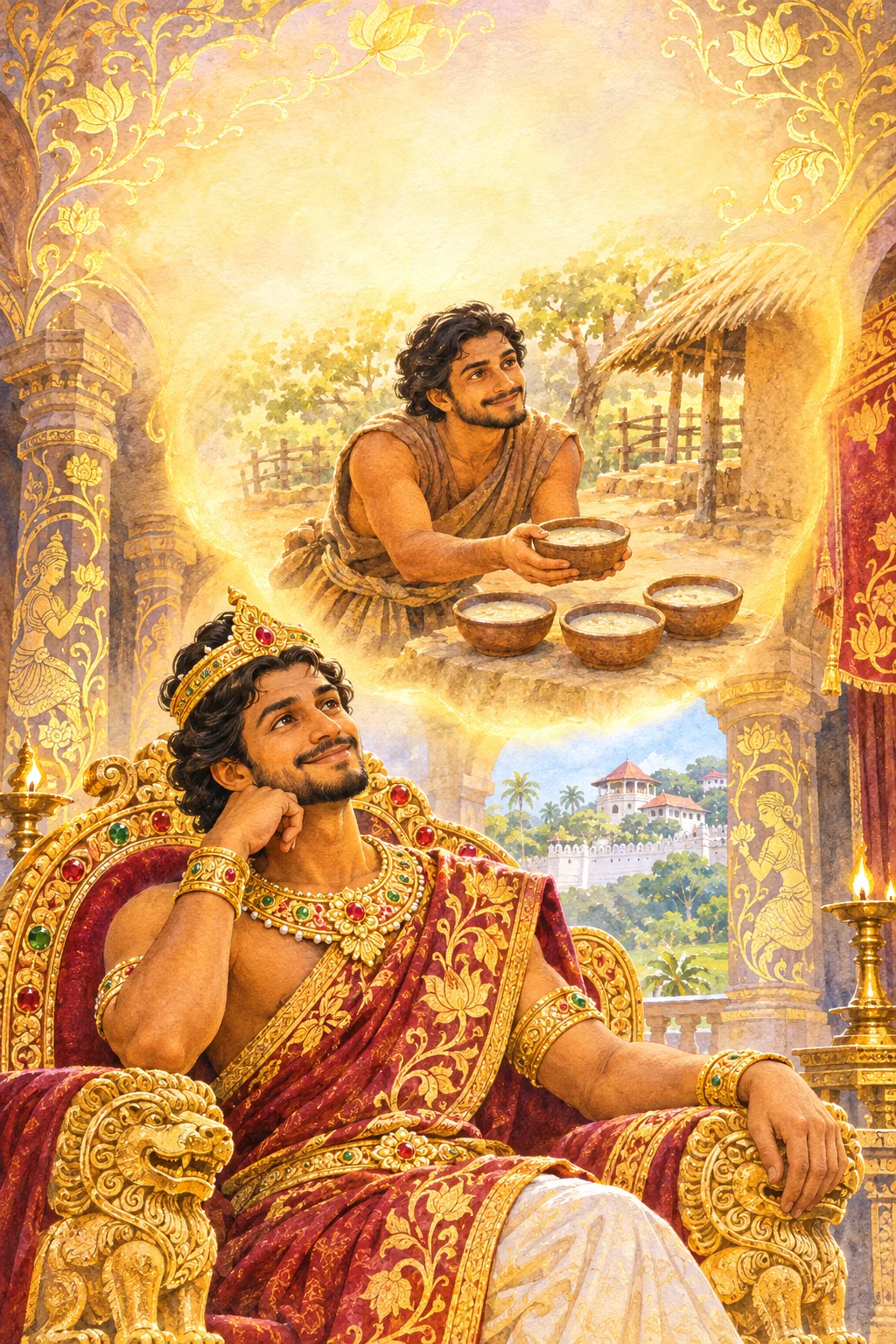
Many years later, in another life, that same kind man was born a prince and became a king. At his grand coronation, the palace glittered with gold and jewels.
බොහෝ කාලෙකට පස්සේ, වෙනත් ජීවිතයක, ඒ කාරුණික මිනිසාම කුමාරයෙක් ලෙස ඉපිද රජ වුණා. ඔහුගේ මහා රාජාභිෂේකයේදී මාලිගය රත්තරන් සහ මැණික්වලින් දිලිසුණා.
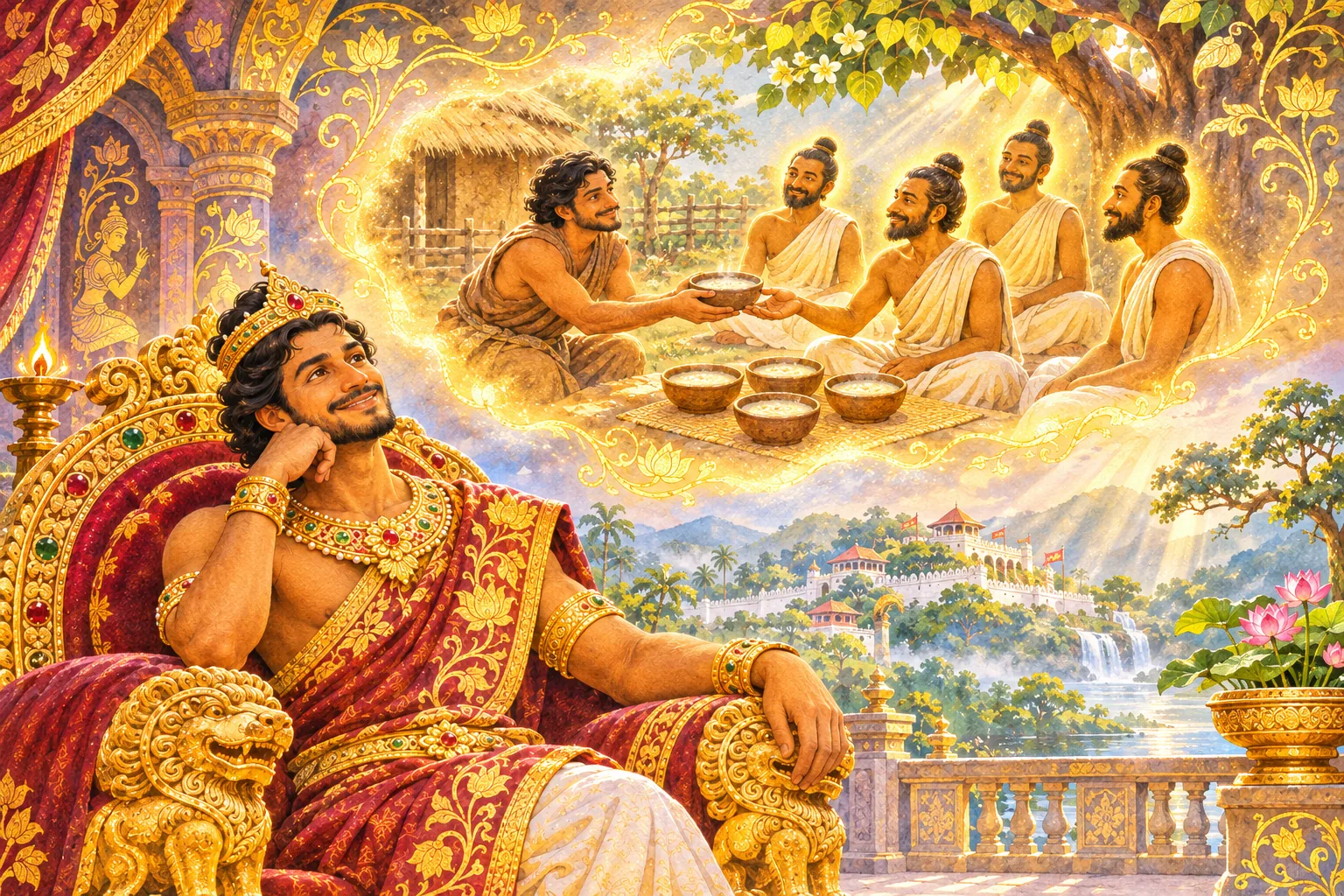
Suddenly the king remembered his past life, the poor labourer and the four bowls of gruel. He smiled and made up a happy little song about it.
හදිසියේම රජුට තම පෙර ජීවිතය, දුප්පත් කම්කරුවා සහ කැඳ පාත්ර හතර මතක් වුණා. ඔහු සිනාසී ඒ ගැන සතුටු පුංචි ගීතයක් හැදුවා.
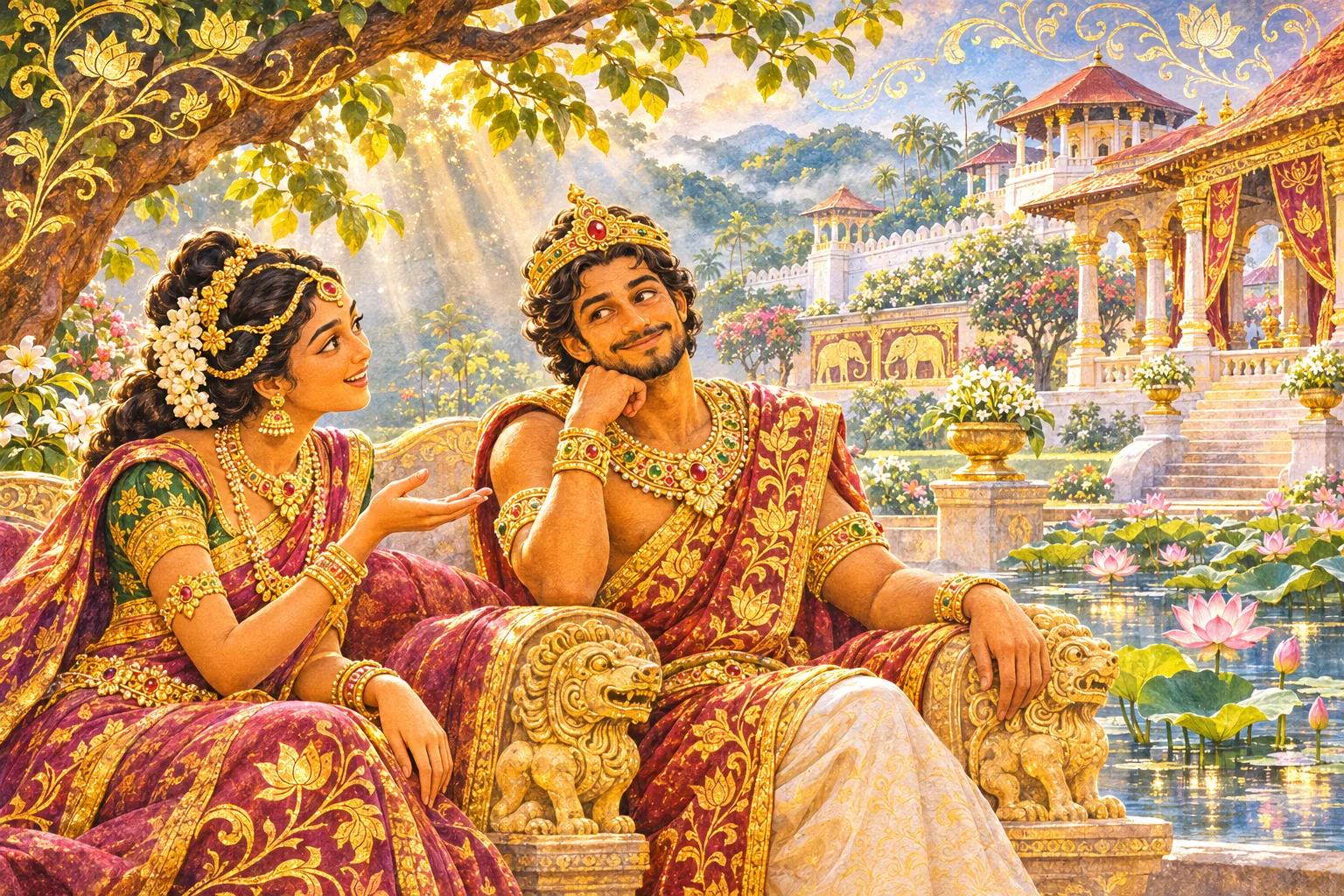
Soon everyone in the kingdom was singing it, but nobody knew what it meant. The curious queen asked, “What does your song mean, my king?”
ඉක්මනින්ම රාජ්යයේ හැමෝම ඒක ගායනා කළා, ඒත් ඒකේ තේරුම කවුරුවත් දැනගෙන හිටියේ නැහැ. කුතුහලයෙන් පිරුණු බිසව ඇසුවා, “මගේ රජතුමනි, ඔබේ ගීතයේ තේරුම මොකක්ද?”
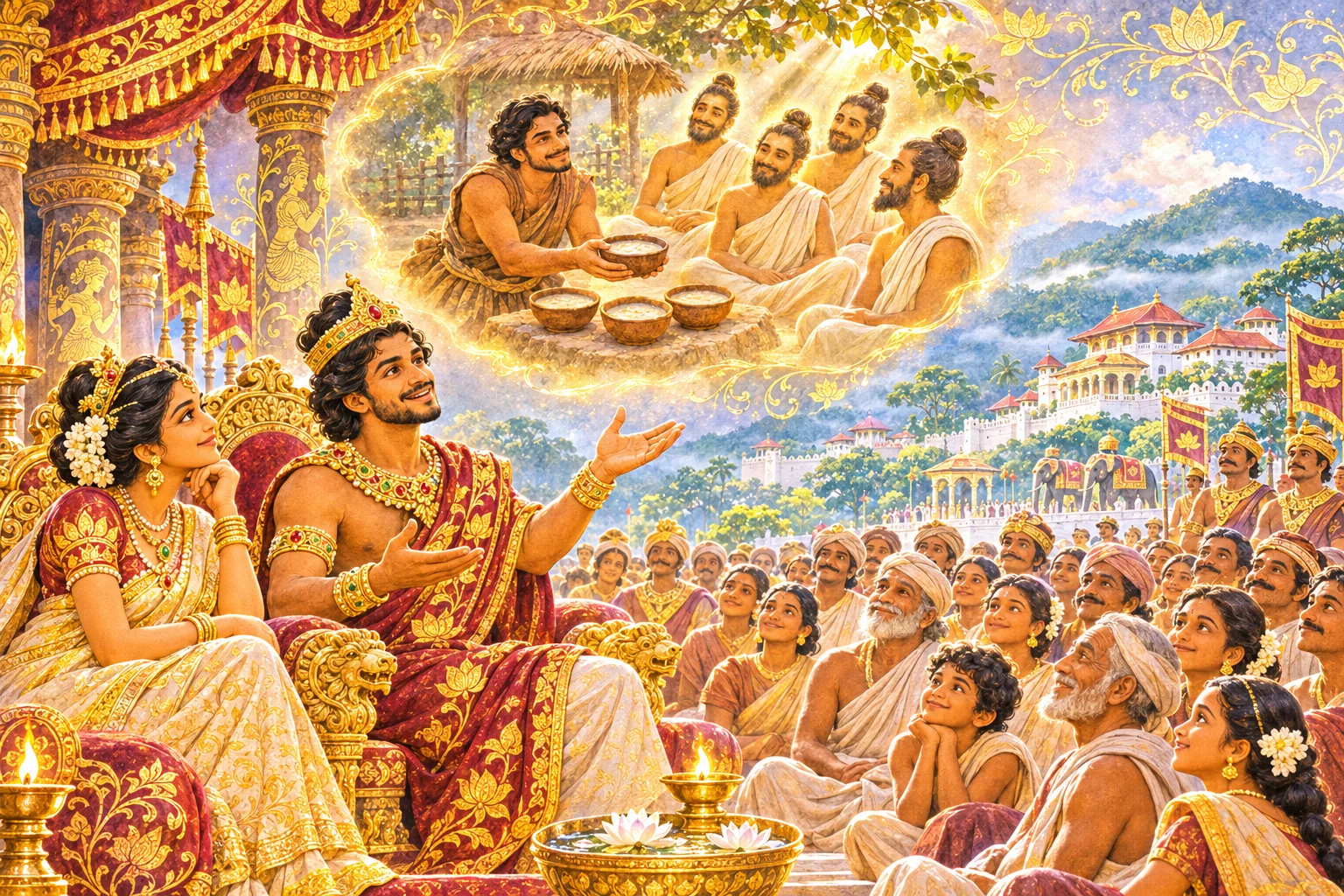
So the king told the whole story to a great crowd. “All this,” he said, pointing to the palace, “began with four small bowls of sour gruel, given with a happy heart.”
ඉතින් රජු මහා සෙනඟකට මුළු කතාවම කීවා. “මේ හැමදේම,” ඔහු මාලිගය පෙන්වමින් කීවා, “පටන් ගත්තේ සතුටු හදවතකින් දුන් ඇඹුල් කැඳ පුංචි පාත්ර හතරකින්.”
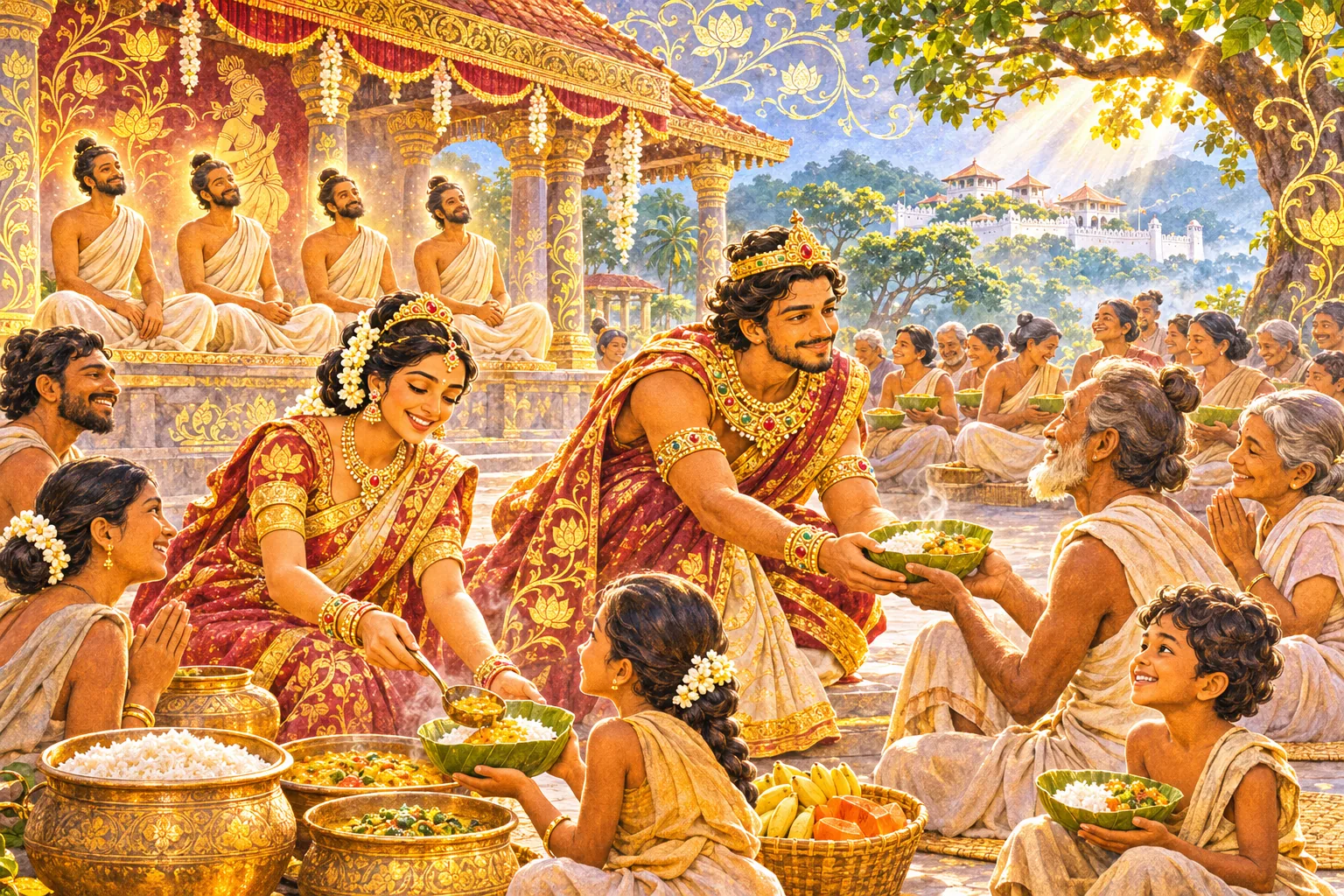
The king and queen built halls where the poor could always eat, and they lived generously and kindly for the rest of their lives.
රජුත් බිසවත් දුප්පතුන්ට හැමවිටම කන්න පුළුවන් ශාලා ඉදි කළා. ඔවුන් ජීවිතයේ ඉතිරි කාලය පුරාම ත්යාගශීලීව, කාරුණිකව ජීවත් වුණා.
Who was who?
In the story, the labourer who became king was the Bodhisatta, the Buddha in one of his past lives. Pacceka Buddhas are holy people who become enlightened on their own, without teaching others.
The lesson
A gift does not have to be big to matter. What we give with a happy heart, even a little, is precious.
Let's talk
- What did the poor labourer give away?
- Why did the king sing a happy song?
- Why do you think a small gift can matter so much?
කවුද කවුරුන් වූයේ?
කතාවේ රජ වූ කම්කරුවා බෝසතාණන් වහන්සේ, එනම් පෙර ආත්මයක බුදුරජාණන් වහන්සේයි. පසේබුදුවරු යනු අන් අයට ධර්මය නොදේශනා කරමින් තනිවම බුද්ධත්වයට පත් වන ශුද්ධ පුද්ගලයෝයි.
පාඩම
තෑග්ගක් වැදගත් වෙන්න ලොකු වෙන්න ඕනෑ නැහැ. සතුටු හදවතකින් අප දෙන දේ, ටිකක් වුණත්, වටිනවා.
අපි කතා කරමු
- දුප්පත් කම්කරුවා දුන්නේ මොනවාද?
- රජු සතුටු ගීතයක් ගායනා කළේ ඇයි?
- පුංචි තෑග්ගක් මෙච්චර වැදගත් වෙන්නේ ඇයි කියා ඔබ හිතනවාද?
Retold for children by Fablewings from the Kummāsapiṇḍa Jātaka (Jātaka No. 415; English translation ed. E. B. Cowell, vol. III, 1897, public domain) and the Sinhala Pansiya Panas Jātaka tradition. Illustrations made with AI assistance for Fablewings.