The Mice That Ate Iron
යකඩ කෑ මීයෝ
Kūṭavāṇija Jātaka (No. 218) · කූටවාණිජ ජාතකය (අංක 218)
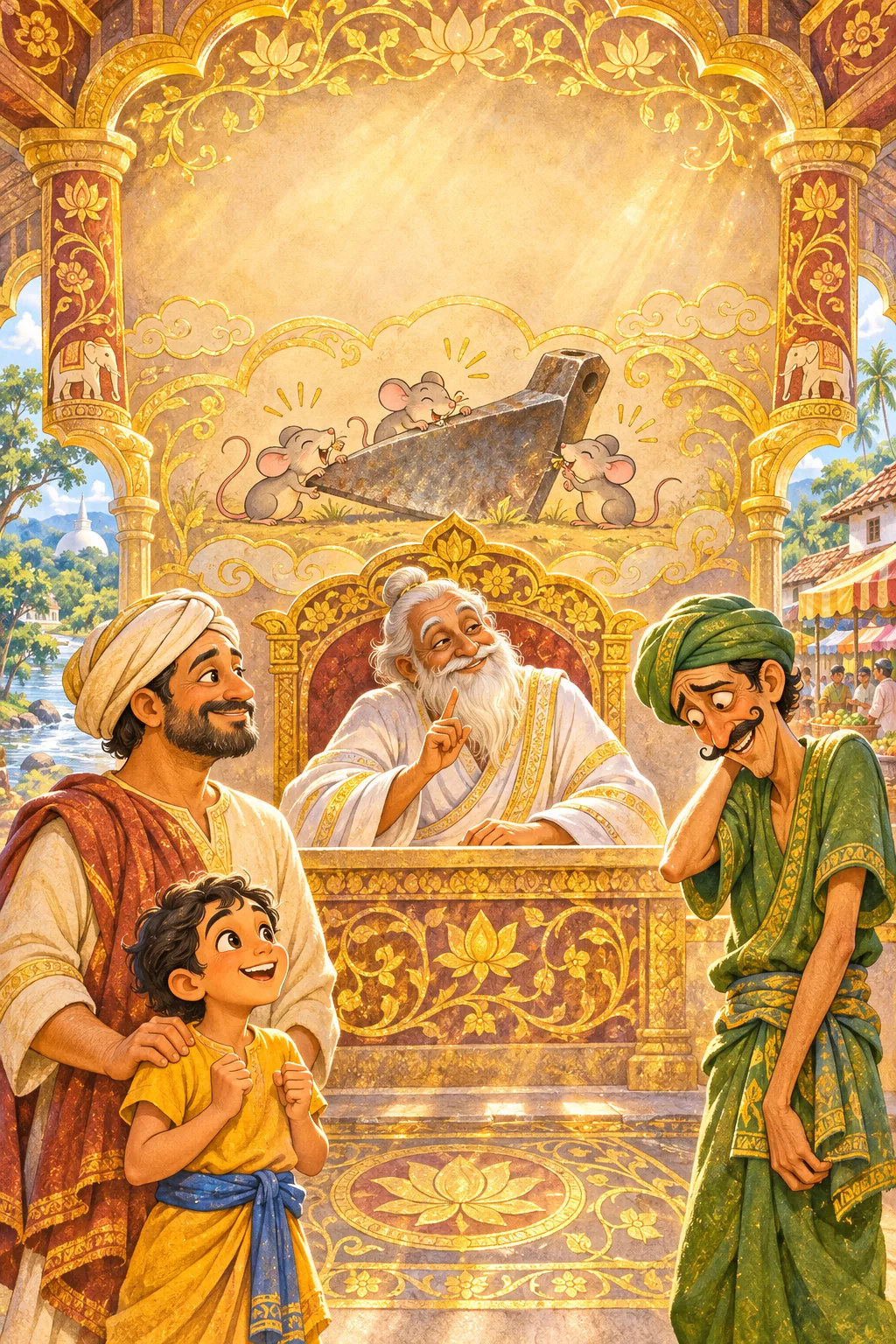
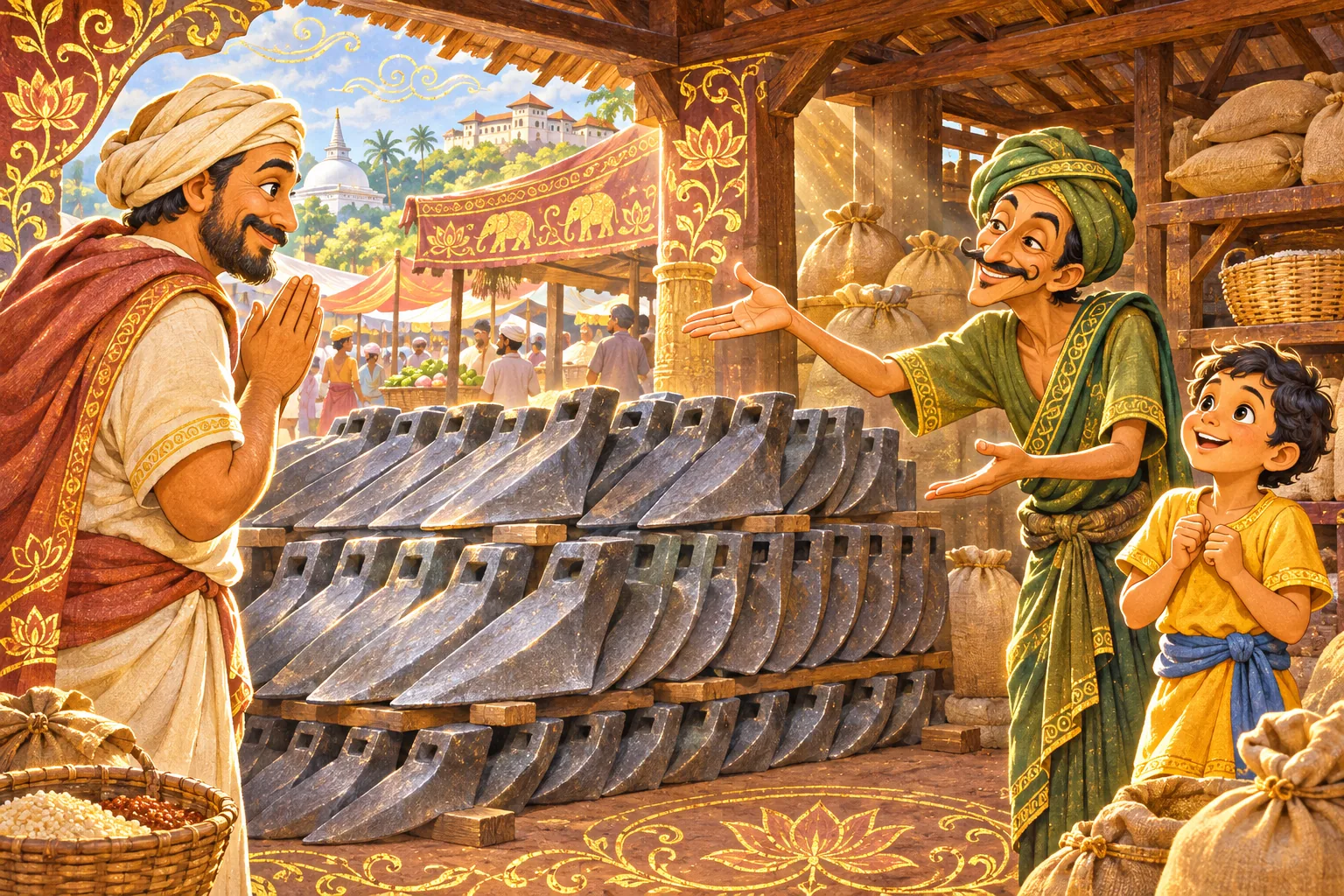
Long ago, there were two merchants who were friends. One was honest. The other was tricky.
බොහෝ කලකට පෙර, මිතුරන් වූ වෙළෙන්දන් දෙදෙනෙක් සිටියා. එක් කෙනෙක් අවංකයි. අනිත් කෙනා කපටියි.
One day the honest merchant went on a journey and left a big stack of iron ploughshares in his friend’s storehouse.
දවසක් අවංක වෙළෙන්දා ගමනක් ගිහින් තම මිතුරාගේ ගබඩාවේ යකඩ නඟුල් තල ගොඩක් තැබුවා.
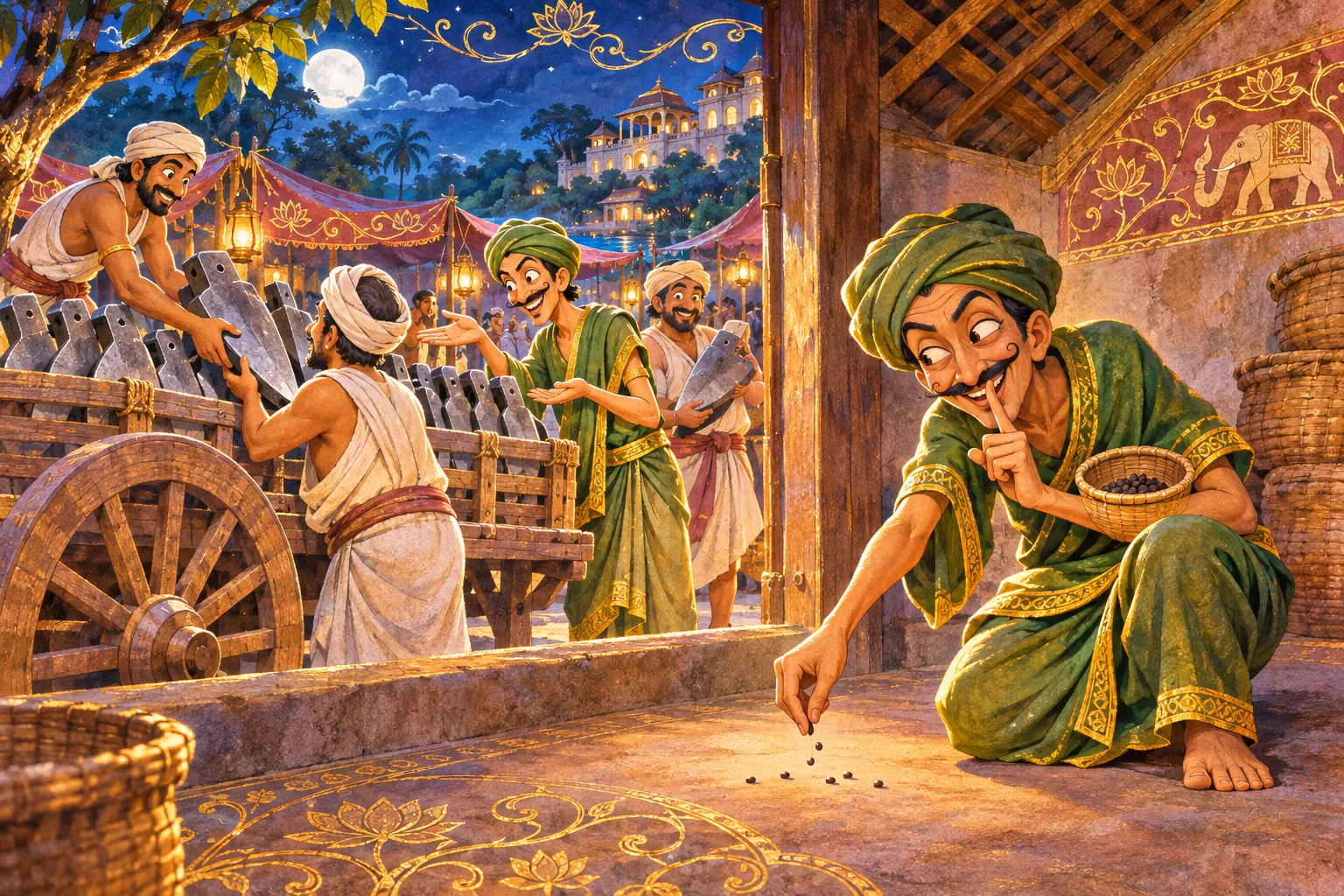
But the tricky merchant secretly sold all the iron. Then he sprinkled a few mouse droppings on the empty floor.
ඒත් කපටි වෙළෙන්දා රහසේම සියලු යකඩ විකුණුවා. ඉන්පසු ඔහු හිස් බිම මී බෙටි ටිකක් විසිරෙව්වා.
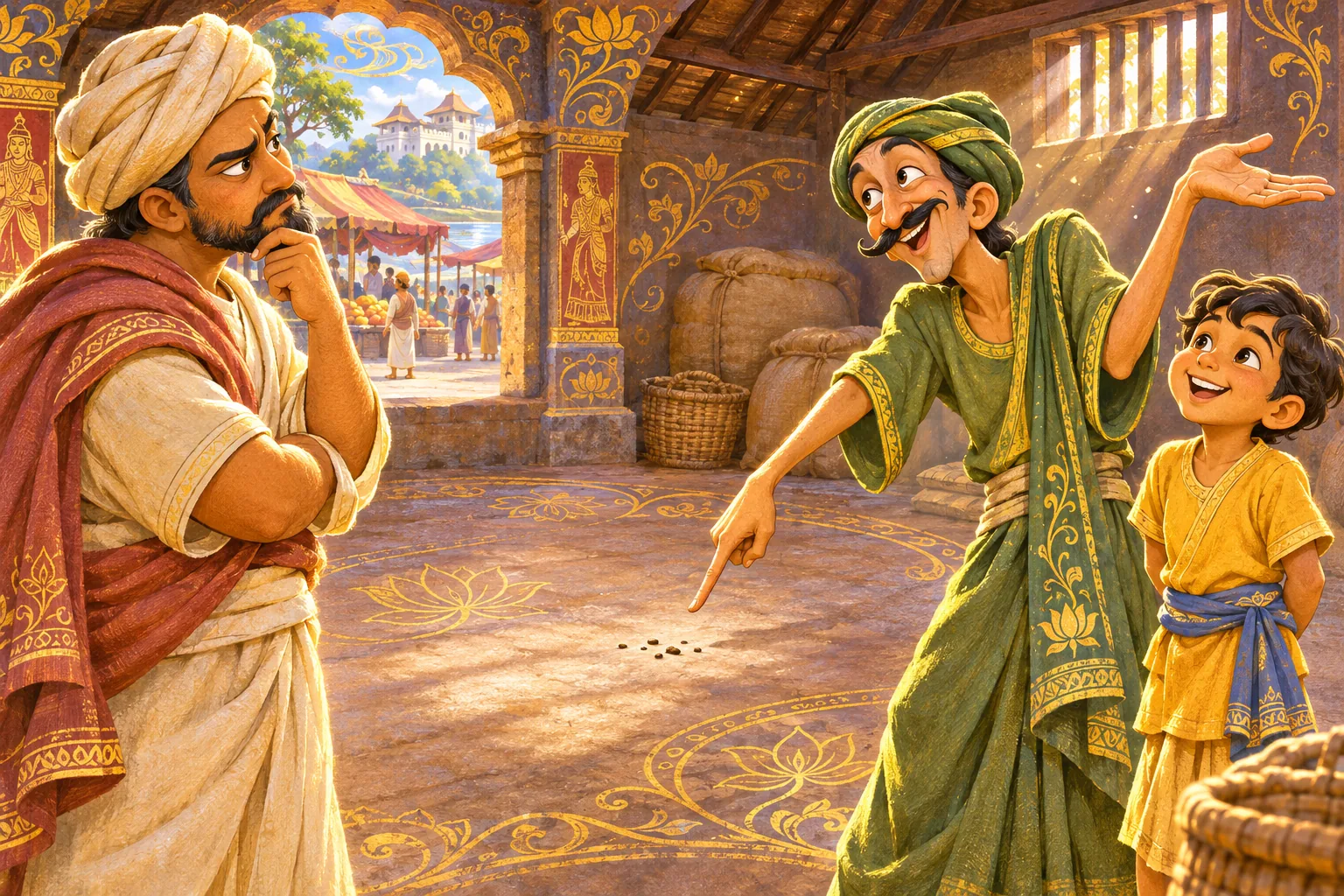
When the honest merchant came back, his friend shrugged. “I’m so sorry,” he said. “The mice ate all your iron!”
අවංක වෙළෙන්දා ආපසු ආ විට ඔහුගේ මිතුරා උරහිස් හැකිළුවා. “මට ගොඩක් කනගාටුයි,” ඔහු කීවා. “මීයෝ ඔයාගේ යකඩ ඔක්කොම කෑවා!”
The honest merchant knew this was nonsense. But he only smiled. “Oh dear,” he said. “What can we do?”
මේක විකාරයක් බව අවංක වෙළෙන්දා දැන සිටියා. ඒත් ඔහු සිනාසුණා විතරයි. “අපොයි,” ඔහු කීවා. “අපිට මොනවා කරන්නද?”

A few days later, the honest merchant offered to take his friend’s little son to bathe in the river. The boy was delighted.
දින කිහිපයකට පසු අවංක වෙළෙන්දා තම මිතුරාගේ පුංචි පුතාව ගඟේ නාවන්න එක්කන් යන්න ඉදිරිපත් වුණා. පුතාට ගොඩක් සතුටුයි.

Afterwards, he took the boy to a kind friend’s house, where he played happily and ate sweets, perfectly safe.
ඉන්පසු ඔහු පුතාව කාරුණික මිතුරෙකුගේ නිවසට එක්කන් ගියා. එහි පුතා සම්පූර්ණයෙන්ම ආරක්ෂිතව, සතුටින් සෙල්ලම් කළා, රසකැවිලි කෑවා.
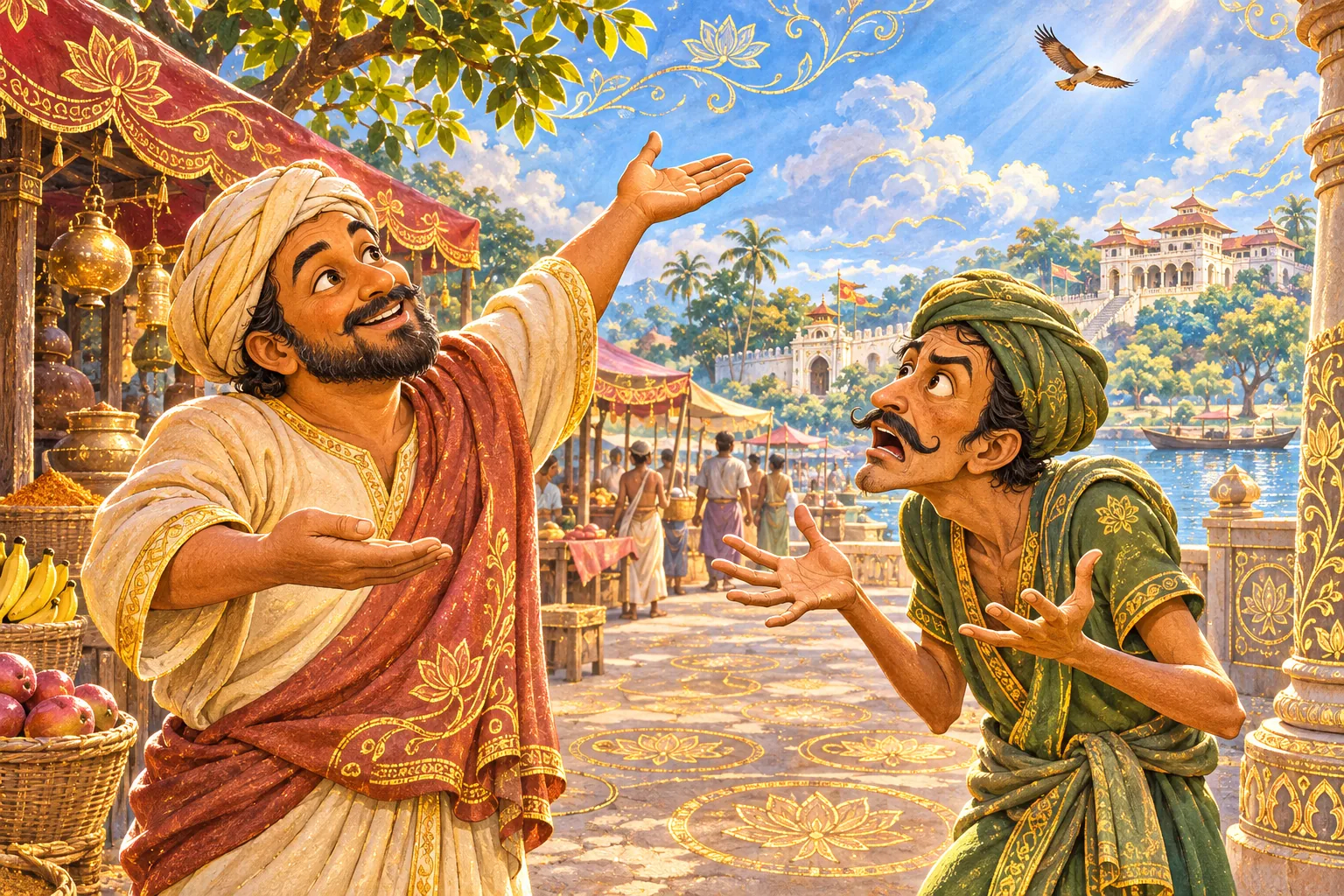
Then he went back to the tricky merchant. “I’m so sorry,” he said, pointing at the sky. “A hawk swooped down and carried your son away!”
ඉන්පසු ඔහු කපටි වෙළෙන්දා ළඟට ආපසු ගියා. “මට ගොඩක් කනගාටුයි,” ඔහු අහස පෙන්වමින් කීවා. “උකුස්සෙක් පහළට පැනලා ඔයාගේ පුතාව අරගෙන ගියා!”
“A hawk can’t carry a boy!” cried the tricky merchant.
“උකුස්සෙකුට කොල්ලෙක්ව ගෙනියන්න බැහැ!” කපටි වෙළෙන්දා කෑ ගැසුවා.

They went before the wise judge. The tricky merchant shouted, “He says a hawk carried off my son!”
ඔවුන් නුවණැති විනිසුරුවරයා ඉදිරියට ගියා. කපටි වෙළෙන්දා කෑ ගැසුවා, “උකුස්සෙක් මගේ පුතාව අරන් ගියා කියලා මෙයා කියනවා!”
The honest merchant said calmly, “In a land where mice can eat iron, surely hawks can carry off boys.”
අවංක වෙළෙන්දා සන්සුන්ව කීවා, “මීයන්ට යකඩ කන්න පුළුවන් රටක, උකුස්සන්ට කොල්ලන්ව ගෙනියන්නත් පුළුවන් වෙන්න ඕනෑ.”
The judge understood at once, and tried not to laugh.
විනිසුරුවරයාට වහාම තේරුණා. ඔහු හිනා නොවී සිටින්න උත්සාහ කළා.
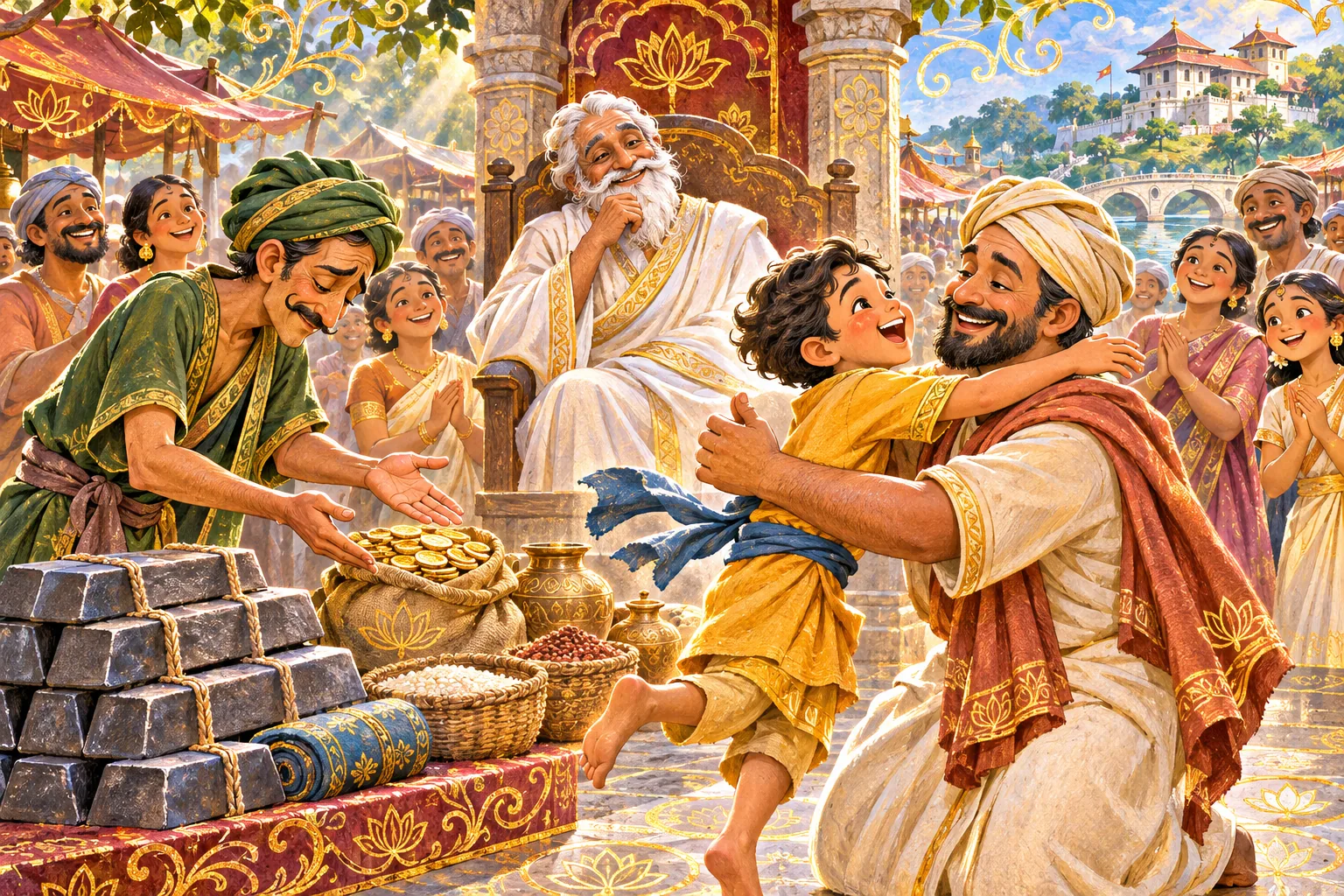
The tricky merchant hung his head and paid back the full value of the iron. At once, his little son came running back, happy and safe, into his arms.
කපටි වෙළෙන්දා හිස පහත් කර යකඩවල සම්පූර්ණ වටිනාකම ආපසු ගෙව්වා. එවිටම ඔහුගේ පුංචි පුතා සතුටින්, ආරක්ෂිතව දුවගෙන ඇවිත් ඔහුගේ තුරුලට පැන්නා.
From then on, the tricky merchant tried hard to be honest.
එතැන් පටන් කපටි වෙළෙන්දා අවංක වෙන්න ගොඩක් උත්සාහ කළා.
Who was who?
This Jātaka shows how a clever, kind answer can reveal a lie without anyone being harmed.
The lesson
A lie usually falls apart in the end. Honesty is always the best way.
Let's talk
- What lie did the tricky merchant tell?
- How did the honest merchant show it was a lie?
- Why is it better to tell the truth?
කවුද කවුරුන් වූයේ?
කිසිවෙකුට හානියක් නොවී බුද්ධිමත්, කාරුණික පිළිතුරකින් බොරුවක් හෙළිදරව් කළ හැකි ආකාරය මේ ජාතකය පෙන්වනවා.
පාඩම
බොරුවක් සාමාන්යයෙන් අන්තිමේදී බිඳ වැටෙනවා. අවංකකම හැම විටම හොඳම මාර්ගයයි.
අපි කතා කරමු
- කපටි වෙළෙන්දා කීවේ මොන බොරුවද?
- ඒක බොරුවක් බව අවංක වෙළෙන්දා පෙන්නුවේ කොහොමද?
- ඇත්ත කීම වඩා හොඳ ඇයි?
Retold for children by Fablewings from the Kūṭavāṇija Jātaka (Jātaka No. 218; English translation ed. E. B. Cowell, vol. II, 1895, public domain) and the Sinhala Pansiya Panas Jātaka tradition. Illustrations made with AI assistance for Fablewings.