Prince Mahājanaka and the Ocean
මහජනක කුමාරයා සහ මහ මුහුද
Mahājanaka Jātaka (No. 539) · මහාජනක ජාතකය (අංක 539)
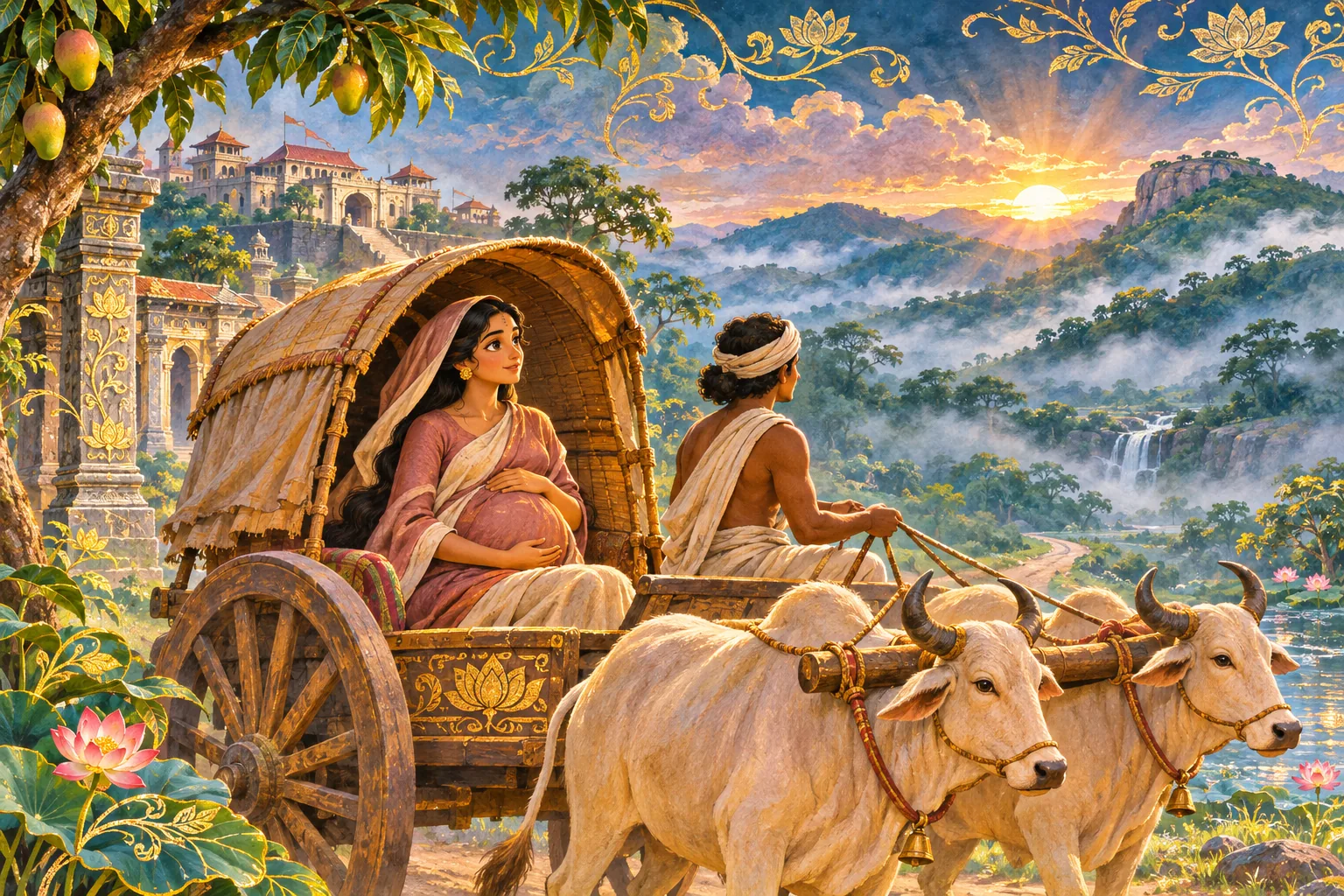
Long ago, the kingdom of Videha, with its great city of Mithilā, lost its good king in a quarrel over the throne. His queen escaped in secret to the far city of Campā, and there her son was born.
බොහෝ කාලෙකට පෙර, මහා මිථිලා නුවර ඇති විදේහ රාජ්යයට, සිහසුන සඳහා වූ ආරවුලකින් තම යහපත් රජු අහිමි වුණා. ඔහුගේ බිසව රහසින් ඈත චම්පා නුවරට පලා ගියා. එහිදී ඇගේ පුතා ඉපදුණා.
She named him Mahājanaka, after his grandfather.
ඇය ඔහුට සීයාගේ නමින් මහජනක යැයි නම් තැබුවා.

Mahājanaka grew up strong, clever and kind. When he was sixteen, his mother told him the truth. “You are the son of a king.”
මහජනක ශක්තිමත්, දක්ෂ, කරුණාවන්ත කෙනෙක් ලෙස වැඩුණා. ඔහුට වයස දහසයේදී අම්මා ඔහුට ඇත්ත කීවා. “ඔයා රජෙකුගේ පුතා.”
“Then I will win back my father’s kingdom,” he said. “Not with anger, but with my own effort.”
“එහෙනම් මම මගේ පියාගේ රාජ්යය ආපසු දිනාගන්නවා,” ඔහු කීවා. “තරහෙන් නෙවෙයි, මගේම වීරියෙන්.”
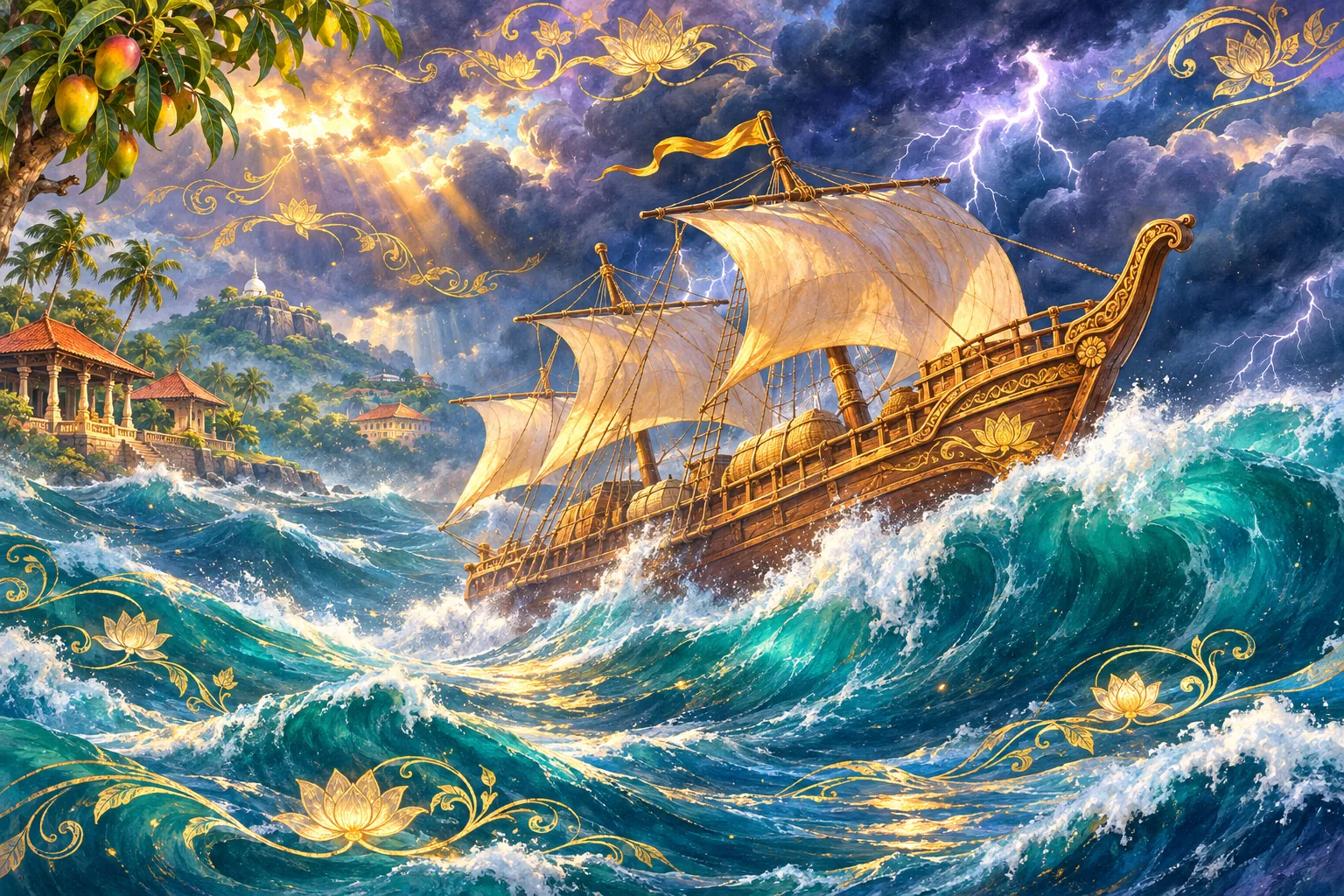
To earn the wealth he needed, he joined a great ship of merchants sailing to the Golden Land across the ocean.
ඔහුට අවශ්ය ධනය උපයාගැනීම සඳහා ඔහු සාගරයෙන් එහා සුවණ්ණභූමියට යාත්රා කළ වෙළෙන්දන්ගේ මහා නැවකට එක්වුණා.
But seven days out to sea, a terrible storm broke the ship apart. The waves rose like mountains.
නමුත් මුහුදේ දින හතක් ගිය පසු, දරුණු කුණාටුවක් නැව බිඳ දැම්මා. රළ කඳු වගේ නැගුණා.
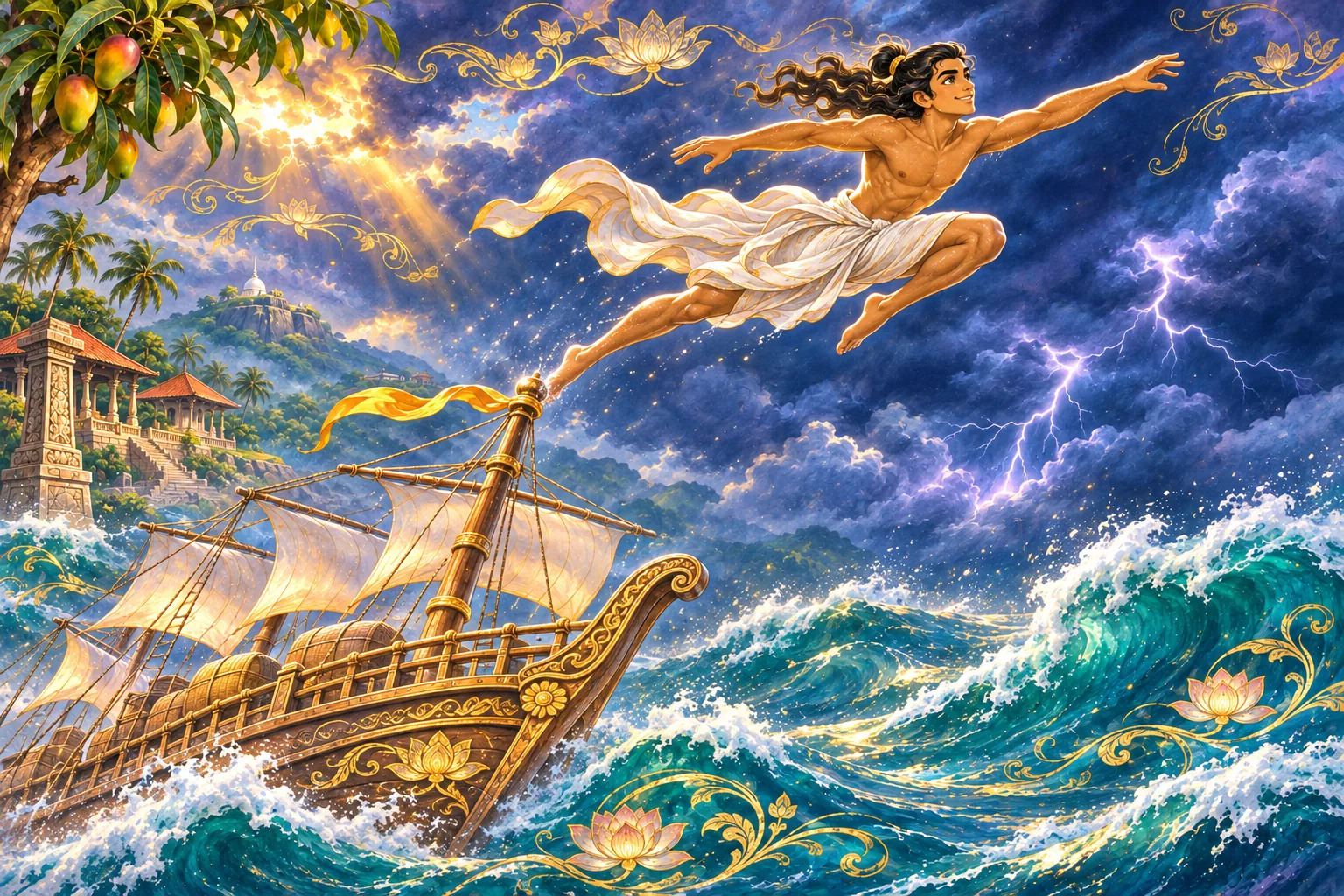
Everyone else gave up. But Mahājanaka rubbed his body with oil so the salt water could not hurt him, climbed to the top of the mast, and leapt far out over the waves.
අනෙක් හැමෝම බලාපොරොත්තු අත්හැරියා. නමුත් මහජනක ලුණු වතුරෙන් හානි නොවෙන්න ඇඟේ තෙල් ගා, කුඹගස මුදුනට නැගලා, රළ උඩින් ඈතට පැන්නා.
Then he began to swim.
ඉන්පසු ඔහු පීනන්න පටන් ගත්තා.
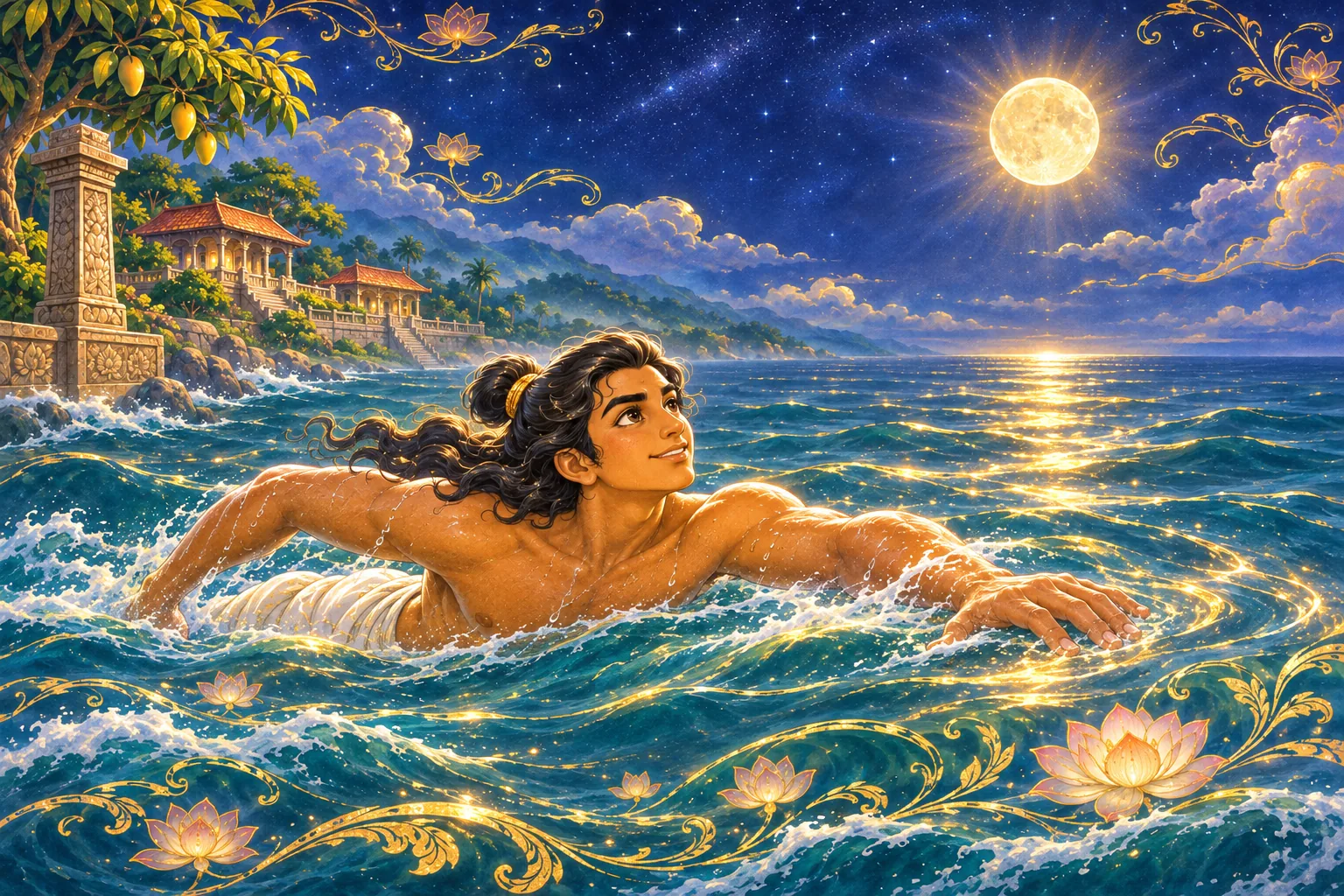
He swam all day and all night. He swam the next day, and the next. For seven days and seven nights he swam in the endless ocean, with no land in sight.
ඔහු මුළු දවසම, මුළු රැයම පීනුවා. ඊළඟ දවසෙත්, ඊට පසු දවසෙත් පීනුවා. දින හතක්, රැයක් හතක් ඔහු ගොඩබිමක් නොපෙනෙන අනන්ත සාගරයේ පීනුවා.
He did not give up.
ඔහු අත්හැරියේ නැහැ.

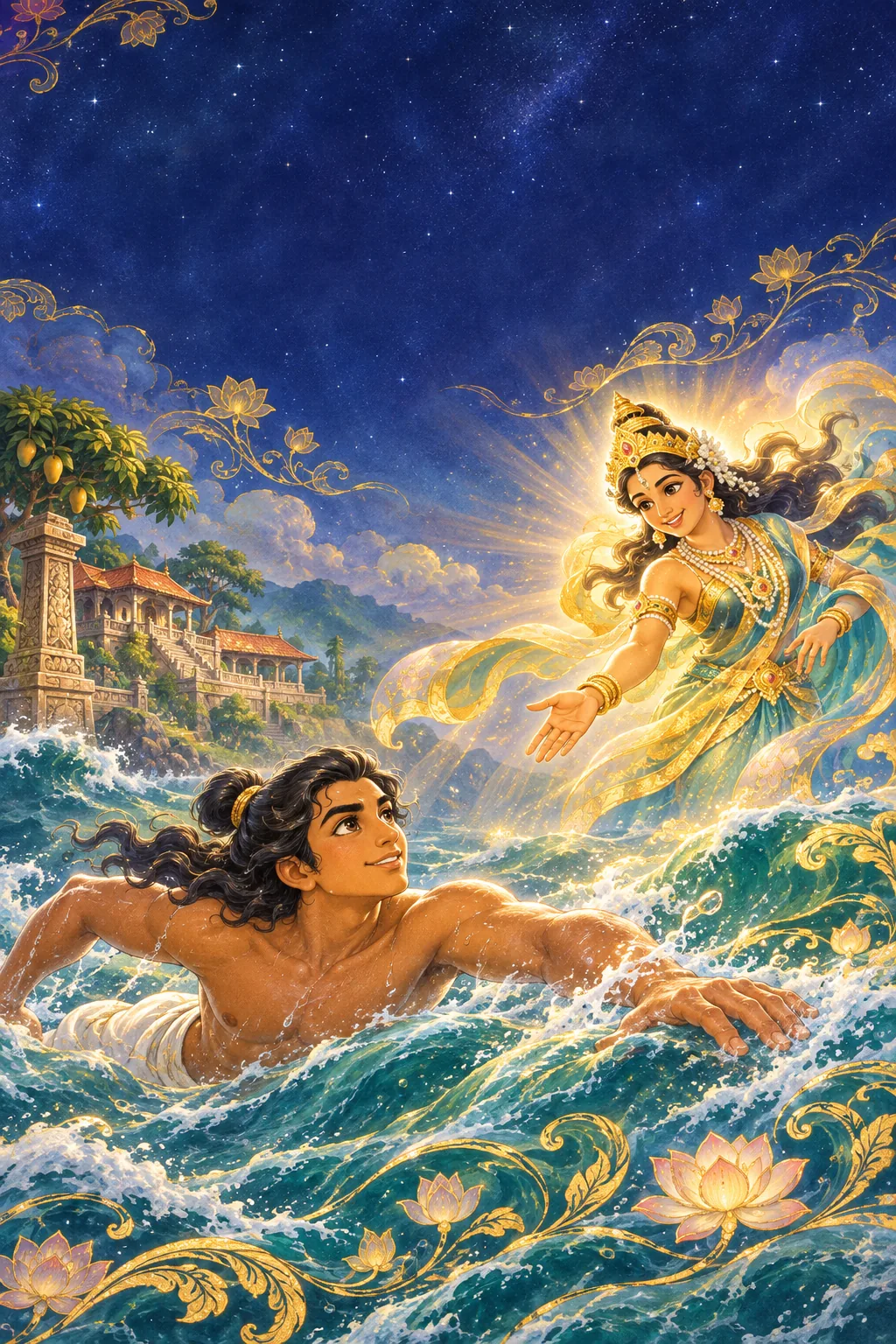
Then a shining goddess of the sea, Maṇimekhalā, appeared above the water. “Why do you keep swimming,” she asked, “when you cannot even see the shore?”
ඉන්පසු මණිමේඛලා නම් දිලිසෙන මුහුදු දෙවඟනක් ජලය මතුපිට පෙනී සිටියා. “වෙරළවත් නොපෙනෙද්දී ඔබ දිගටම පීනන්නේ ඇයි?” ඇය ඇසුවා.
“Because if I try, at least I have done my best,” said Mahājanaka. “Whoever gives up has already lost.”
“මම උත්සාහ කළොත්, අඩුම තරමින් මම මගේ උපරිමය කළා,” මහජනක කීවා. “අත්හරින කෙනා දැනටමත් පරාද වෙලා.”

The goddess was so moved by his courage that she lifted him in her arms and flew with him across the sky, all the way to Mithilā, and laid him gently in the royal mango garden.
ඔහුගේ ධෛර්යය ගැන දෙවඟන කොච්චර පැහැදුණාද කියනවා නම්, ඇය ඔහුව තම දෑතින් ඔසවාගෙන අහස හරහා මිථිලා නුවර දක්වාම පියාඹා ගොස්, රාජකීය අඹ උයනේ සෙමින් තැබුවා.
The old king who had taken the throne had died, and the princess Sīvalī was looking for a wise new king.
සිහසුන ගත් මහලු රජු මිය ගොස් තිබුණා. සීවලී කුමරිය නුවණැති අලුත් රජෙකු සොයමින් සිටියා.
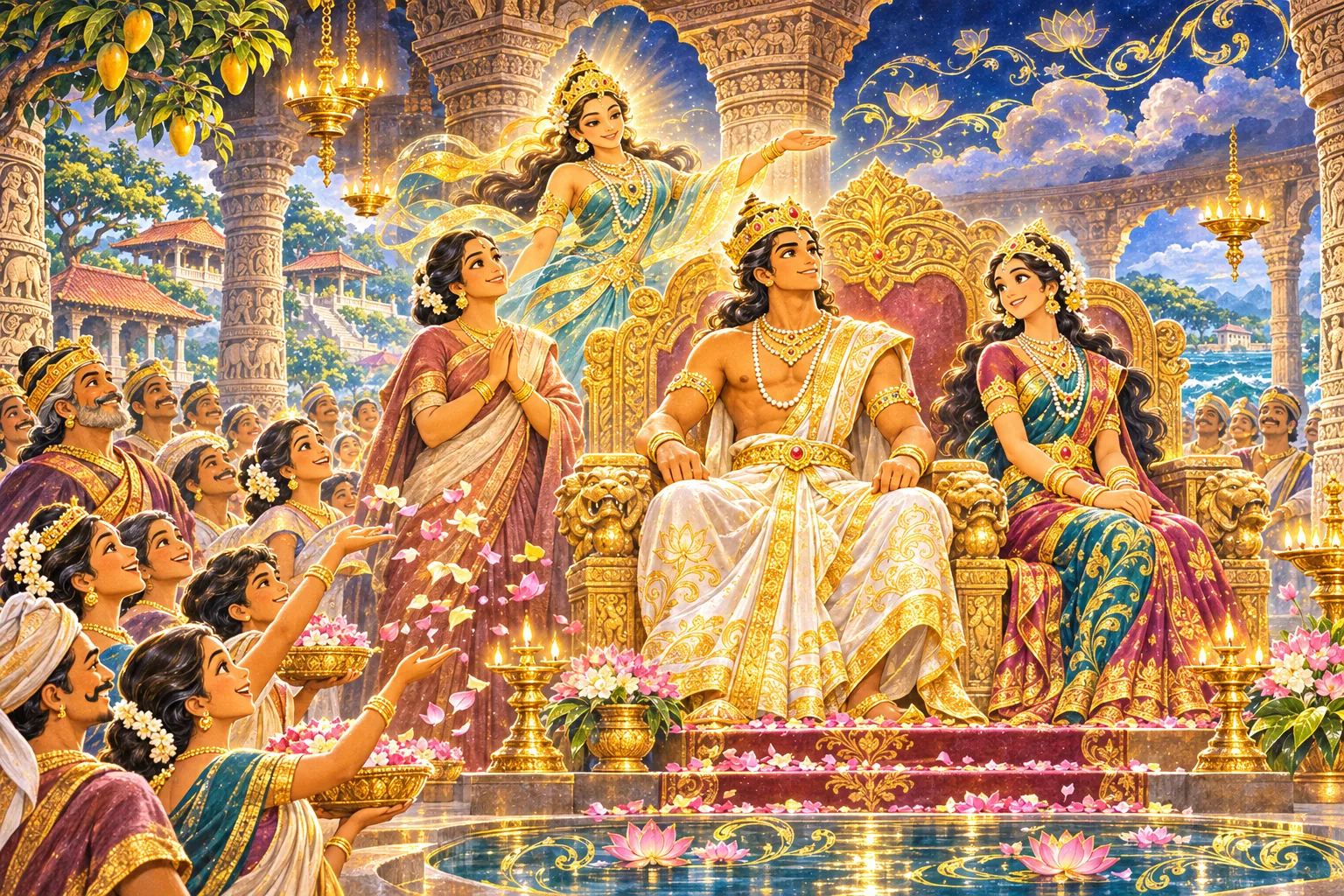
Mahājanaka answered every one of the kingdom’s hard riddles, and the people made him their king. He married Sīvalī and ruled with wisdom and kindness.
මහජනක රාජ්යයේ සියලු දුෂ්කර ප්රහේලිකාවලට පිළිතුරු දුන්නා. ජනතාව ඔහුව තම රජු කරගත්තා. ඔහු සීවලී කුමරිය සමඟ විවාහ වී නුවණින්, කරුණාවෙන් රට පාලනය කළා.
And he never forgot the ocean, or the lesson it taught him: keep trying, and never give up.
සාගරය හෝ එය ඔහුට කියා දුන් පාඩම ඔහුට කවදාවත් අමතක වුණේ නැහැ: දිගටම උත්සාහ කරන්න, කවදාවත් අත්හරින්න එපා.
Who was who?
The Buddha told this story about his own great renunciation. Mahājanaka was the Bodhisatta, the goddess Maṇimekhalā was Uppalavaṇṇā, and Queen Sīvalī was Rāhula’s mother.
The lesson
Never give up. Even when you cannot see the shore, keep swimming and do your best.
Let's talk
- Why did Mahājanaka keep swimming when everyone else gave up?
- What did he say to the goddess?
- What is something hard that you will keep trying at?
කවුද කවුරුන් වූයේ?
තමන්ගේම මහා අභිනිෂ්ක්රමණය ගැන බුදුරජාණන් වහන්සේ මේ කතාව වදාළා. මහජනක කුමාරයා වූයේ බෝසතාණන් වහන්සේයි. මණිමේඛලා දෙවඟන උප්පලවණ්ණා භික්ෂුණිය, සීවලී බිසව රාහුල මාතාව විය.
පාඩම
කවදාවත් අත්හරින්න එපා. වෙරළ නොපෙනුණත්, දිගටම පීනන්න, ඔබේ උපරිමය කරන්න.
අපි කතා කරමු
- අනෙක් හැමෝම අත්හළත් මහජනක දිගටම පීනුවේ ඇයි?
- ඔහු දෙවඟනට කීවේ මොනවද?
- ඔබ දිගටම උත්සාහ කරන අමාරු දෙයක් මොකක්ද?
Retold for children by Fablewings from the Mahājanaka Jātaka (Jātaka No. 539; English translation ed. E. B. Cowell, vol. VI, 1907, public domain) and the Sinhala Pansiya Panas Jātaka tradition. Illustrations made with AI assistance for Fablewings.