The Monkey Who Dressed as a Hermit
තවුසෙකු ලෙස සැරසුණු වඳුරා
Makkaṭa Jātaka (No. 173) · මක්කට ජාතකය (අංක 173)
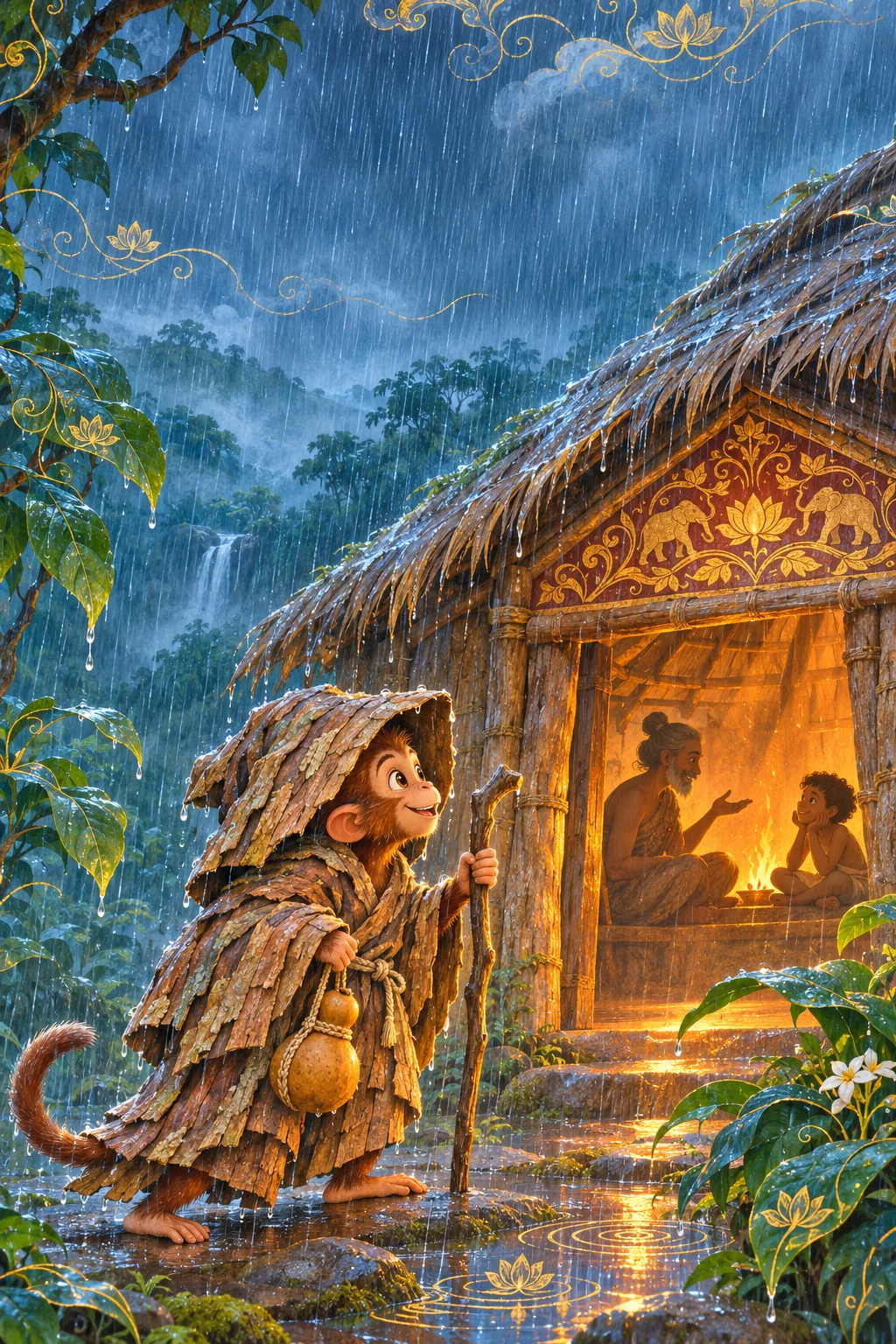
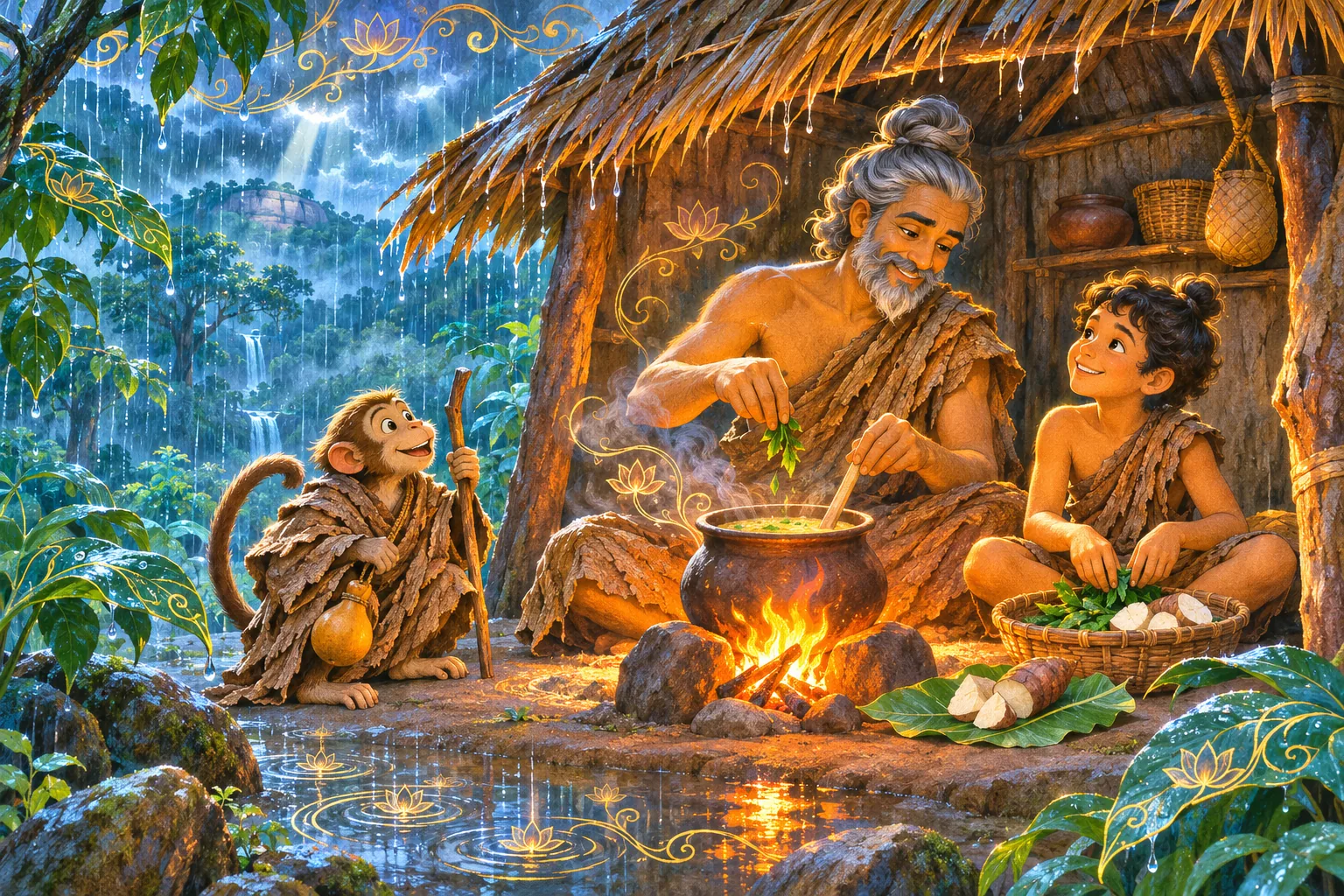
A wise hermit lived with his young son in a little hut in the forest. They lived simply, gathering fruit and keeping a small fire burning.
නුවණැති තවුසෙක් තම පුංචි පුතා සමඟ වනයේ පුංචි පැලක ජීවත් වුණා. ඔවුන් පලතුරු එකතු කරමින්, පුංචි ගින්නක් දල්වාගෙන සරලව ජීවත් වුණා.
One winter, the rain poured down for days, and the forest was cold and wet.
එක සීත කාලයක දවස් ගණනාවක් වැස්ස වැටුණා. වනය සීතල, තෙත් වුණා.
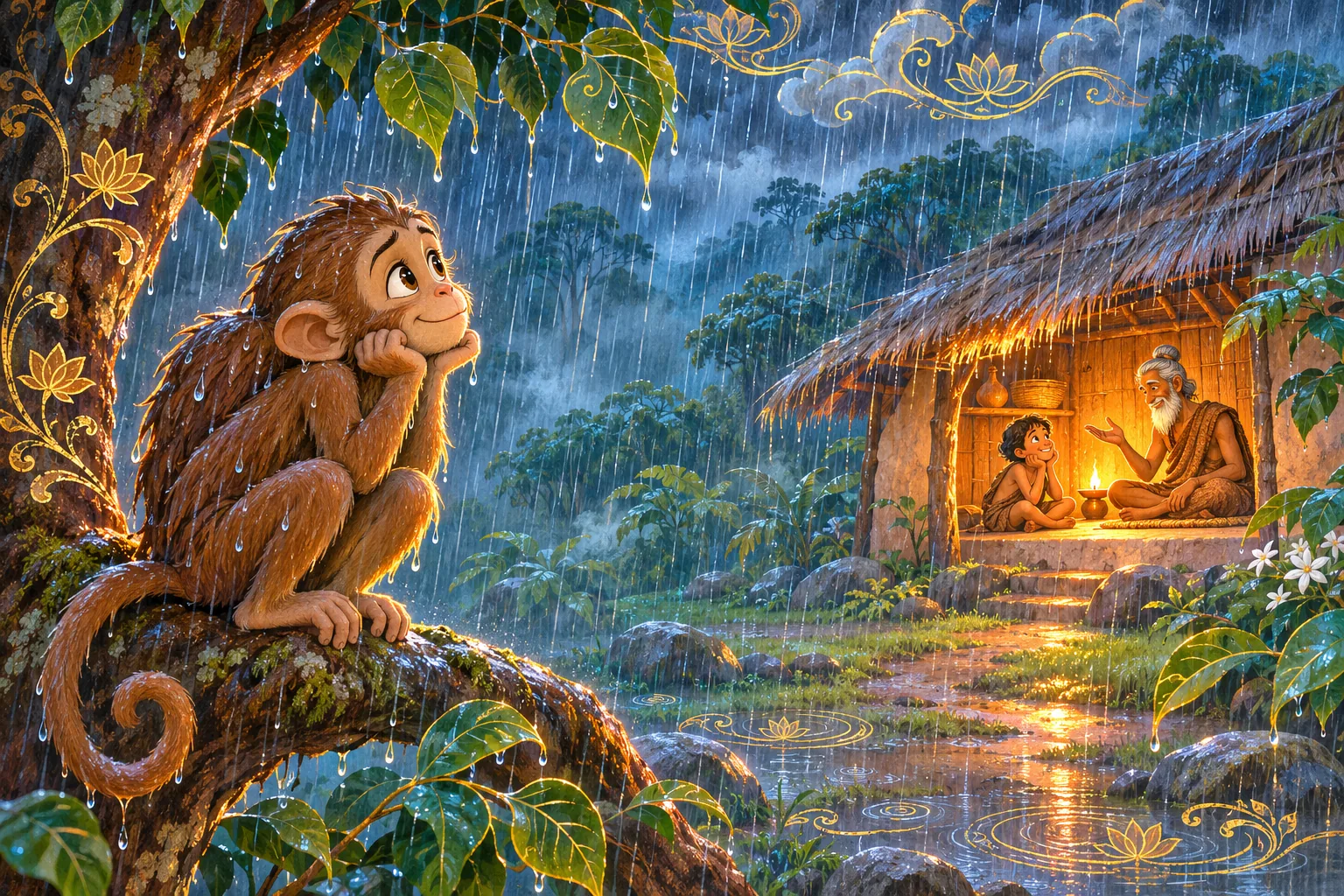
A shivering monkey saw the warm glow of the fire inside the hut. “I wish I could sit by that fire,” he thought.
වෙව්ලන වඳුරෙකුට පැල ඇතුළේ ගින්නේ උණුසුම් එළිය පෙනුණා. “මට ඒ ගින්න ළඟ වාඩි වෙන්න පුළුවන් නම්,” ඔහු හිතුවා.
Then he had a sneaky idea.
ඉන්පසු ඔහුට කපටි අදහසක් ආවා.
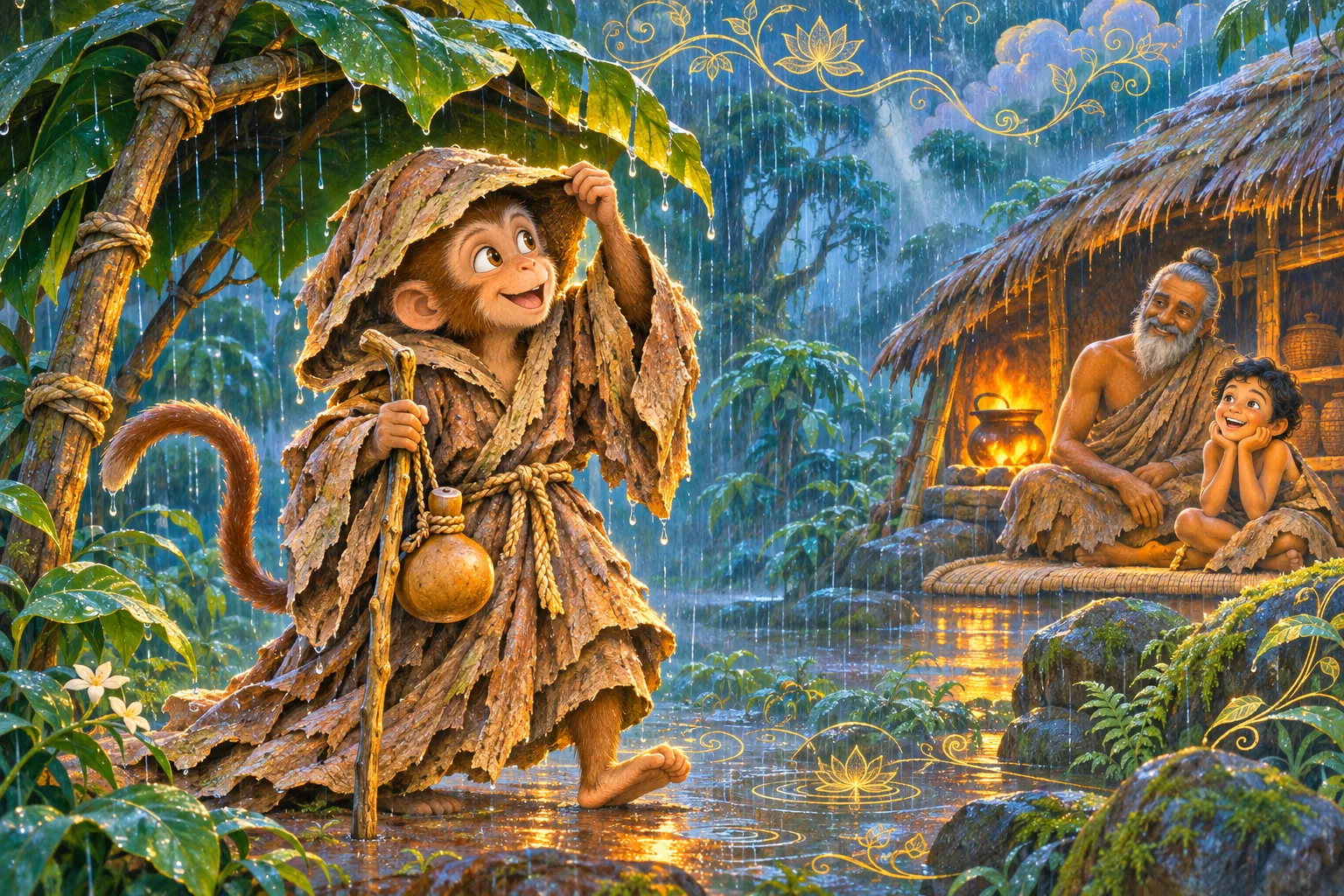
He found an old bark robe hanging on a tree and wrapped it around himself. He picked up a walking stick and a water gourd.
ඔහු ගසක එල්ලී තිබූ පරණ වැහැරි සිවුරක් සොයාගෙන එයින් තමාව ඔතා ගත්තා. ඔහු සැරයටියක් සහ වතුර ලබුකැටයක් අරන් ගත්තා.
Then he walked slowly to the hut, bowing his head, trying to look like a holy hermit.
ඉන්පසු ඔහු සිල්වත් තවුසෙකු වගේ පෙනෙන්න හිස නමාගෙන සෙමින් පැලට ඇවිද ආවා.
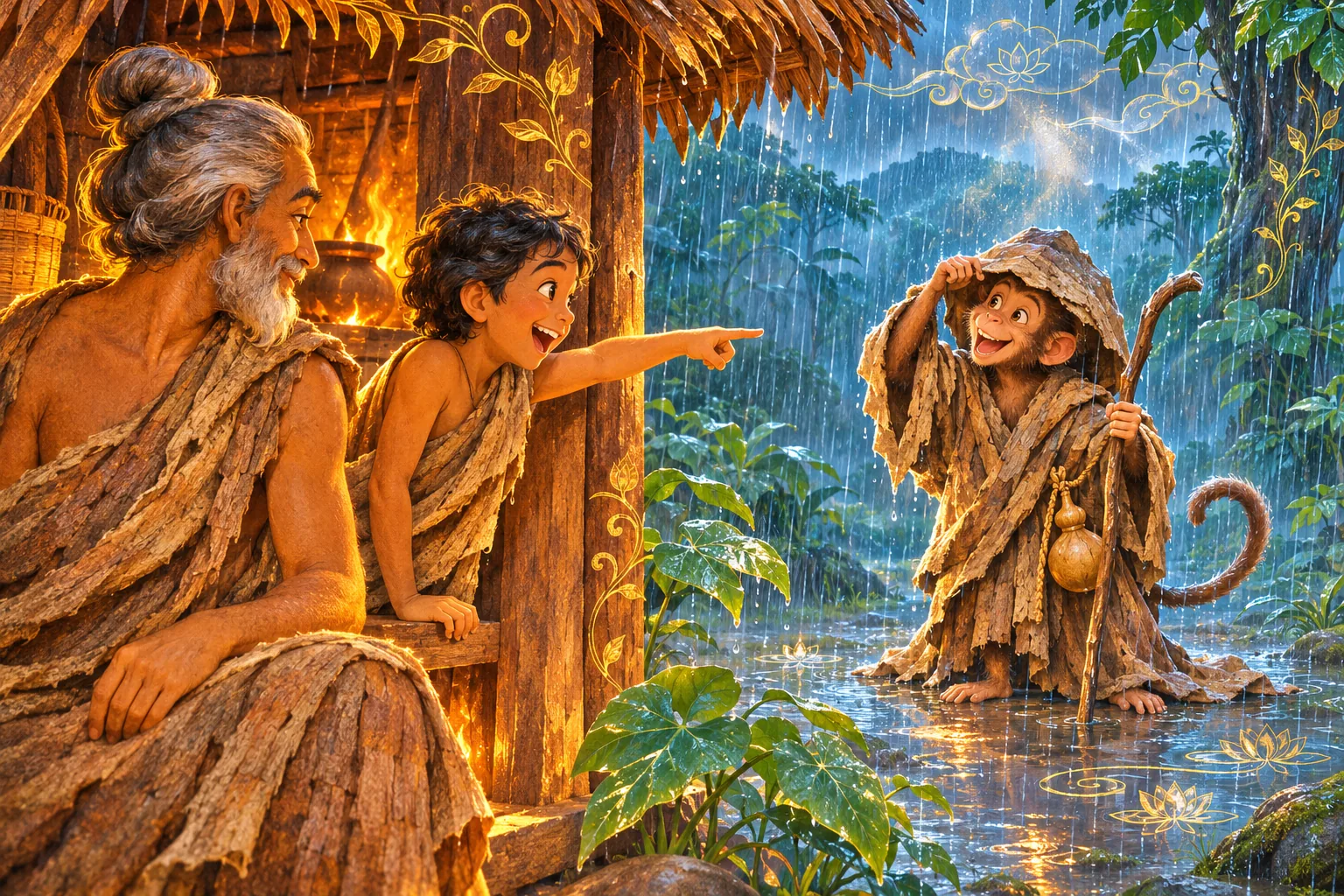
The little boy saw him standing in the rain. “Father, look! A holy hermit is outside, shivering. Let’s invite him in to sit by our fire!”
පුංචි කොලුවා වැස්සේ සිටගෙන සිටි ඔහුව දැක්කා. “තාත්තේ, බලන්න! සිල්වත් තවුසෙක් එළියේ වෙව්ලනවා. අපි එයාට ඇතුළට ඇවිත් අපේ ගින්න ළඟ වාඩි වෙන්න ආරාධනා කරමු!”
The father looked up from his work.
පියා තම වැඩෙන් උඩ බැලුවා.
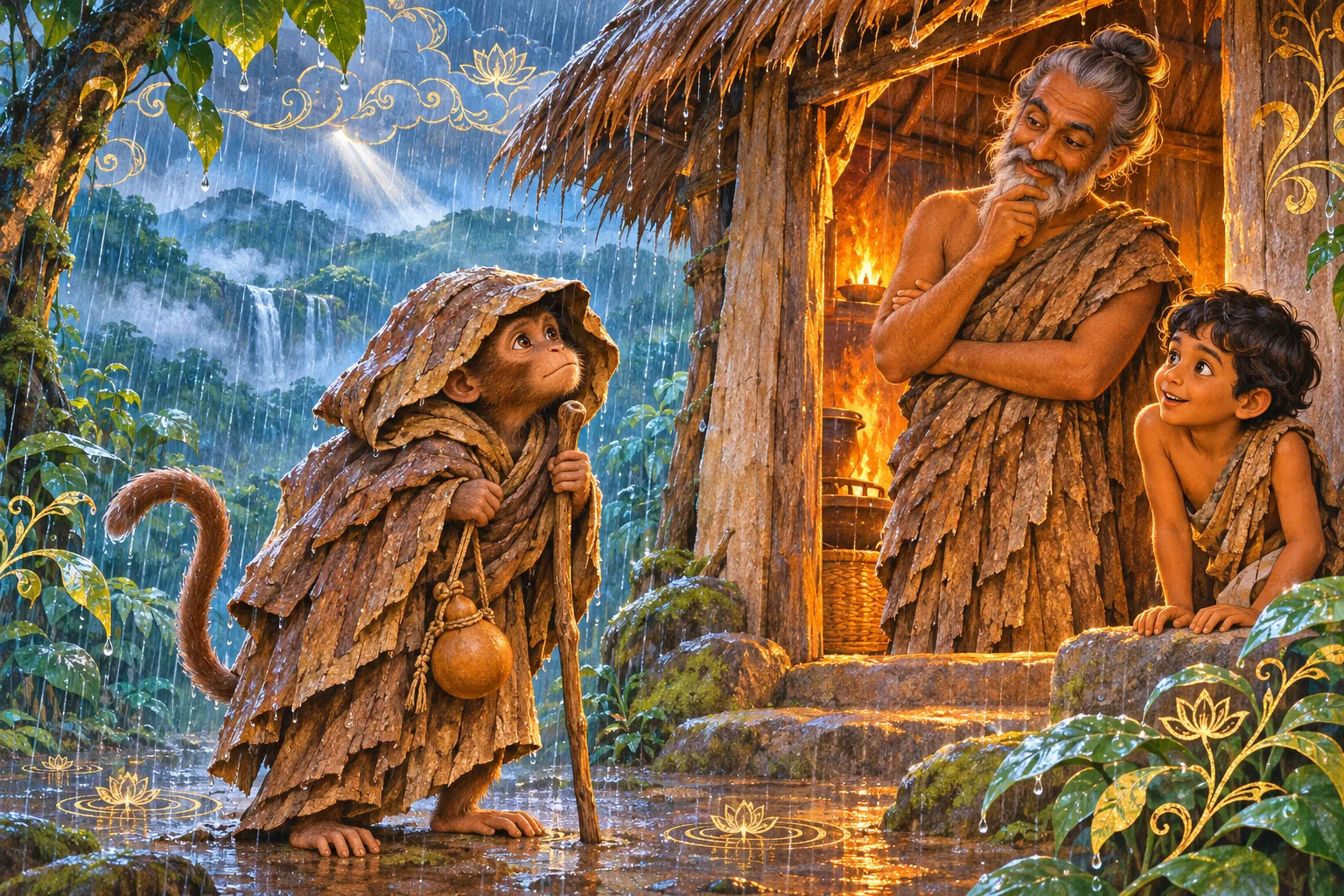
The wise father looked carefully at the visitor. He saw a long tail peeping out from under the robe, and a little hairy face under the hood.
නුවණැති පියා අමුත්තා දෙස ප්රවේශමෙන් බැලුවා. සිවුර යටින් එළියට පෙනෙන දිග වලිගයක් සහ තොප්පිය යට පුංචි ලොම් සහිත මුහුණක් ඔහුට පෙනුණා.
“My son,” he said, smiling, “that is not a hermit. That is a monkey in a hermit’s robe.”
“පුතේ,” ඔහු සිනාසෙමින් කීවා, “ඒ තවුසෙක් නෙවෙයි. ඒ තවුසෙකුගේ සිවුර ඇඳගත් වඳුරෙක්.”
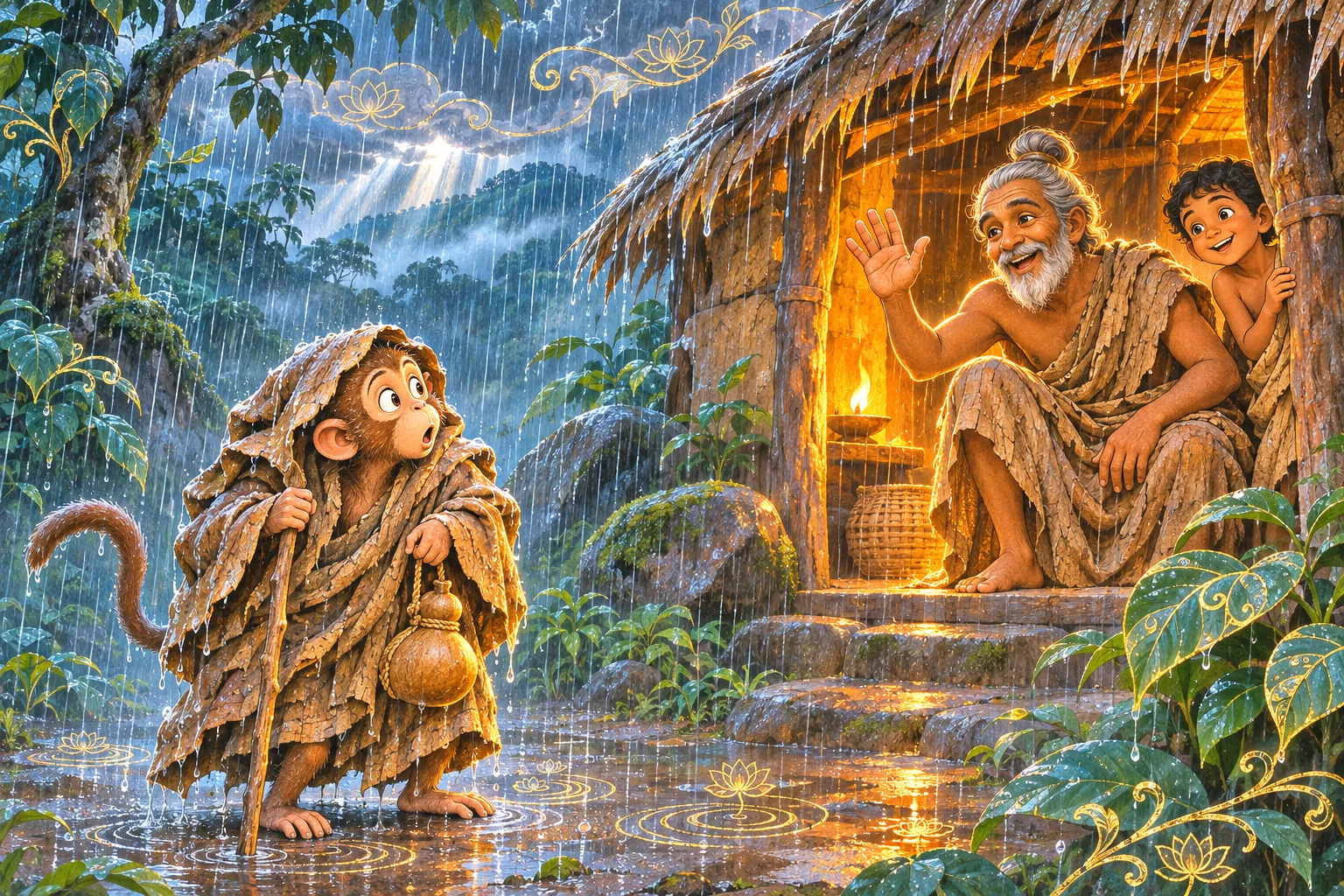
“If we let him in, he will jump about, knock over our pots and scatter our fire,” said the father. “A robe does not make someone good.”
“අපි එයාට ඇතුළට එන්න දුන්නොත්, එයා පනිමින් අපේ මුට්ටි පෙරළලා ගින්න විසුරුවයි,” පියා කීවා. “සිවුරක් කෙනෙකුව යහපත් කරන්නේ නැහැ.”
He called out kindly, “Off you go, little monkey! Find a dry hollow tree to shelter in.”
ඔහු කරුණාවෙන් කෑ ගැසුවා, “පුංචි වඳුරා, යන්න! නවාතැන් ගන්න වියළි හිස් ගසක් හොයාගන්න.”
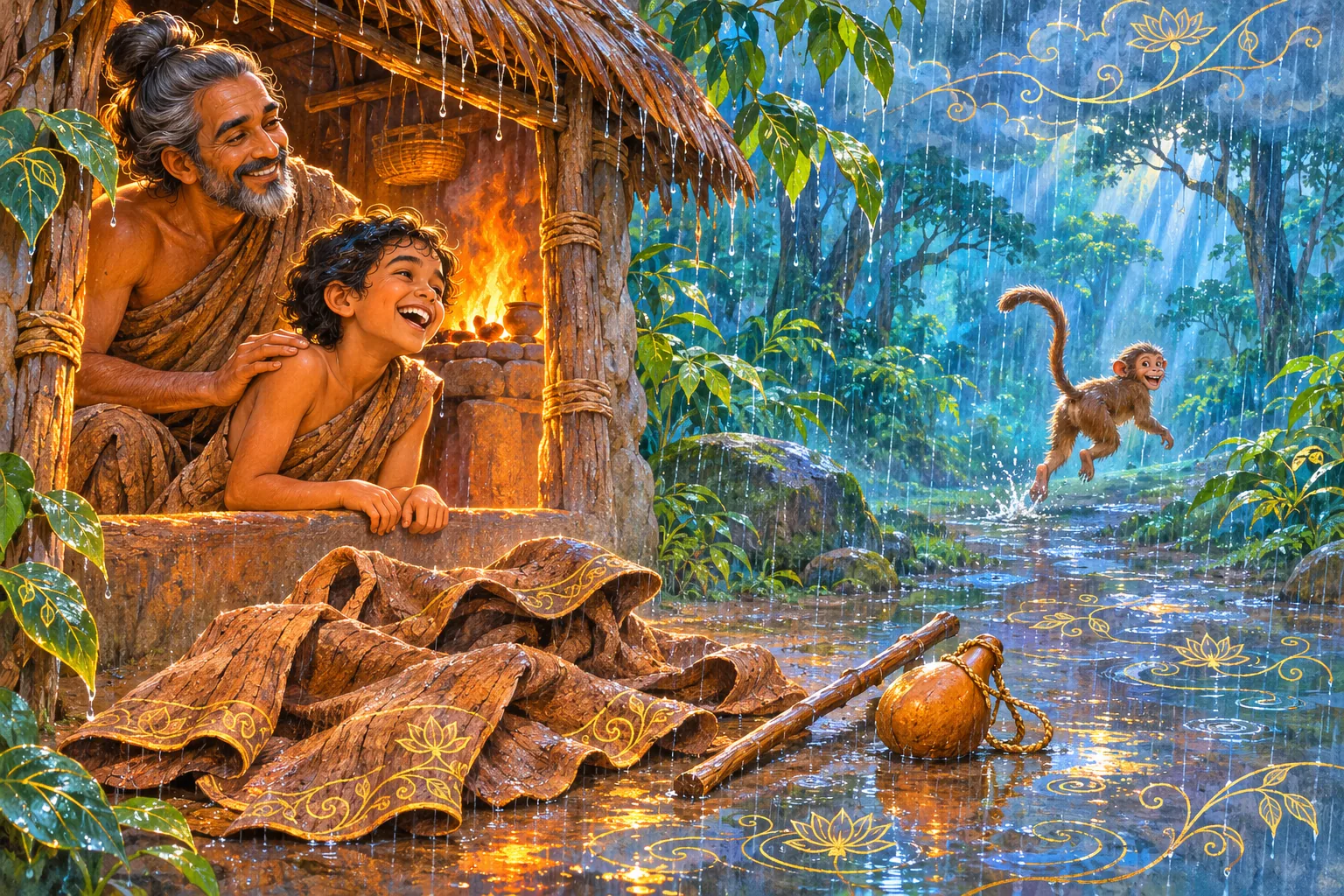
The monkey dropped the robe and the stick and scampered off into the trees, looking rather silly.
වඳුරා සිවුරත් සැරයටියත් බිම දමා, තරමක් මෝඩ පෙනුමකින් ගස් අතරට දිව ගියා.
The boy laughed. “I would never have known!”
කොලුවා සිනාසුණා. “මට කවදාවත් ඒක දැනගන්න ලැබෙන්නේ නැහැ!”
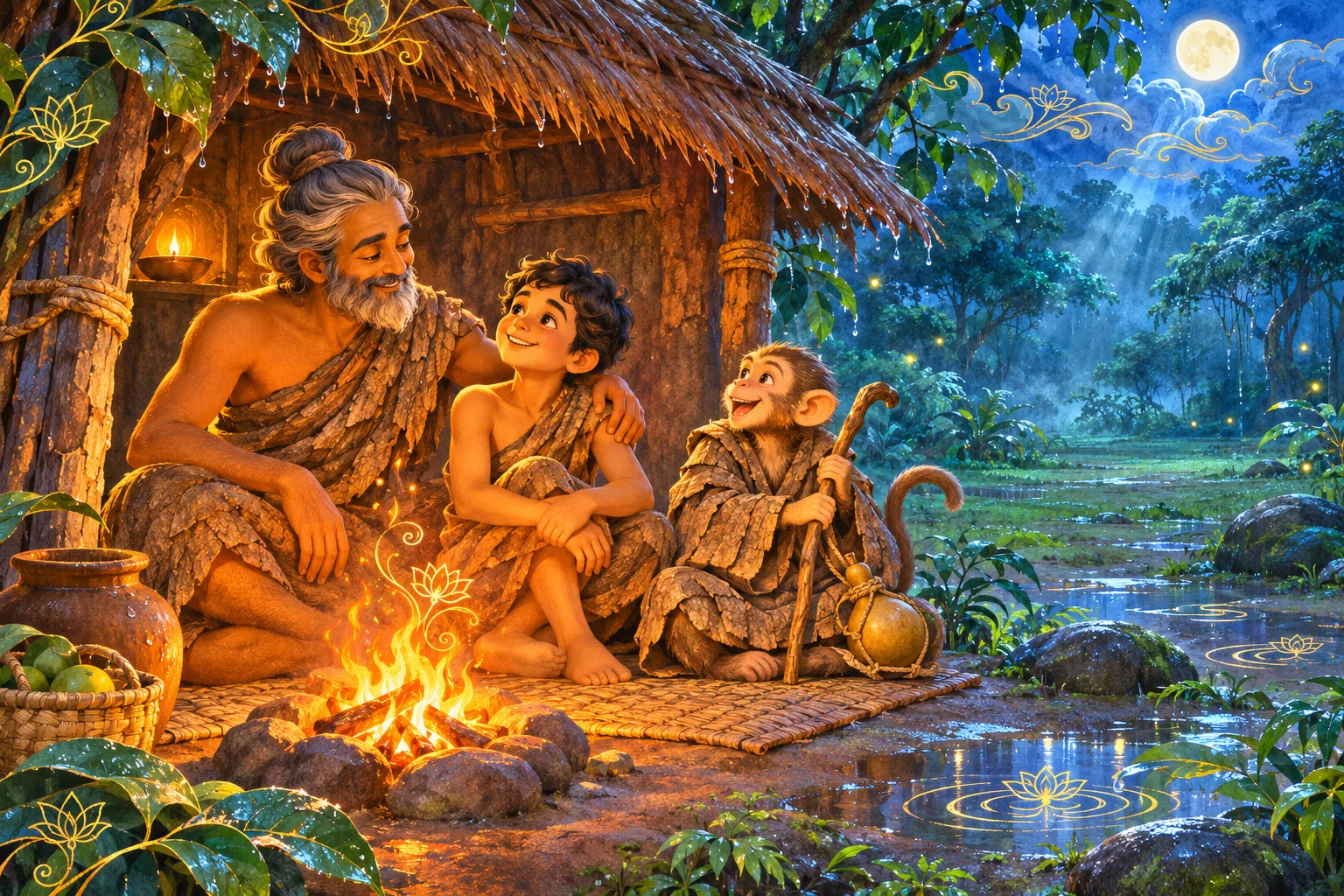
“Always look carefully,” said his father, as they sat warm by their little fire. “Clothes and looks can fool us.
“හැමදාම හොඳින් බලන්න,” ඔවුන් තම පුංචි ගින්න ළඟ උණුසුම්ව වාඩි වී සිටියදී පියා කීවා. “ඇඳුම් සහ පෙනුම අපව රවට්ටන්න පුළුවන්.
It is how someone behaves that shows who they really are.”
කෙනෙක් ඇත්තටම කවුද කියලා පෙන්වන්නේ ඔවුන් හැසිරෙන විදිහයි.”
Who was who?
The Buddha told this story about someone who pretended to be holy without truly being good. The wise father was the Bodhisatta.
The lesson
Don’t judge by looks or clothes. What someone does shows who they really are.
Let's talk
- How did the monkey try to look like a hermit?
- How did the father know the truth?
- Why is it important to look at how people behave?
කවුද කවුරුන් වූයේ?
සැබවින්ම යහපත් නොවී සිල්වත් ලෙස රඟපෑ අයෙකු ගැන බුදුරජාණන් වහන්සේ මේ කතාව වදාළා. නුවණැති පියා වූයේ බෝසතාණන් වහන්සේයි.
පාඩම
පෙනුමෙන් හෝ ඇඳුම්වලින් විනිශ්චය කරන්න එපා. කෙනෙක් කරන දේ ඔවුන් ඇත්තටම කවුද කියලා පෙන්වනවා.
අපි කතා කරමු
- වඳුරා තවුසෙකු වගේ පෙනෙන්න උත්සාහ කළේ කොහොමද?
- පියා සත්යය දැනගත්තේ කොහොමද?
- මිනිසුන් හැසිරෙන විදිහ දෙස බැලීම වැදගත් ඇයි?
Retold for children by Fablewings from the Makkaṭa Jātaka (Jātaka No. 173; English translation ed. E. B. Cowell, vol. II, 1895, public domain) and the Sinhala Pansiya Panas Jātaka tradition. Illustrations made with AI assistance for Fablewings.