The Nibbled Cloth
මීයා කෑ රෙද්ද
Maṅgala Jātaka (No. 87) · මංගල ජාතකය (අංක 87)
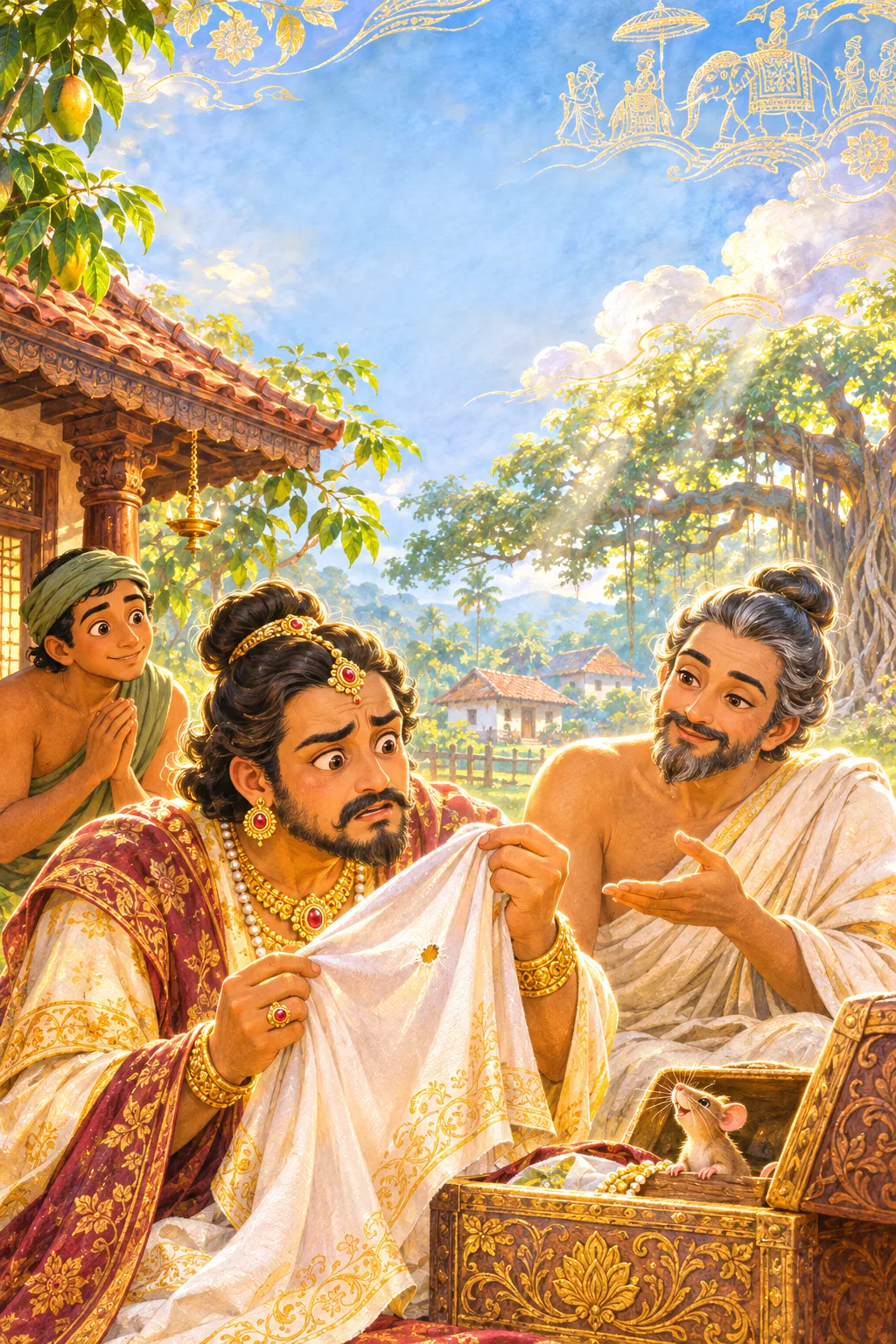
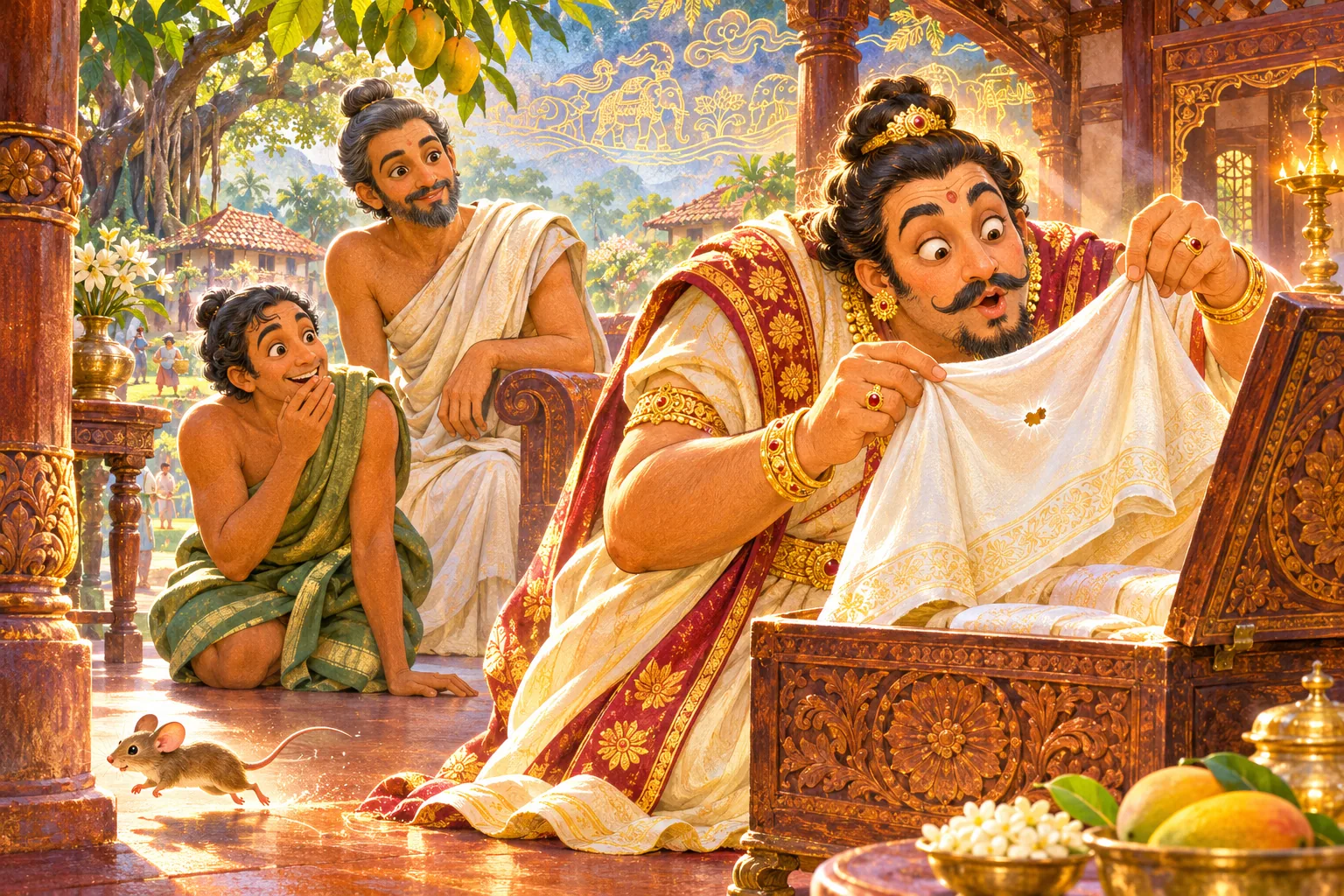
Long ago, a rich man opened his chest one morning and found that a mouse had nibbled a tiny hole in his finest cloth.
බොහෝ කලකට පෙර, ධනවත් මිනිසෙක් එක් උදෑසනක තම පෙට්ටිය ඇරියා. මීයෙක් ඔහුගේ හොඳම රෙද්දේ පුංචි සිදුරක් කාලා තිබුණා.
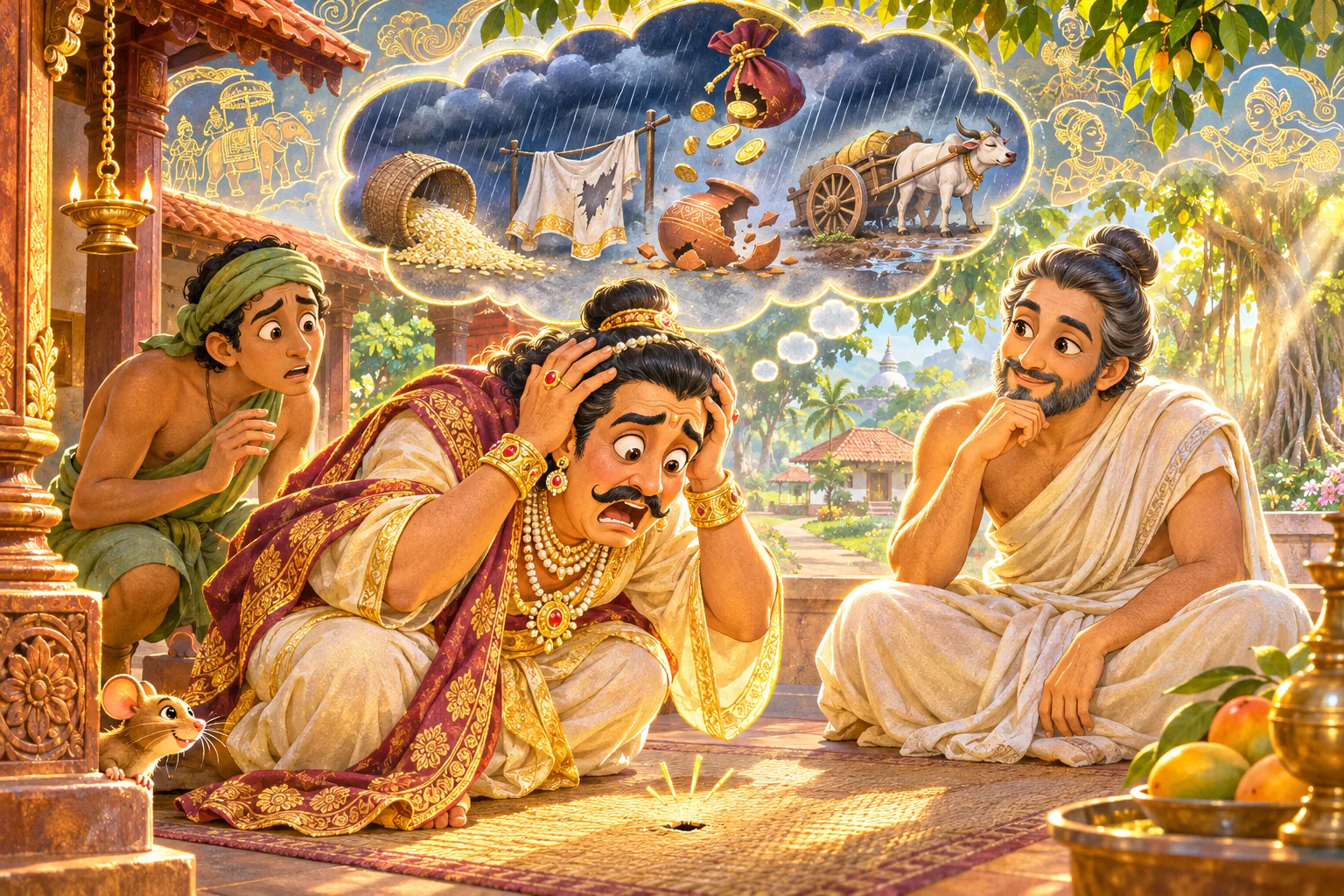
He gasped. “Mouse-bitten cloth brings terrible bad luck!” he cried. “If I keep it, something awful will happen to my family!”
ඔහු හති දැම්මා. “මීයා කෑ රෙදි දරුණු අවාසනාවක් ගෙනෙනවා!” ඔහු කෑ ගැසුවා. “මම මේක තියාගත්තොත් මගේ පවුලට මොකක් හරි භයානක දෙයක් වෙයි!”
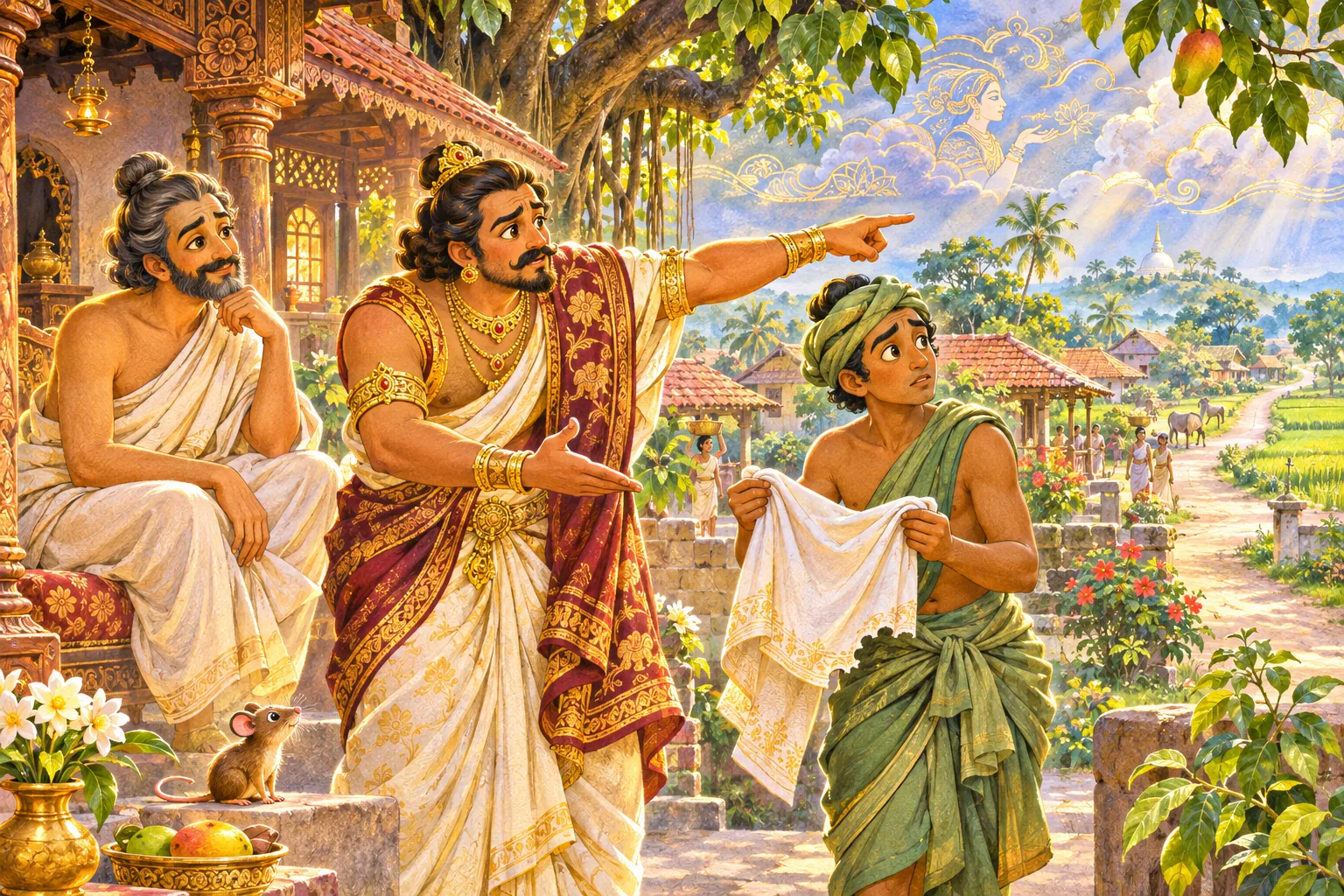
So he told his servant to carry the cloth on a long stick, without touching it, and throw it far away at the edge of the village.
ඉතින් ඔහු තම සේවකයාට රෙද්ද අල්ලන්නේ නැතිව දිගු කෝටුවක් උඩ තබාගෙන ගමේ මායිමේ ඈතට විසි කරන්න කීවා.
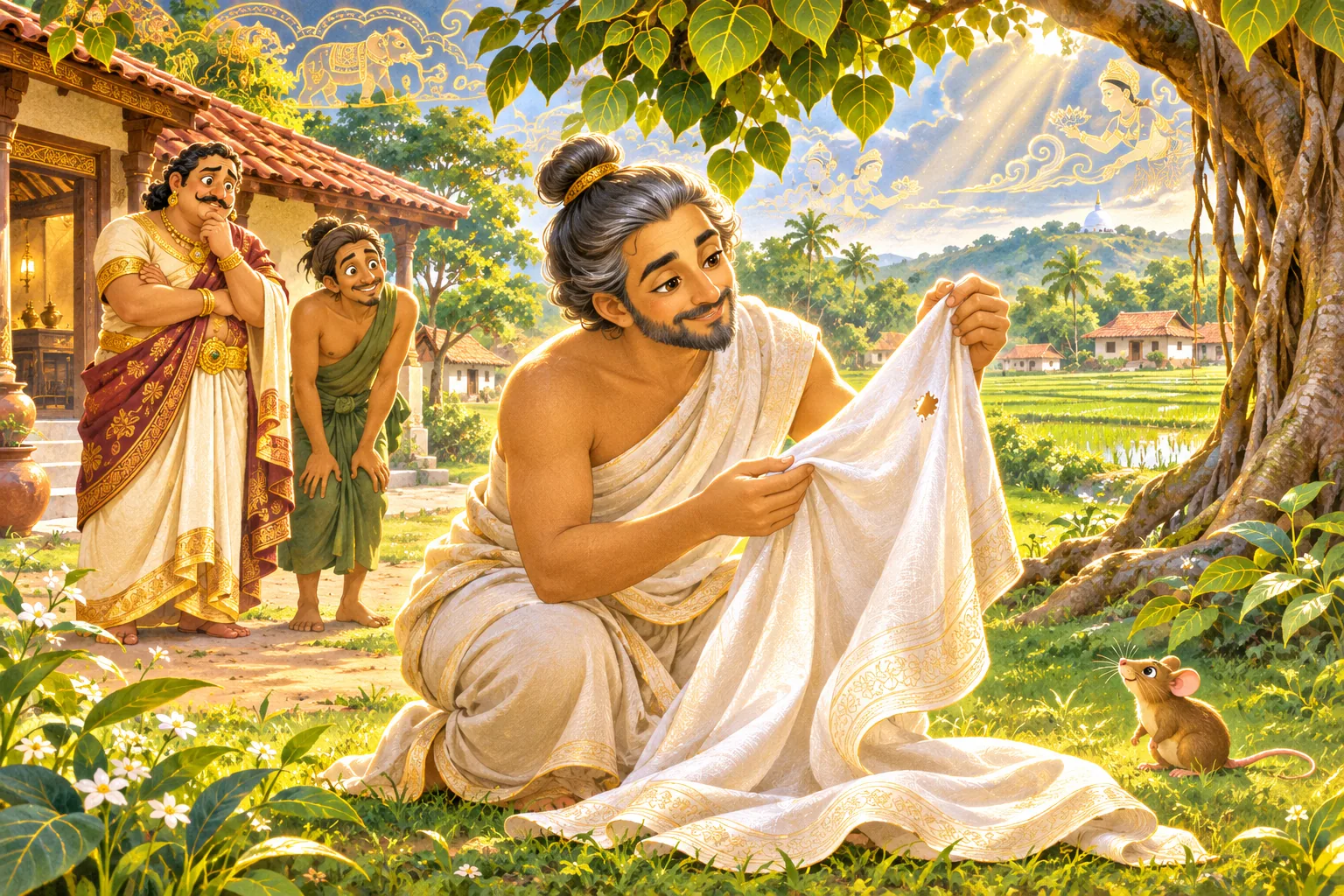
A wise teacher walking by saw the good cloth lying in the dust. “What a waste,” he said, and he picked it up.
ඒ පැත්තෙන් ඇවිද ගිය නුවණැති ගුරුවරයෙකුට දූවිල්ලේ වැටී තිබූ හොඳ රෙද්ද පෙනුණා. “මොනතරම් නාස්තියක්ද,” ඔහු කියා එය අහුලා ගත්තා.
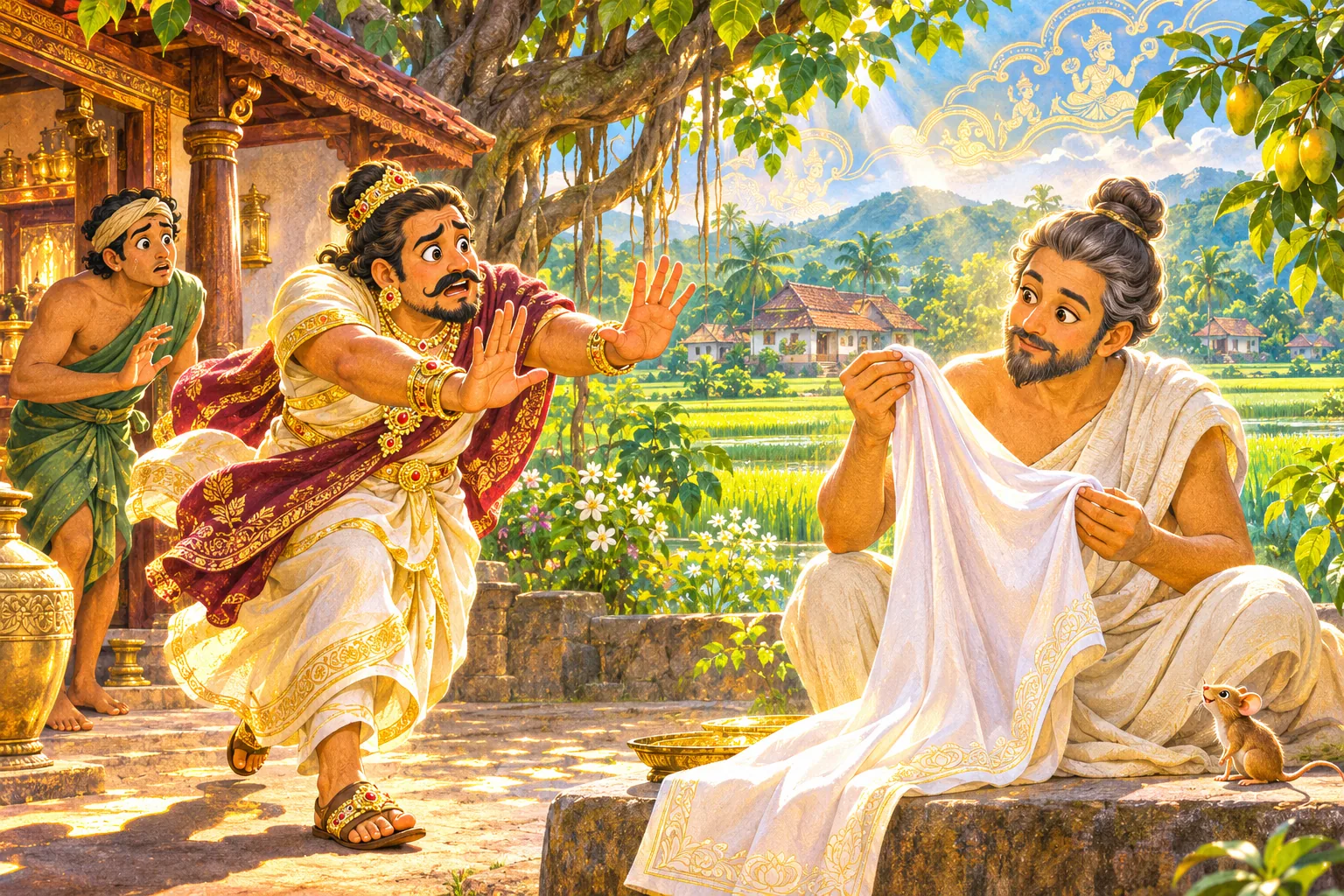
The rich man came running, waving his arms. “Don’t touch it!” he shouted. “It’s full of bad luck!”
ධනවත් මිනිසා අත් වනමින් දුවගෙන ආවා. “ඒක අල්ලන්න එපා!” ඔහු කෑ ගැසුවා. “ඒක අවාසනාවෙන් පිරිලා!”
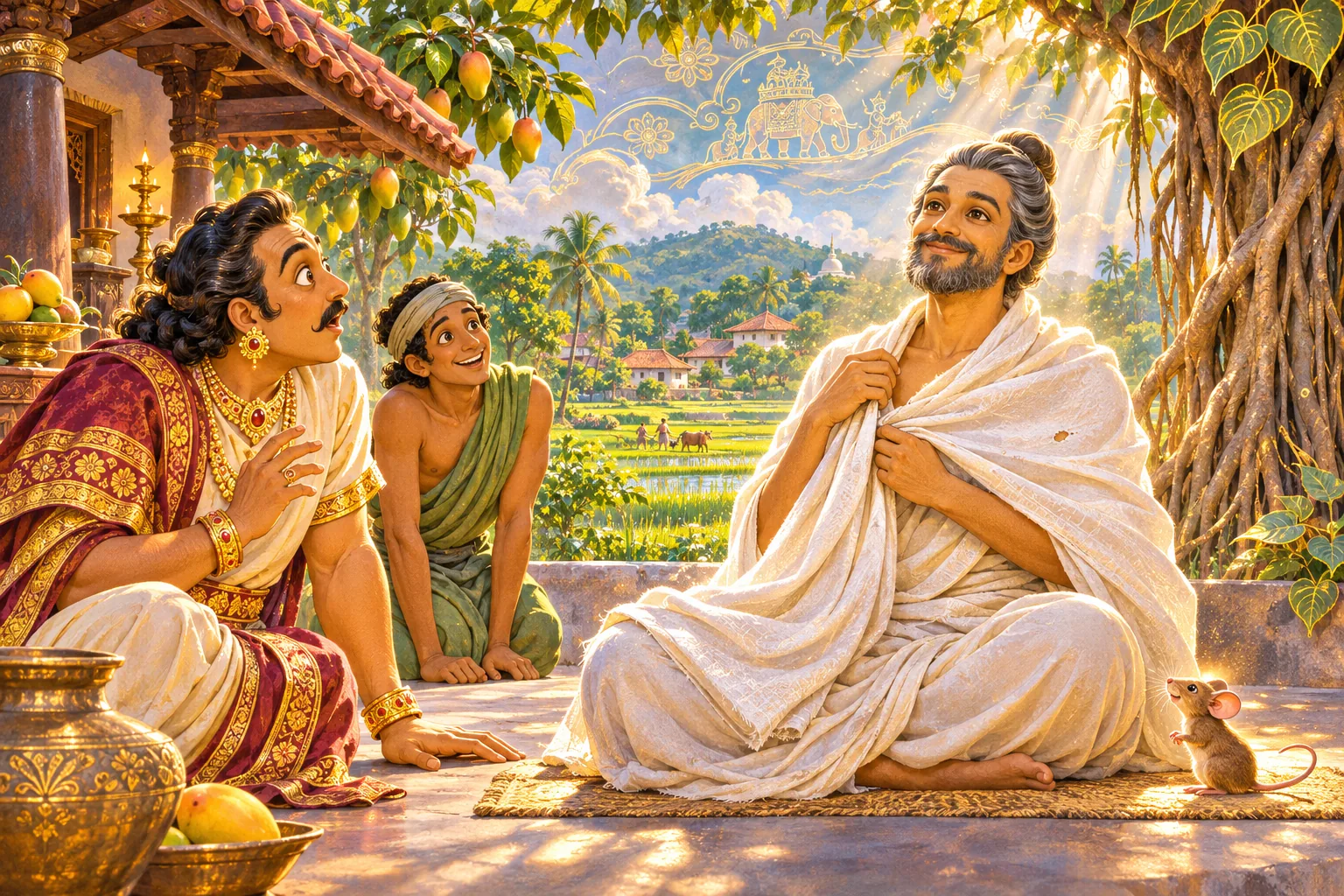
The teacher only smiled and wrapped the cloth around his shoulders. “It looks perfectly good to me,” he said.
ගුරුවරයා සිනාසී රෙද්ද තම උරහිස් වටා පොරවා ගත්තා විතරයි. “මට නම් ඒක හොඳට තියෙනවා වගේ පේනවා,” ඔහු කීවා.
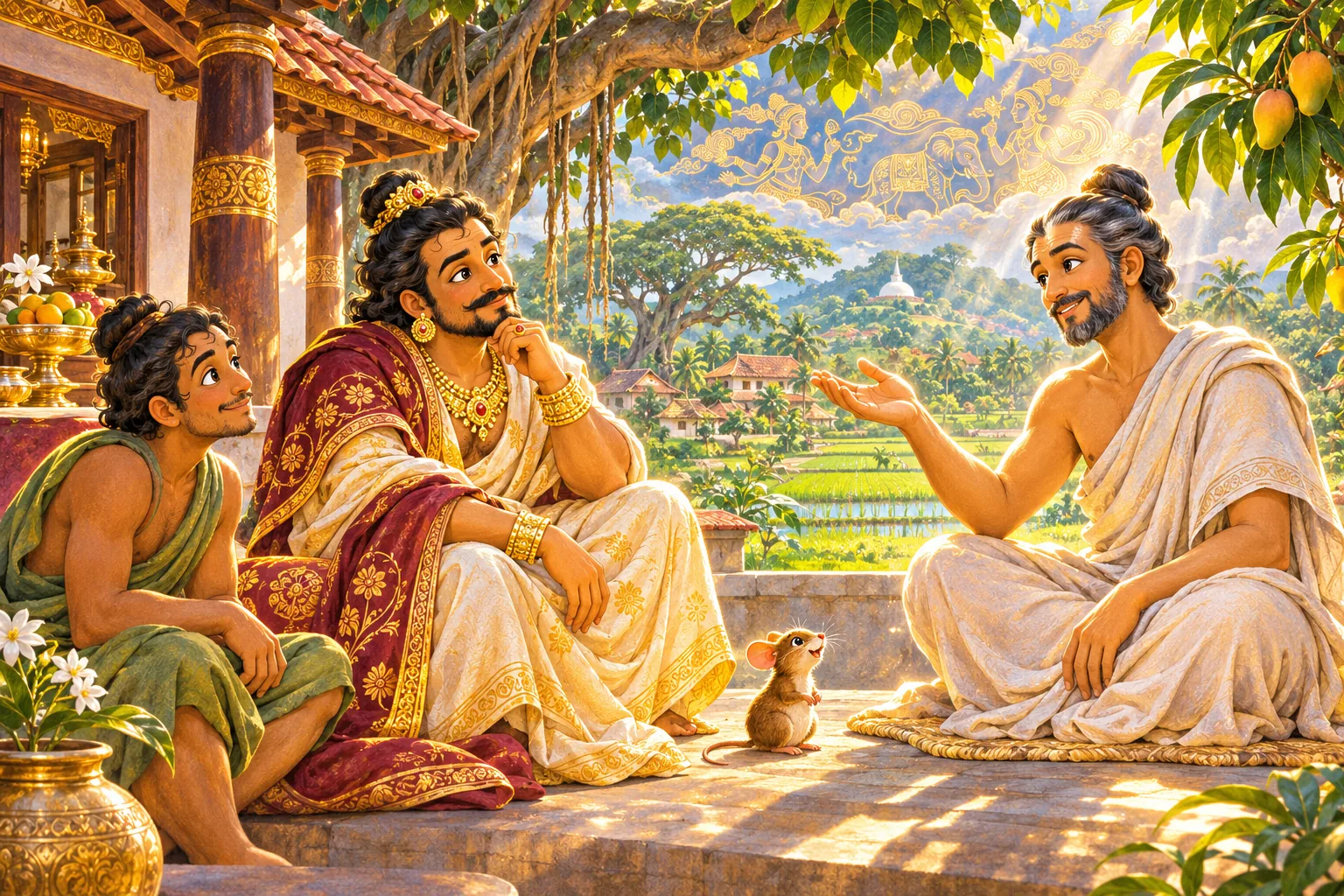
“A mouse nibbles cloth because it is hungry,” he explained kindly. “It doesn’t know anything about luck. Our luck comes from what we think, say and do, not from mice or signs.”
“මීයෙක් රෙදි කන්නේ ඌට බඩගිනි නිසා,” ඔහු කාරුණිකව පැහැදිලි කළා. “ඌ වාසනාව ගැන කිසිවක් දන්නේ නැහැ. අපේ වාසනාව එන්නේ අපි හිතන, කියන, කරන දේවලින් මිස මීයන්ගෙන් හෝ ලකුණුවලින් නොවෙයි.”
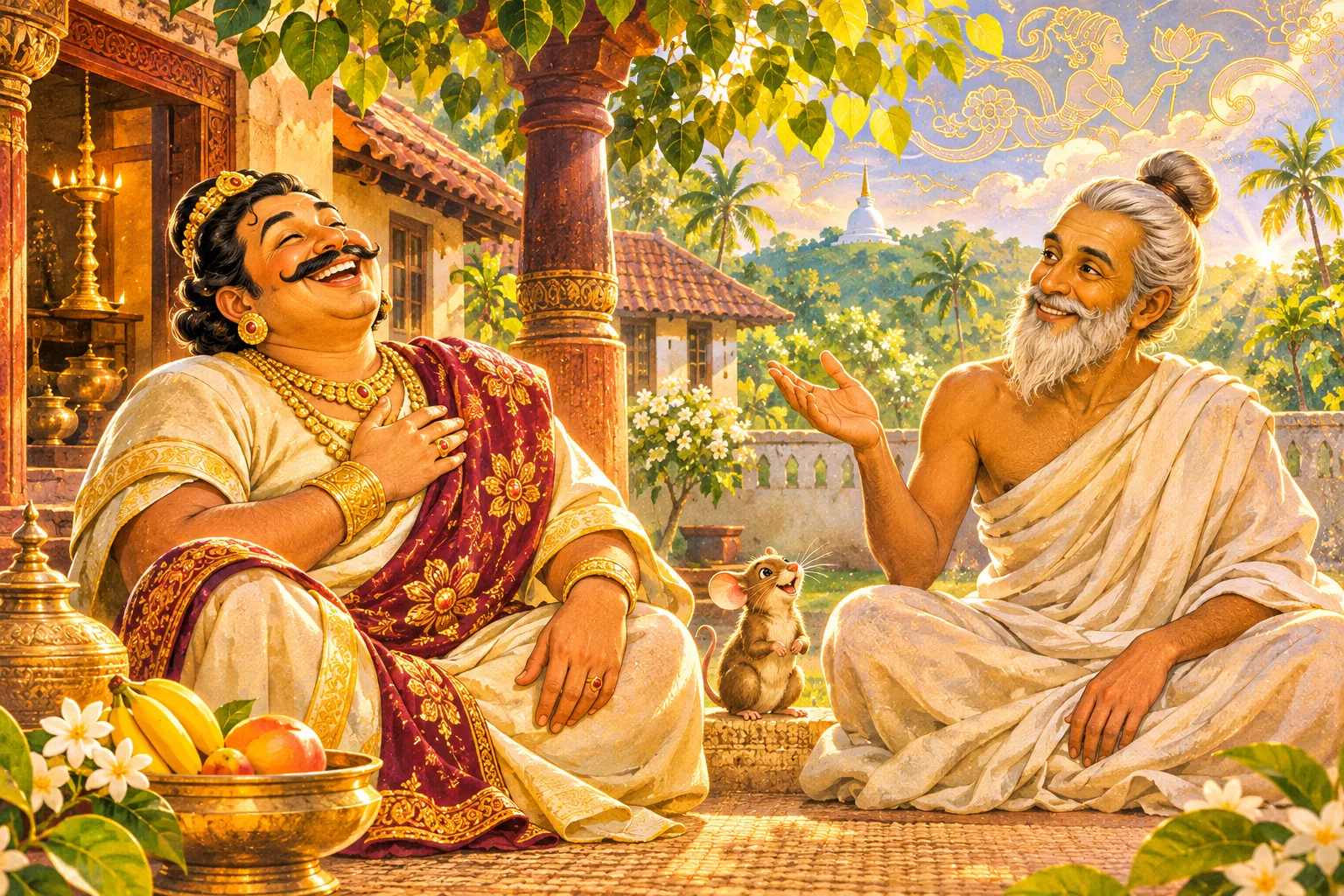
The rich man thought about it, and then he laughed with relief. “I’ve been afraid of a little hole!” he said. And from then on, he stopped worrying about signs and omens.
ධනවත් මිනිසා ඒ ගැන සිතා, ඉන්පසු සහනයෙන් සිනාසුණා. “මම පුංචි සිදුරකට බය වෙලා!” ඔහු කීවා. එතැන් සිට ඔහු ලකුණු සහ පෙර නිමිති ගැන කනස්සල්ලට පත් වීම නැවැත්තුවා.
Who was who?
In the story, the wise teacher was the Bodhisatta, the Buddha in one of his past lives.
The lesson
We don’t need to fear signs and superstitions. What really matters is how we think and act.
Let's talk
- Why was the rich man afraid?
- What did the wise teacher say about luck?
- What really makes good things happen?
කවුද කවුරුන් වූයේ?
කතාවේ නුවණැති ගුරුවරයා බෝසතාණන් වහන්සේ, එනම් පෙර ආත්මයක බුදුරජාණන් වහන්සේයි.
පාඩම
අපට ලකුණු සහ මිථ්යා විශ්වාසවලට බය වෙන්න අවශ්ය නැහැ. ඇත්තටම වැදගත් වන්නේ අපි හිතන, ක්රියා කරන විදිහයි.
අපි කතා කරමු
- ධනවත් මිනිසා බය වුණේ ඇයි?
- නුවණැති ගුරුවරයා වාසනාව ගැන කීවේ මොකක්ද?
- ඇත්තටම හොඳ දේවල් සිදු කරන්නේ මොකක්ද?
Retold for children by Fablewings from the Maṅgala Jātaka (Jātaka No. 87; English translation ed. E. B. Cowell, vol. I, 1895, public domain) and the Sinhala Pansiya Panas Jātaka tradition. Illustrations made with AI assistance for Fablewings.