The Two Pig Brothers
ඌරු සහෝදරයෝ දෙදෙනා
Tuṇḍila Jātaka (No. 388) · තුණ්ඩිල ජාතකය (අංක 388)
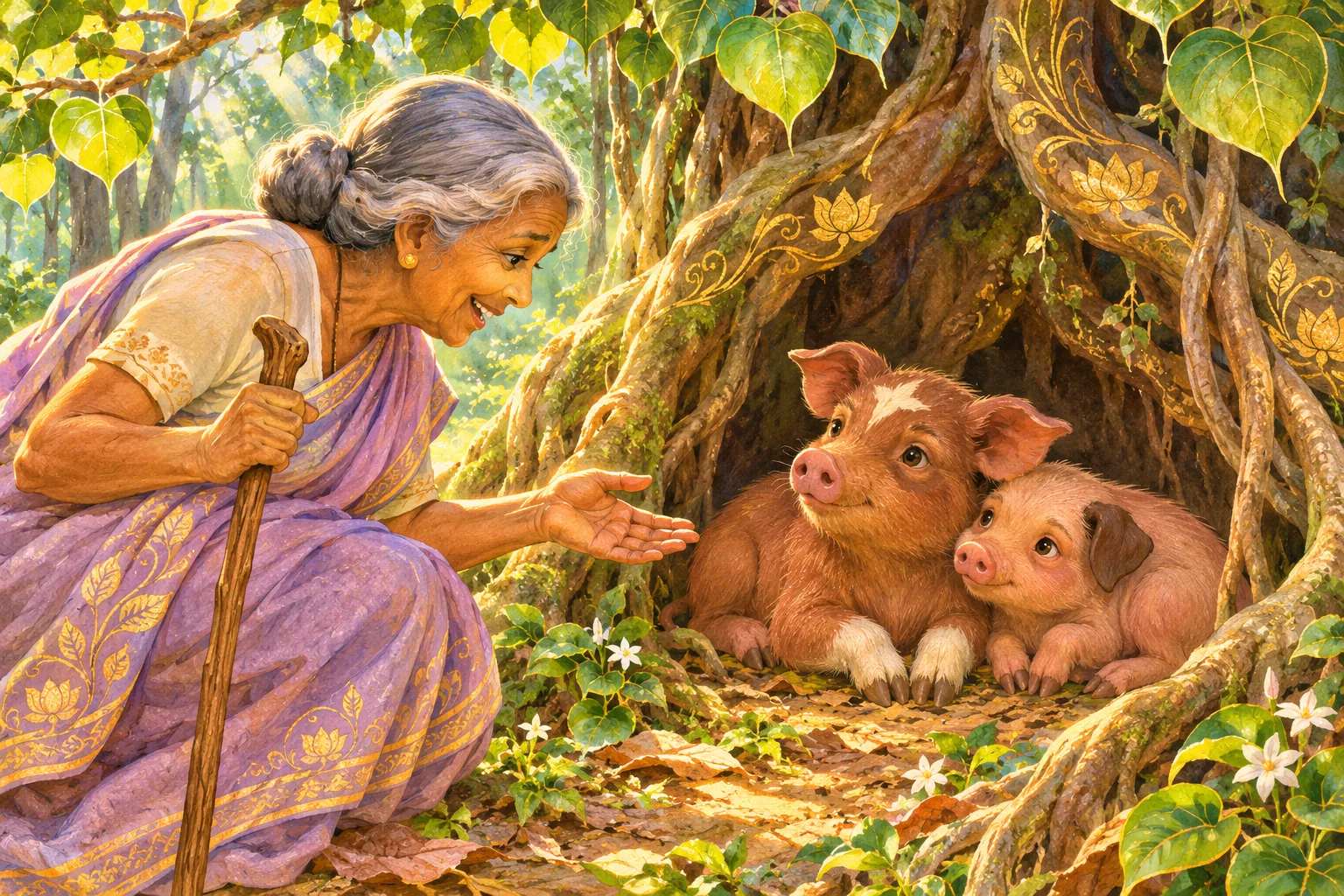
Long ago, a kind old woman with a walking stick found two tiny piglets alone in a forest hollow. Their mother had run away, frightened by the tap-tap of her stick.
බොහෝ කලකට පෙර, සැරයටියක් අතැති කාරුණික මහලු කාන්තාවකට වනයේ වළක තනිවම හිටි පුංචි ඌරු පැටවුන් දෙදෙනෙක් හම්බ වුණා. ඇගේ සැරයටියේ ටක්-ටක් හඬට බයවුණු ඔවුන්ගේ අම්මා දුවලා ගිහින්.
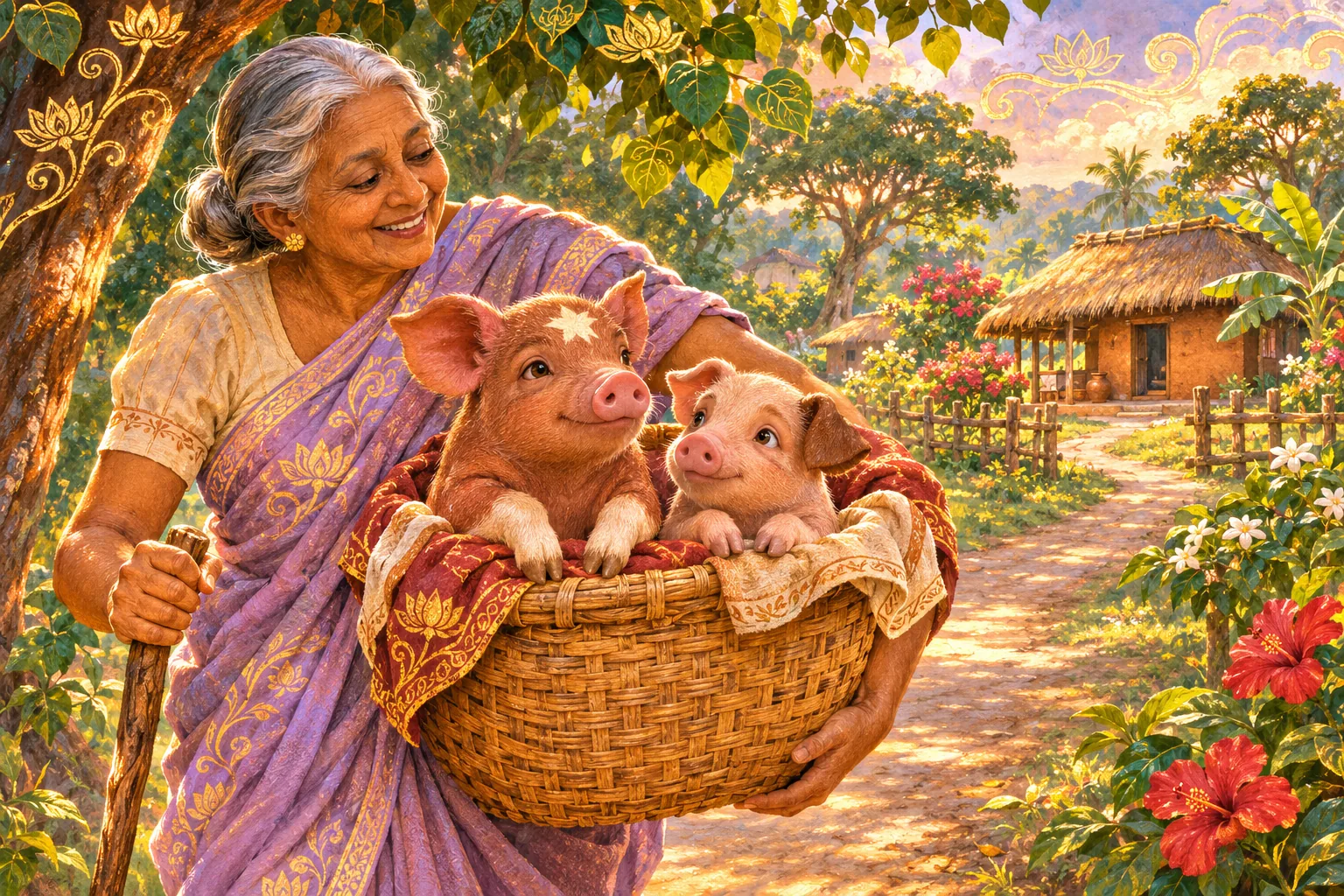
She carried them home in her basket and raised them as if they were her own children, feeding and petting them every day.
ඇය ඔවුන්ව තම කූඩයේ ගෙදර ගෙනිහින්, හැමදාම කෑම දී, ආදරයෙන් පිරිමදිමින් තමාගේම දරුවන් වගේ ඇති දැඩි කළා.
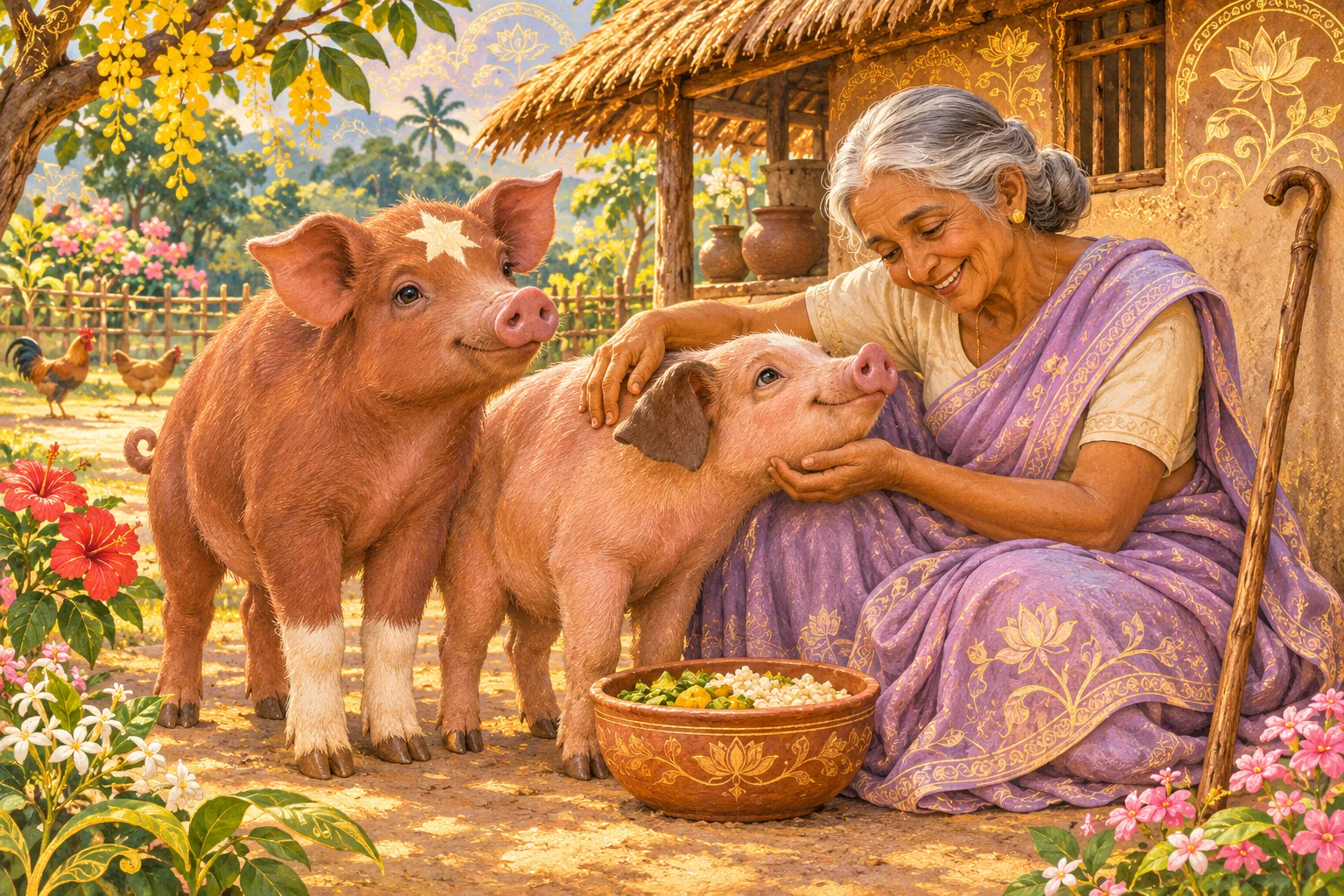
The two brothers grew big and strong. The elder brother was calm and wise. The younger one was easily frightened.
සහෝදරයෝ දෙදෙනා ලොකු වී ශක්තිමත් වුණා. වැඩිමලා සන්සුන්, නුවණැති කෙනෙක්. බාලයා ලේසියෙන් බය වුණා.
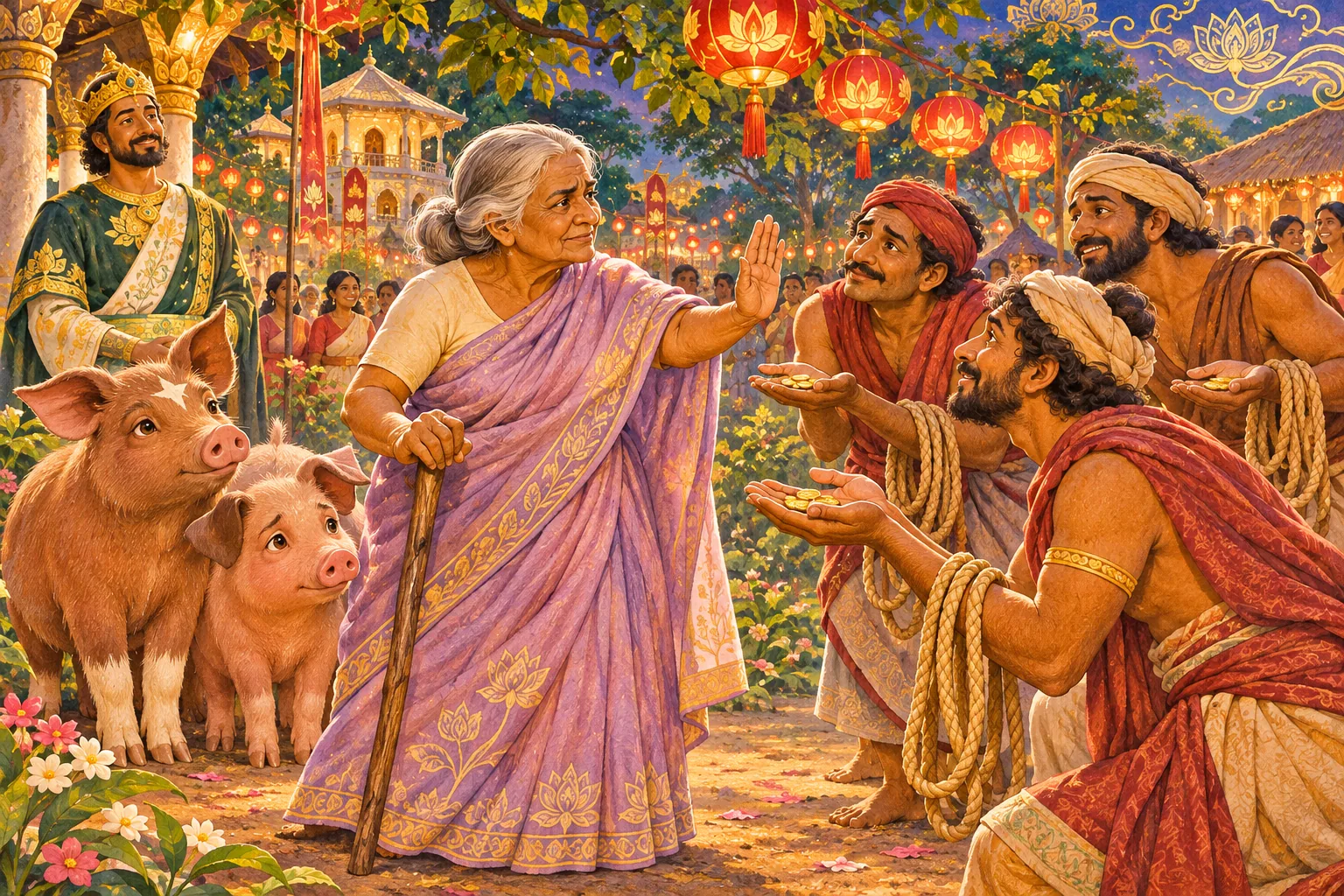
At festival time, some men came and pleaded with the old woman to sell them a pig. She refused again and again, but at last she gave in and agreed to sell the younger brother.
උත්සව කාලයේ සමහර මිනිස්සු ඇවිත් ඌරෙක් විකුණන්න කියලා මහලු කාන්තාවගෙන් ඉල්ලුවා. ඇය නැවත නැවත ප්රතික්ෂේප කළත්, අන්තිමේදී බාල සහෝදරයාව විකුණන්න එකඟ වුණා.
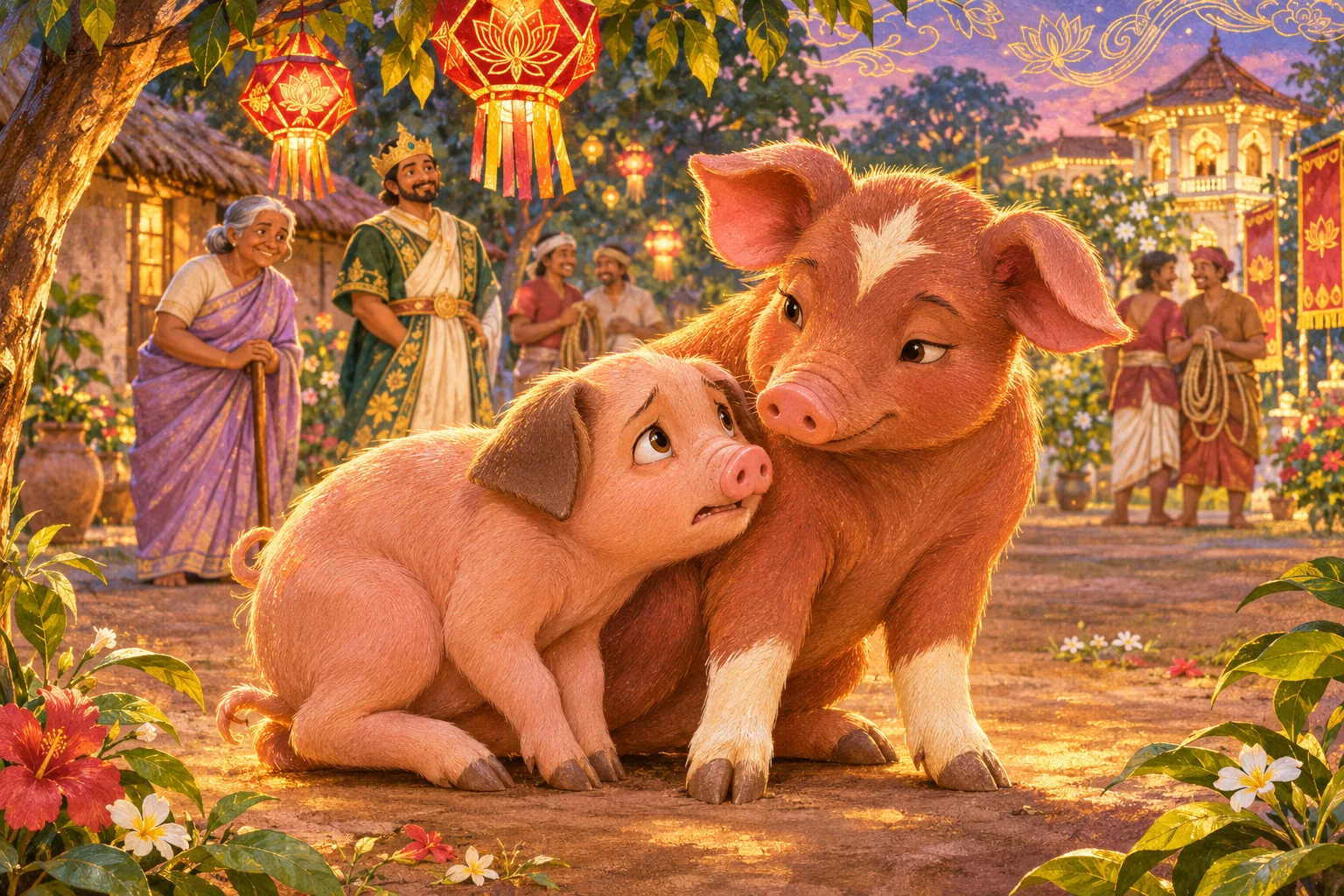
When the younger pig saw the men waiting with ropes, he trembled and ran to his elder brother. “Brother, I’m so scared!”
ලණු අරගෙන බලා සිටි මිනිසුන්ව දැක්ක බාල ඌරා වෙව්ලමින් තම වැඩිමල් සහෝදරයා ළඟට දිව්වා. “අයියේ, මට හරිම බයයි!”
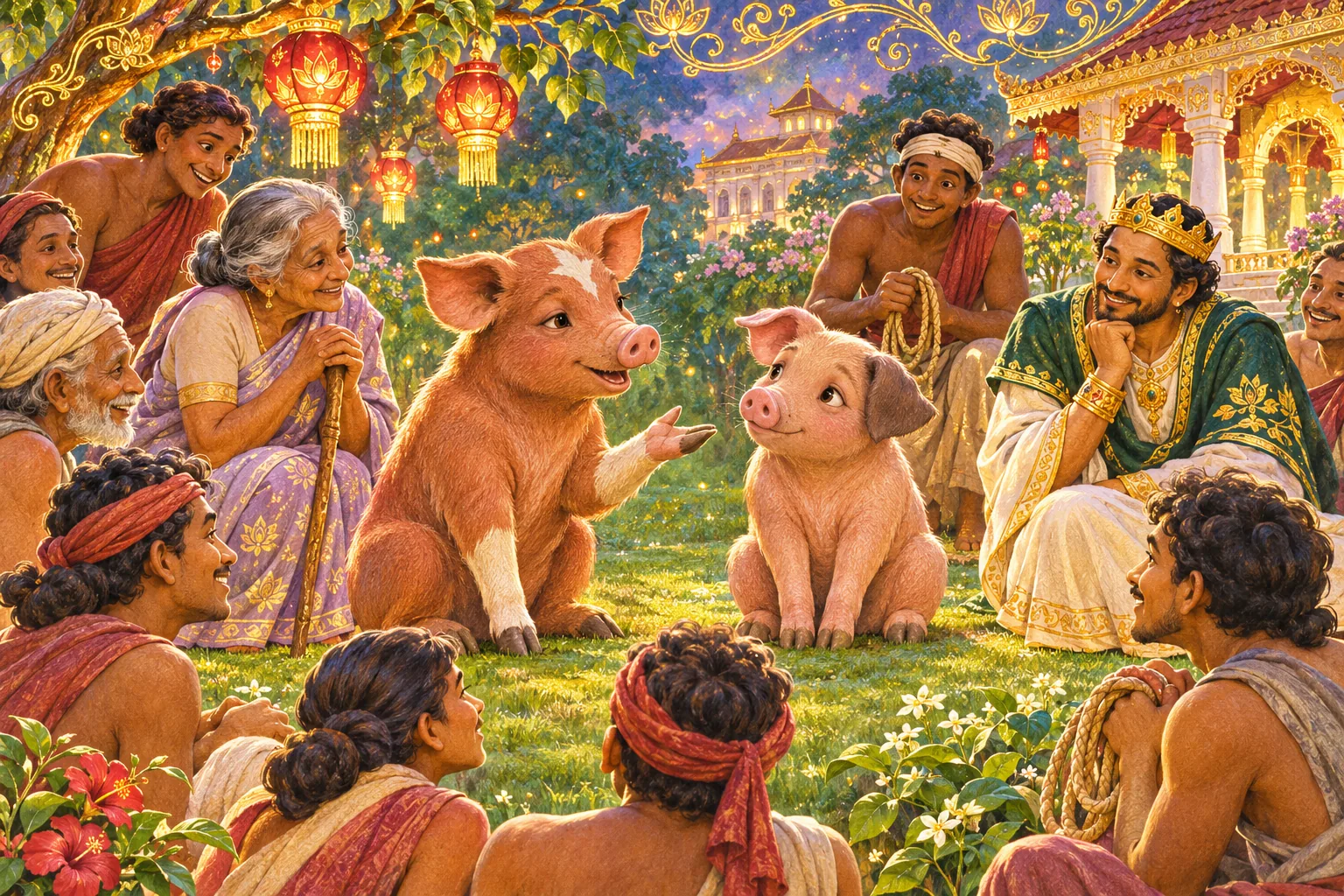
The elder brother spoke to him calmly and kindly, about being brave, about kindness and love for all living things. His voice was so gentle and wise that everyone nearby stopped to listen.
වැඩිමල් සහෝදරයා ඔහුට සන්සුන්ව, කාරුණිකව, නිර්භීත වීම ගැන, සියලු ජීවීන්ට කරුණාව සහ ආදරය ගැන කතා කළා. ඔහුගේ හඬ කොච්චර මෘදු, නුවණැතිද කියනවා නම්, අසල හිටපු හැමෝම නැවතී ඇහුම්කන් දුන්නා.
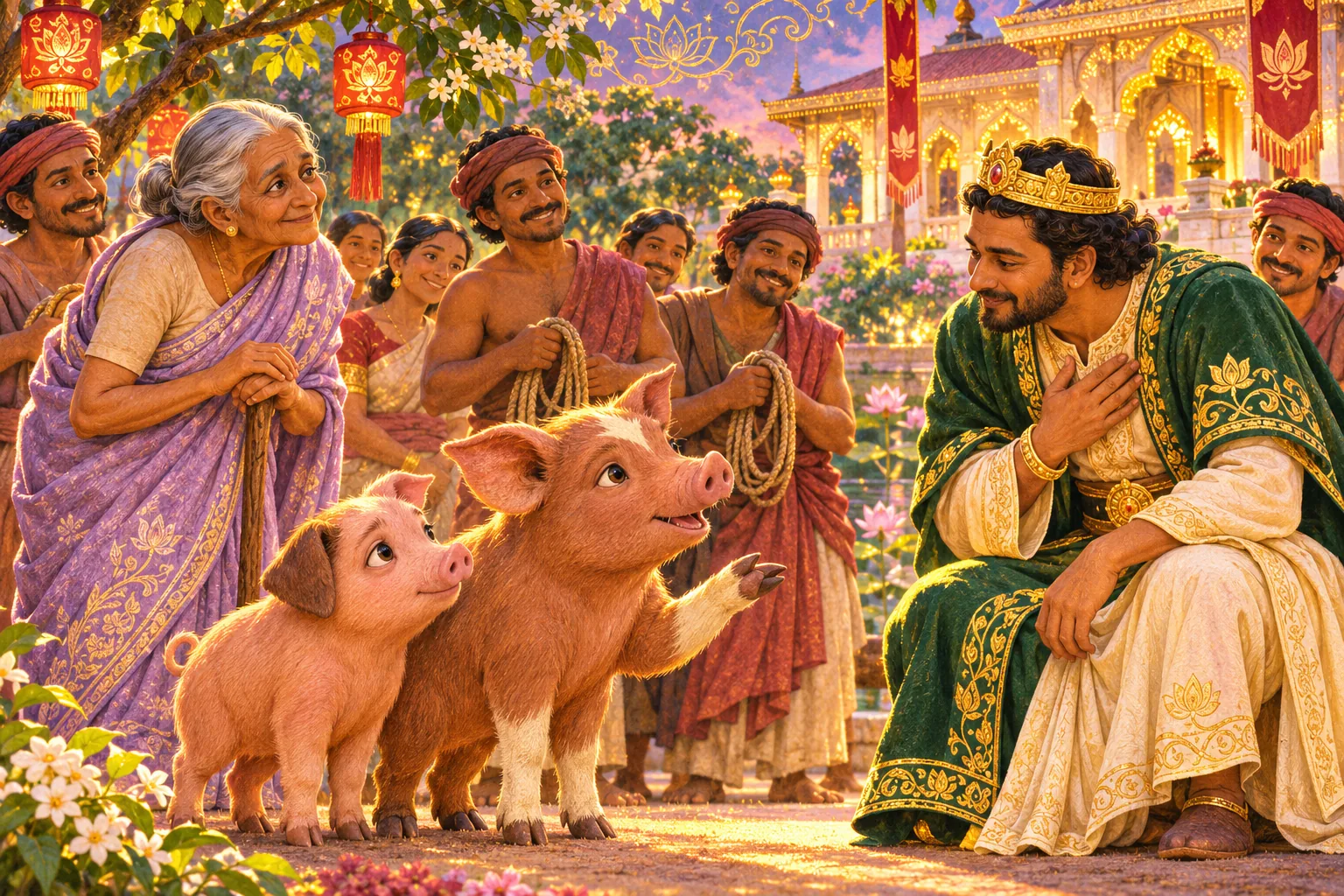
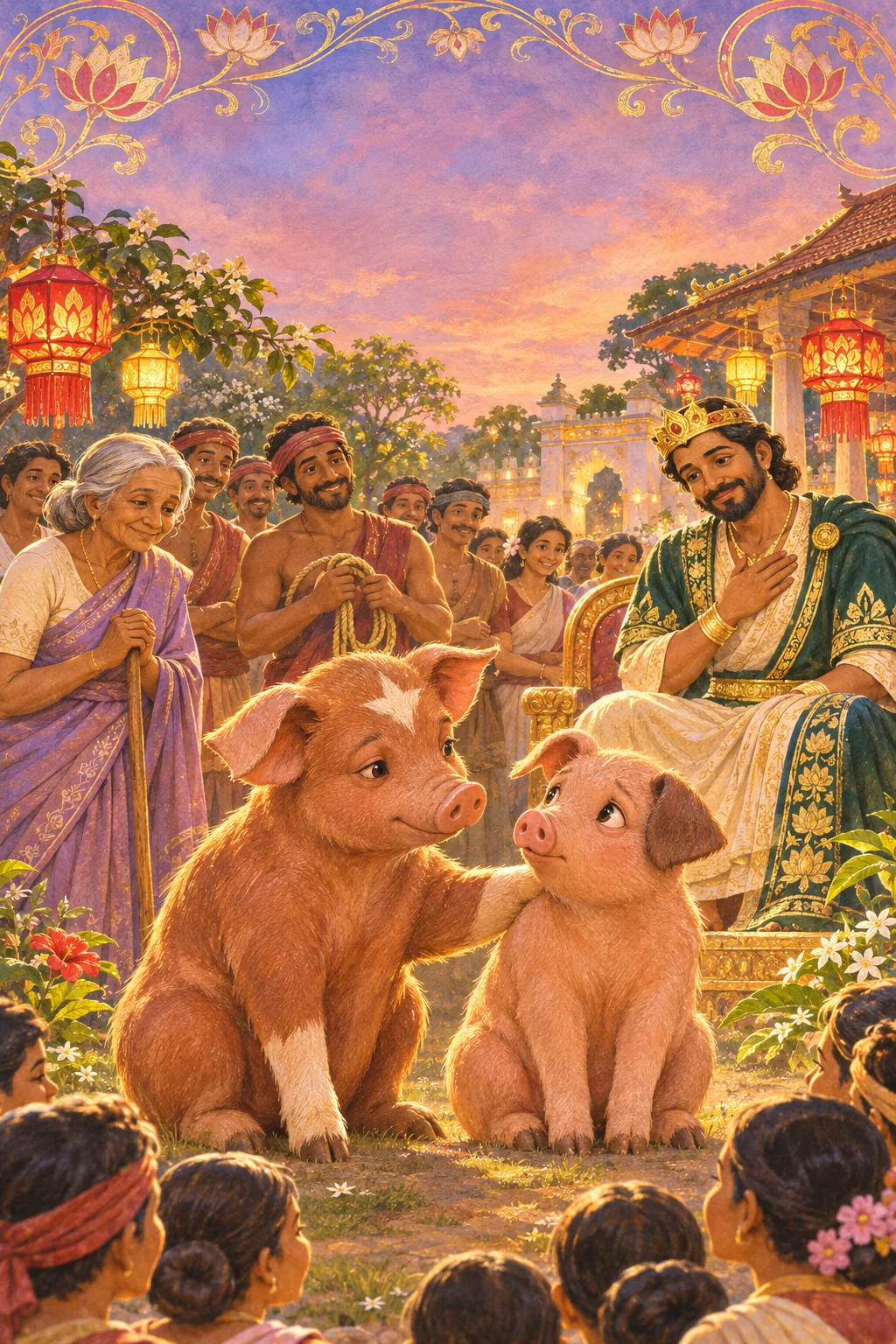
Word spread, and the king himself came to listen. He was deeply moved. “Such wisdom should be cared for, not harmed,” he said.
ආරංචිය පැතිරුණා. රජු පවා ඇහුම්කන් දෙන්න ආවා. ඔහුගේ සිත ගැඹුරින් උණු වුණා. “මෙවැනි ප්රඥාව රැකබලා ගත යුතුයි, හානි කළ යුතු නැහැ,” ඔහු කීවා.
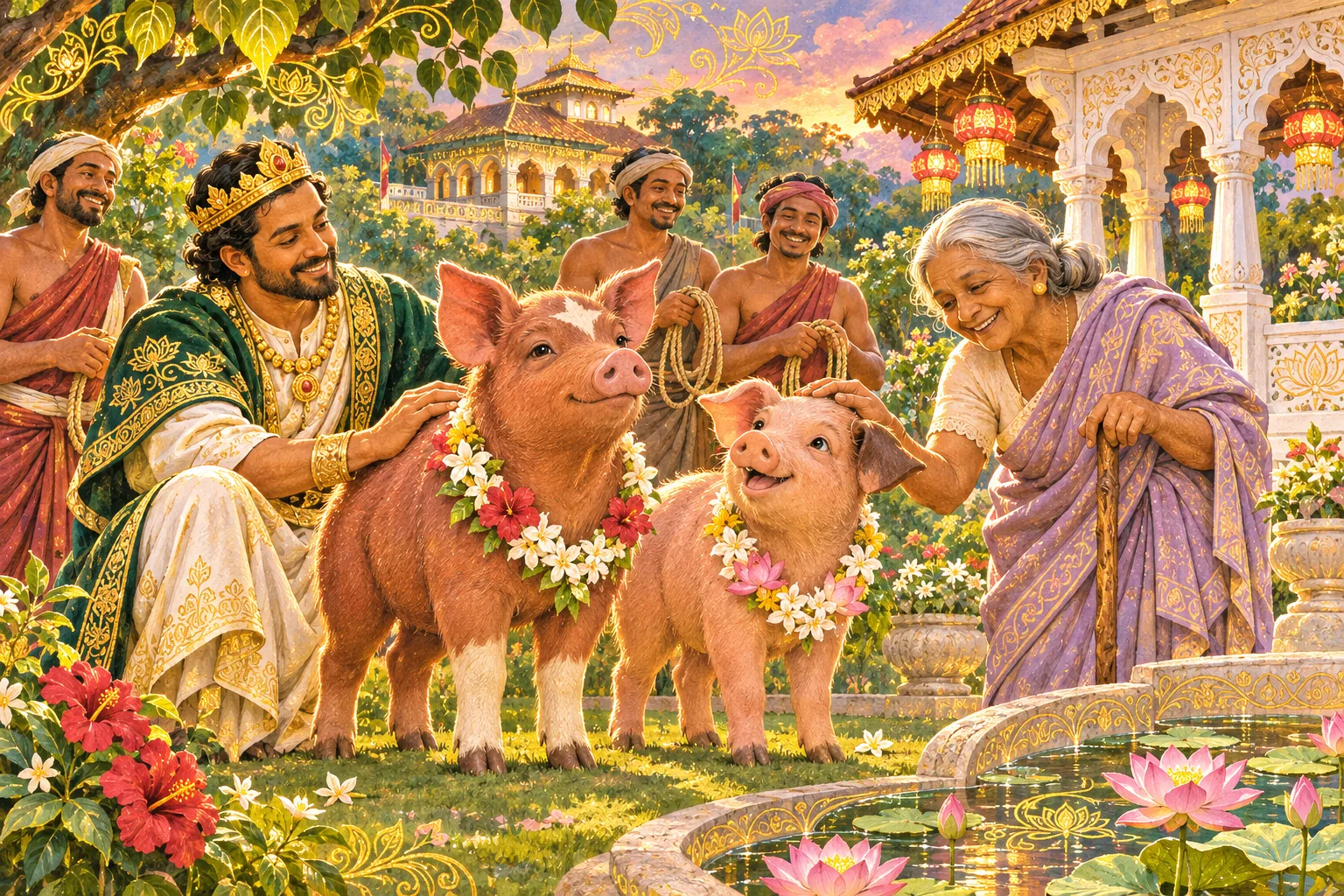
So the king took both pig brothers to live in his palace garden, and the old woman visited them often. The elder brother became the king’s wise adviser, and they all lived happily together.
ඉතින් රජු ඌරු සහෝදරයන් දෙදෙනාවම තම මාලිගා උයනේ ජීවත් වෙන්න එක්කගෙන ගියා. මහලු කාන්තාව නිතර ඔවුන්ව බලන්න ආවා. වැඩිමල් සහෝදරයා රජුගේ නුවණැති උපදේශකයා වුණා. ඔවුන් හැමෝම සතුටින් එකට ජීවත් වුණා.
Who was who?
In the story, the elder pig was the Bodhisatta, the Buddha in one of his past lives. In the original story the men make the old woman drunk so that she will sell the younger pig, and the elder brother teaches him to face death bravely; here these parts are softened.
The lesson
Kind, calm words can comfort the frightened and change people's hearts. Wisdom deserves to be listened to and protected.
Let's talk
- Who looked after the two piglets?
- How did the elder brother help the younger one?
- Why did the king take them to his palace?
කවුද කවුරුන් වූයේ?
කතාවේ වැඩිමල් ඌරා බෝසතාණන් වහන්සේ, එනම් පෙර ආත්මයක බුදුරජාණන් වහන්සේයි. මුල් කතාවේ බාල ඌරාව විකුණන්න මිනිසුන් මහලු කාන්තාවට මත්පැන් පොවනවා, වැඩිමල් සහෝදරයා ඔහුට නිර්භීතව මරණයට මුහුණ දෙන්න උගන්වනවා. මෙහි මේ කොටස් මෘදු කර ඇත.
පාඩම
කාරුණික, සන්සුන් වචනවලින් බයවුණු අයට සැනසීමක් දෙන්නත් මිනිසුන්ගේ හදවත් වෙනස් කරන්නත් පුළුවන්. ප්රඥාවට ඇහුම්කන් දී රැකබලා ගත යුතුයි.
අපි කතා කරමු
- පුංචි ඌරු පැටවුන් දෙදෙනාව රැකබලා ගත්තේ කවුද?
- වැඩිමල් සහෝදරයා බාලයාට උදව් කළේ කොහොමද?
- රජු ඔවුන්ව මාලිගයට එක්කගෙන ගියේ ඇයි?
Retold for children by Fablewings from the Tuṇḍila Jātaka (Jātaka No. 388; English translation ed. E. B. Cowell, vol. III, 1897, public domain) and the Sinhala Pansiya Panas Jātaka tradition. Illustrations made with AI assistance for Fablewings.