Everything Is Like a Plough Handle!
හැම දෙයක්ම නගුල් මිට වගේ!
Naṅgalīsa Jātaka (No. 123) · නංගලීස ජාතකය (අංක 123)


Long ago in Benares, a famous teacher had five hundred students. One of them was a kind, hard-working boy who always helped his teacher.
බොහෝ කලකට පෙර බරණැස් නුවර ප්රසිද්ධ ගුරුවරයෙකුට ශිෂ්යයන් පන්සියයක් හිටියා. ඔවුන්ගෙන් එක් අයෙක් හැමදාම ගුරුවරයාට උදව් කළ කාරුණික, මහන්සි වී වැඩ කරන කොලුවෙක්.
But no matter how hard he tried, he found lessons very difficult.
නමුත් ඔහු කොච්චර උත්සාහ කළත්, පාඩම් ඔහුට හරිම අමාරු වුණා.

The teacher wanted to help him. “I have an idea,” he said. “Whenever you see something new, come and tell me what it is like.
ගුරුවරයාට ඔහුට උදව් කරන්න ඕනෑ වුණා. “මට අදහසක් තියෙනවා,” ඔහු කීවා. “අලුත් දෙයක් දකින හැම වෙලාවකම, ඇවිත් ඒක මොකක් වගේද කියලා මට කියන්න.
Comparing things will help your mind grow.”
දේවල් සසඳන එක ඔයාගේ මනස වර්ධනය කරන්න උදව් වෙයි.”
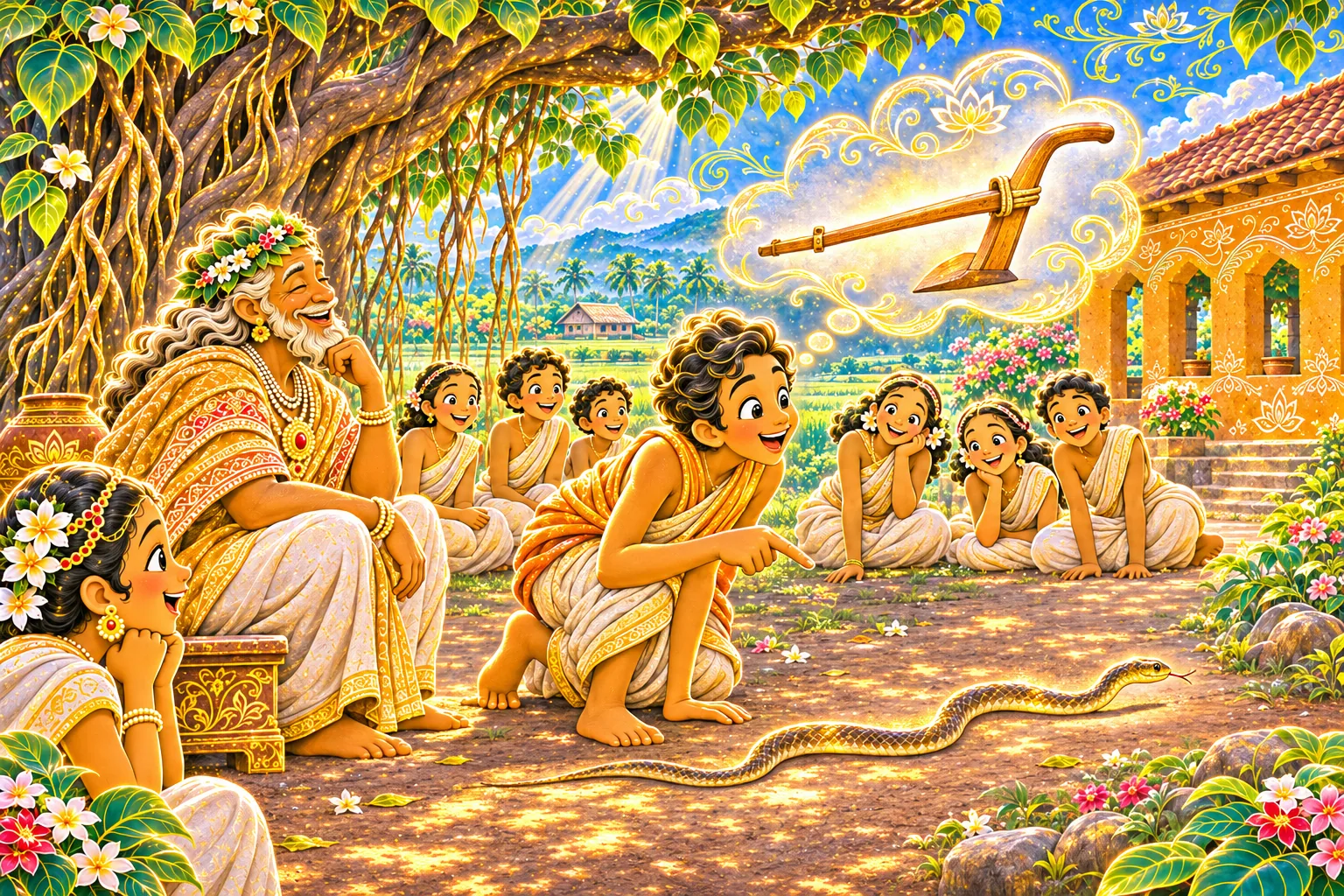
The next day the boy saw a long snake slide across the path. He ran to his teacher.
පසුදා කොලුවා දිග සර්පයෙක් පාර හරහා ලිස්සා යනවා දැක්කා. ඔහු ගුරුවරයා ළඟට දිව්වා.
“Teacher! I saw a snake!” “Good! What was it like?” “It was like a plough handle!”
“ගුරුතුමනි! මම සර්පයෙක් දැක්කා!” “හොඳයි! ඒක මොකක් වගේද?” “ඒක නගුල් මිටක් වගේ!”

“Hmm,” said the teacher. “A snake is long and thin, and so is a plough handle. That is a fair start.”
“හ්ම්,” ගුරුවරයා කීවා. “සර්පයෙක් දිගයි, සිහින්. නගුල් මිටත් එහෙමයි. ඒක හොඳ ආරම්භයක්.”
The next day the boy saw an elephant. “Teacher! It was like a plough handle!”
පසුදා කොලුවා ඇතෙක් දැක්කා. “ගුරුතුමනි! ඒක නගුල් මිටක් වගේ!”

Then he tasted sweet sugar cane. “Like a plough handle!” Then he ate a bowl of creamy curd. “Like a plough handle!”
ඉන්පසු ඔහු පැණිරස උක් රස බැලුවා. “නගුල් මිටක් වගේ!” ඉන්පසු ඔහු කිරි මුට්ටියක් කෑවා. “නගුල් මිටක් වගේ!”
The other students giggled. The teacher scratched his head.
අනිත් ශිෂ්යයෝ හිනා වුණා. ගුරුවරයා හිස කසා ගත්තා.

“My dear boy,” he said gently, “an elephant is huge and grey. Sugar cane is sweet and crunchy. Curd is soft and cool.
“මගේ දරුවෝ,” ඔහු මෘදුව කීවා, “ඇතෙක් විශාලයි, අළු පාටයි. උක් පැණිරසයි, හපන්න හැකියි. මීකිරි මෘදුයි, සිසිල්.
They are not all like plough handles! You have to really look, and touch, and taste.”
ඒ ඔක්කොම නගුල් මිට වගේ නෙවෙයි! ඔයා ඇත්තටම බලන්න, අල්ලලා බලන්න, රස බලන්න ඕනෑ.”

The boy thought hard. He had been so busy trying to give an answer that he hadn’t really looked.
කොලුවා හොඳින් හිතුවා. පිළිතුරක් දෙන්න කොතරම් කාර්යබහුල වුණාද කියනවා නම්, ඔහු ඇත්තටම බැලුවේ නැහැ.
So the teacher took him out to the garden. “What is this flower like?” They looked at it together, slowly and carefully.
ඉතින් ගුරුවරයා ඔහුව උයනට එක්ක ගියා. “මේ මල මොකක් වගේද?” ඔවුන් එකට, සෙමින්, ප්රවේශමෙන් එය දෙස බැලුවා.

“It is like… a little golden sun,” said the boy slowly, “and it smells sweet like honey.”
“ඒක… පුංචි රන්වන් හිරු වගේ,” කොලුවා සෙමින් කීවා, “ඒකේ මී පැණි වගේ මිහිරි සුවඳක් තියෙනවා.”
The teacher smiled. “Now you are really seeing,” he said. And from then on, the boy looked carefully at the world before he spoke.
ගුරුවරයා සිනාසුණා. “දැන් ඔයා ඇත්තටම දකිනවා,” ඔහු කීවා. එදා සිට කොලුවා කතා කරන්න කලින් ලෝකය දෙස හොඳින් බැලුවා.
Who was who?
The Buddha told this story about a monk who always said the same thing, whatever the situation. The patient teacher was the Bodhisatta.
The lesson
Look carefully before you speak. Every thing in the world is different and worth noticing.
Let's talk
- Why did the boy say everything was like a plough handle?
- How did the teacher help him?
- Choose something near you. What is it really like?
කවුද කවුරුන් වූයේ?
තත්ත්වය කුමක් වුවත් හැමදාම එකම දේ කී භික්ෂුවක් ගැන බුදුරජාණන් වහන්සේ මේ කතාව වදාළා. ඉවසිලිවන්ත ගුරුවරයා වූයේ බෝසතාණන් වහන්සේයි.
පාඩම
කතා කරන්න කලින් හොඳින් බලන්න. ලෝකයේ හැම දෙයක්ම වෙනස්, දැකිය යුතුයි.
අපි කතා කරමු
- හැම දෙයක්ම නගුල් මිට වගේ කියලා කොලුවා කීවේ ඇයි?
- ගුරුවරයා ඔහුට උදව් කළේ කොහොමද?
- ඔබ අසල ඇති දෙයක් තෝරාගන්න. ඒක ඇත්තටම මොකක් වගේද?
Retold for children by Fablewings from the Naṅgalīsa Jātaka (Jātaka No. 123; English translation ed. E. B. Cowell, vol. I, 1895, public domain) and the Sinhala Pansiya Panas Jātaka tradition. Illustrations made with AI assistance for Fablewings.