Rāma the Wise
රාම පණ්ඩිත
Dasaratha Jātaka (No. 461) · දසරථ ජාතකය (අංක 461)
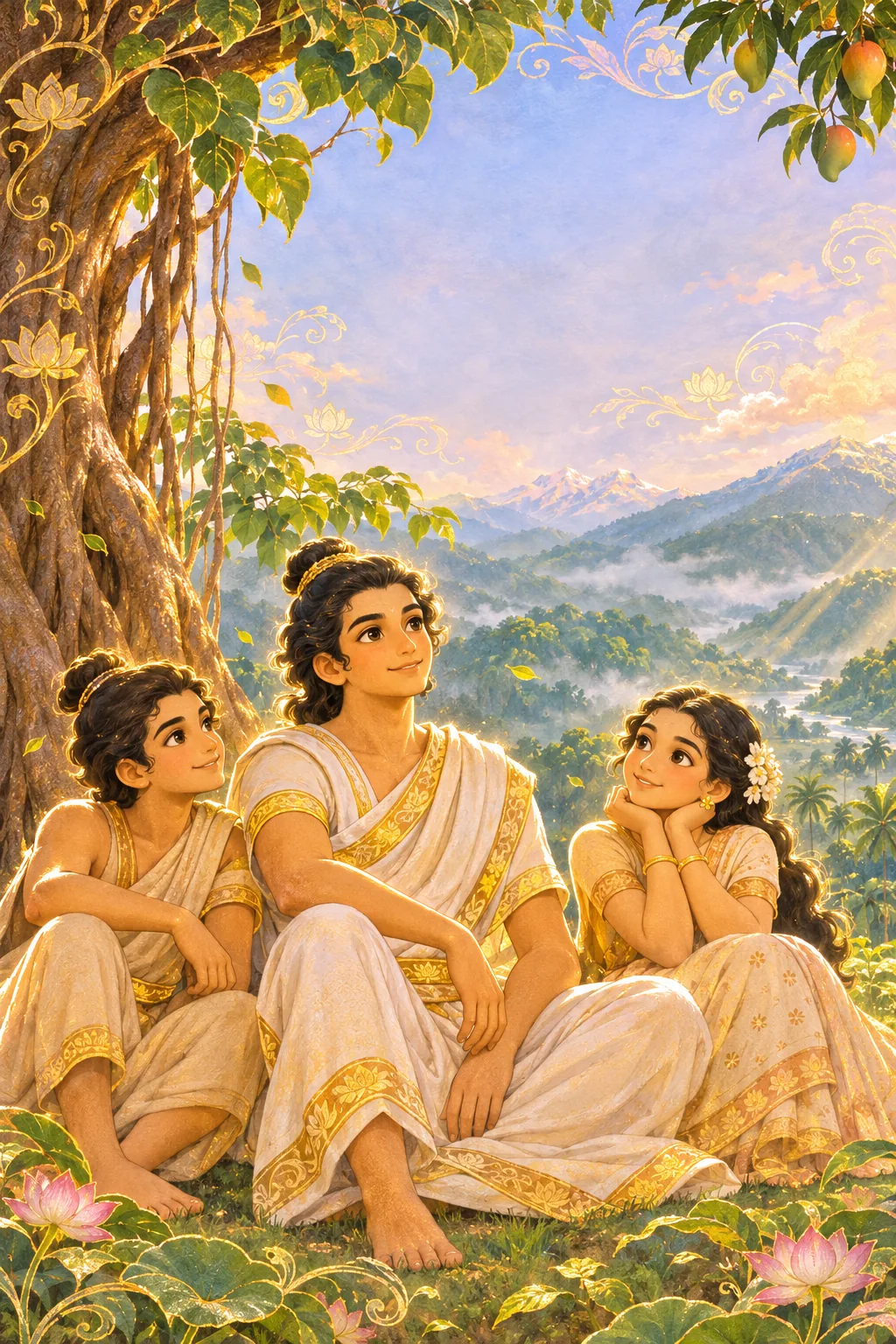
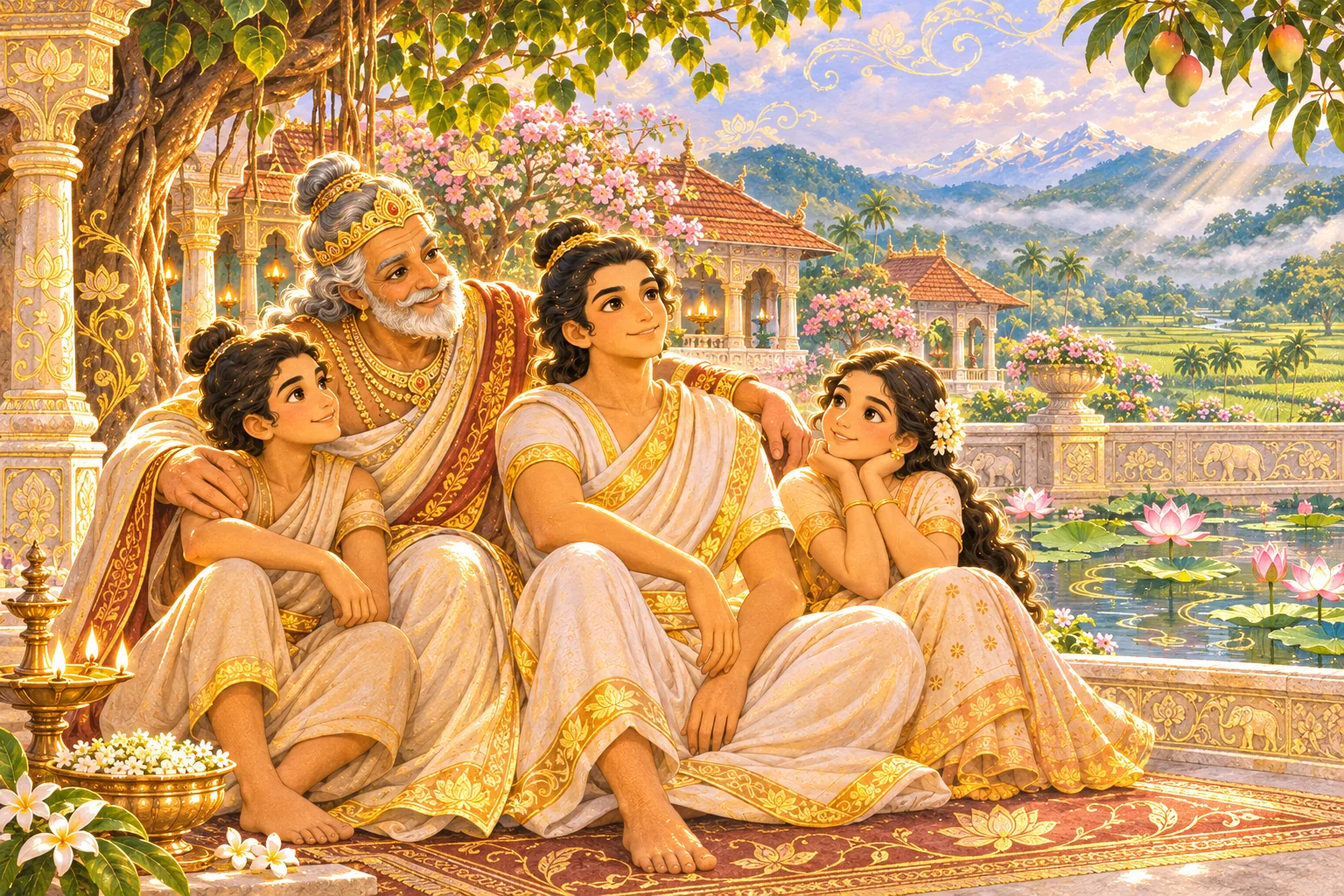
Long ago, King Dasaratha ruled in Benares. He had three children he loved dearly: wise Prince Rāma, his brother Lakkhaṇa and his sister Sītā.
බොහෝ කලකට පෙර දසරථ රජු බරණැස රජකම් කළා. ඔහු ගොඩක් ආදරය කළ දරුවන් තිදෙනෙක් සිටියා: නුවණැති රාම කුමාරයා, ඔහුගේ සහෝදරයා ලක්ඛණ සහ සහෝදරිය සීතා.
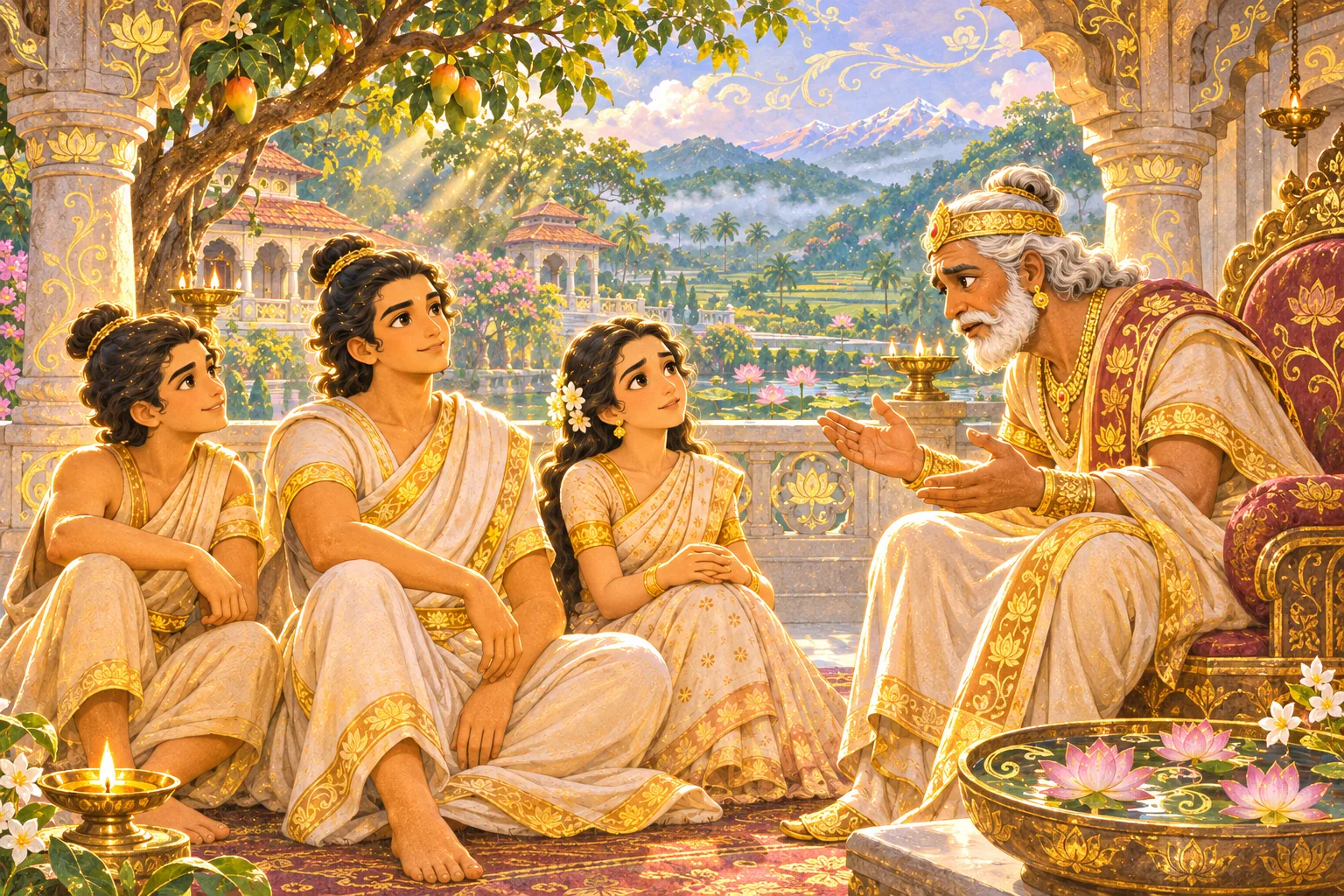
After their mother died, the king married again. The new queen wanted her own son, Bharata, to be king one day.
ඔවුන්ගේ මව මිය ගිය පසු රජු නැවත විවාහ වුණා. අලුත් බිසව තම පුතා වූ භරත දවසක රජු වෙනවා දකින්න කැමති වුණා.
The old king worried for his three older children. “Go to the forest for a while, where you will be safe,” he told them gently. “Come back when the time is right.”
මහලු රජු තම වැඩිමල් දරුවන් තිදෙනා ගැන කනස්සල්ලට පත් වුණා. “ටික කාලයකට ආරක්ෂිත වනයට යන්න,” ඔහු ඔවුන්ට මෘදුව කීවා. “හරි වෙලාව ආවම ආපසු එන්න.”
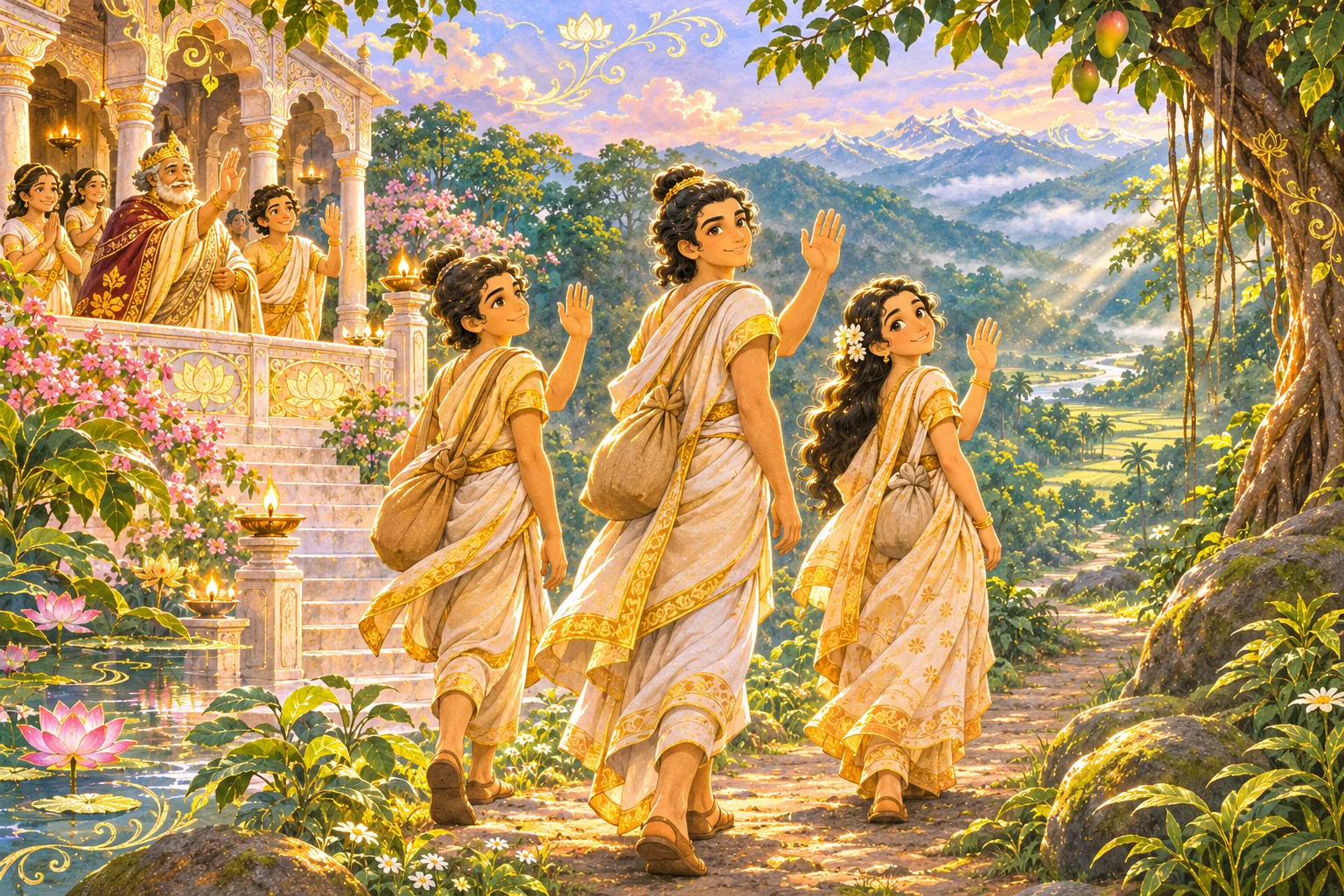
So Rāma, Lakkhaṇa and Sītā said goodbye and travelled to the peaceful forests of the Himalayas.
ඉතින් රාම, ලක්ඛණ සහ සීතා සමු ගෙන හිමාලයේ සාමකාමී වනාන්තරවලට ගියා.
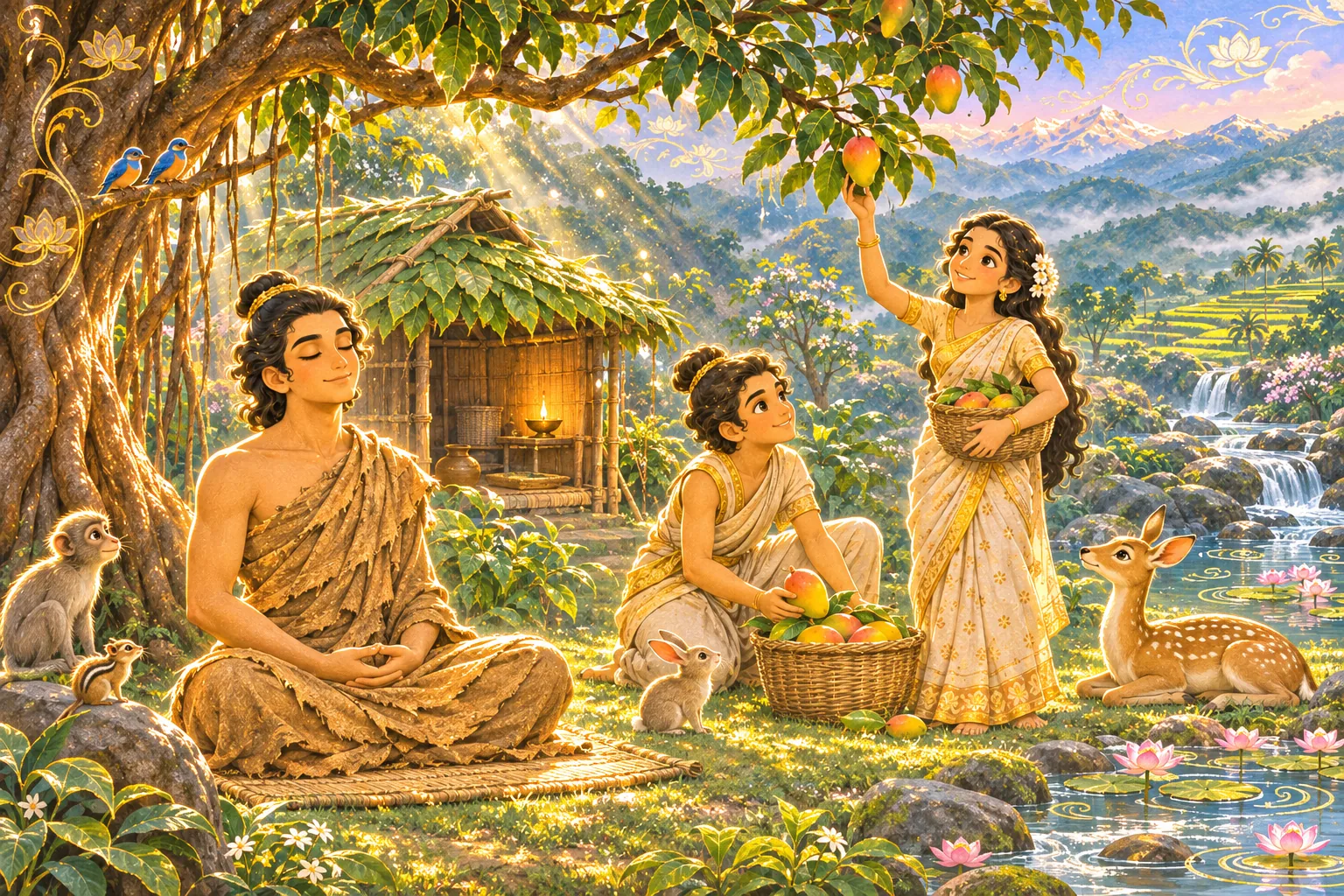
There they lived simply in a forest hermitage. Rāma meditated and taught. His brother and sister gathered fruit and water. They were content.
එහි ඔවුන් වන අසපුවක සරලව ජීවත් වුණා. රාම භාවනා කළා, ඉගැන්නුවා. ඔහුගේ සහෝදරයා සහ සහෝදරිය පලතුරු සහ වතුර එකතු කළා. ඔවුන් සතුටින් සිටියා.
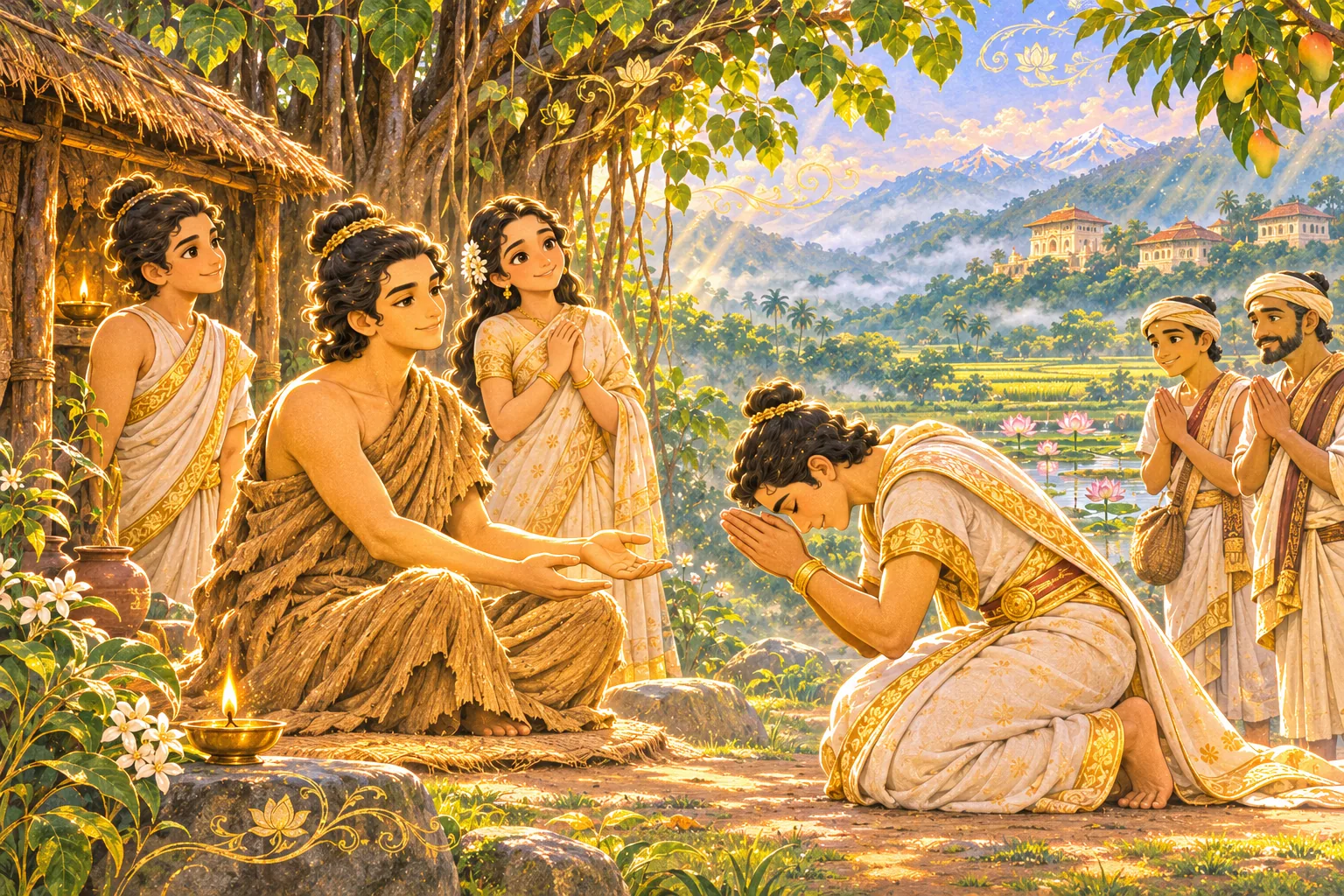
Years later, Prince Bharata came to the hermitage. He bowed sadly. “Brother,” he said, “our father, the king, has died. Please come home and rule.”
අවුරුදු ගණනාවකට පසු භරත කුමාරයා අසපුවට ආවා. ඔහු දුකෙන් වැන්දා. “අයියේ,” ඔහු කීවා, “අපේ පියා, රජතුමා මිය ගියා. කරුණාකර ගෙදර ඇවිත් රජකම් කරන්න.”
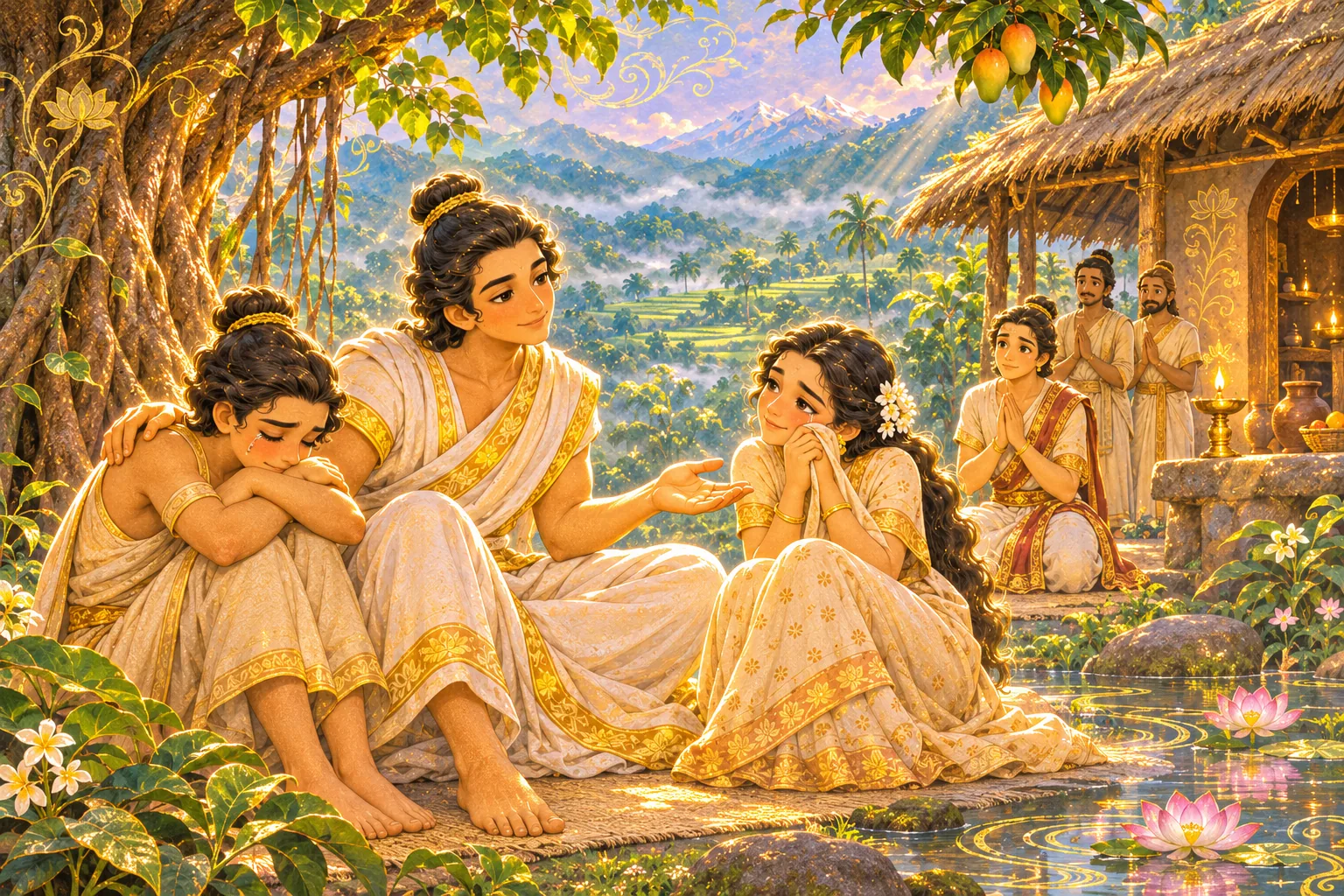
When Lakkhaṇa and Sītā heard this, they wept. But Rāma stayed calm. He comforted them, holding their hands.
ලක්ඛණ සහ සීතා මේ ආරංචිය ඇසූ විට ඔවුන් ඇඬුවා. ඒත් රාම සන්සුන්ව සිටියා. ඔහු ඔවුන්ගේ අත් අල්ලාගෙන ඔවුන්ව සනසුවා.
“Why don’t you cry, brother?” Bharata asked.
“අයියේ, ඔයා අඬන්නේ නැත්තේ ඇයි?” භරත ඇසුවා.
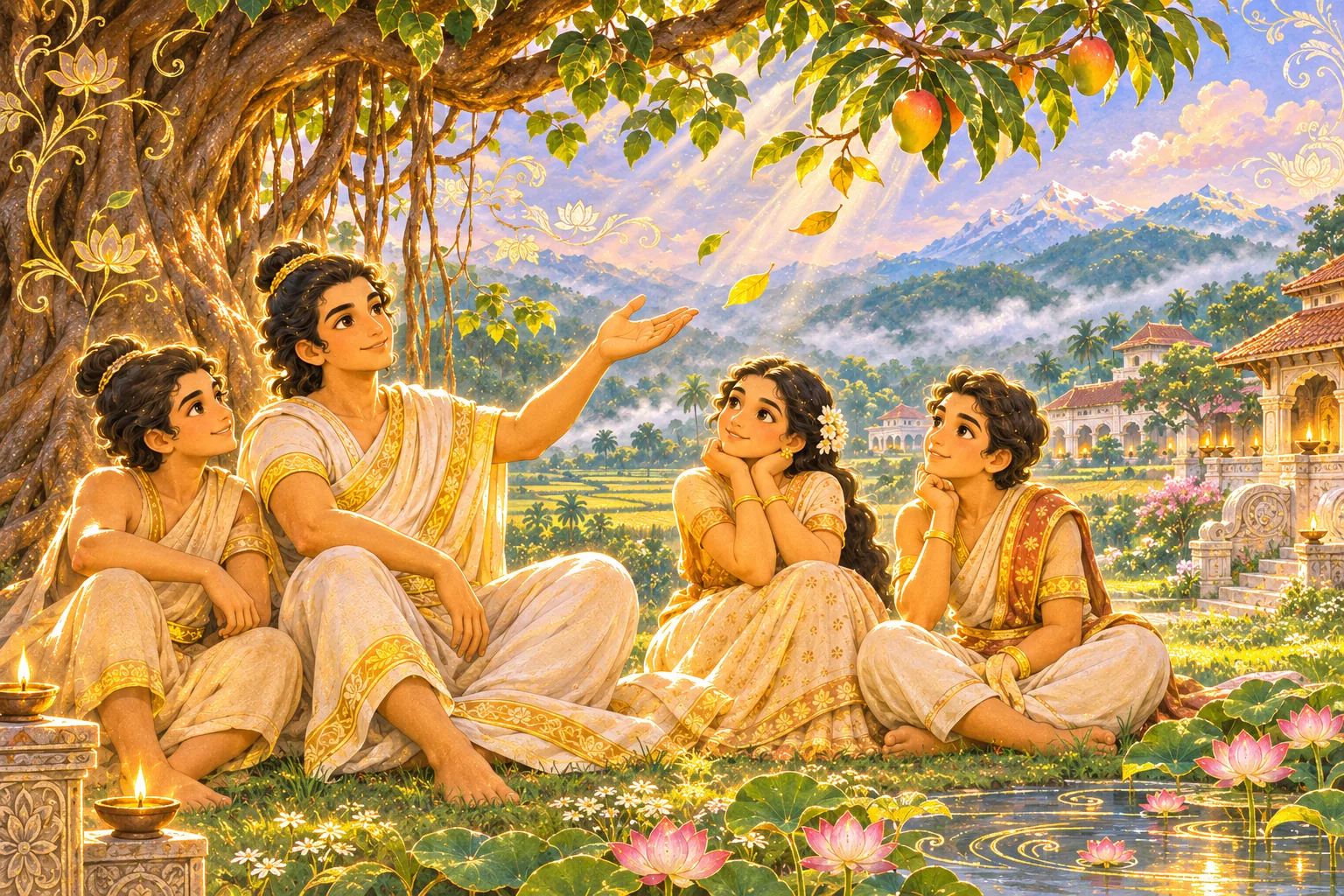
Rāma pointed to the trees. “See how ripe fruit falls from the branch,” he said softly. “Everything that is born must one day pass away. Our father lived a good life. Weeping cannot bring him back.
රාම ගස් දෙස පෙන්නුවා. “ඉදුණු පලතුරු අත්තෙන් වැටෙන හැටි බලන්න,” ඔහු මෘදුව කීවා. “උපදින හැම දෙයක්ම දවසක පහව යනවා. අපේ පියා යහපත් ජීවිතයක් ගත කළා. ඇඬීමෙන් එයාව ආපසු ගෙන එන්න බැහැ.
I loved him dearly. I will honour him by living well and caring for our people.”
මම එයාට ගොඩක් ආදරය කළා. යහපත්ව ජීවත් වෙලා, අපේ ජනතාව රැකබලා ගෙන මම එයාට ගෞරව කරනවා.”
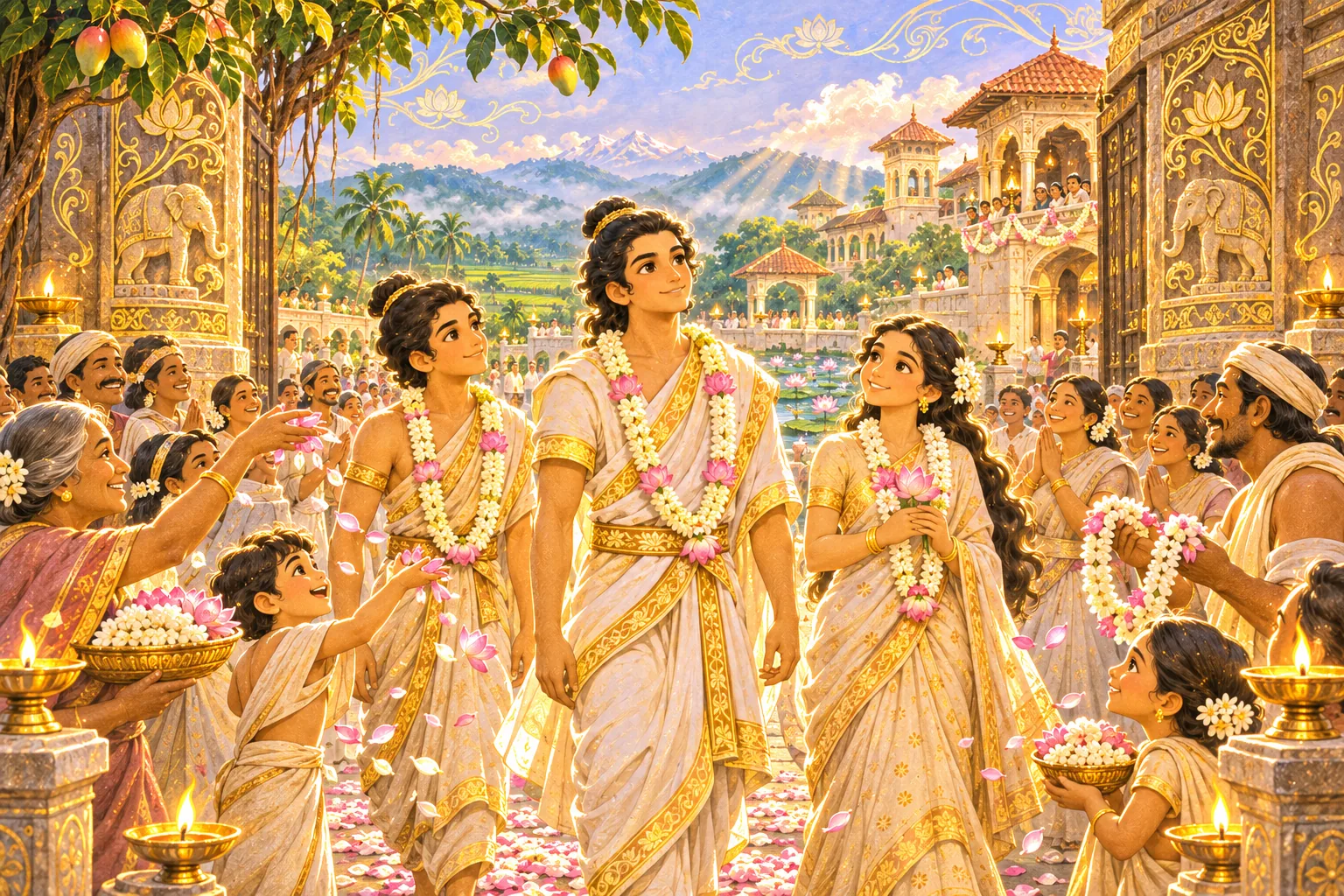
Lakkhaṇa and Sītā dried their tears, comforted by his words. In time, Rāma returned to the city, where the people welcomed him with flowers.
ඔහුගේ වචනවලින් සැනසුණු ලක්ඛණ සහ සීතා කඳුළු පිස දැම්මා. කලක් ගත වූ පසු රාම නගරයට ආපසු ආවා. ජනතාව මල් රැගෙන ඔහුව පිළිගත්තා.
He ruled wisely and kindly for many years.
ඔහු බොහෝ වසර ගණනක් නුවණින්, කරුණාවෙන් රජකම් කළා.
Who was who?
In the story, Rāma the Wise was the Bodhisatta, the Buddha in one of his past lives. This Buddhist version of the Rāma story is very different from the famous Indian epic. A note for grown-ups: it is a gentle story about loss and can help children talk about grief.
The lesson
It is natural to feel sad when someone we love dies. Understanding that all things change can help us find calm, and we honour those we love by living well.
Let's talk
- Why did the king send his children to the forest?
- How did Rāma comfort his brother and sister?
- What are some ways we can remember someone we love?
කවුද කවුරුන් වූයේ?
කතාවේ රාම පණ්ඩිත බෝසතාණන් වහන්සේ, එනම් පෙර ආත්මයක බුදුරජාණන් වහන්සේයි. මේ බෞද්ධ රාම කතාව ප්රසිද්ධ ඉන්දියානු මහා කාව්යයට වඩා ගොඩක් වෙනස්. වැඩිහිටියන්ට සටහනක්: මෙය අහිමි වීම ගැන මෘදු කතාවක්. ශෝකය ගැන දරුවන් සමඟ කතා කරන්න එය උදව් වෙන්න පුළුවන්.
පාඩම
අප ආදරය කරන කෙනෙක් මිය ගිය විට දුක දැනීම ස්වභාවිකයි. සියල්ල වෙනස් වන බව තේරුම් ගැනීම සන්සුන්කම ලබා ගන්න උදව් කරනවා. යහපත්ව ජීවත් වීමෙන් අපි ආදරය කරන අයට ගෞරව කරනවා.
අපි කතා කරමු
- රජු තම දරුවන් වනයට යැව්වේ ඇයි?
- රාම තම සහෝදරයාව සහ සහෝදරියව සනසුවේ කොහොමද?
- අප ආදරය කරන කෙනෙකු සිහි කළ හැකි ක්රම මොනවාද?
Retold for children by Fablewings from the Dasaratha Jātaka (Jātaka No. 461; English translation ed. E. B. Cowell, vol. IV, 1901, public domain) and the Sinhala Pansiya Panas Jātaka tradition. Illustrations made with AI assistance for Fablewings.