A Measure of Rice
හාල් නැළියක වටිනාකම
Taṇḍulanāḷi Jātaka (No. 5) · තණ්ඩුලනාළි ජාතකය (අංක 5)
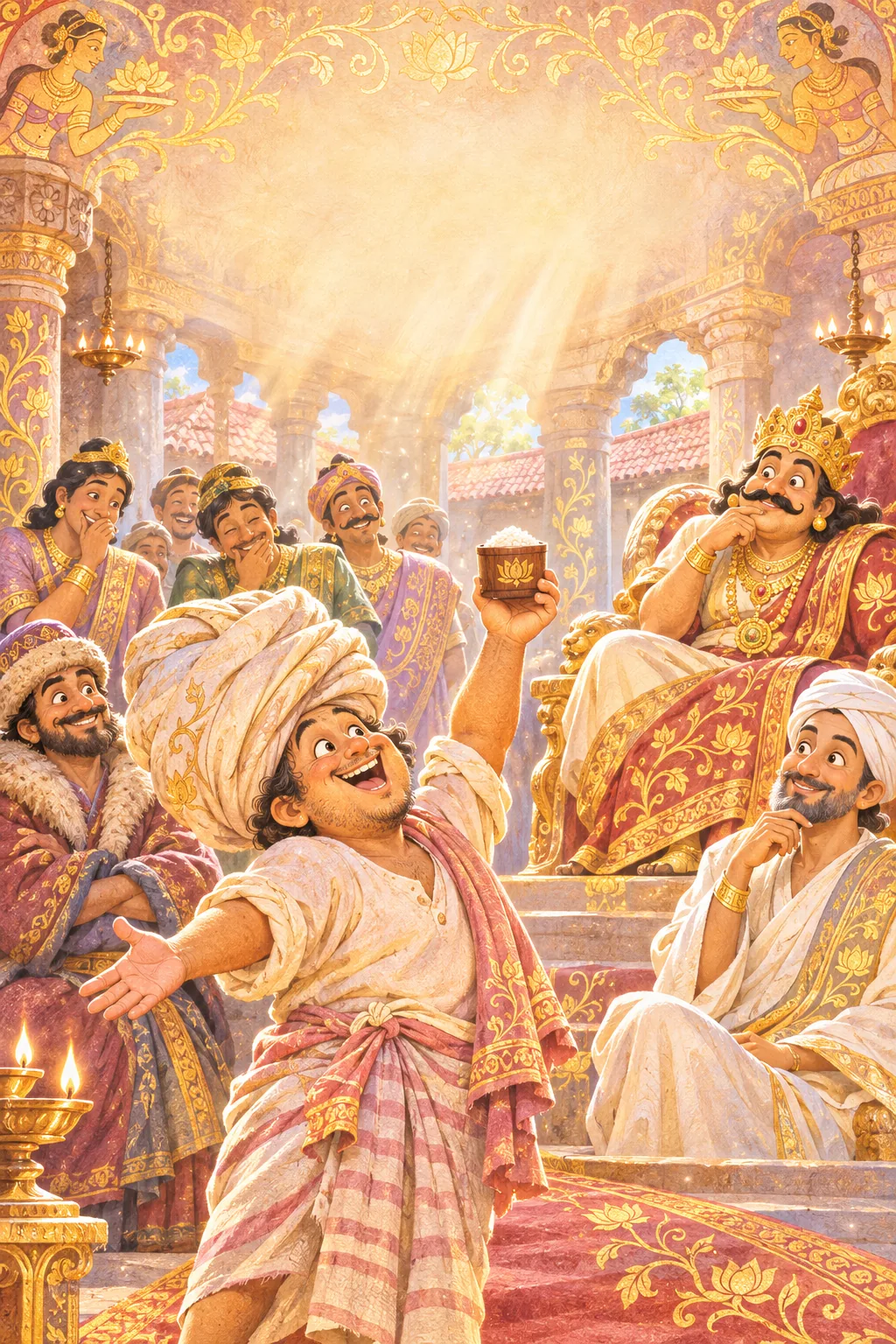
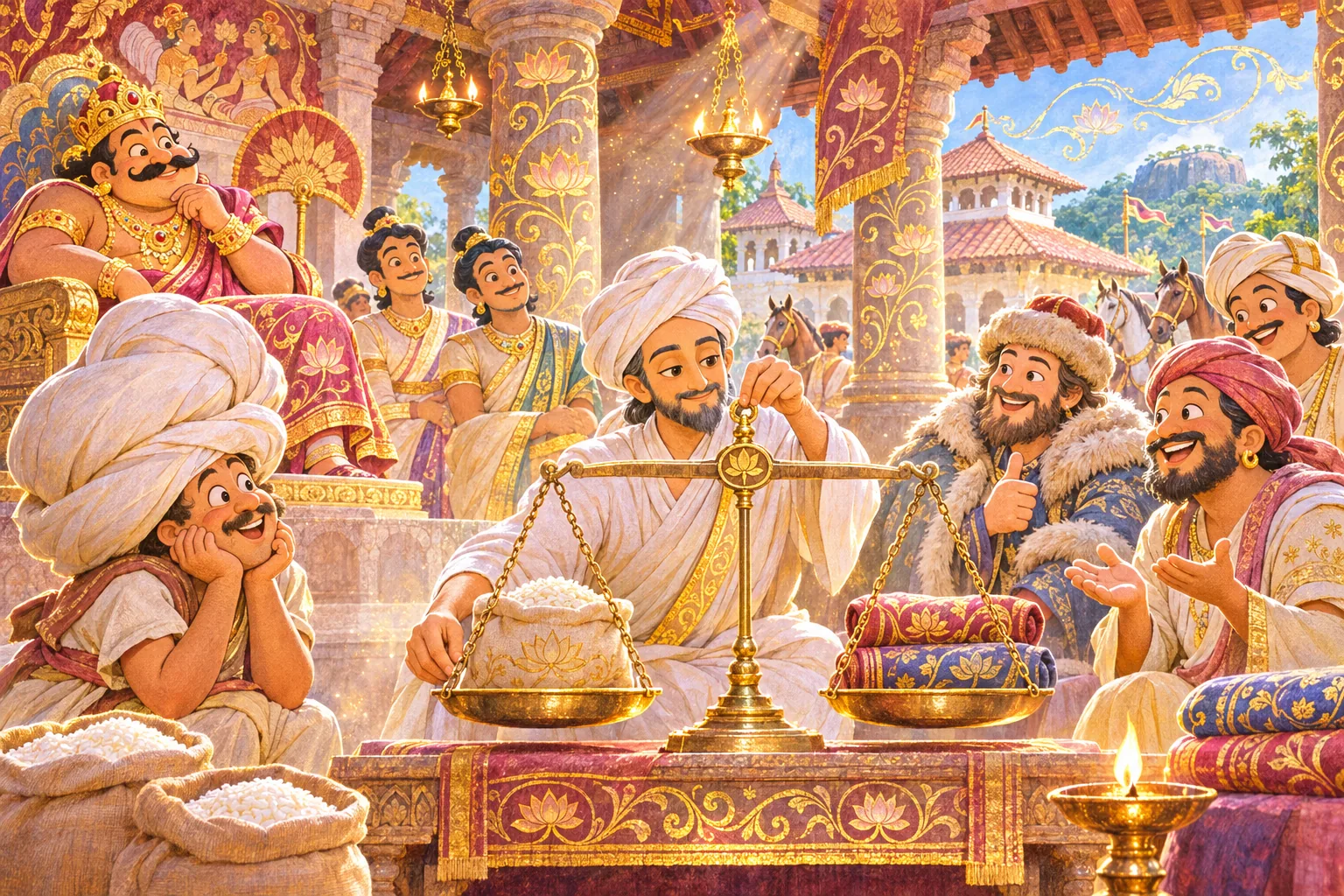
Long ago, the King of Benares had an honest royal valuer. Whenever merchants brought horses, elephants or jewels to sell, he set a fair price, never too high and never too low.
බොහෝ කලකට පෙර බරණැස් රජුට අවංක රාජකීය වටිනාකම් තක්සේරුකරුවෙක් සිටියා. වෙළෙන්දෝ විකුණන්න අශ්වයන්, ඇතුන් හෝ මැණික් ගෙනා හැම විටම ඔහු සාධාරණ මිලක් නියම කළා, ඉතා වැඩිවත් නැහැ, ඉතා අඩුවත් නැහැ.
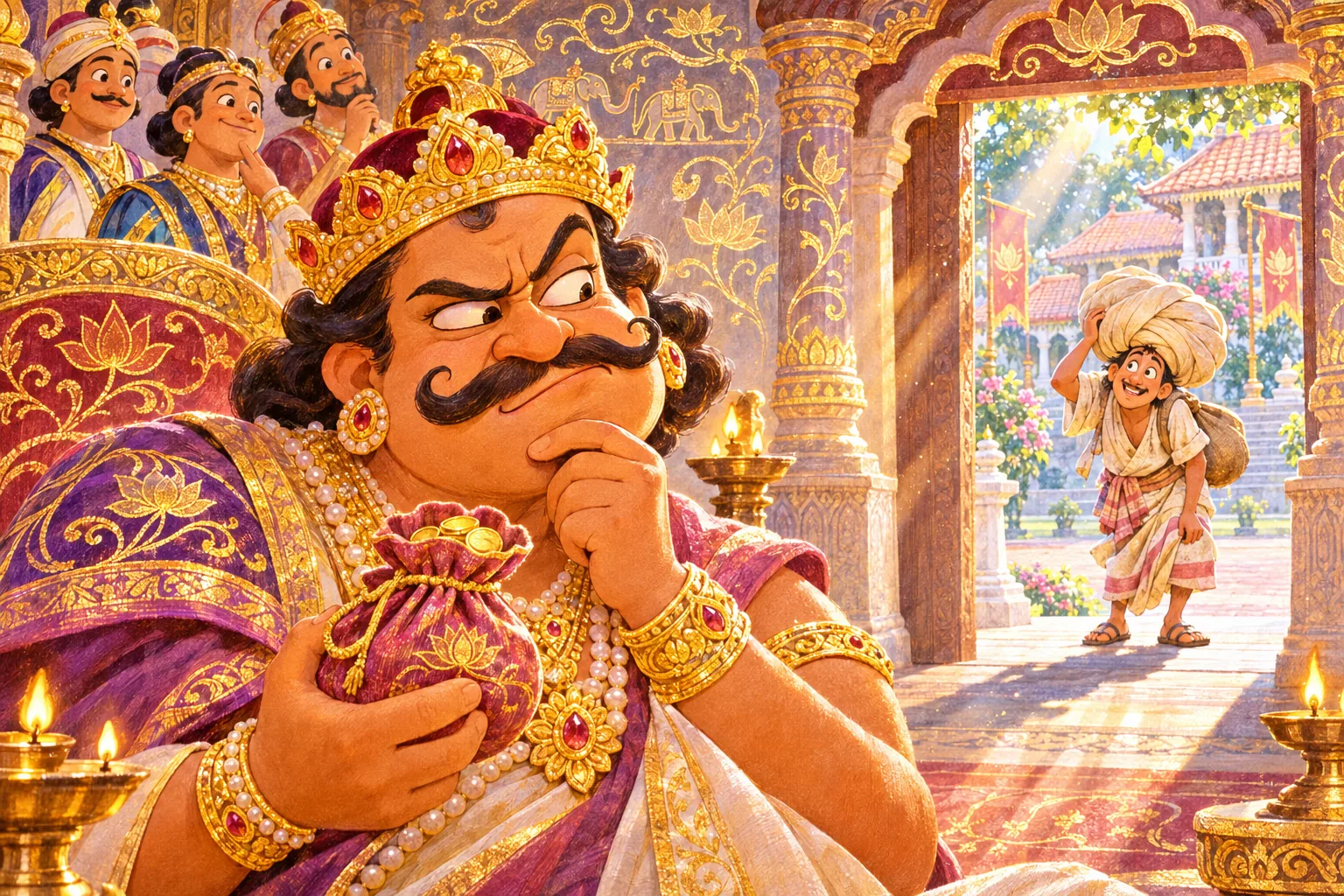
But the king was greedy. “If my valuer paid less, I would have more gold,” he grumbled.
ඒත් රජු ලෝභ වුණා. “මගේ තක්සේරුකරු අඩුවෙන් ගෙව්වා නම් මට තවත් රන් තියෙනවා,” ඔහු මැසිවිලි නැඟුවා.
Just then he saw a bumbling farmer outside the window. “That fool will pay whatever I like,” he thought.
එවිටම ඔහුට ජනේලයෙන් පිටත අවුල් සහගත ගොවියෙක් පෙනුණා. “ඒ මෝඩයා මම කැමති මිලක් ගෙවයි,” ඔහු සිතුවා.
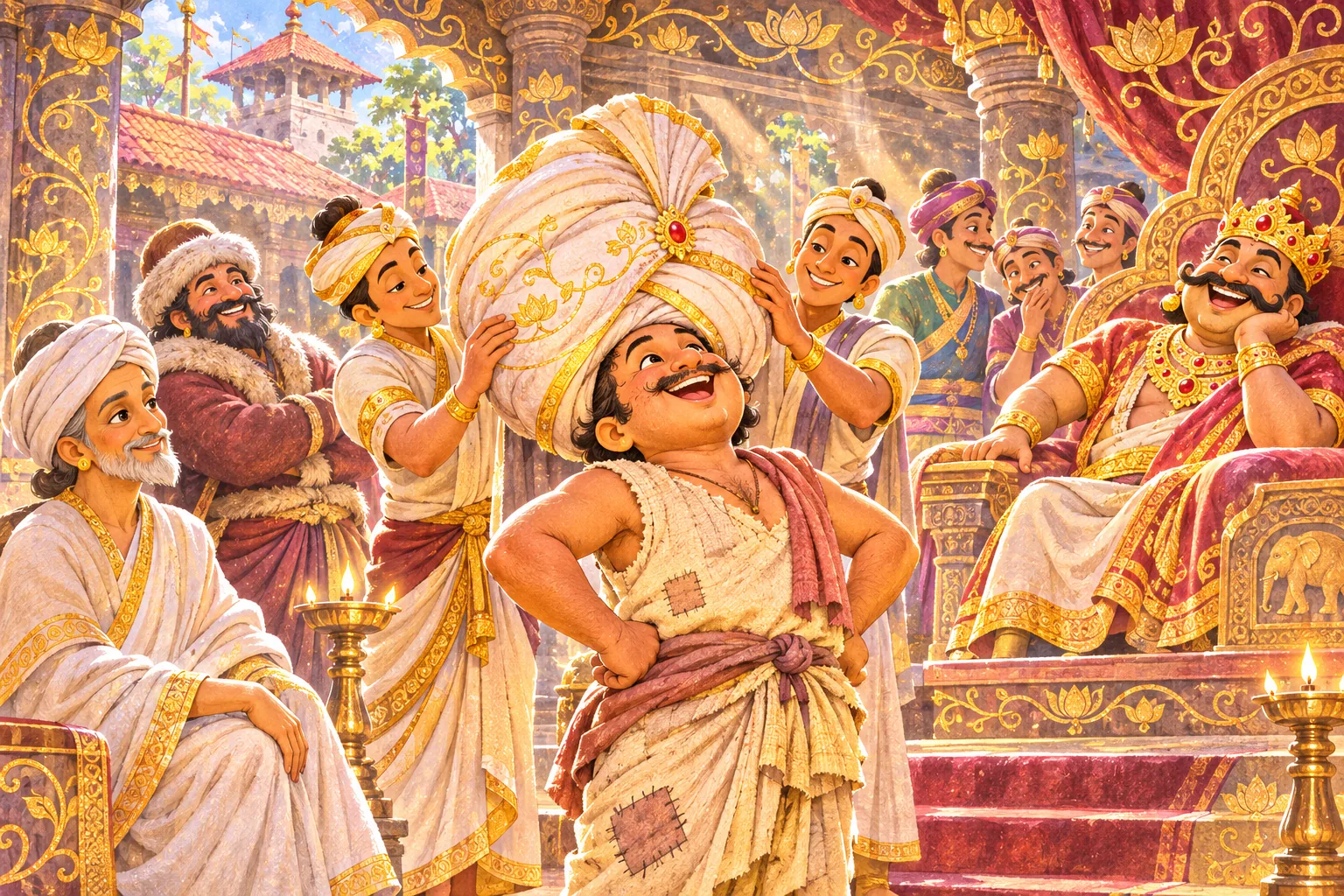
So the king made the farmer his new valuer, and gave him the honest valuer’s turban. The farmer was very pleased with himself, though the turban was far too big.
ඉතින් රජු ගොවියාව තම අලුත් තක්සේරුකරු කළා. අවංක තක්සේරුකරුගේ මුඩාසය ඔහුට දුන්නා. මුඩාසය ගොඩක් ලොකු වුණත් ගොවියා තමා ගැන ගොඩක් සතුටු වුණා.
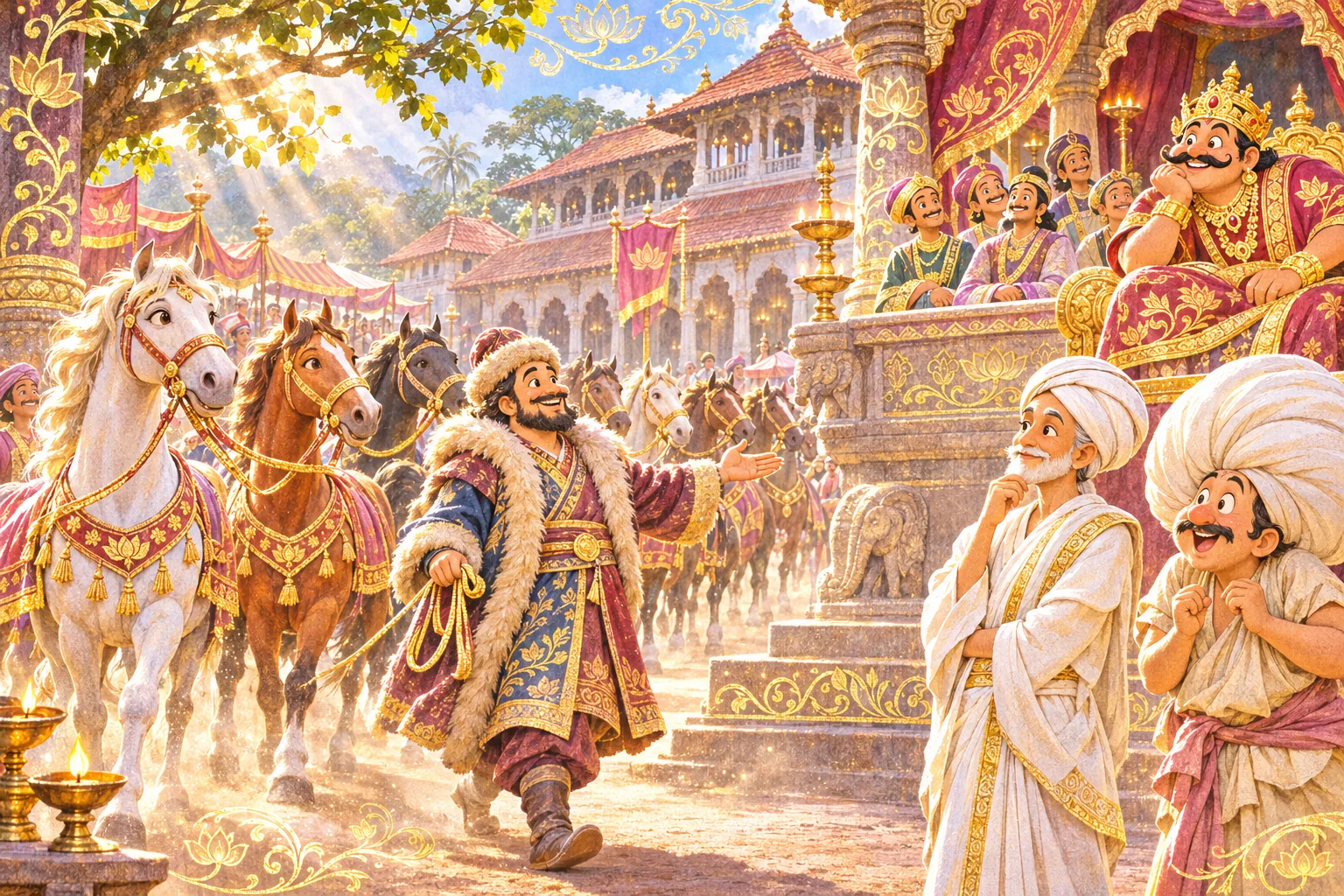
One day, a horse dealer arrived from the north with five hundred fine horses.
දවසක් උතුරෙන් අශ්ව වෙළෙන්දෙක් හොඳ අශ්වයන් පන්සියයක් රැගෙන ආවා.
The new valuer looked at them all and announced, “These horses are worth… one measure of rice!”
අලුත් තක්සේරුකරු ඔවුන් සියල්ලන් දෙස බලා ප්රකාශ කළා, “මේ අශ්වයන්ගේ වටිනාකම… හාල් නැළියක්!”
The dealer’s mouth fell open.
වෙළෙන්දාගේ කට ඇරුණා.
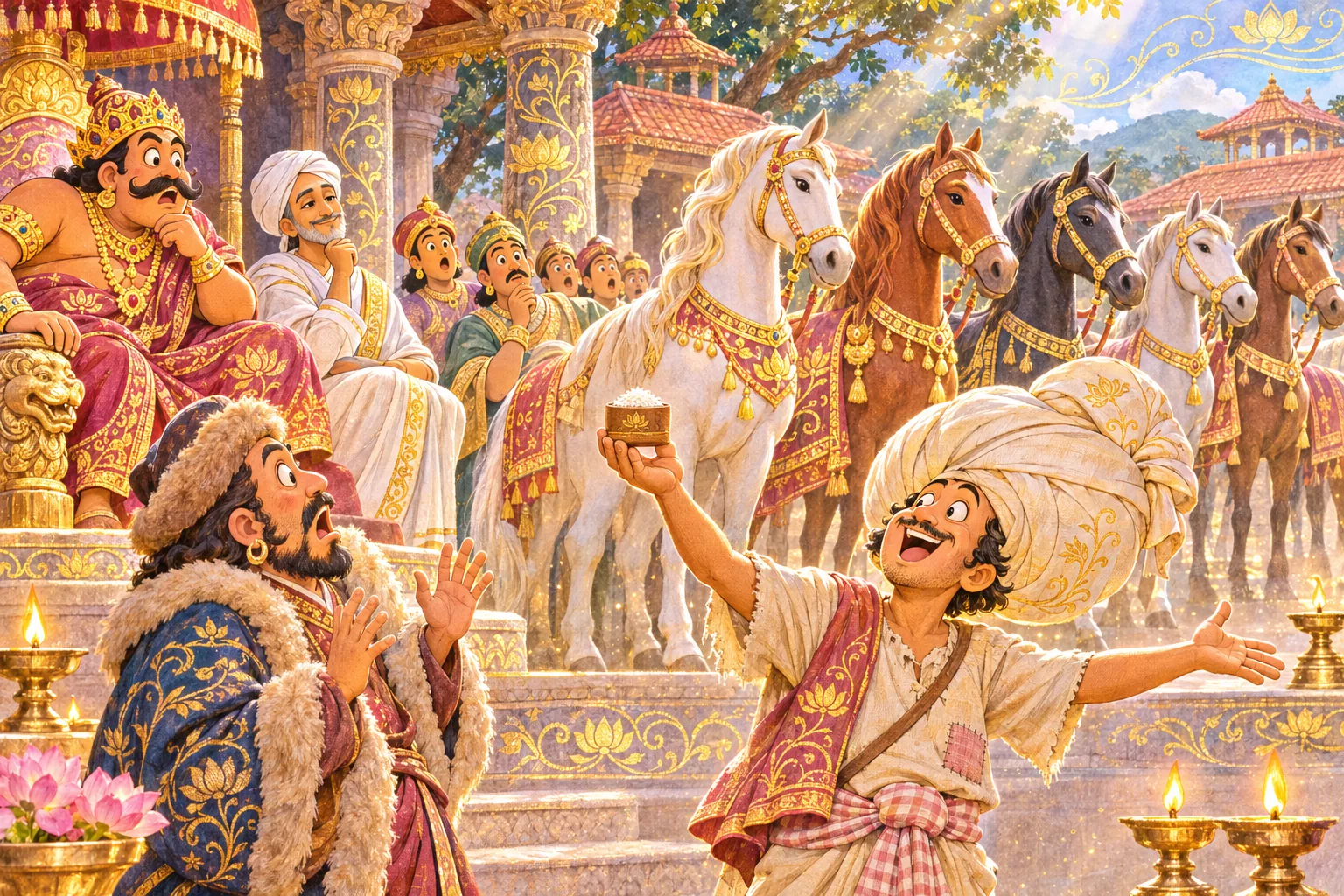
Upset, the dealer went to the old honest valuer for advice.
කලබල වූ වෙළෙන්දා උපදෙස් පතා පරණ අවංක තක්සේරුකරු ළඟට ගියා.
The honest valuer smiled. “Give the new valuer a small present,” he said, “and ask him, in front of the king, what one measure of rice is worth.”
අවංක තක්සේරුකරු සිනාසුණා. “අලුත් තක්සේරුකරුට පොඩි තෑග්ගක් දීලා,” ඔහු කීවා, “රජු ඉදිරියේ හාල් නැළියක වටිනාකම කීයද කියලා අහන්න.”
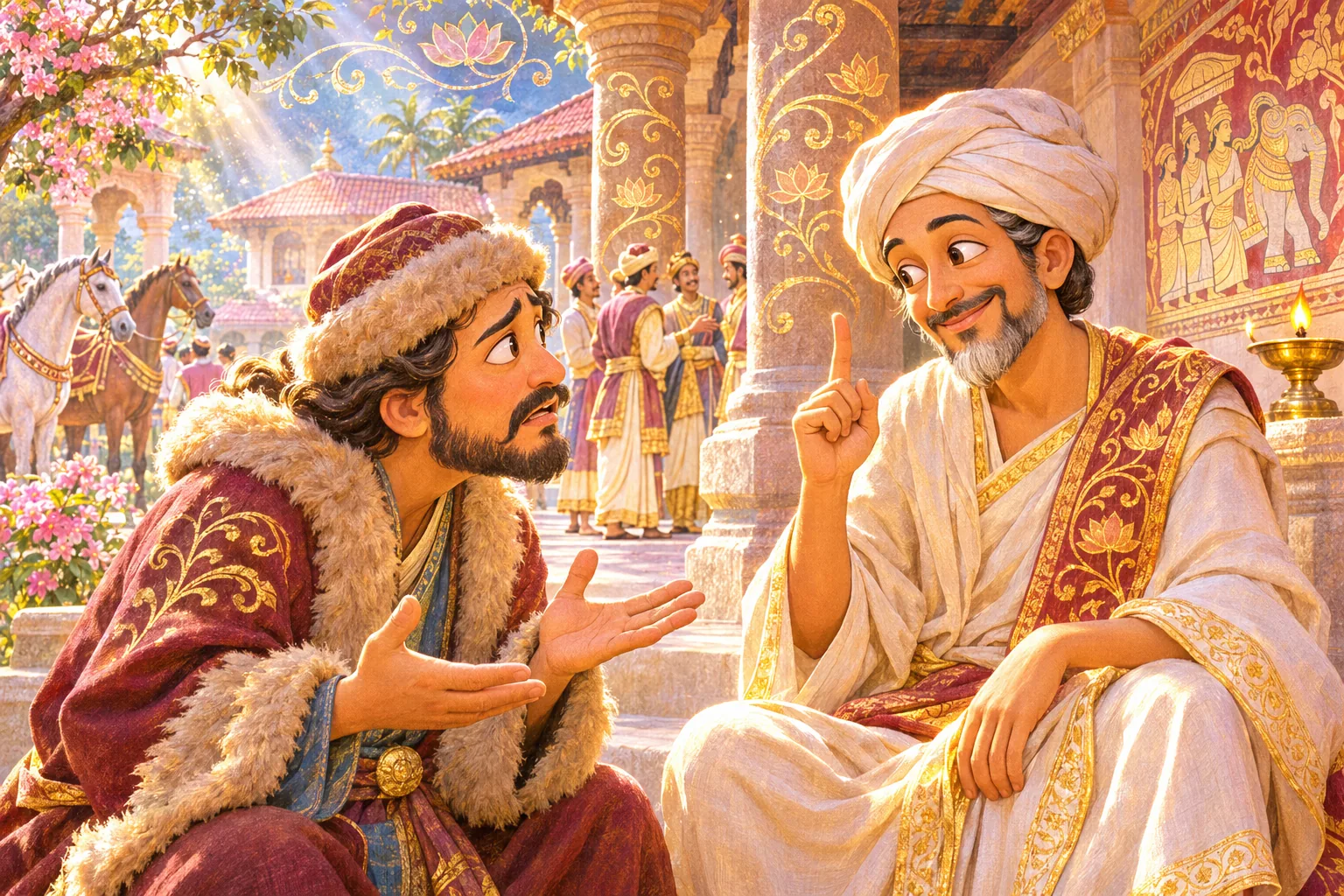
In the great hall, before the king and all his courtiers, the dealer asked, “Wise valuer, please tell us: what is one measure of rice worth?”
මහා ශාලාවේ, රජු සහ සියලු ඇමතිවරුන් ඉදිරියේ, වෙළෙන්දා ඇසුවා, “නුවණැති තක්සේරුකරුතුමනි, කරුණාකර අපට කියන්න: හාල් නැළියක වටිනාකම කීයද?”
The new valuer puffed out his chest. “One measure of rice,” he declared, “is worth the whole city of Benares!”
අලුත් තක්සේරුකරු පපුව පුප්පා ගත්තා. “හාල් නැළියක්,” ඔහු ප්රකාශ කළා, “මුළු බරණැස් නගරයටම වටිනවා!”
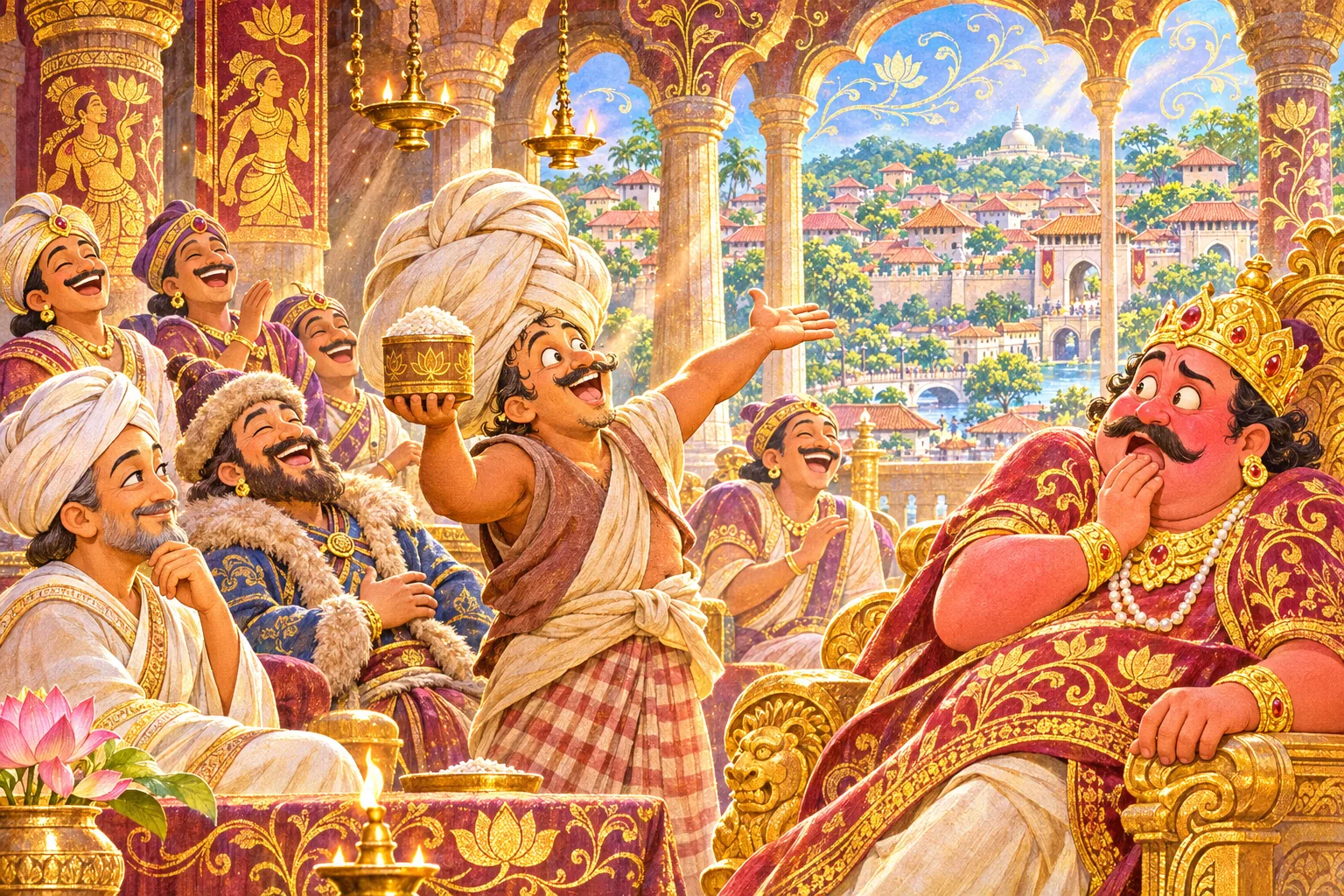
The whole hall burst out laughing. “The city is worth one measure of rice, and five hundred horses too!” giggled the courtiers.
මුළු ශාලාවම හයියෙන් සිනාසුණා. “නගරයත්, අශ්වයන් පන්සියයත් හාල් නැළියකට වටිනවා!” ඇමතිවරු හිනා වුණා.
The king turned red with shame.
රජු ලැජ්ජාවෙන් රතු වුණා.
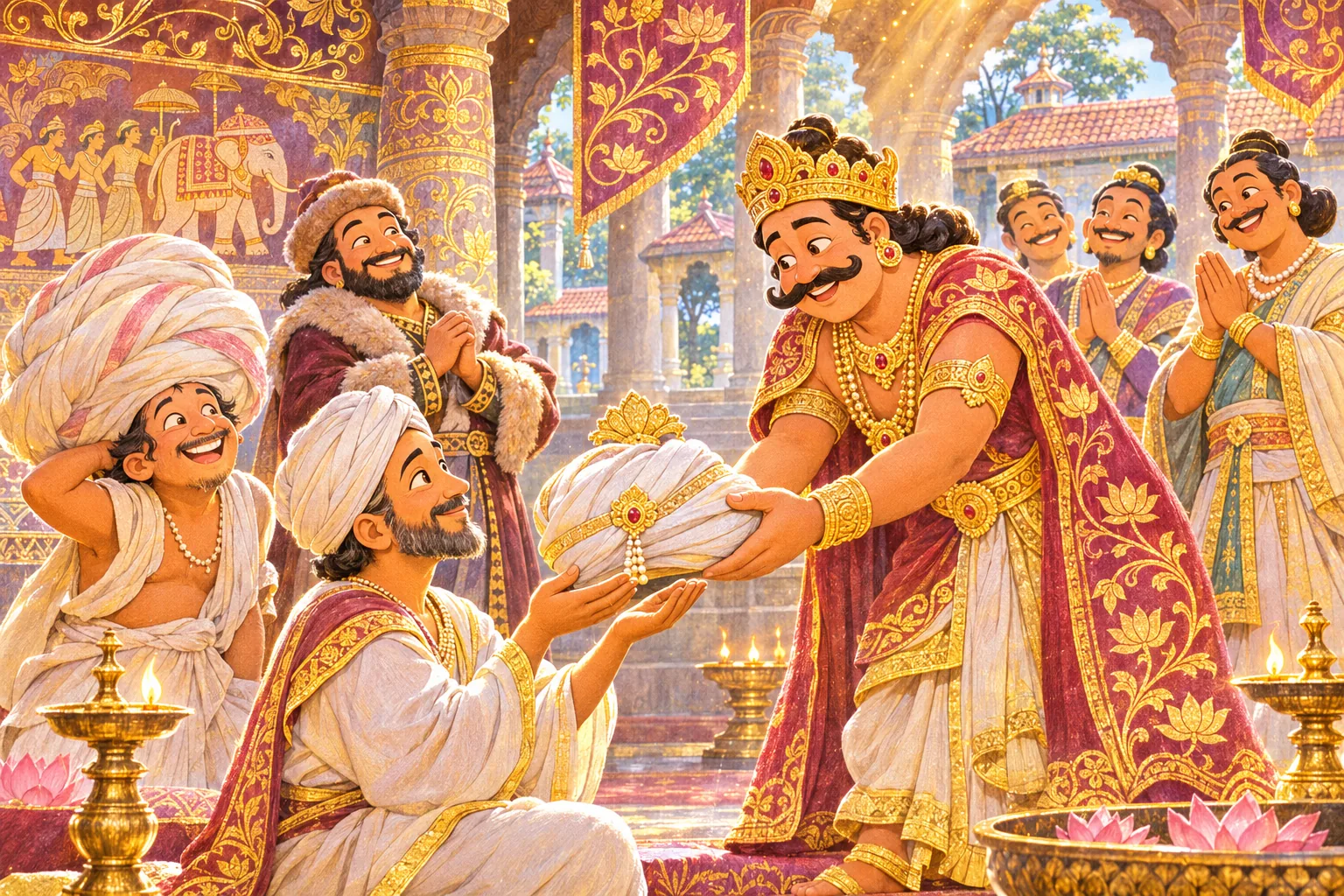
The king understood his mistake. He gave the turban back to the honest valuer, and from then on every merchant was paid a fair price.
රජුට තම වැරැද්ද තේරුණා. ඔහු මුඩාසය නැවත අවංක තක්සේරුකරුට දුන්නා. එතැන් පටන් හැම වෙළෙන්දෙකුටම සාධාරණ මිලක් ලැබුණා.
And the farmer went happily back to his fields.
ගොවියා සතුටින් නැවත තම කෙත්වලට ගියා.
Who was who?
In the story, the honest valuer was the Bodhisatta, the Buddha in one of his past lives.
The lesson
Greed and unfairness make us foolish in the end. Being honest and fair earns everyone’s trust.
Let's talk
- Why did the king choose a new valuer?
- What clever question did the dealer ask?
- Why is it important to be fair to everyone?
කවුද කවුරුන් වූයේ?
කතාවේ අවංක තක්සේරුකරු බෝසතාණන් වහන්සේ, එනම් පෙර ආත්මයක බුදුරජාණන් වහන්සේයි.
පාඩම
ලෝභකම සහ අසාධාරණකම අන්තිමේදී අපව මෝඩයන් කරනවා. අවංක, සාධාරණ වීමෙන් හැමෝගේම විශ්වාසය දිනා ගන්නවා.
අපි කතා කරමු
- රජු අලුත් තක්සේරුකරුවෙක් තෝරා ගත්තේ ඇයි?
- වෙළෙන්දා ඇසූ බුද්ධිමත් ප්රශ්නය මොකක්ද?
- හැමෝටම සාධාරණ වීම වැදගත් වන්නේ ඇයි?
Retold for children by Fablewings from the Taṇḍulanāḷi Jātaka (Jātaka No. 5; English translation ed. E. B. Cowell, vol. I, 1895, public domain) and the Sinhala Pansiya Panas Jātaka tradition. Illustrations made with AI assistance for Fablewings.