The Sad Partridge
දුක්වුණු වටුවා
Tittira Jātaka (No. 319) · තිත්තිර ජාතකය (අංක 319)
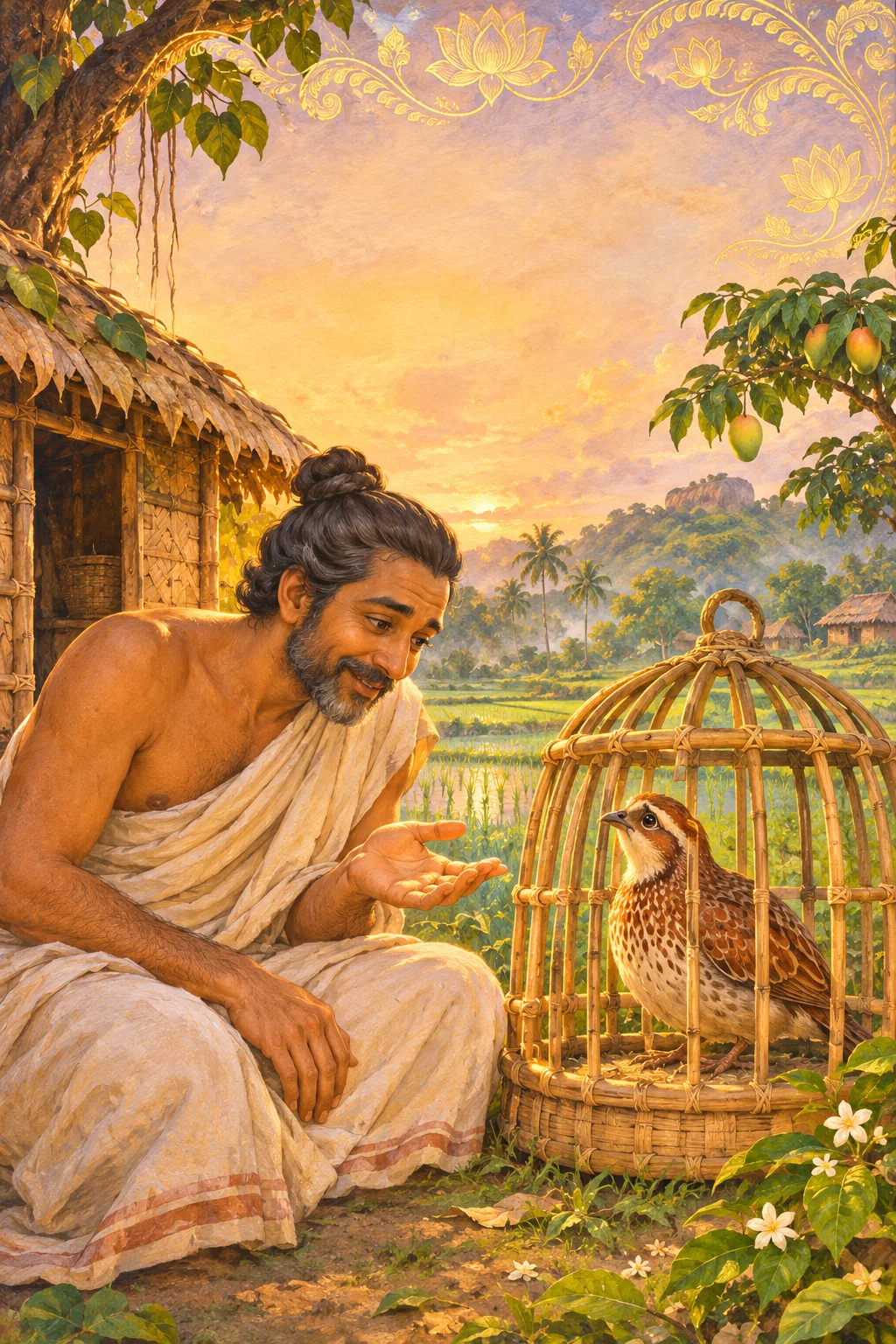

Long ago, the people of a village built a little leaf hut for a kind and wise hermit who had come to stay with them.
බොහෝ කලකට පෙර, ගමක ජනතාව තමන් ළඟ නතර වෙන්න ආපු කාරුණික, නුවණැති තවුසෙකුට පුංචි කොළ පැල්පතක් හැදුවා.
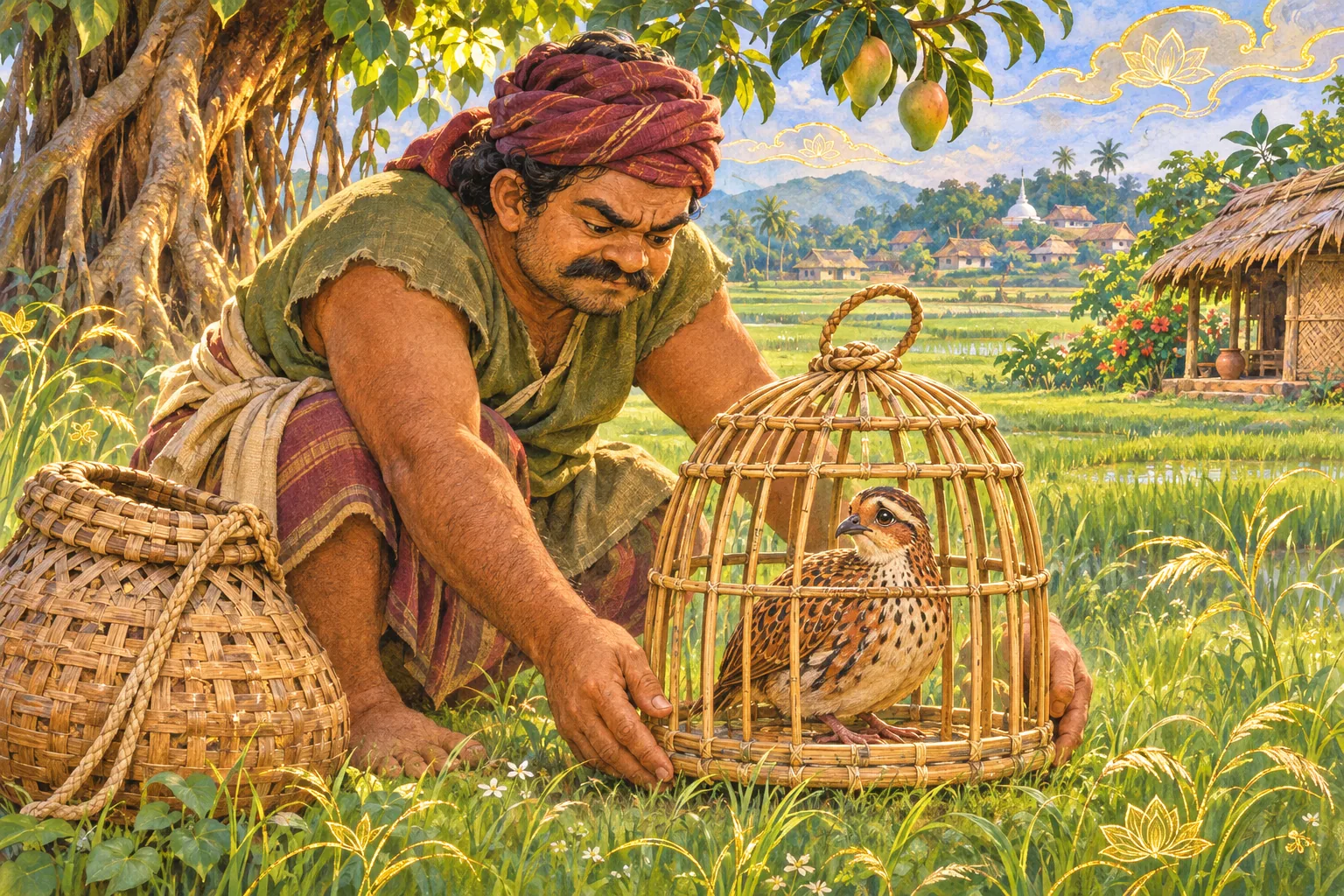
In the same village lived a bird-catcher. He kept a gentle partridge in a cage and used its call to attract wild partridges into his net.
එම ගමේම කුරුළු අල්ලන්නෙක් ජීවත් වුණා. ඔහු කූඩුවක මෘදු වටුවෙකු තියාගෙන, ඌගේ හඬින් වල් වටුවන්ව තම දැලට ඇදගත්තා.
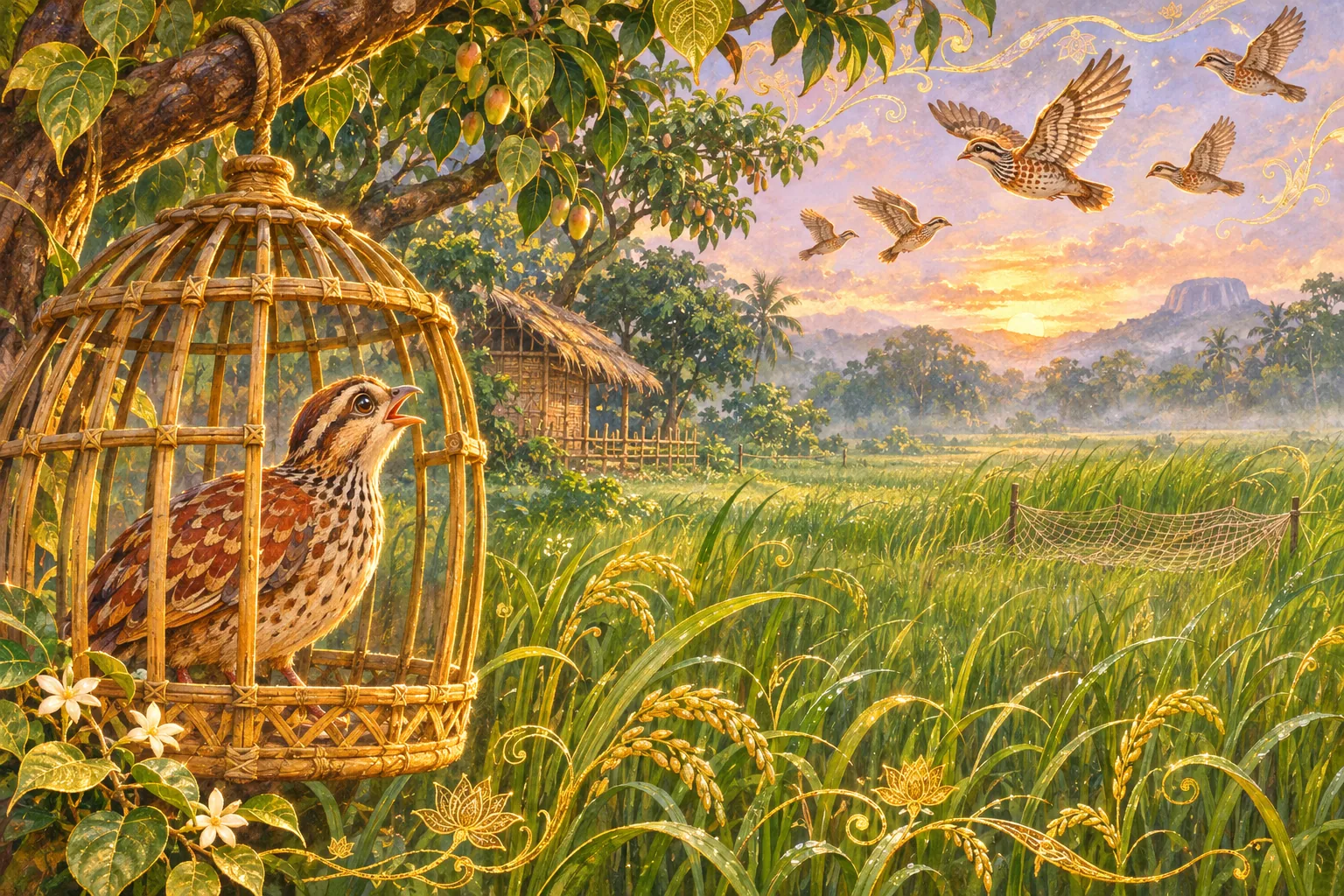
When the partridge called, other partridges came flying, thinking they had found a friend. And the bird-catcher caught them in his net.
වටුවා හඬ නැඟුවම, යාළුවෙක් හම්බ වුණා කියලා හිතලා අනිත් වටුවෝ පියාඹා ආවා. කුරුළු අල්ලන්නා ඔවුන්ව තම දැලෙන් අල්ලාගත්තා.
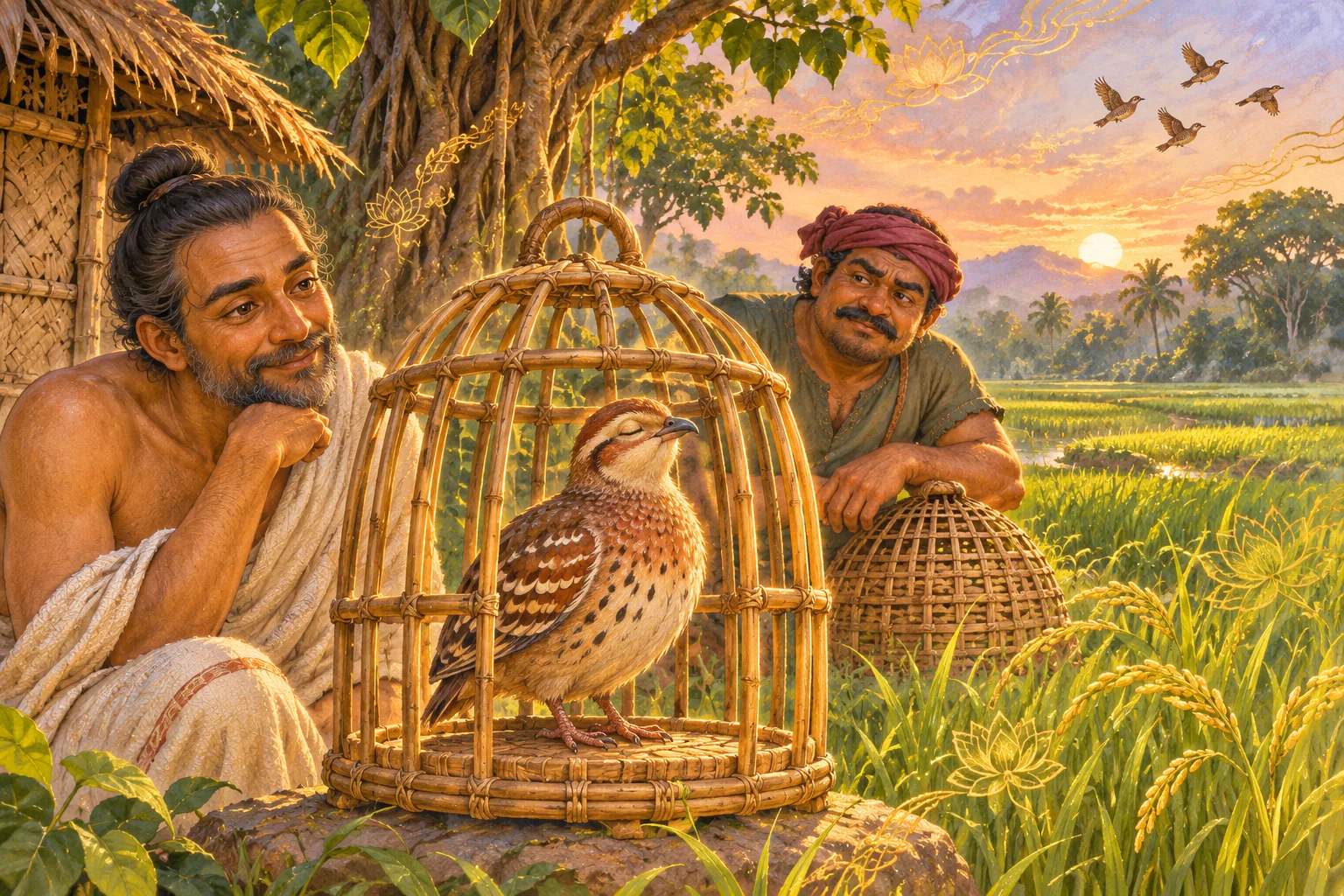
The kind partridge felt terrible. He closed his eyes and refused to call any more. “I don’t want to trick my friends,” he thought.
කාරුණික වටුවාට භයානක ලෙස දුක හිතුණා. ඌ ඇස් පියාගෙන තවදුරටත් හඬ නඟන්න ප්රතික්ෂේප කළා. “මට මගේ යාළුවන්ව රවට්ටන්න ඕනෑ නැහැ,” ඌ හිතුවා.
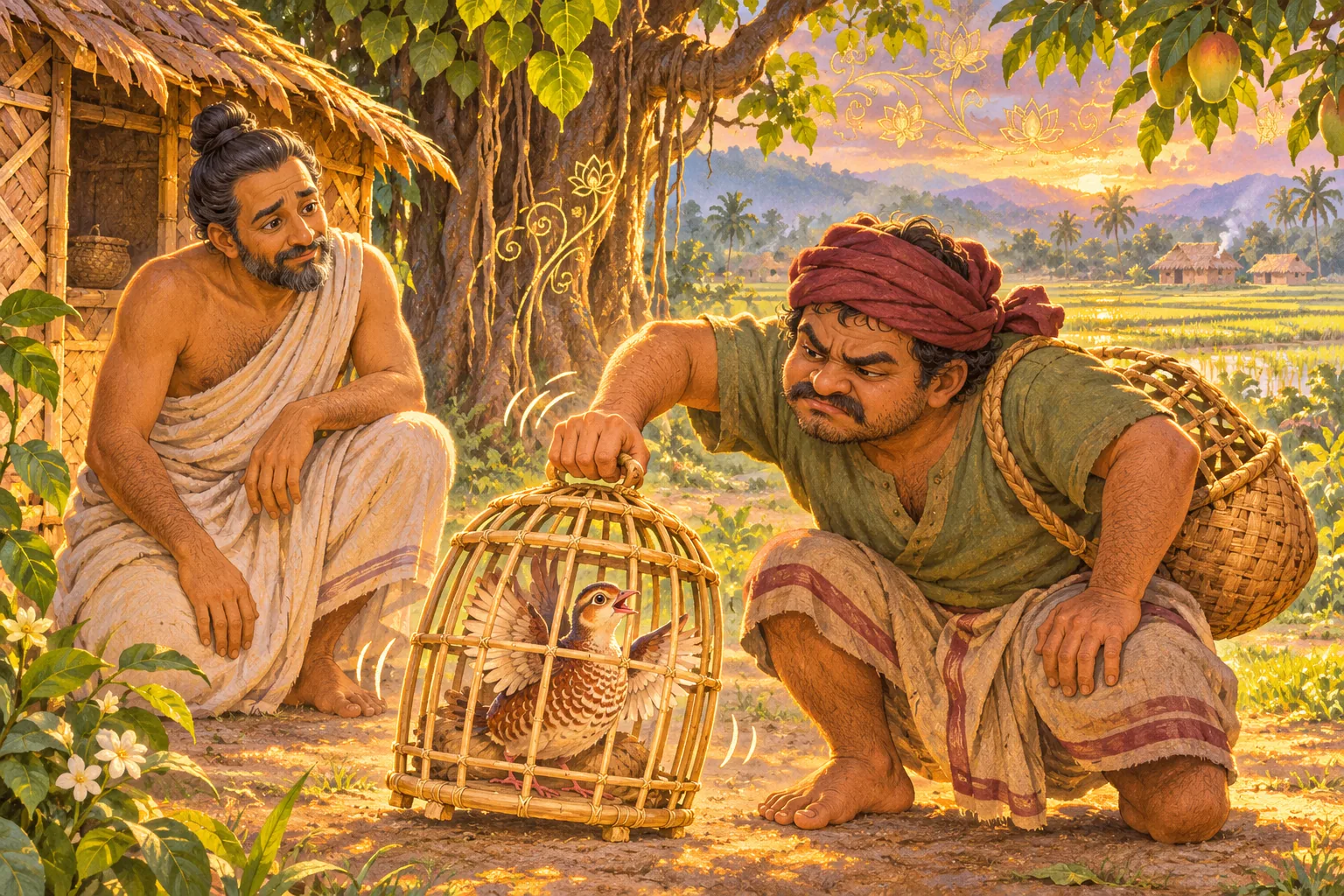
But the bird-catcher shook the cage crossly, and the frightened partridge squawked. More birds came. The partridge was very unhappy.
ඒත් කුරුළු අල්ලන්නා තරහින් කූඩුව සෙලෙව්වා. බයවුණු වටුවා කෑගැසුවා. තවත් කුරුල්ලෝ ආවා. වටුවා හරිම අසතුටින් හිටියා.
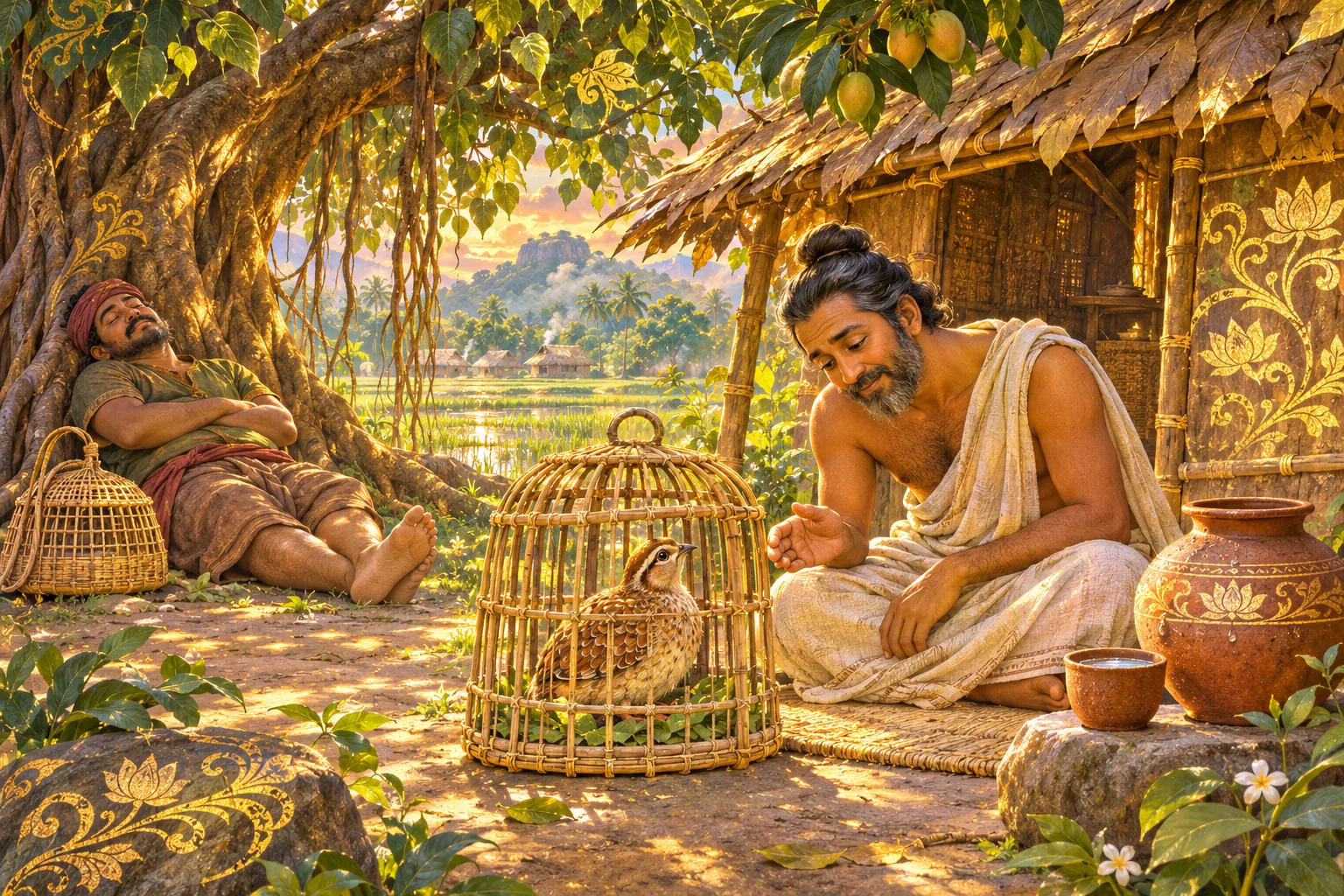
One hot afternoon, the bird-catcher stopped at the hermit’s hut for a drink of water and fell asleep in the shade.
එක් උණුසුම් දහවලක, කුරුළු අල්ලන්නා වතුර ටිකක් බොන්න තවුසාගේ පැල්පත ළඟ නැවතී සෙවණේ නින්දට වැටුණා.
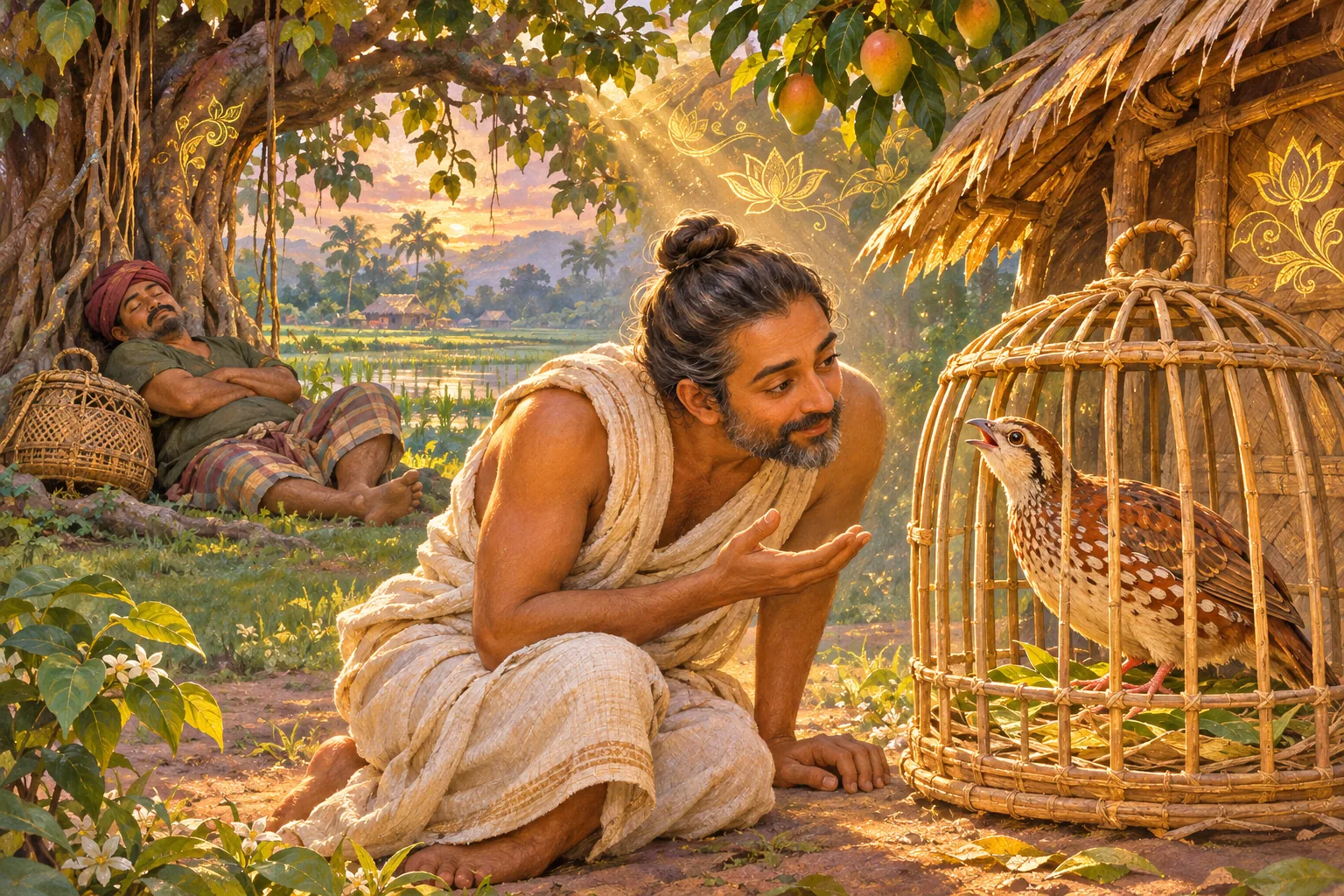
The partridge whispered to the hermit, “Wise one, other birds are caught because of my calling. Am I doing something wrong?”
වටුවා තවුසාට කොඳුරුවා, “නුවණැත්තනි, මගේ හඬ නිසා අනිත් කුරුල්ලෝ අහුවෙනවා. මම වැරදි දෙයක් කරනවාද?”
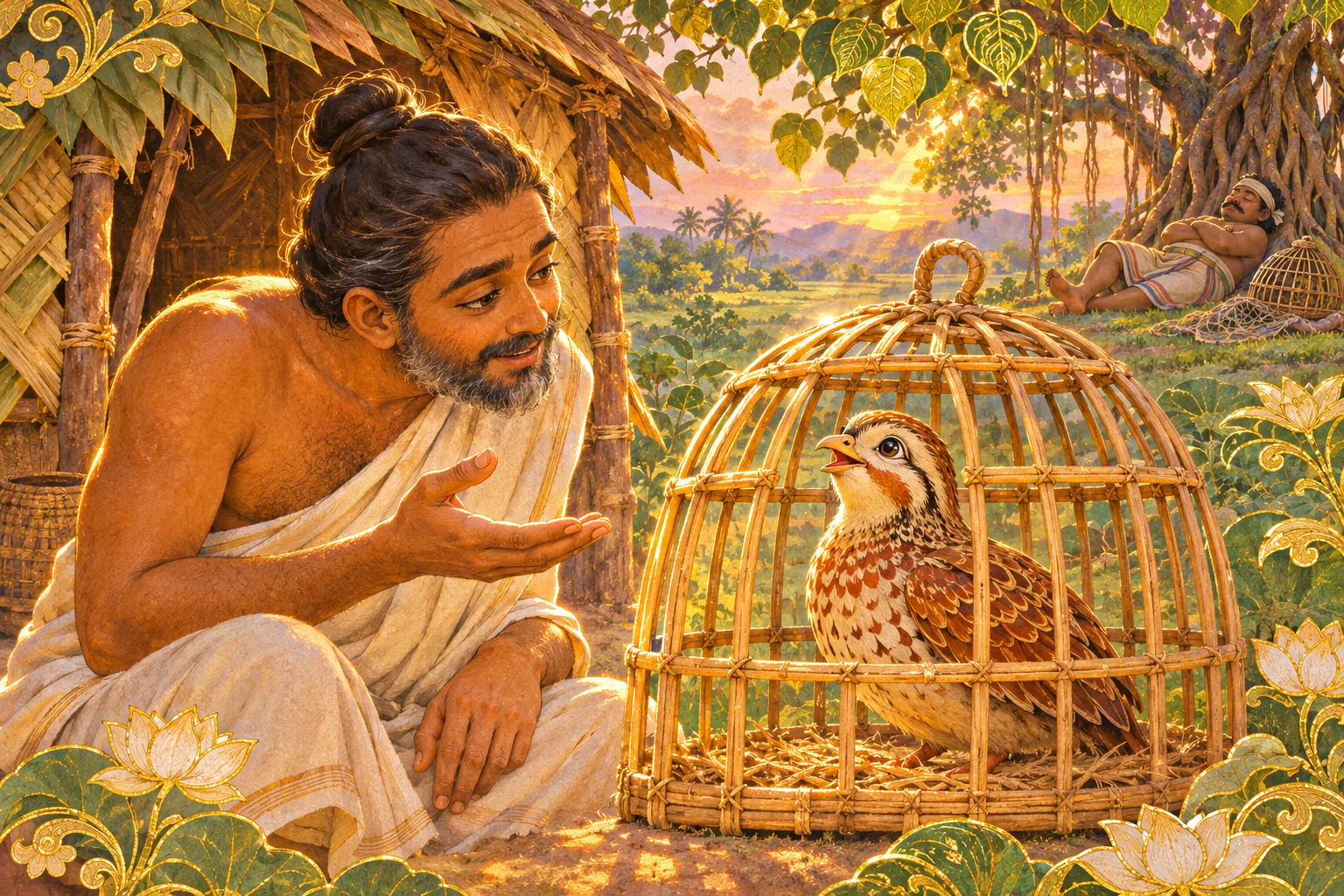
The hermit smiled kindly. “You never meant any harm,” he said. “What matters most is what is in your heart. Yours is good.” The partridge felt his sadness lift away.
තවුසා කාරුණිකව සිනාසුණා. “ඔයා කවදාවත් හානියක් කරන්න හිතුවේ නැහැ,” ඔහු කීවා. “වැදගත්ම දේ ඔයාගේ හදවතේ තියෙන දේ. ඔයාගේ හදවත හොඳයි.” වටුවාට තම දුක ඉවත් වෙනවා දැනුණා.
Who was who?
In the story, the hermit was the Bodhisatta, the Buddha in one of his past lives. In the original story the bird-catcher strikes the partridge to make it call; here he only shakes the cage. The teaching is that there is no wrongdoing without ill intention.
The lesson
What we intend matters. If we are forced into something we never wanted, our good heart is still good.
Let's talk
- Why did the partridge stop calling?
- What did he ask the hermit?
- Why did the hermit say his heart was good?
කවුද කවුරුන් වූයේ?
කතාවේ තවුසා බෝසතාණන් වහන්සේ, එනම් පෙර ආත්මයක බුදුරජාණන් වහන්සේයි. මුල් කතාවේ කුරුළු අල්ලන්නා හඬ නඟවන්න වටුවාට පහර දෙනවා. මෙහි ඔහු කූඩුව සොලවනවා විතරයි. ඉගැන්වීම නම් නරක චේතනාවක් නැතිව වරදක් නැති බවයි.
පාඩම
අපේ චේතනාව වැදගත්. අප කවදාවත් කැමති නොවූ දෙයකට බලහත්කාරයෙන් යොමු වුණත්, අපේ හොඳ හදවත තවමත් හොඳයි.
අපි කතා කරමු
- වටුවා හඬ නැඟීම නැවැත්තුවේ ඇයි?
- ඌ තවුසාගෙන් ඇසුවේ මොකක්ද?
- ඌගේ හදවත හොඳයි කියා තවුසා කීවේ ඇයි?
Retold for children by Fablewings from the Tittira Jātaka (Jātaka No. 319; English translation ed. E. B. Cowell, vol. III, 1897, public domain) and the Sinhala Pansiya Panas Jātaka tradition. Illustrations made with AI assistance for Fablewings.