The Secret Place
රහස් තැන
Sīlavīmaṃsana Jātaka (No. 305) · සීලවීමංසන ජාතකය (අංක 305)
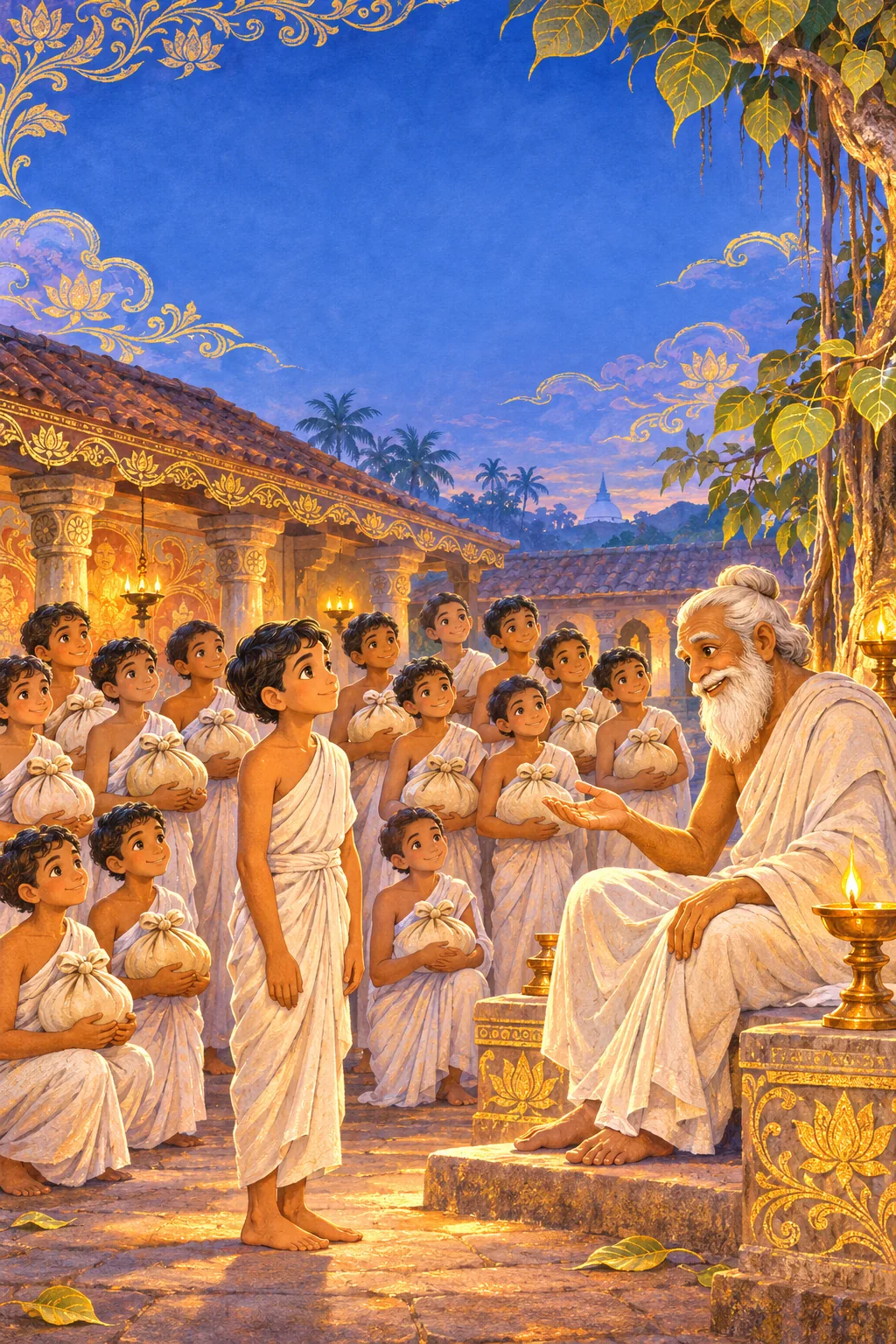
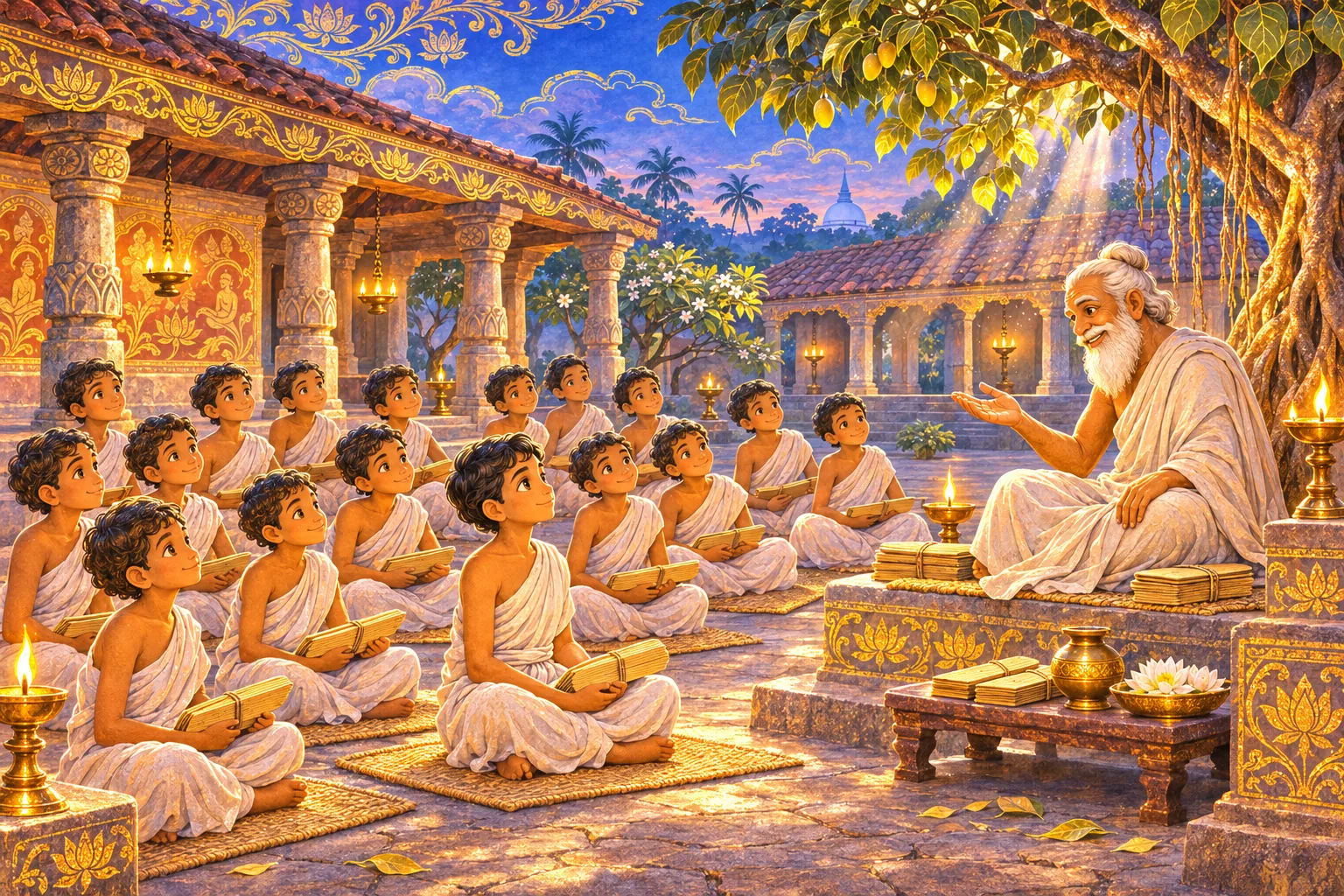
Long ago, a wise old teacher had five hundred students. He wanted to know which of them truly understood what it means to be good.
බොහෝ කලකට පෙර නුවණැති මහලු ගුරුවරයෙකුට ශිෂ්යයන් පන්සියයක් සිටියා. ඔවුන්ගෙන් යහපත් වීම යනු කුමක්ද කියා සැබවින්ම තේරුම් ගත්තේ කවුද කියා දැනගන්න ඔහුට ඕනෑ වුණා.
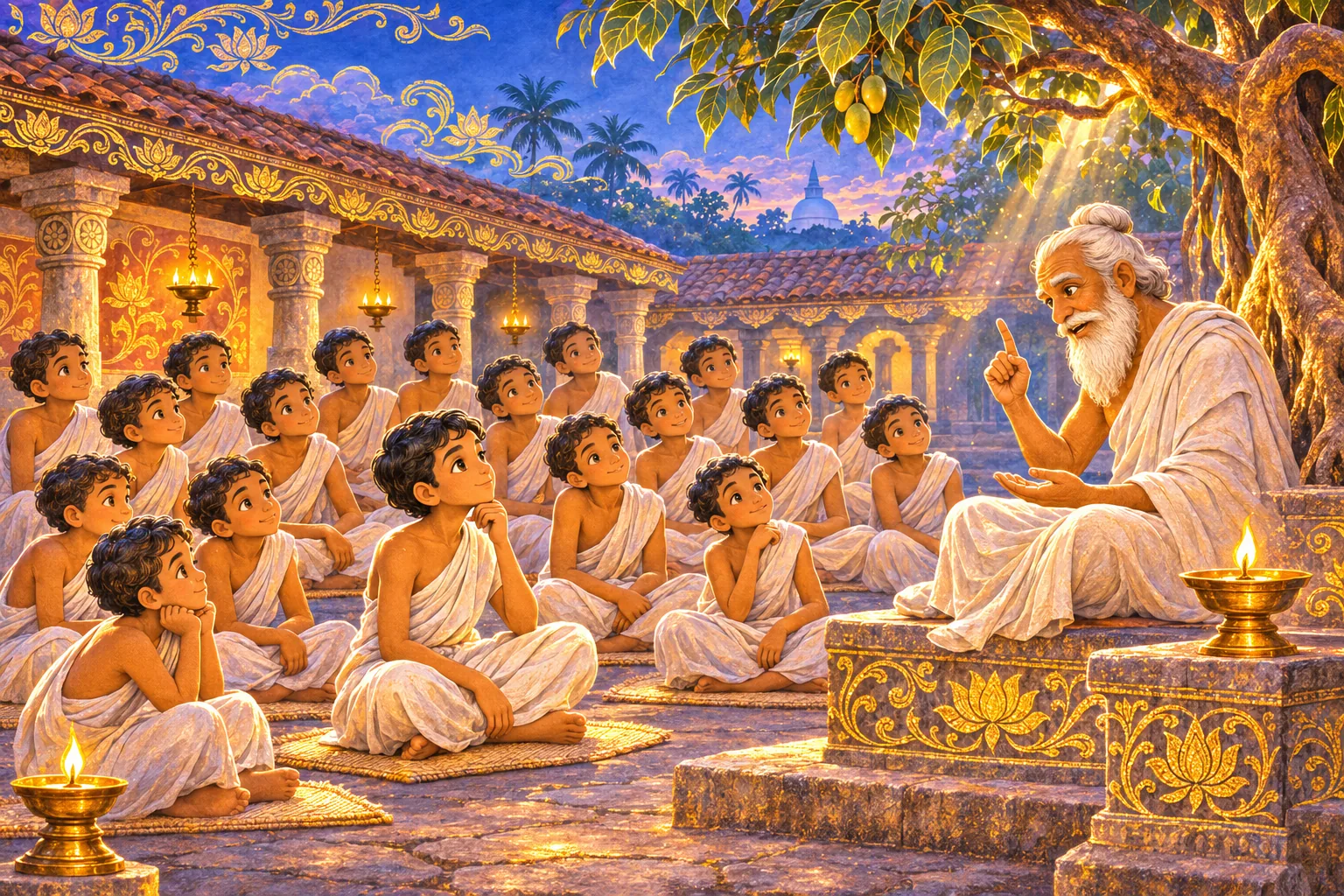
So one day he set them a strange test. “Students,” he said with a serious face, “I need money for my daughter’s wedding. Bring me things from the town, but take them where nobody can see you.”
ඉතින් දවසක් ඔහු ඔවුන්ට අමුතු පරීක්ෂණයක් දුන්නා. “ශිෂ්යයිනි,” ඔහු බරපතළ මුහුණකින් කීවා, “මගේ දුවගේ විවාහයට මට සල්ලි ඕනෑ. නගරයෙන් දේවල් ගේන්න, ඒත් කවුරුත් ඔයාලව නොදකින විදිහට ගන්න.”

Off went the students, sneaking about. One crept into an empty shop. Another slipped into a quiet storeroom. Each looked around carefully and took something when he thought no one was looking.
ශිෂ්යයෝ හොරෙන් පිටත් වුණා. එක් කෙනෙක් හිස් කඩයකට රිංගා ගත්තා. තවත් කෙනෙක් නිස්කලංක ගබඩාවකට රිංගුවා. හැම කෙනෙක්ම හොඳින් වටපිට බලා කවුරුත් නොබලනවා කියා හිතූ වෙලාවක යමක් ගත්තා.
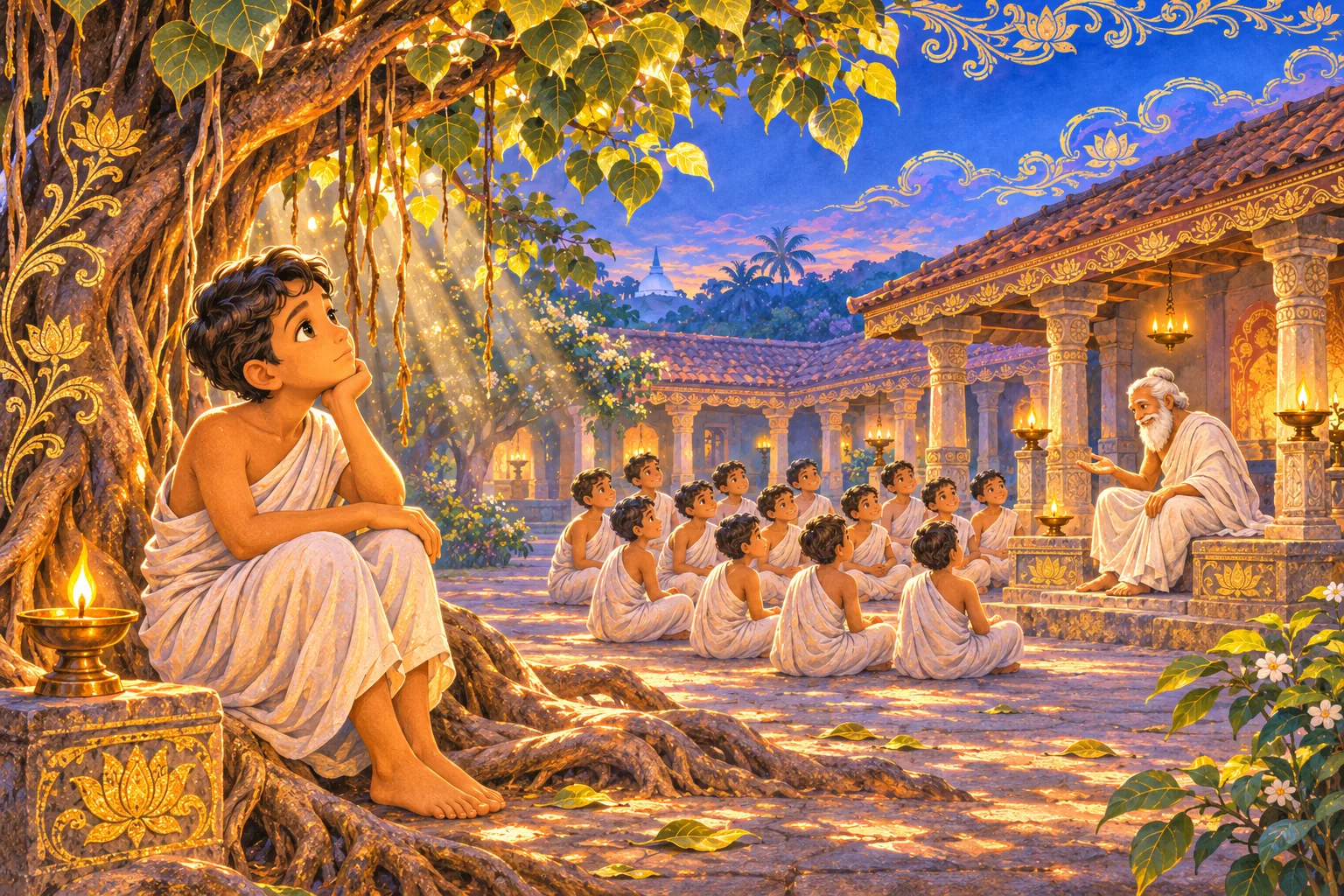
But one quiet student did not go. He sat under a tree and thought deeply.
ඒත් එක් නිහඬ ශිෂ්යයෙක් ගියේ නැහැ. ඔහු ගසක් යට වාඩි වී ගැඹුරින් කල්පනා කළා.
“Is there anywhere truly secret?” he wondered. “Even if no one else sees me, I will see myself.”
“සැබවින්ම රහස් තැනක් තියෙනවාද?” ඔහු කල්පනා කළා. “වෙන කවුරුත් මාව නොදැක්කත්, මම මාවම දකිනවා.”
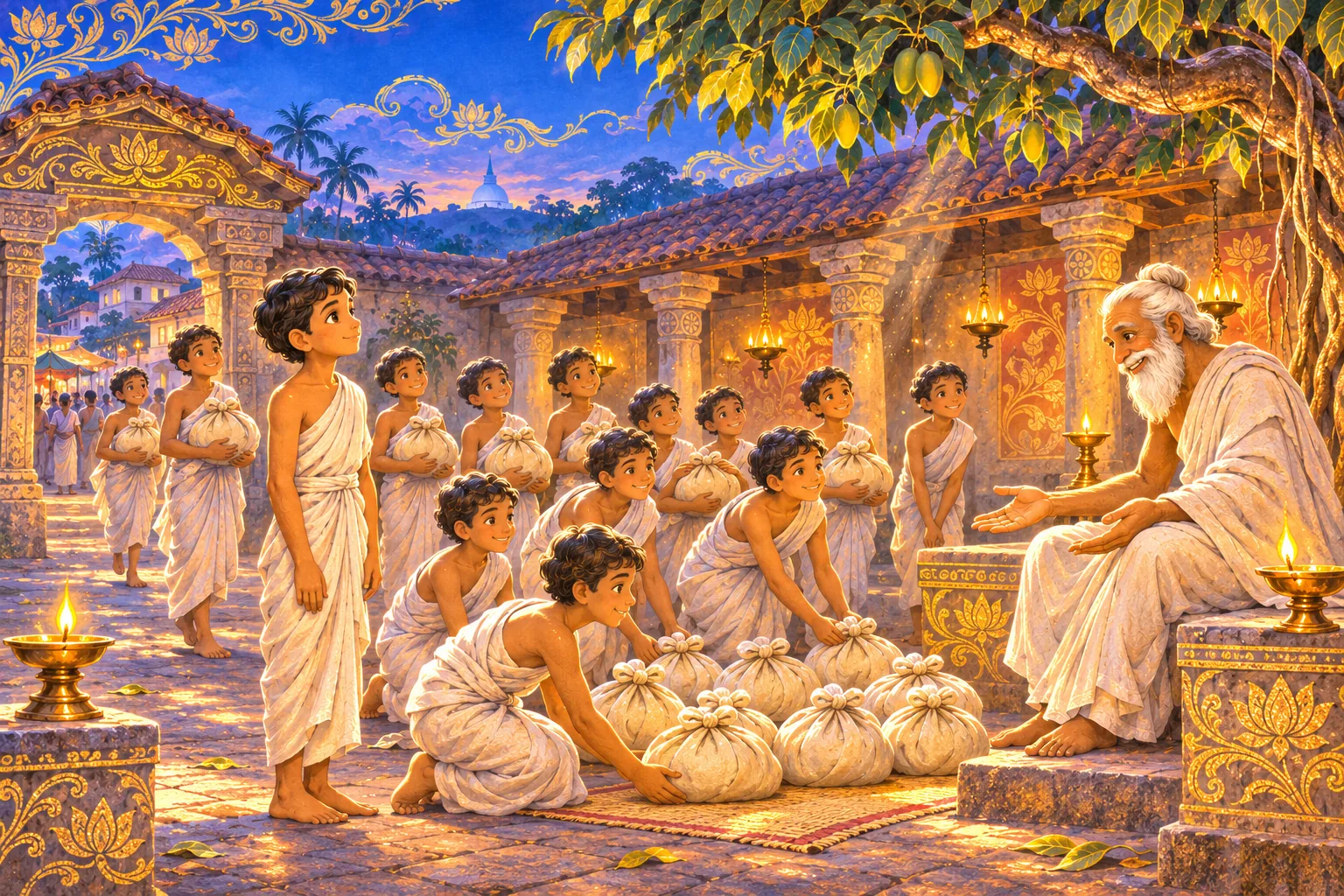
The students came back with their bundles and laid them proudly before the teacher.
ශිෂ්යයෝ තමන්ගේ මිටි රැගෙන ආපසු ඇවිත් ආඩම්බරයෙන් ගුරුවරයා ඉදිරියේ තැබුවා.
“And you?” the teacher asked the quiet student. “Why have you brought nothing?”
“ඔයා?” ගුරුවරයා නිහඬ ශිෂ්යයාගෙන් ඇසුවා. “ඔයා කිසිවක් නොගෙනාවේ ඇයි?”
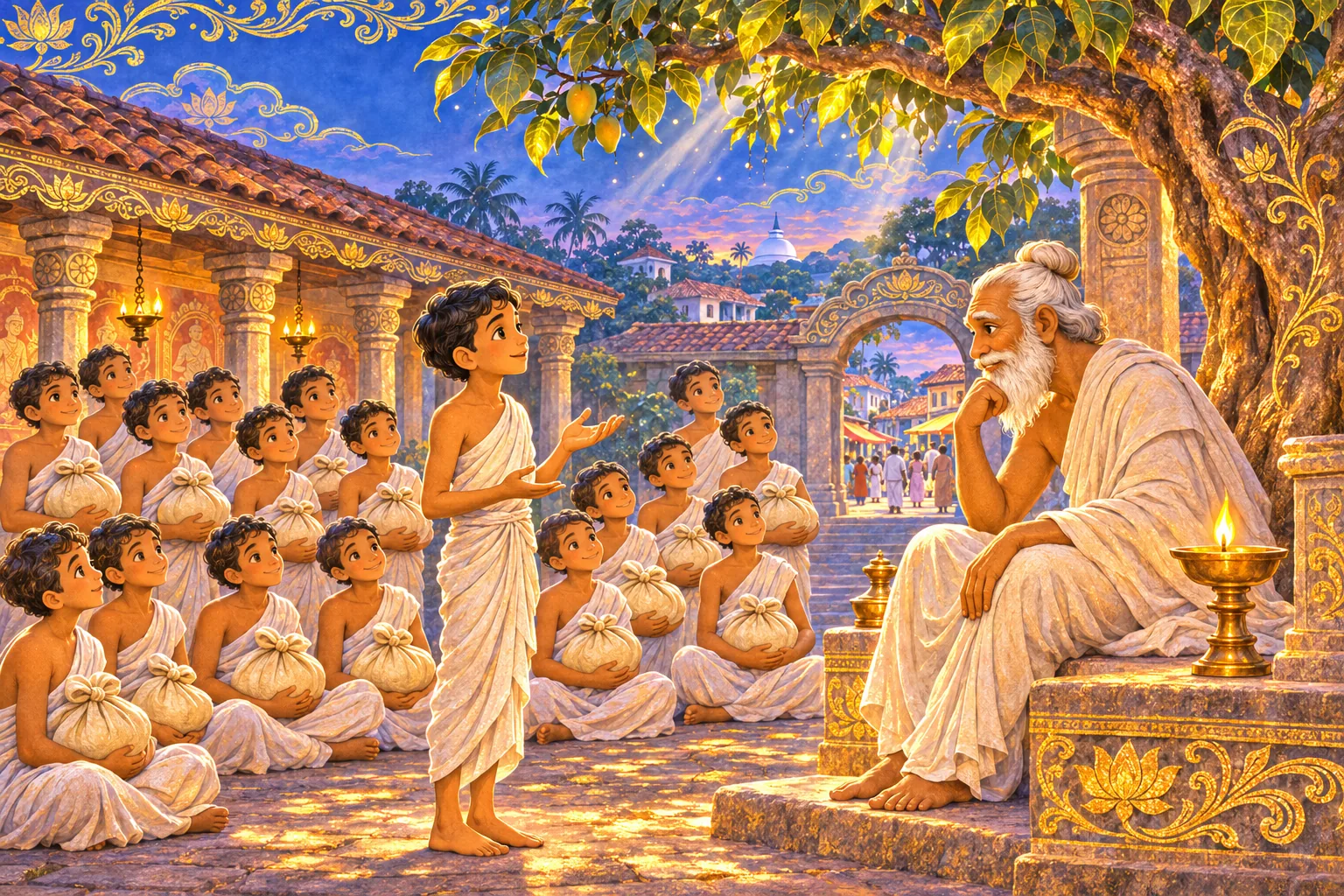
“Teacher,” said the student calmly, “you told us to take things where no one could see. But there is no such place. Wherever I go, I am there, and I would know. So I could not do wrong.”
“ගුරුතුමනි,” ශිෂ්යයා සන්සුන්ව කීවා, “කවුරුත් නොදකින තැනක දේවල් ගන්න කියලා ඔබ කීවා. ඒත් එහෙම තැනක් නැහැ. මම කොහේ ගියත් මම එතැන ඉන්නවා, මම දන්නවා. ඒ නිසා මට වරදක් කරන්න බැරි වුණා.”
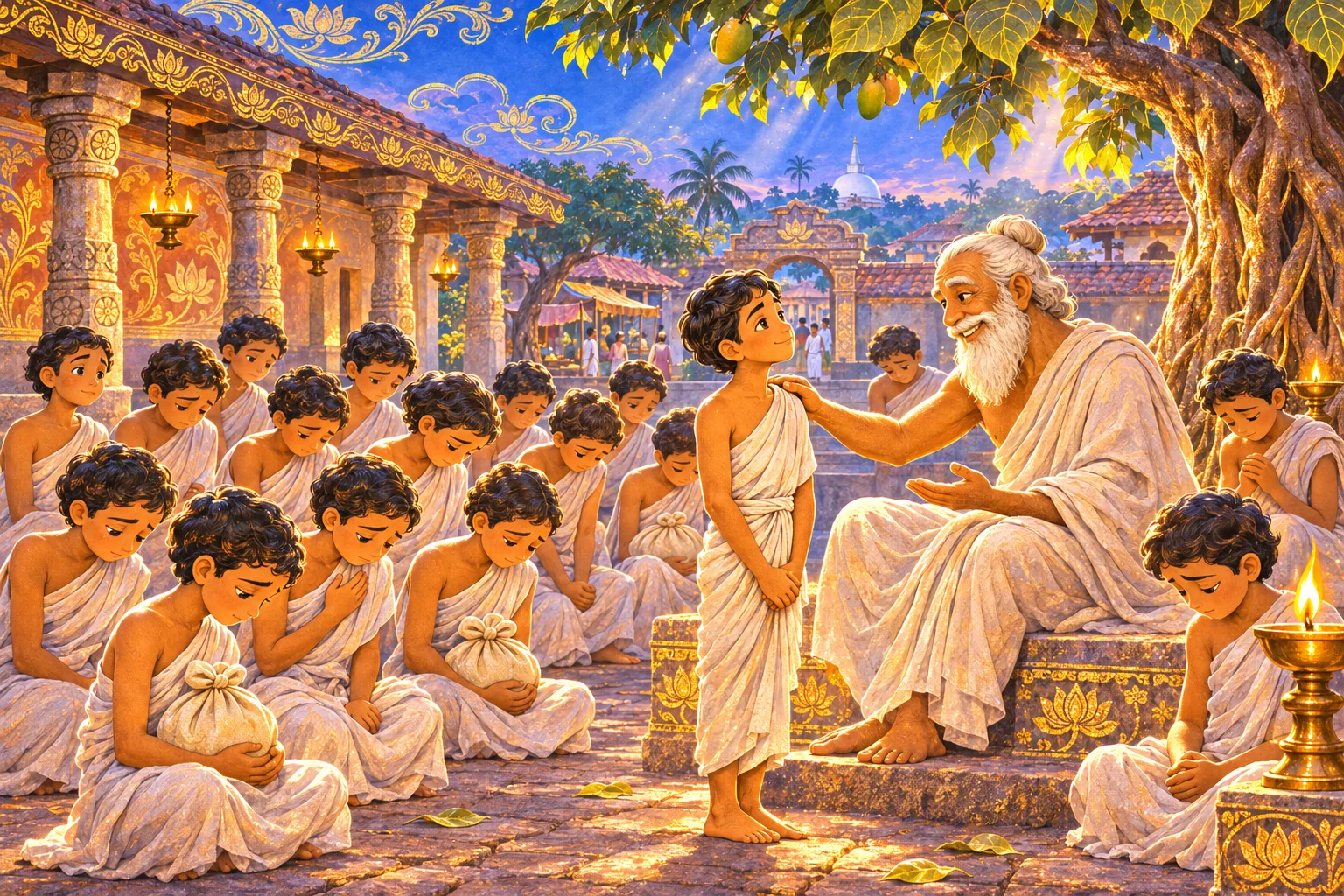
The teacher smiled warmly and put a hand on the student’s shoulder. “You alone have understood,” he said. “I did not want these things. I wanted to see who is good even when no one is watching.”
ගුරුවරයා උණුසුම්ව සිනාසී ශිෂ්යයාගේ උරහිස මත අතක් තැබුවා. “ඔයා විතරයි තේරුම් ගත්තේ,” ඔහු කීවා. “මට මේ දේවල් ඕනෑ වුණේ නැහැ. කවුරුත් නොබලන විටත් යහපත් කවුද කියා බලන්නයි මට ඕනෑ වුණේ.”
The other students hung their heads.
අනිත් ශිෂ්යයෝ හිස පහත් කළා.
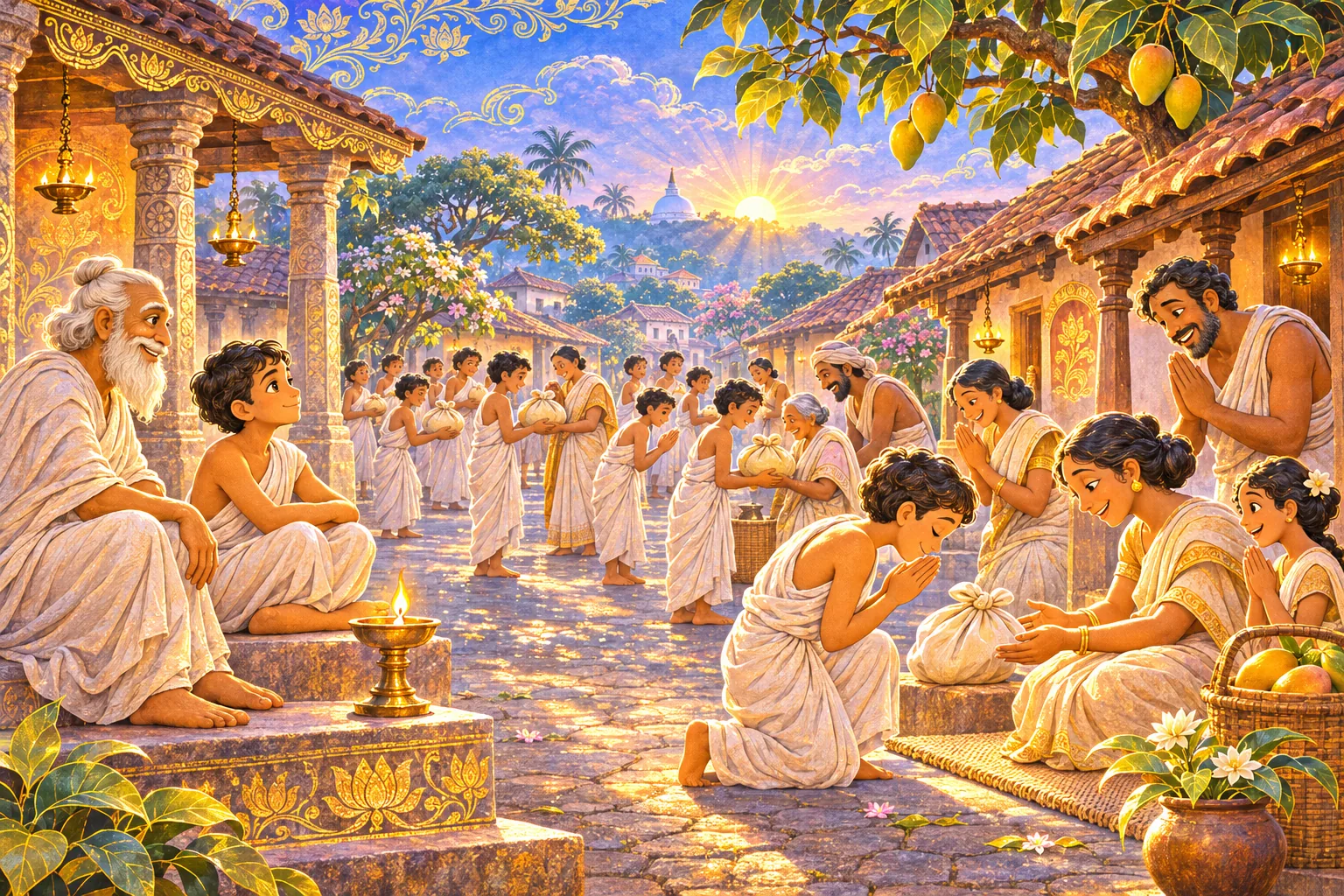
Then all the students carried the things back to the townspeople and said sorry. And they never forgot the lesson of the secret place.
ඉන්පසු සියලු ශිෂ්යයෝ ඒ දේවල් නගරවාසීන්ට ආපසු ගෙන ගොස් සමාව ඉල්ලුවා. රහස් තැනේ පාඩම ඔවුන්ට කවදාවත් අමතක වුණේ නැහැ.
Who was who?
In the story, the quiet student was the Bodhisatta, the Buddha in one of his past lives.
The lesson
There is no truly secret place to do wrong, because we always know what we have done. Real goodness is what we do when no one is watching.
Let's talk
- What strange test did the teacher set?
- Why did the quiet student bring nothing?
- What does it mean to be good when no one is watching?
කවුද කවුරුන් වූයේ?
කතාවේ නිහඬ ශිෂ්යයා බෝසතාණන් වහන්සේ, එනම් පෙර ආත්මයක බුදුරජාණන් වහන්සේයි.
පාඩම
වරදක් කරන්න සැබෑ රහස් තැනක් නැහැ, මොකද අපි කළ දේ අපි හැම විටම දන්නවා. සැබෑ යහපත කියන්නේ කවුරුත් නොබලන විට අපි කරන දේයි.
අපි කතා කරමු
- ගුරුවරයා දුන් අමුතු පරීක්ෂණය මොකක්ද?
- නිහඬ ශිෂ්යයා කිසිවක් නොගෙනාවේ ඇයි?
- කවුරුත් නොබලන විට යහපත් වීම කියන්නේ මොකක්ද?
Retold for children by Fablewings from the Sīlavīmaṃsana Jātaka (Jātaka No. 305; English translation ed. E. B. Cowell, vol. III, 1897, public domain) and the Sinhala Pansiya Panas Jātaka tradition. Illustrations made with AI assistance for Fablewings.