A Handful of Sesame
තල මිටක්
Tilamuṭṭhi Jātaka (No. 252) · තිලමුට්ඨි ජාතකය (අංක 252)
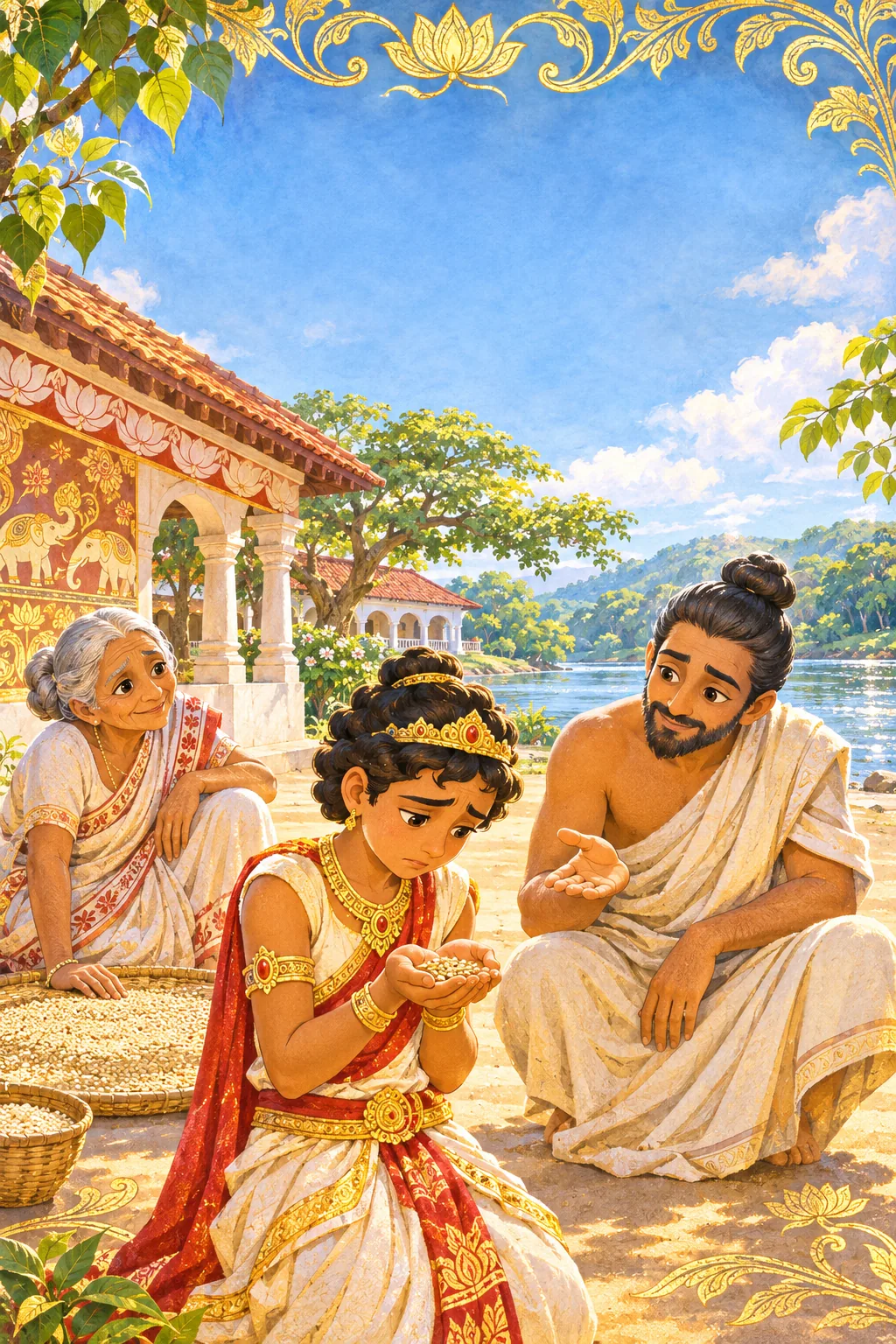
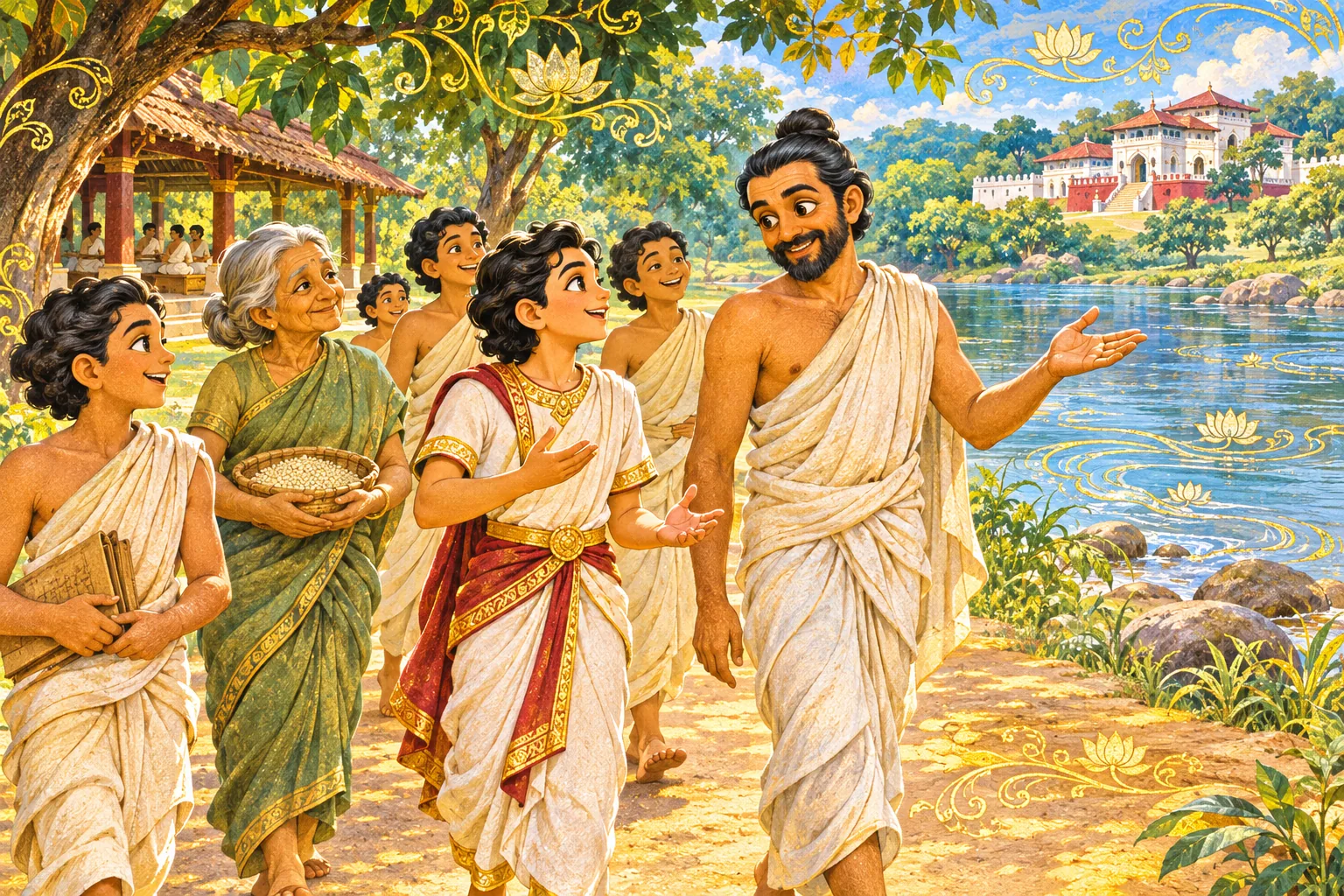
Long ago, a young prince was sent to study with a wise teacher in the city of Takkasila. Every morning, the teacher and his students walked to the river to bathe.
බොහෝ කලකට පෙර, තරුණ කුමාරයෙක් තක්සලා නගරයේ නුවණැති ගුරුවරයෙක් ළඟ ඉගෙන ගන්න යැව්වා. හැම උදේම ගුරුවරයාත් ශිෂ්යයොත් නාන්න ගඟට ඇවිද ගියා.
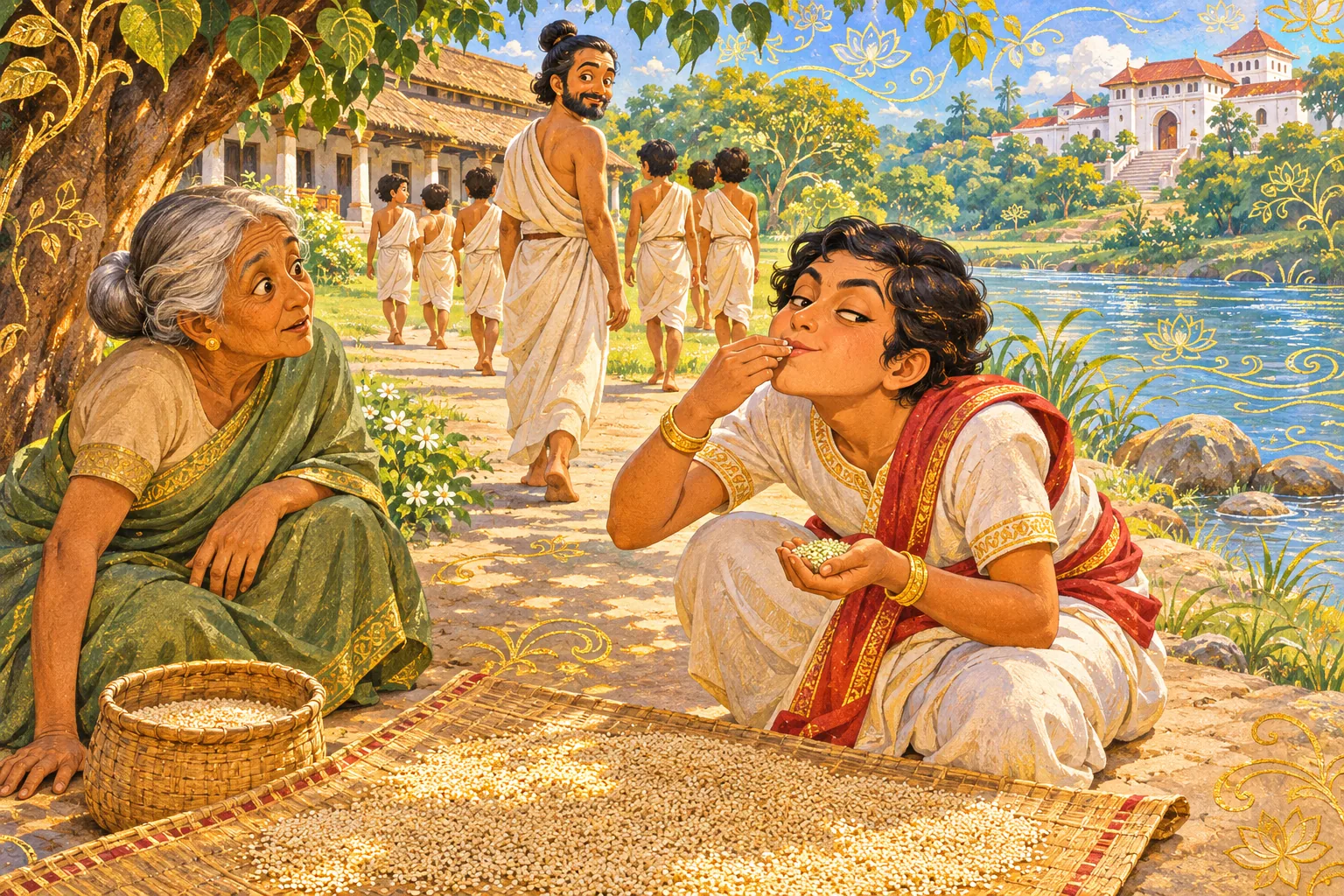
On the way, an old woman had spread sesame seeds on a mat to dry in the sun. The prince reached down, grabbed a handful and ate them.
යන මඟදී, මහලු කාන්තාවක් තල ඇට අව්වේ වේලන්න පැදුරක් මත අතුරලා තිබුණා. කුමාරයා පහත් වී තල මිටක් අරගෙන කෑවා.
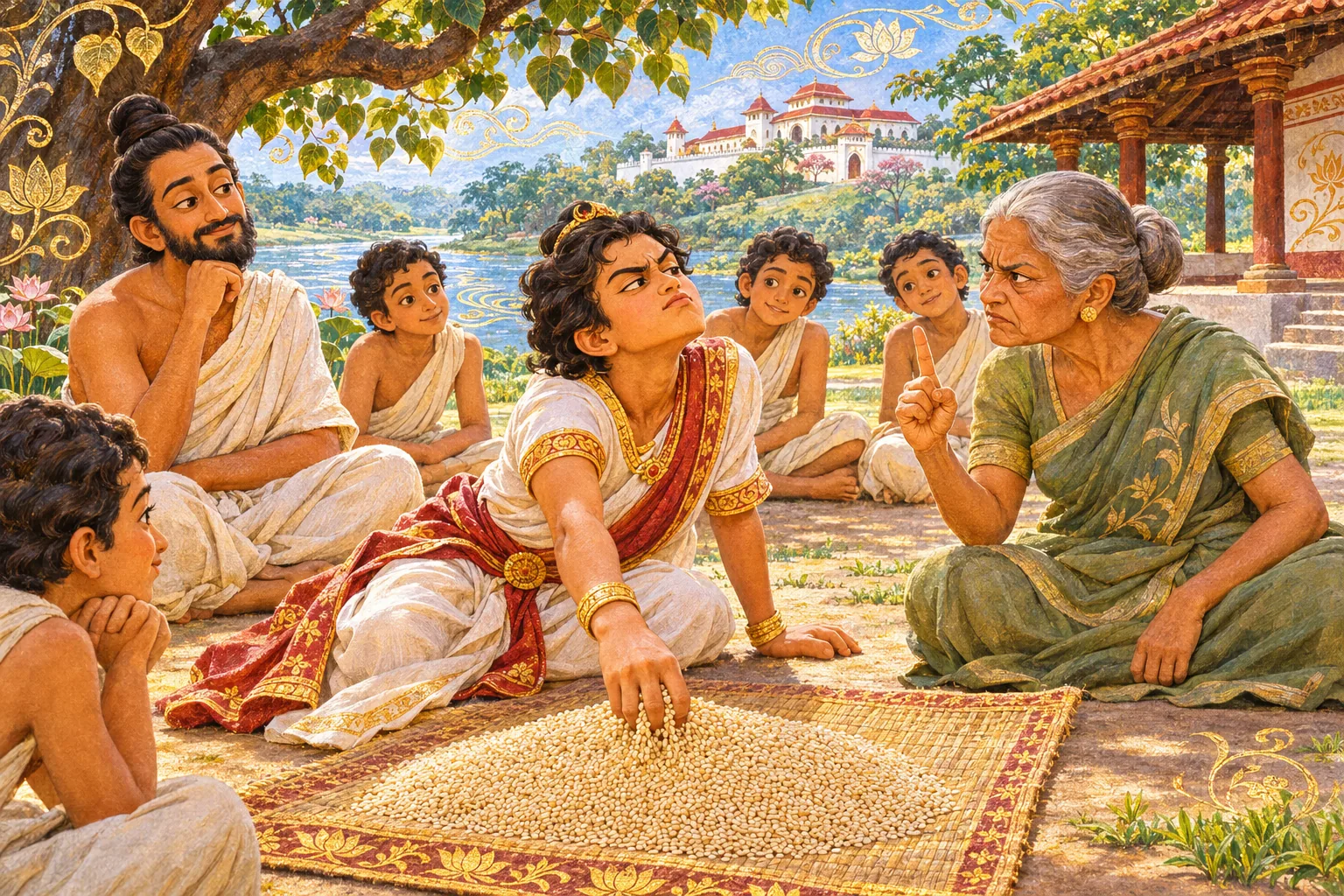
The next day he did it again, and the day after that. The old woman said nothing at first, but she was very upset.
පහුවදාත් ඔහු එහෙම කළා, ඊට පහුවදාත් කළා. මුලින් මහලු කාන්තාව කිසිවක් කීවේ නැති වුණත්, ඇය හරිම කලබල වුණා.
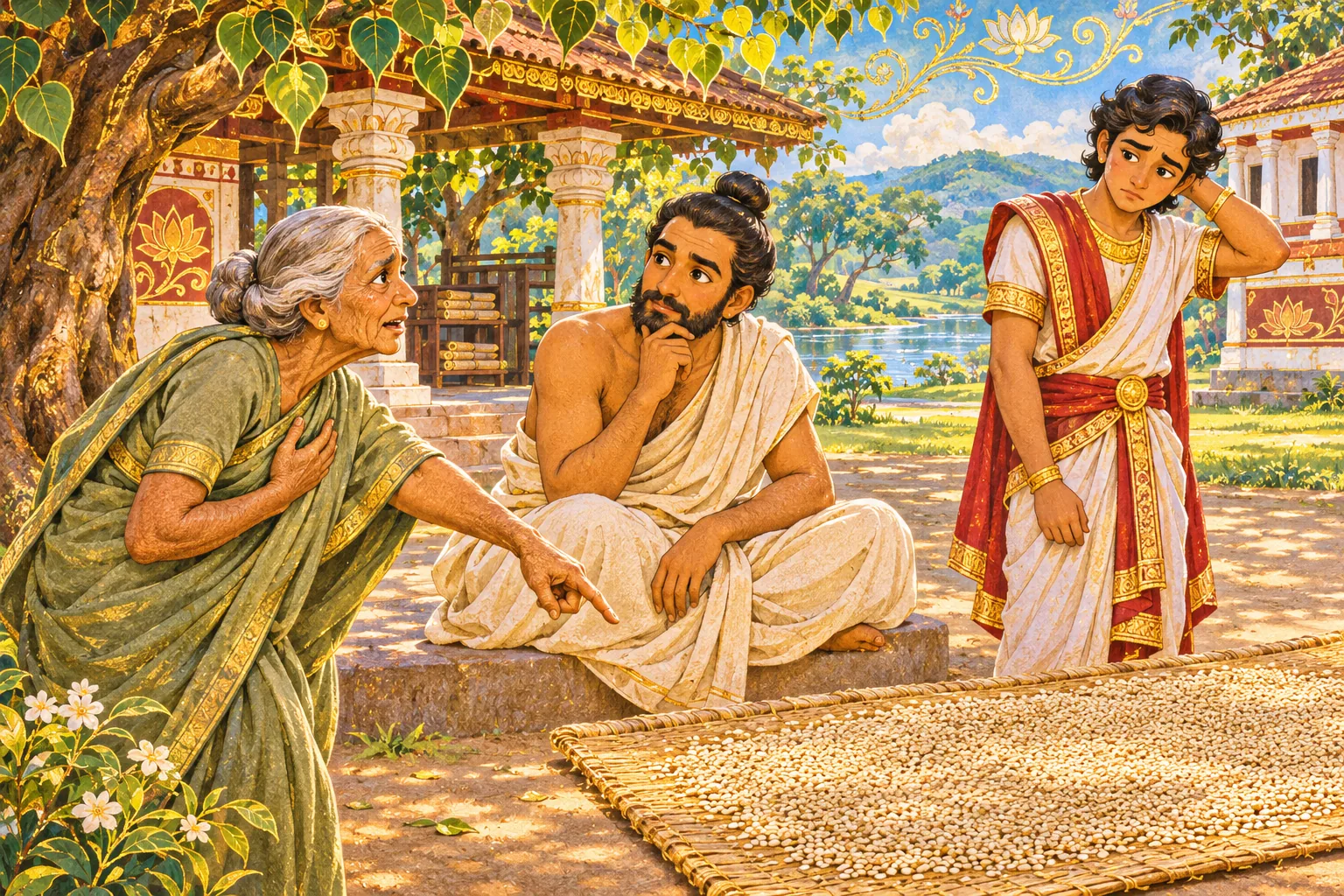
On the third day, she went to the teacher. “Your student keeps taking my seeds!” she said. “I don’t want money. I want him to learn not to take what isn’t his.”
තුන්වෙනි දවසේ ඇය ගුරුවරයා ළඟට ගියා. “ඔබේ ශිෂ්යයා දිගටම මගේ ඇට ගන්නවා!” ඇය කීවා. “මට සල්ලි ඕනෑ නැහැ. ඔහුට අයිති නැති දේ නොගන්න ඉගෙන ගන්න ඕනෑ.”
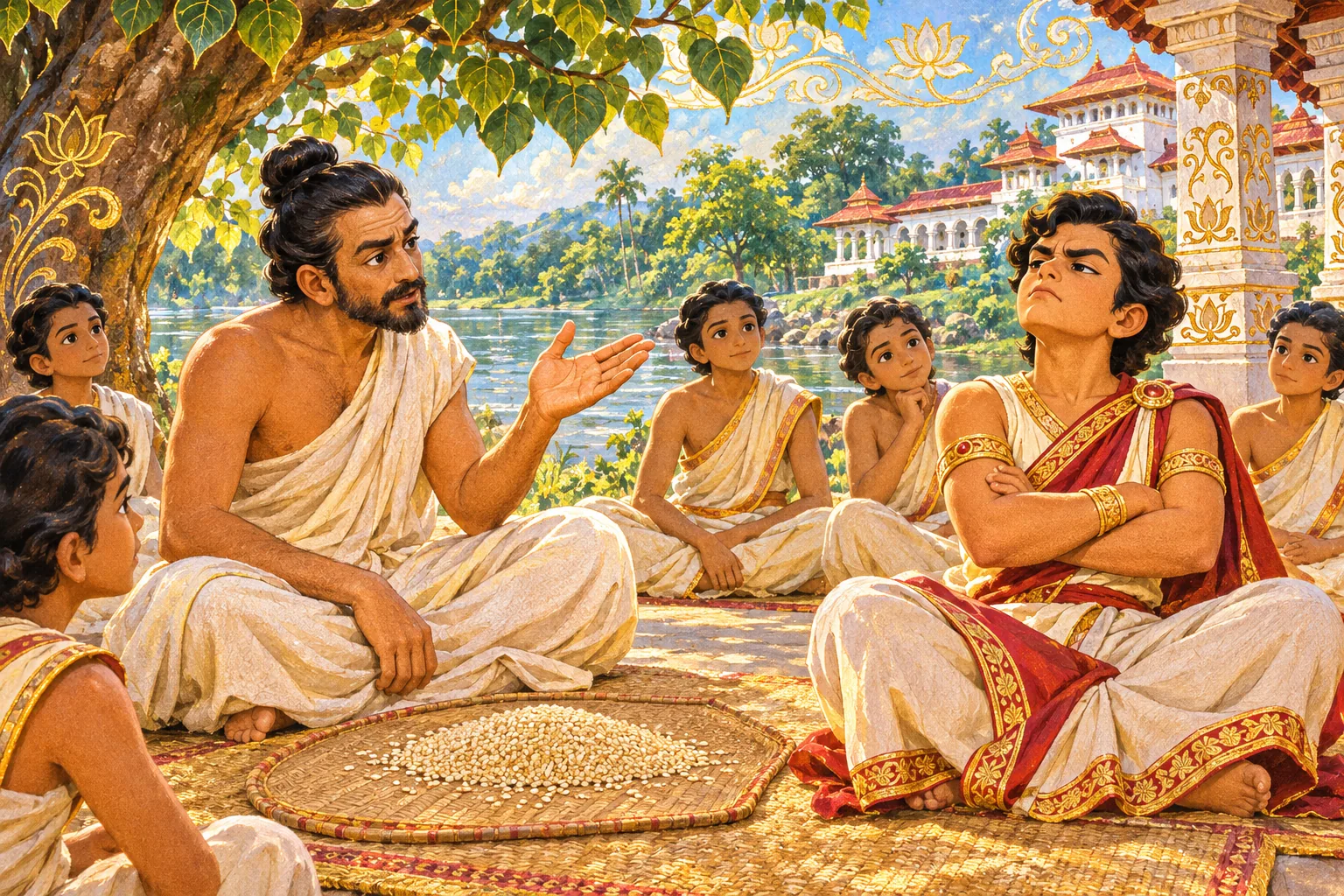
The teacher spoke to the prince very sternly and gave him a hard punishment, even though he was a prince. The prince sulked. “One day I will pay him back for this!” he muttered.
ගුරුවරයා කුමාරයාට හරිම දැඩිව කතා කර, ඔහු කුමාරයෙක් වුණත්, ඔහුට දැඩි දඬුවමක් දුන්නා. කුමාරයා තරහ වුණා. “දවසක මම මේකට ඔහුට පළිගන්නවා!” ඔහු කොඳුරුවා.
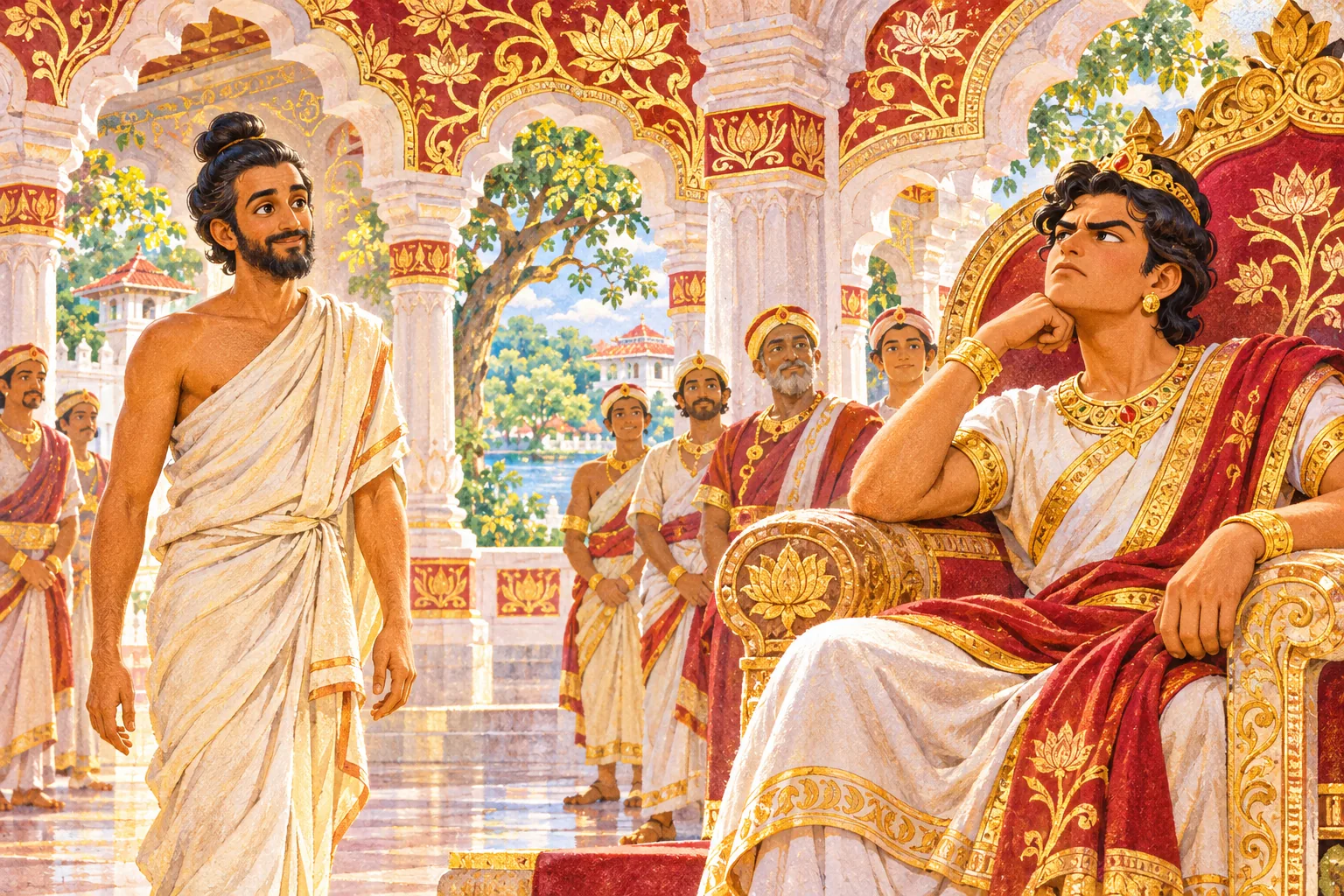
Years later, the prince became king. He was still angry. When the old teacher came to visit the palace, the king frowned. “You punished me in front of everyone!”
අවුරුදු ගණනාවකට පස්සේ කුමාරයා රජ වුණා. ඔහු තවමත් තරහින් හිටියා. මහලු ගුරුවරයා මාලිගාවට ආවම රජු මුහුණ හකුළුවා. “ඔබ හැමෝම ඉදිරියේ මට දඬුවම් කළා!”
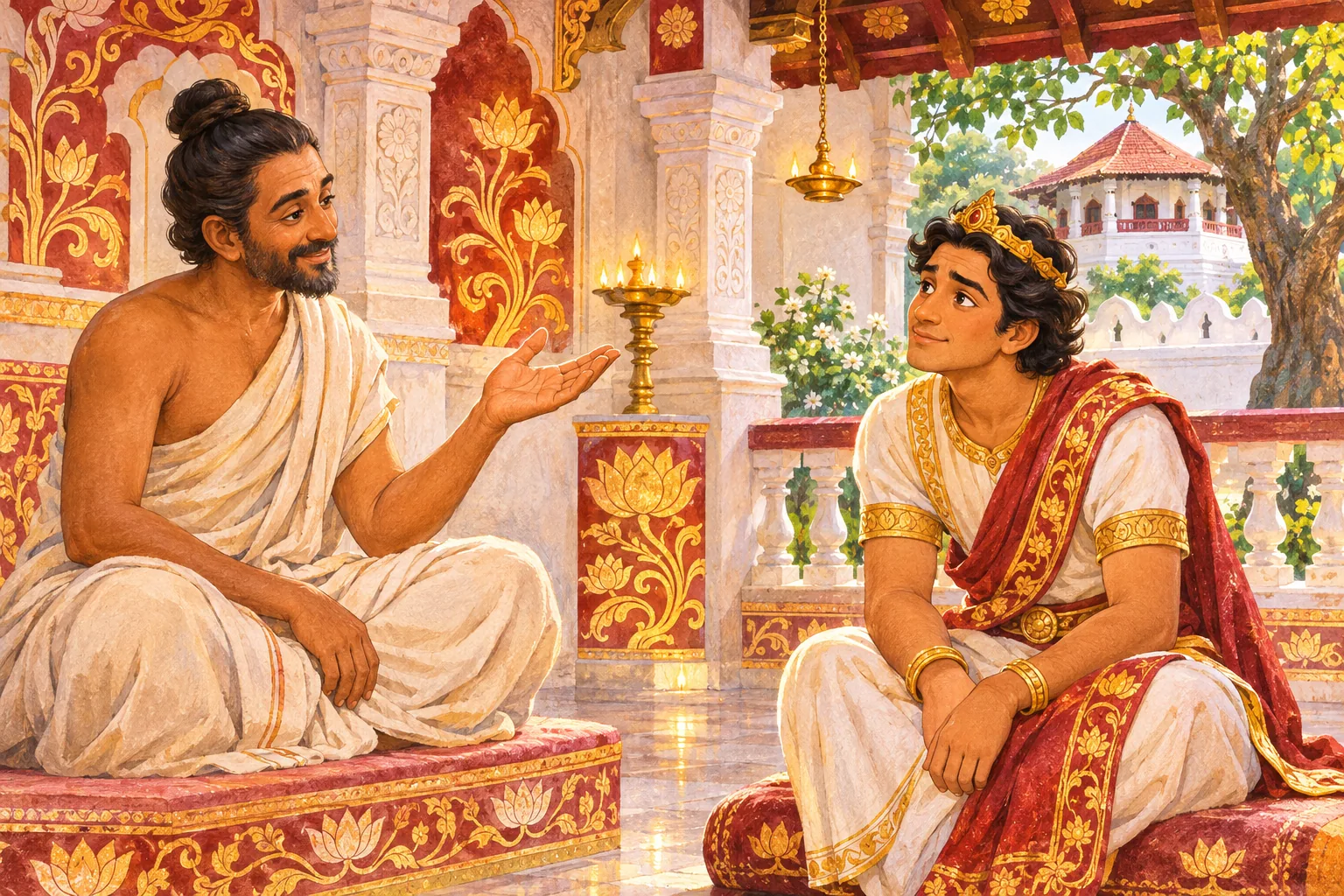
“I did it because I cared,” the teacher said calmly. “If no one had stopped you taking a few seeds, you might have taken bigger things, and grown into an unjust king. Would you be the good king you are today?”
“මම එහෙම කළේ මම ඔබ ගැන සැලකිලිමත් නිසා,” ගුරුවරයා සන්සුන්ව කීවා. “ඇට ටිකක් ගන්න එක කවුරුවත් නැවැත්තුවේ නැත්නම්, ඔබ ලොකු දේවල් ගන්න පටන් අරන් අසාධාරණ රජෙක් වෙන්න තිබුණා. අද ඔබ ඉන්න හොඳ රජු වෙන්න ලැබෙයිද?”
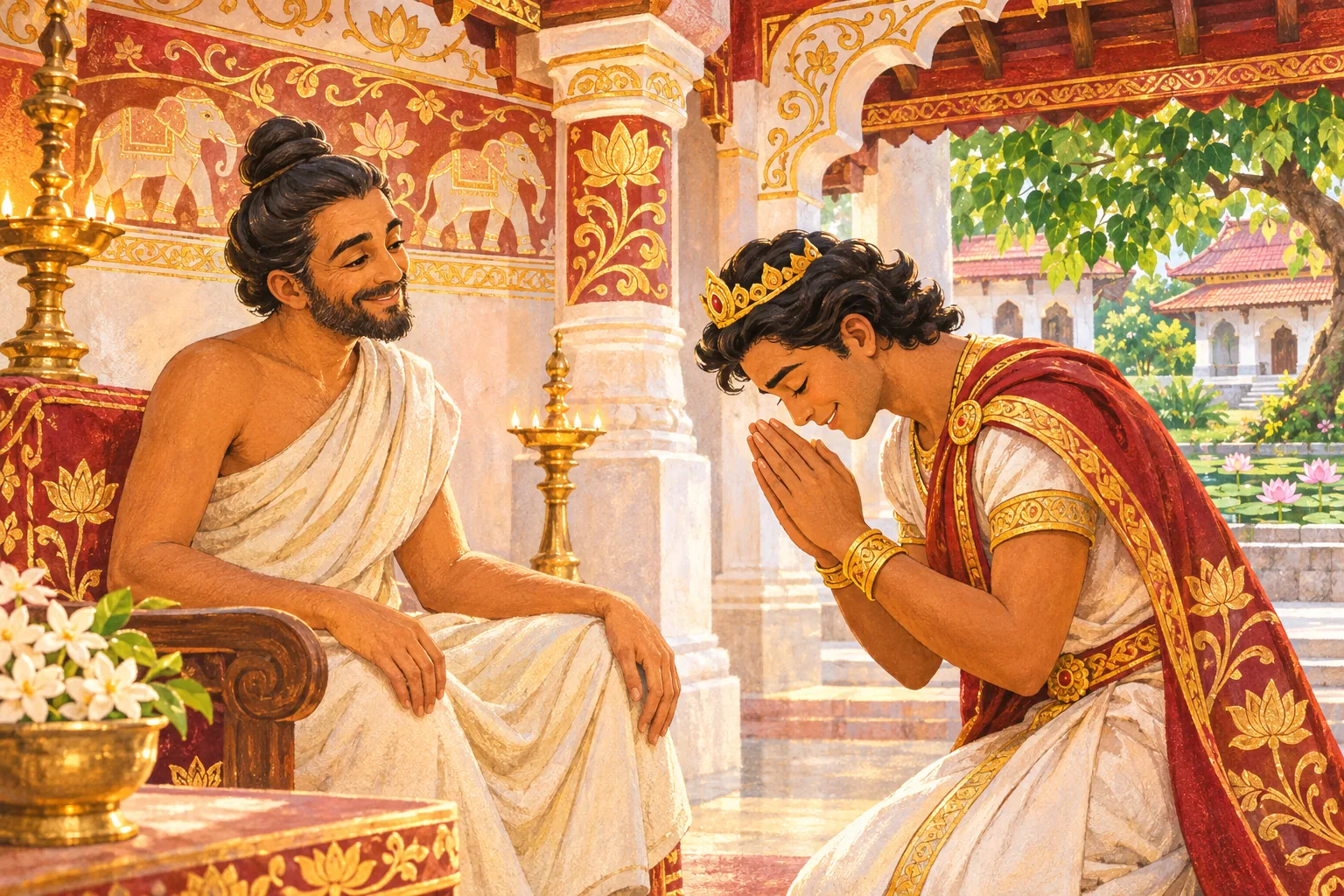
The king thought for a long time. Then he bowed to his teacher. “Thank you,” he said. “You taught me the most important lesson of all.” And he honoured him like a father for the rest of his life.
රජු බොහෝ වෙලාවක් කල්පනා කළා. ඊට පස්සේ ඔහු ගුරුවරයාට වැන්දා. “ස්තූතියි,” ඔහු කීවා. “ඔබ මට ඉගැන්නුවේ හැමදේටම වඩා වැදගත් පාඩම.” ඔහු මුළු ජීවිත කාලයම ඔහුට පියෙකුට මෙන් ගෞරව කළා.
Who was who?
In the story, the wise teacher was the Bodhisatta, the Buddha in one of his past lives. In the original story the teacher strikes the prince with a bamboo cane, and the angry king at first wants him put to death; here the punishment is not shown and the king is simply angry.
The lesson
Taking something that isn't ours, even something small, is wrong. When someone who cares about us corrects us, it can be the greatest gift, even if it doesn't feel like it at the time.
Let's talk
- What did the prince keep doing on the way to the river?
- Why did the old woman not want money?
- Has anyone ever corrected you in a way that helped you later?
කවුද කවුරුන් වූයේ?
කතාවේ නුවණැති ගුරුවරයා බෝසතාණන් වහන්සේ, එනම් පෙර ආත්මයක බුදුරජාණන් වහන්සේයි. මුල් කතාවේ ගුරුවරයා කුමාරයාට උණ කෝටුවකින් පහර දෙනවා. තරහ වූ රජු මුලින් ඔහුට මරණ දඬුවම දෙන්න හිතනවා. මෙහි දඬුවම පෙන්වන්නේ නැහැ, රජු තරහින් ඉන්නවා විතරයි.
පාඩම
අපට අයිති නැති දෙයක්, පුංචි දෙයක් වුණත්, ගැනීම වැරදියි. අප ගැන සැලකිලිමත් කෙනෙක් අපව නිවැරදි කරන විට, ඒ වෙලාවේ එහෙම නොදැනුණත්, ඒක ලොකුම තෑග්ගක් වෙන්න පුළුවන්.
අපි කතා කරමු
- ගඟට යන මඟදී කුමාරයා දිගටම කළේ මොකක්ද?
- මහලු කාන්තාවට සල්ලි ඕනෑ නොවුණේ ඇයි?
- කවුරුහරි ඔබව නිවැරදි කළ දෙයක් පස්සේ ඔබට උදව් වුණාද?
Retold for children by Fablewings from the Tilamuṭṭhi Jātaka (Jātaka No. 252; English translation ed. E. B. Cowell, vol. II, 1895, public domain) and the Sinhala Pansiya Panas Jātaka tradition. Illustrations made with AI assistance for Fablewings.