The Spade Sage
උදළු පණ්ඩිතයා
Kuddāla Jātaka (No. 70) · කුද්දාල ජාතකය (අංක 70)
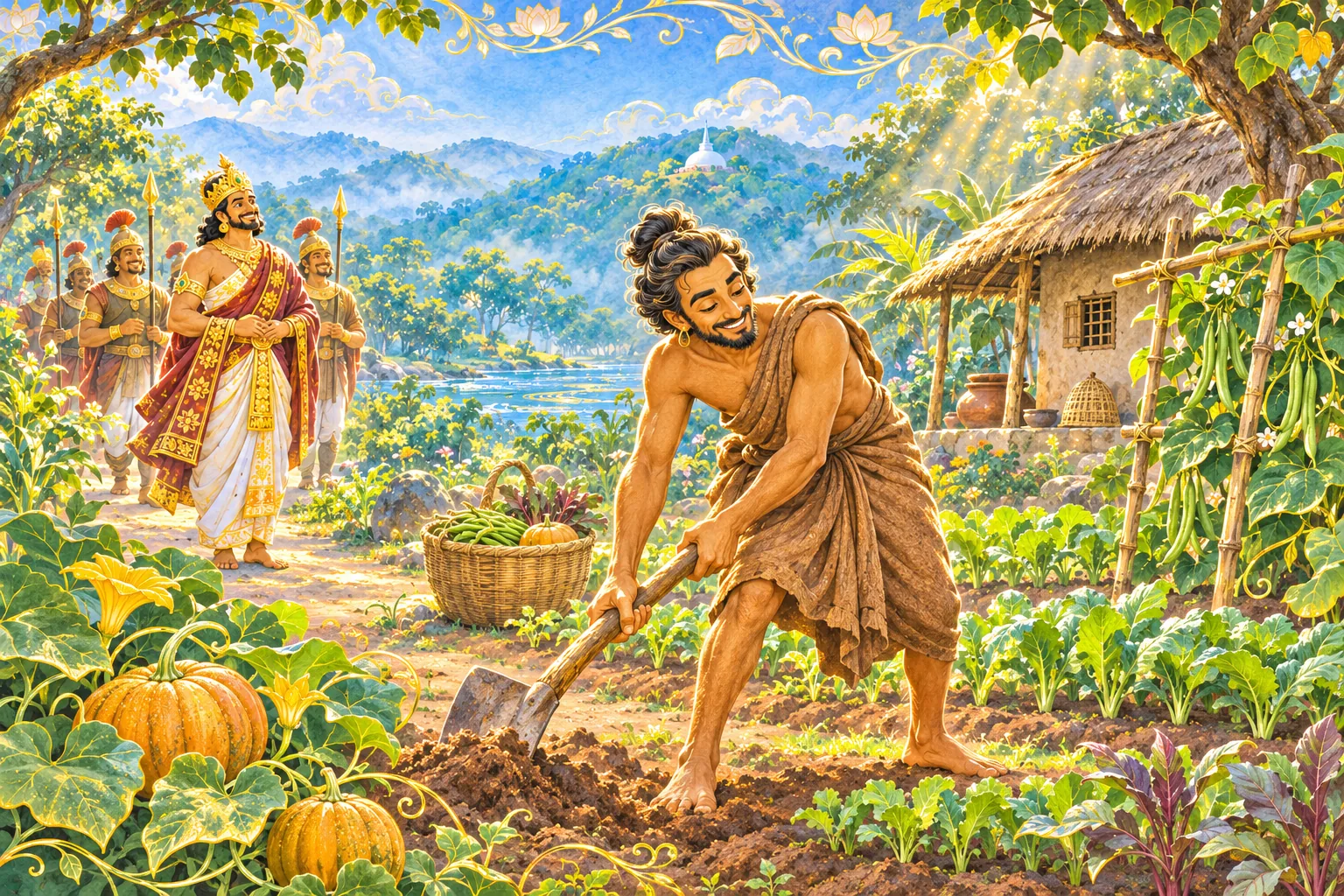
Long ago, there lived a gardener named Kuddāla, which means “spade”. Every day he dug his little garden with his old spade and grew pumpkins, beans and gourds to sell.
බොහෝ කලකට පෙර කුද්දාල නම් වත්තේ වැඩ කරන්නෙක් ජීවත් වුණා. කුද්දාල කියන්නේ “උදැල්ල” යන්නයි. හැමදාම ඔහු තම පැරණි උදැල්ලෙන් පොඩි වත්ත හාරලා විකුණන්න වට්ටක්කා, බෝංචි සහ ලබු වැව්වා.
One day he thought, “I would like to live a peaceful life in the forest as a hermit.”
දවසක් ඔහු සිතුවා, “මට තවුසෙක් ලෙස වනයේ සාමකාමී ජීවිතයක් ගත කරන්න ආසයි.”
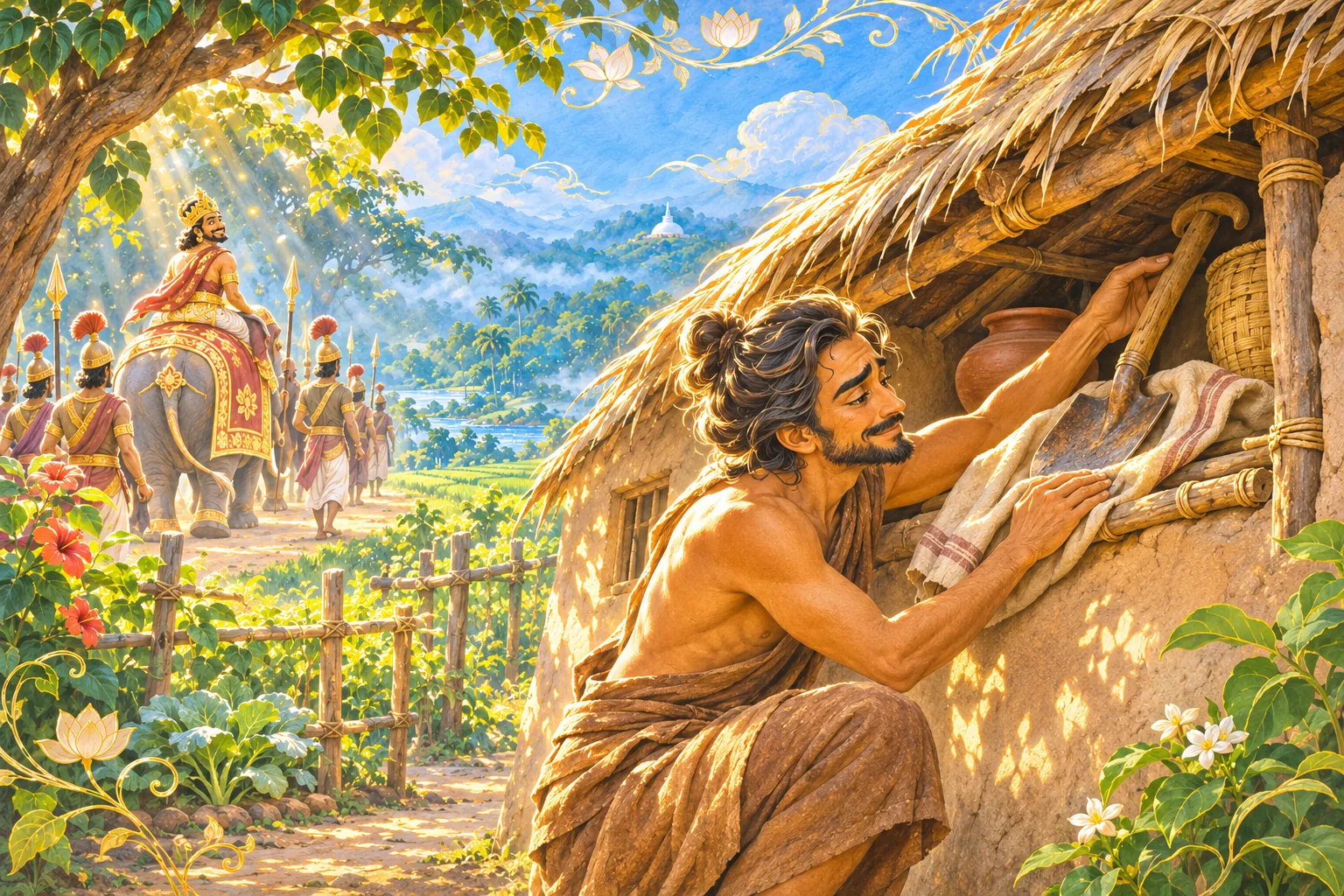
But he loved his spade. So before he left, he hid it carefully under the roof of his hut.
ඒත් ඔහු තම උදැල්ලට ආදරය කළා. ඒ නිසා යන්න කලින් ඔහු එය ඔහුගේ පැල්පතේ වහලය යට පරිස්සමින් සඟවා තැබුවා.
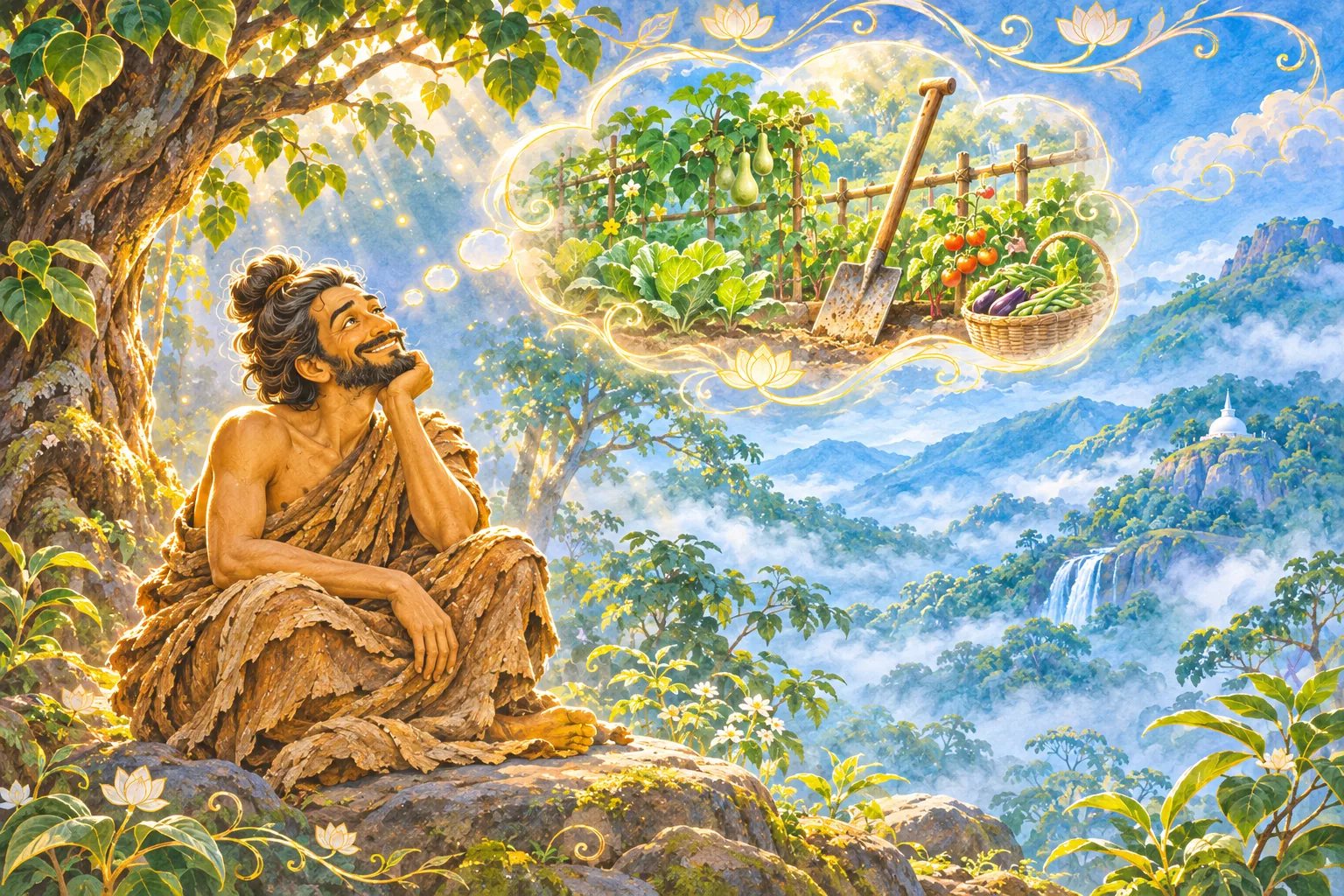
In the mountains he tried to meditate. But his mind kept wandering home.
කඳුකරයේ ඔහු භාවනා කරන්න උත්සාහ කළා. ඒත් ඔහුගේ සිත දිගටම ගෙදර දුවගෙන ගියා.
“My good old spade,” he thought. “My pumpkins and my beans.” Soon he walked all the way back to his garden.
“මගේ හොඳ පරණ උදැල්ල,” ඔහු සිතුවා. “මගේ වට්ටක්කා, මගේ බෝංචි.” ඉක්මනින්ම ඔහු ආපසු වත්තට ම ඇවිදගෙන ගියා.
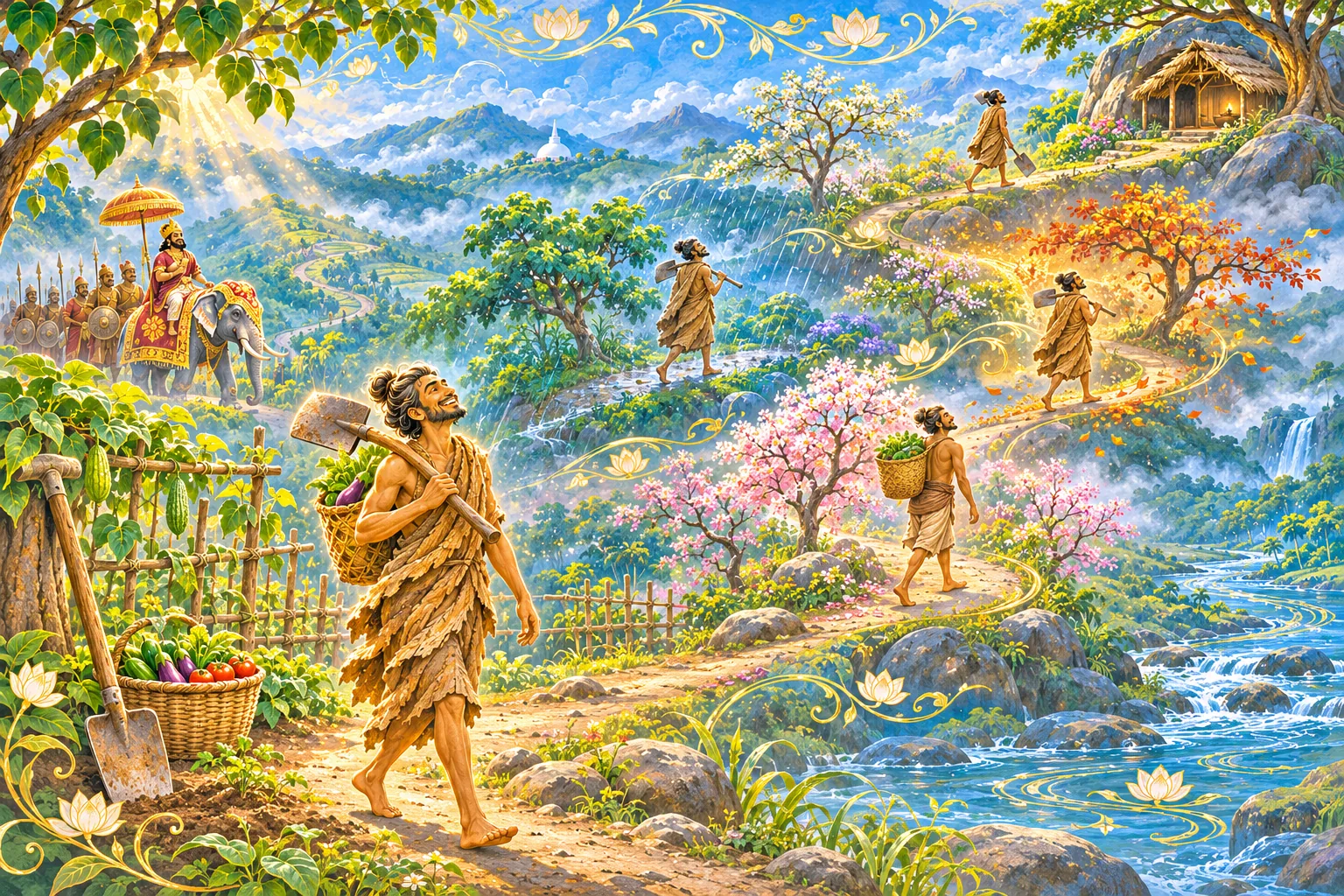
This happened again and again. Six times he went to the forest, and six times his spade called him home.
මෙය නැවත නැවතත් සිදු වුණා. හය වතාවක් ඔහු වනයට ගියා, හය වතාවක්ම උදැල්ල ඔහුව ගෙදරට කැඳෙව්වා.
The seasons came and went, and still he could not let it go.
ඍතු ආවා ගියා. ඒත් ඔහුට ඒක අත්හරින්න බැරි වුණා.
The seventh time, he said, “Enough! This old spade is holding me back.”
හත්වෙනි වතාවේ ඔහු කීවා, “ඇති! මේ පරණ උදැල්ල මාව පස්සට අදිනවා.”
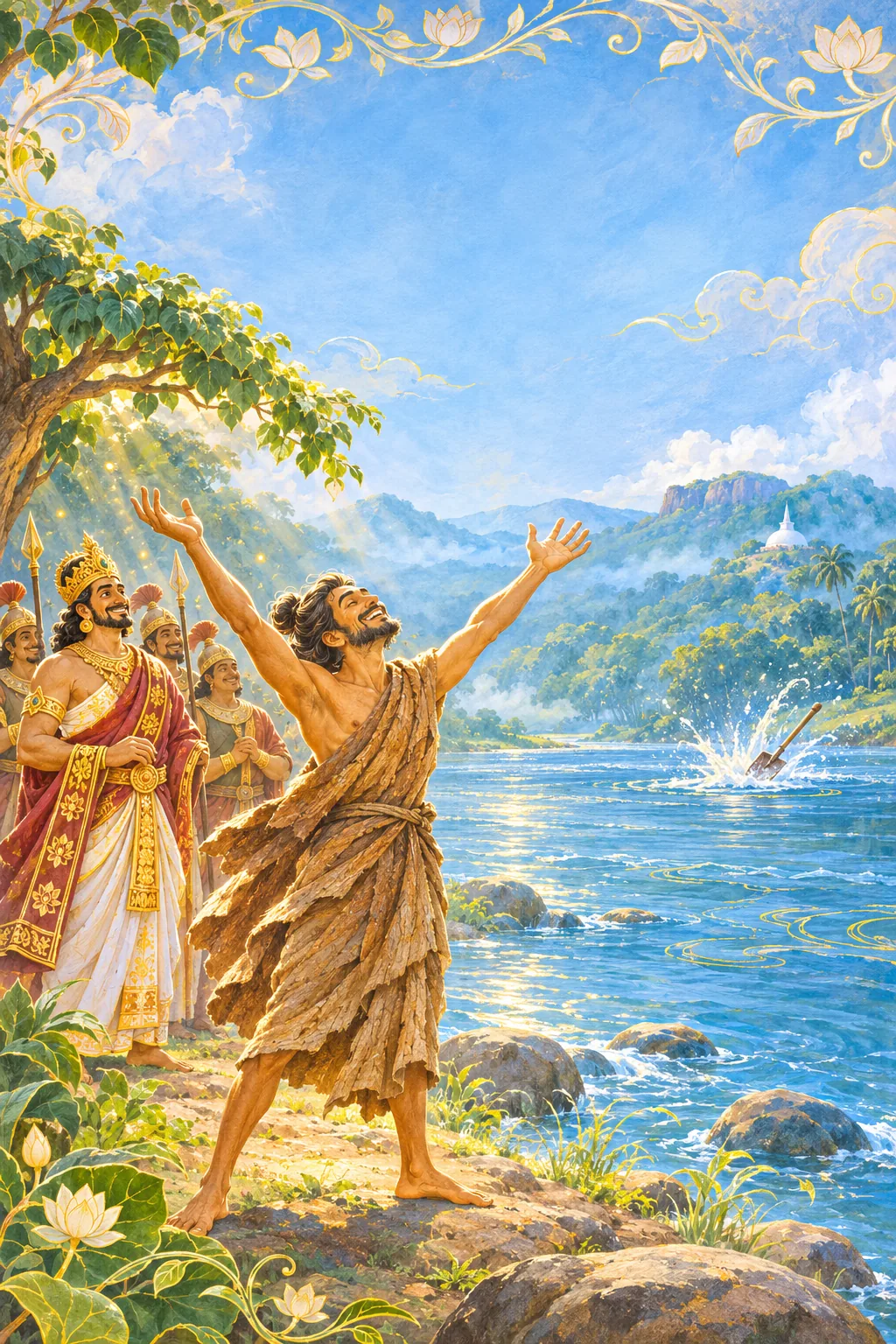
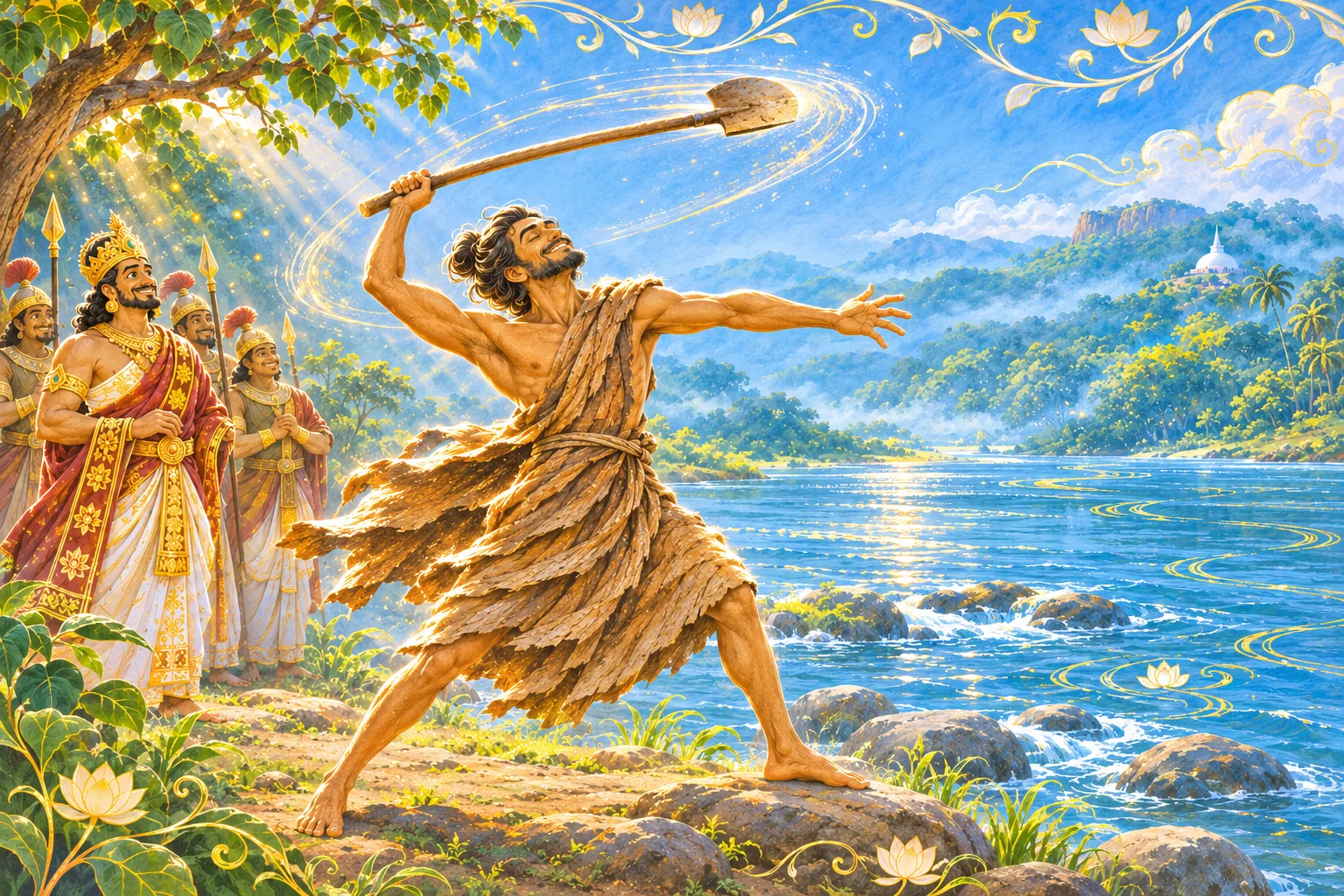
He carried it to the wide river. He closed his eyes so he would not see where it fell, whirled it round his head three times, and threw it far, far into the water. Splash!
ඔහු එය පළල් ගඟට ගෙන ගියා. එය වැටෙන තැන නොපෙනෙන්න ඔහු ඇස් පියාගෙන, තුන් වතාවක් හිස වටා කරකවා, ඈතට ඈතට වතුරට විසි කළා. ඩබාස්!
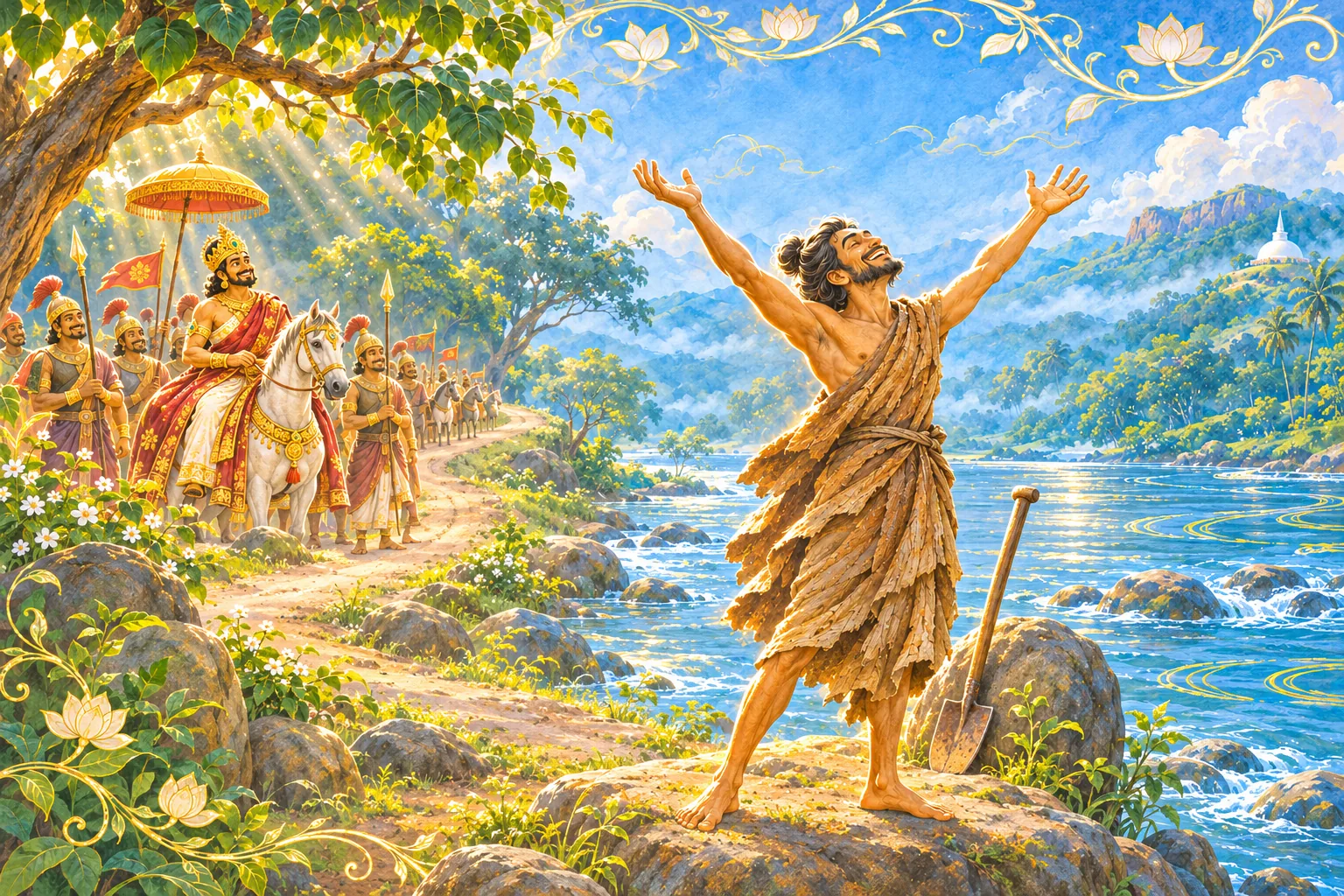
A wonderful lightness filled his heart. “I have conquered! I have conquered!” he shouted for joy.
අපූරු සැහැල්ලුවක් ඔහුගේ හදවත පිරෙව්වා. “මම දිනුවා! මම දිනුවා!” ඔහු සතුටින් කෑ ගැසුවා.
At that very moment, a king was passing by with his army, coming home from a battle. He heard the shout and stopped.
ඒ මොහොතේම රජෙක් සටනකින් ආපසු එමින් තම හමුදාව සමඟ ඒ පැත්තෙන් යමින් සිටියා. ඔහුට කෑ ගැසීම ඇසී ඔහු නැවතුණා.
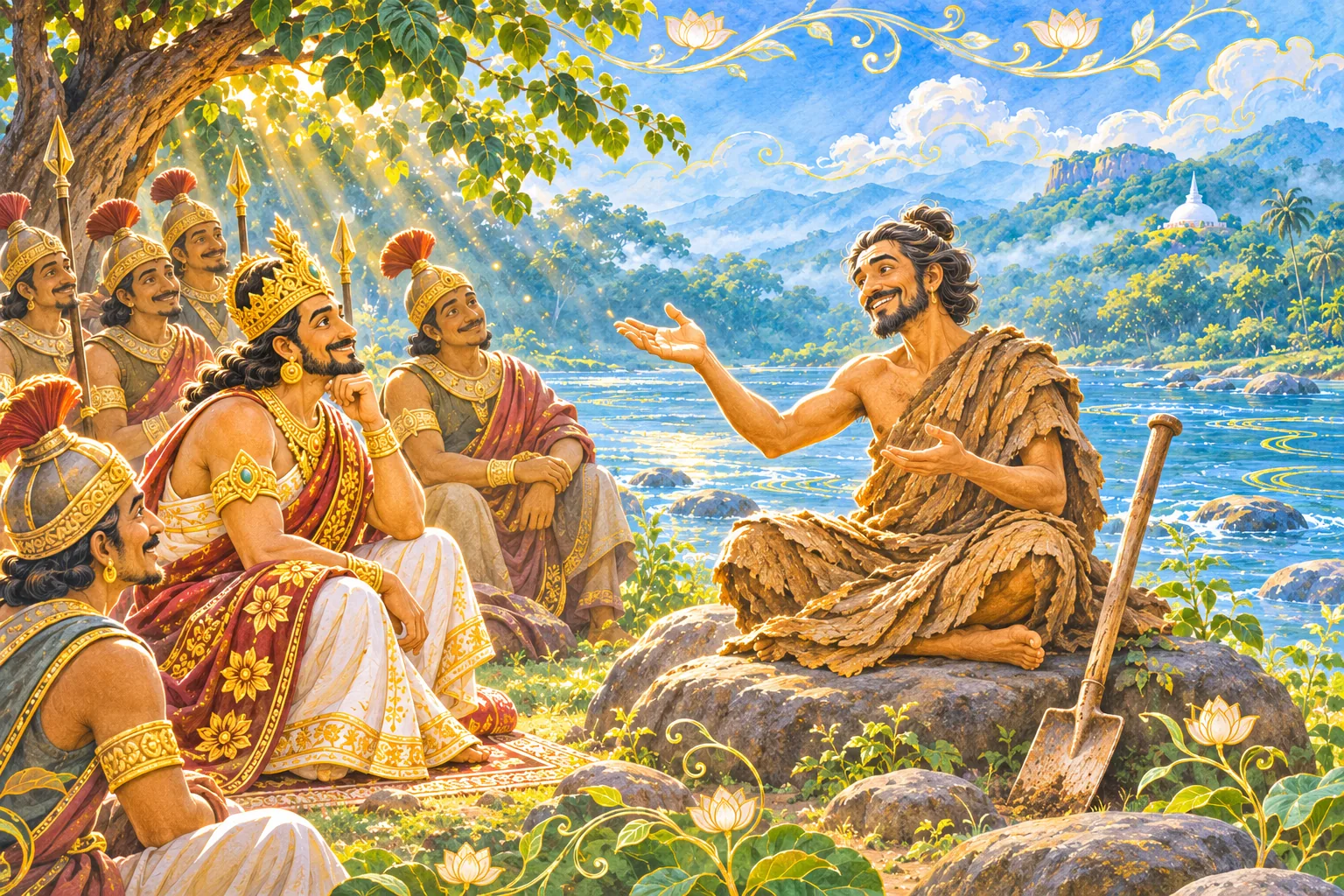
“What have you conquered, friend?” asked the king.
“මිත්රයා, ඔබ දිනුවේ මොකක්ද?” රජු ඇසුවා.
“You can win a hundred battles,” said Kuddāla, “but those victories can be lost again. I have won over my own wanting. That is the greatest victory of all, and no one can take it away.”
“ඔබට සටන් සියයක් දිනන්න පුළුවන්,” කුද්දාල කීවා, “ඒත් ඒ ජයග්රහණ නැවත අහිමි වෙන්න පුළුවන්. මම මගේම ආශාව දිනුවා. ඒක තමයි සියල්ලටම වඩා ලොකු ජයග්රහණය. කිසිවෙකුට එය උදුරා ගන්න බැහැ.”
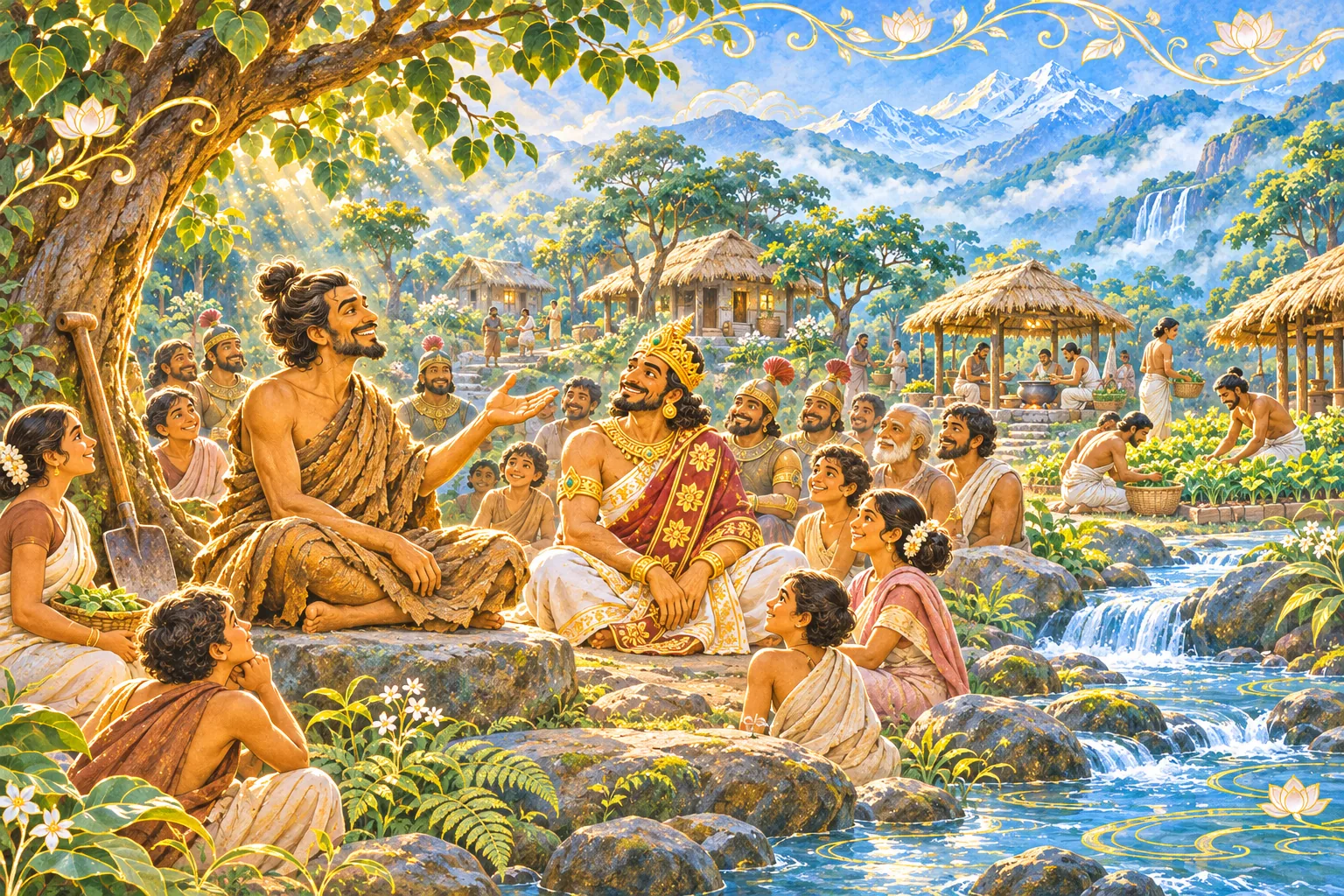
The king was deeply moved. He and many of his people chose to follow Kuddāla to the quiet forest.
රජුගේ සිත ගැඹුරින් කම්පා වුණා. ඔහු සහ ඔහුගේ බොහෝ දෙනා කුද්දාල සමඟ නිස්කලංක වනයට යන්න තීරණය කළා.
There they lived simply and peacefully, with calm and happy hearts.
එහි ඔවුන් සන්සුන්, සතුටු සිත් ඇතිව සරලව, සාමයෙන් ජීවත් වුණා.
Who was who?
In the story, Kuddāla the gardener was the Bodhisatta, the Buddha in one of his past lives.
The lesson
Holding on too tightly can stop us from moving forward. Letting go can make our hearts light and free.
Let's talk
- Why did Kuddāla keep going back home?
- What did he mean when he said, “I have conquered”?
- Is there something that is hard for you to let go of?
කවුද කවුරුන් වූයේ?
කතාවේ කුද්දාල නම් වත්තේ වැඩ කරන්නා බෝසතාණන් වහන්සේ, එනම් පෙර ආත්මයක බුදුරජාණන් වහන්සේයි.
පාඩම
යමක තදින් එල්ලී සිටීම ඉදිරියට යාම නවත්වන්න පුළුවන්. අත්හැරීමෙන් හදවත සැහැල්ලු සහ නිදහස් වෙනවා.
අපි කතා කරමු
- කුද්දාල දිගින් දිගටම ගෙදර ආවේ ඇයි?
- “මම දිනුවා” කියා ඔහු අදහස් කළේ මොකක්ද?
- ඔබට අත්හරින්න අමාරු දෙයක් තියෙනවාද?
Retold for children by Fablewings from the Kuddāla Jātaka (Jātaka No. 70; English translation ed. E. B. Cowell, vol. I, 1895, public domain) and the Sinhala Pansiya Panas Jātaka tradition. Illustrations made with AI assistance for Fablewings.