The Stingy Treasurer
මසුරු සිටුවරයා
Biḷārikosiya Jātaka (No. 450) · බිළාරිකෝසිය ජාතකය (අංක 450)
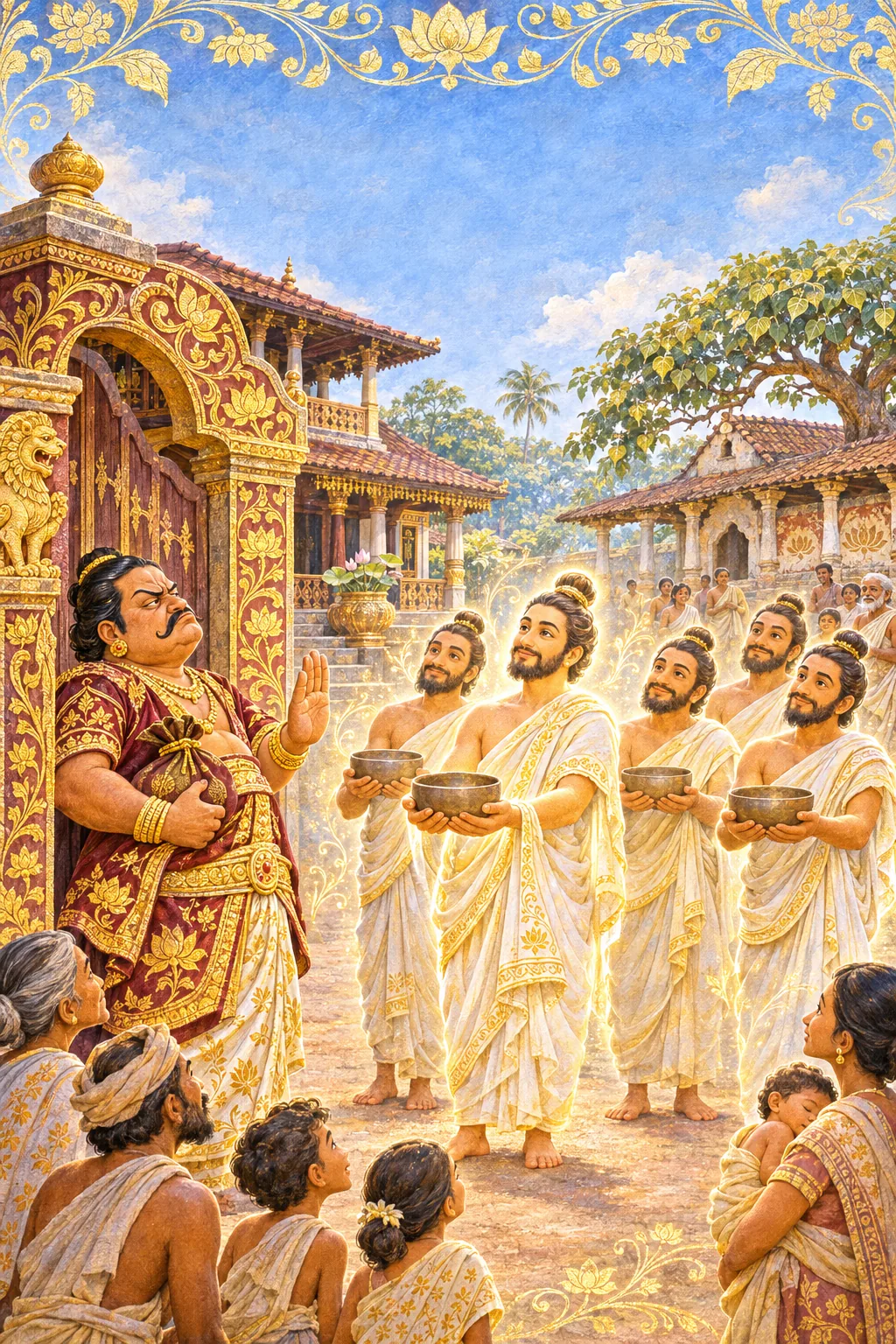
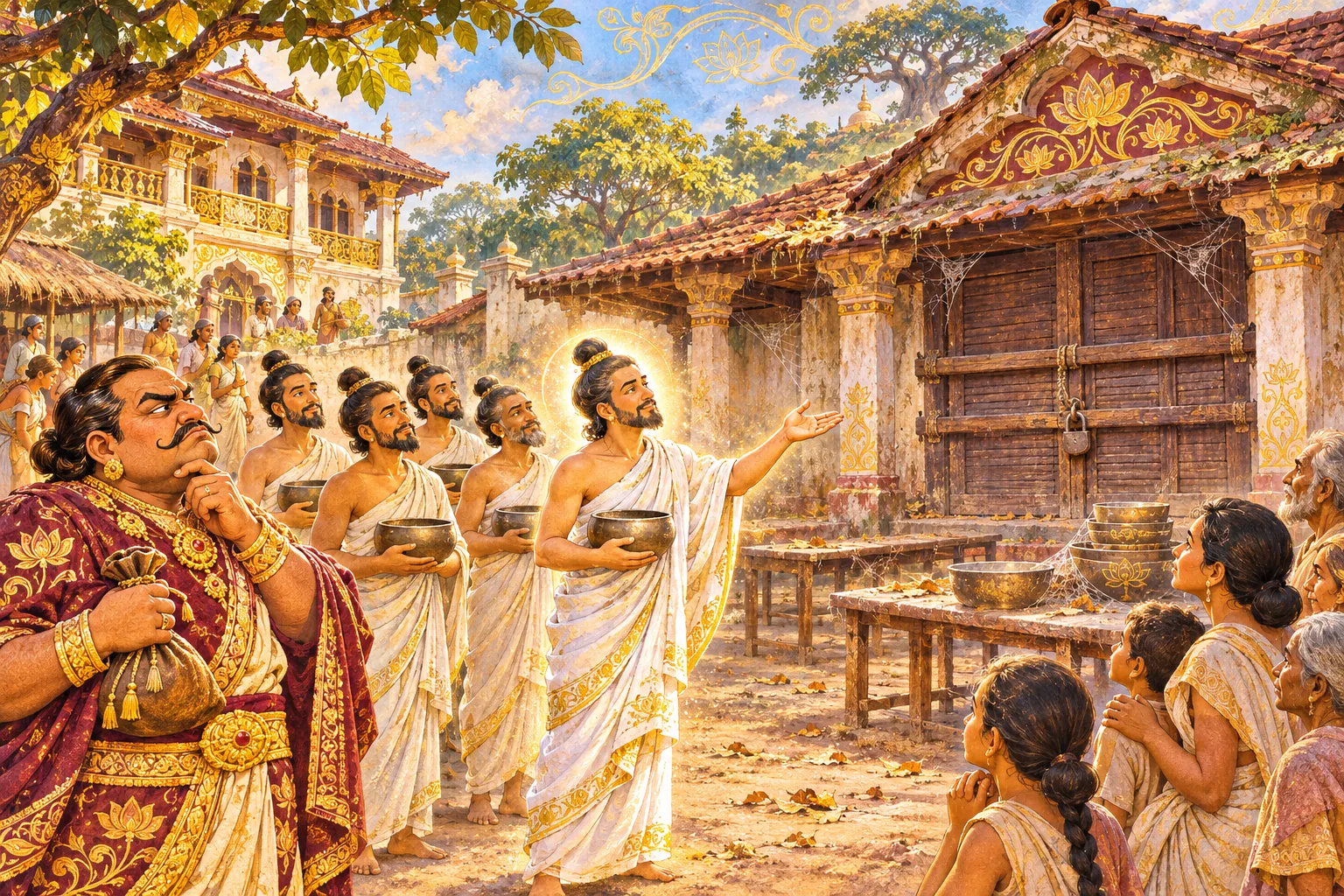
Long ago, a kind family in Benares built a hall where hungry people could always come for a meal. For many years, the family gave food to everyone who needed it.
බොහෝ කලකට පෙර, බරණැසේ කාරුණික පවුලක් බඩගිනි අයට හැමවිටම ඇවිත් කෑම කන්න පුළුවන් ශාලාවක් හැදුවා. බොහෝ අවුරුදු ගණනාවක් ඒ පවුල අවශ්ය හැමෝටම කෑම දුන්නා.
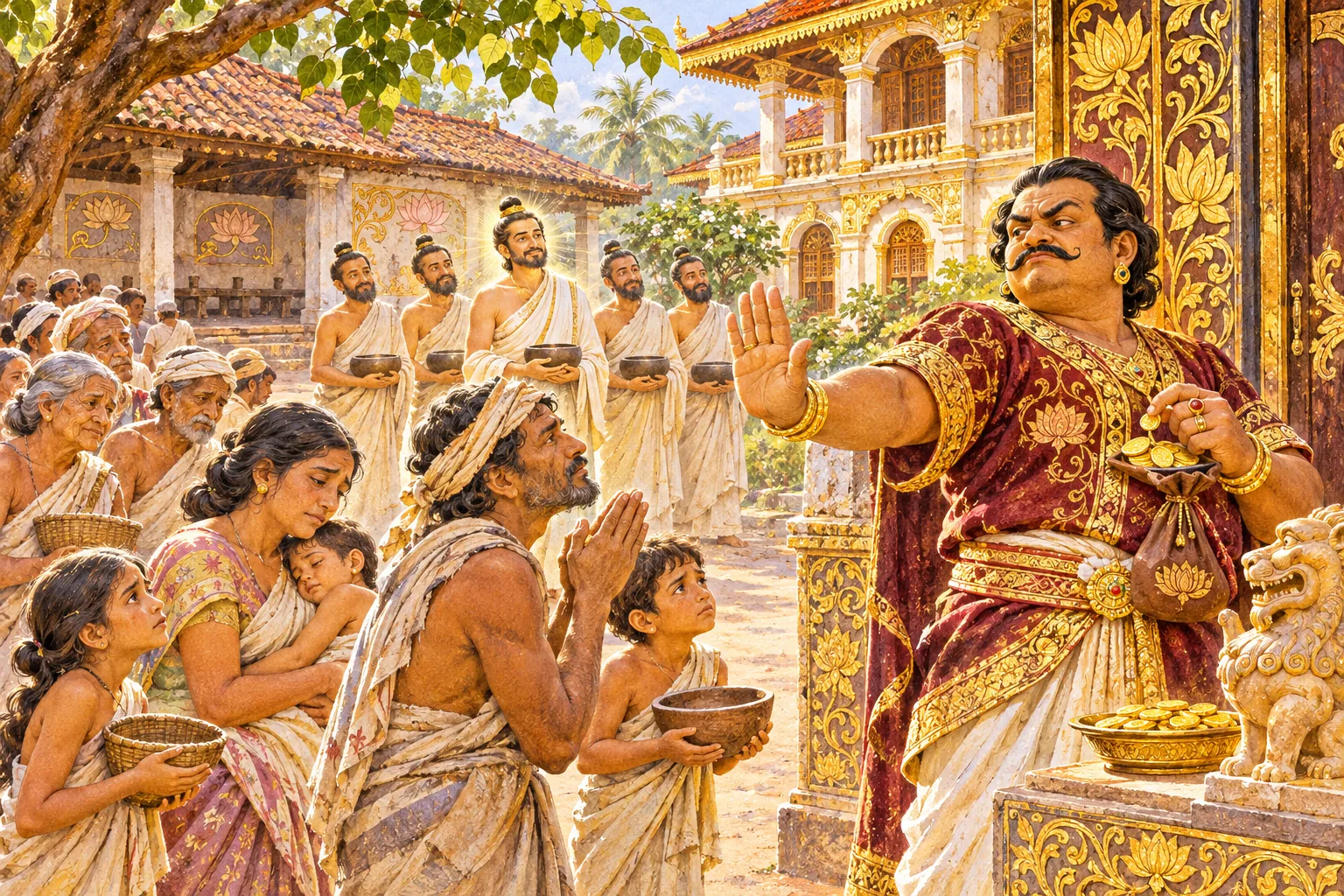
But then the family’s money passed to a stingy man called Kosiya. He closed the hall, turned the poor away from his gate and sat counting his coins.
ඒත් පස්සේ පවුලේ ධනය කෝසිය නම් මසුරු මිනිහෙකුට අයිති වුණා. ඔහු ශාලාව වැහුවා, දුප්පතුන්ව දොරටුවෙන් එළවලා, ඉඳගෙන තම කාසි ගණන් කළා.
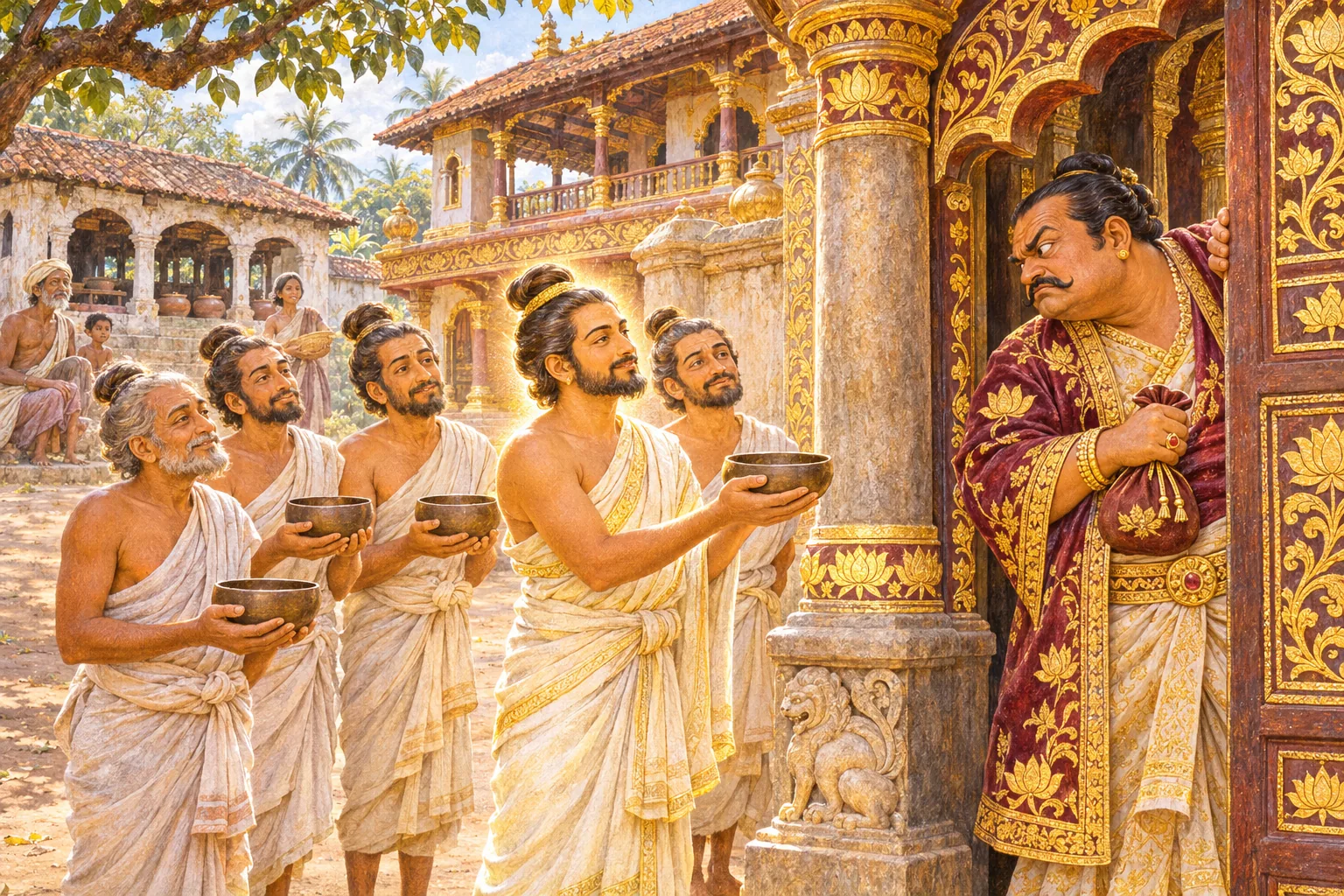
High in the heavens, Sakka, the king of the gods, saw this. Sakka and four other gods had once belonged to this generous family. “Let us go and help Kosiya,” said Sakka.
ස්වර්ගයේ ඉහළ, දෙවියන්ගේ රජු වූ ශක්ර දෙවියෝ මෙය දැක්කා. ශක්රයාත් තවත් දෙවිවරු හතර දෙනෙකුත් වරෙක මේ ත්යාගශීලී පවුලේ සාමාජිකයෝ. “අපි ගිහින් කෝසියට උදව් කරමු,” ශක්රයා කීවා.
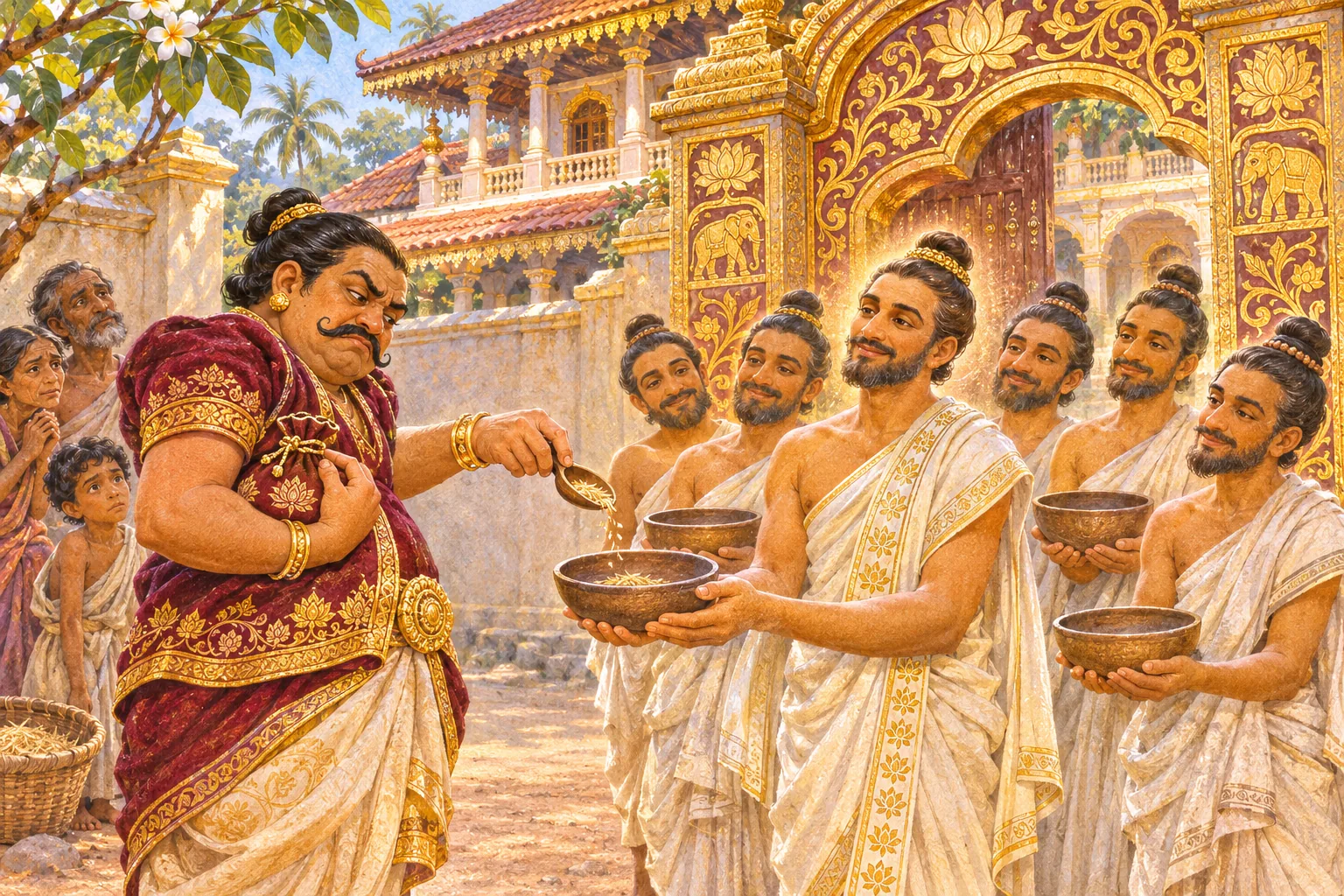
So the five gods dressed as wandering holy men and came to Kosiya’s gate, holding out their bowls. “May we have a little food?” they asked.
ඉතින් දෙවිවරු පස්දෙනා ඇවිදින තවුසන් වගේ ඇඳගෙන තම පාත්ර දිගු කරගෙන කෝසියගේ දොරටුවට ආවා. “අපට කෑම ටිකක් ලැබෙයිද?” ඔවුන් ඇසුවා.
Grumbling, Kosiya gave them each a tiny scoop of plain husks. The visitors did not complain. They thanked him politely.
මැසිවිලි කියමින්, කෝසිය ඔවුන් හැමෝටම නිකම් දහයියා පුංචි හැන්දක් දුන්නා. අමුත්තන් පැමිණිලි කළේ නැහැ. ඔවුන් ආචාරශීලීව ස්තූති කළා.
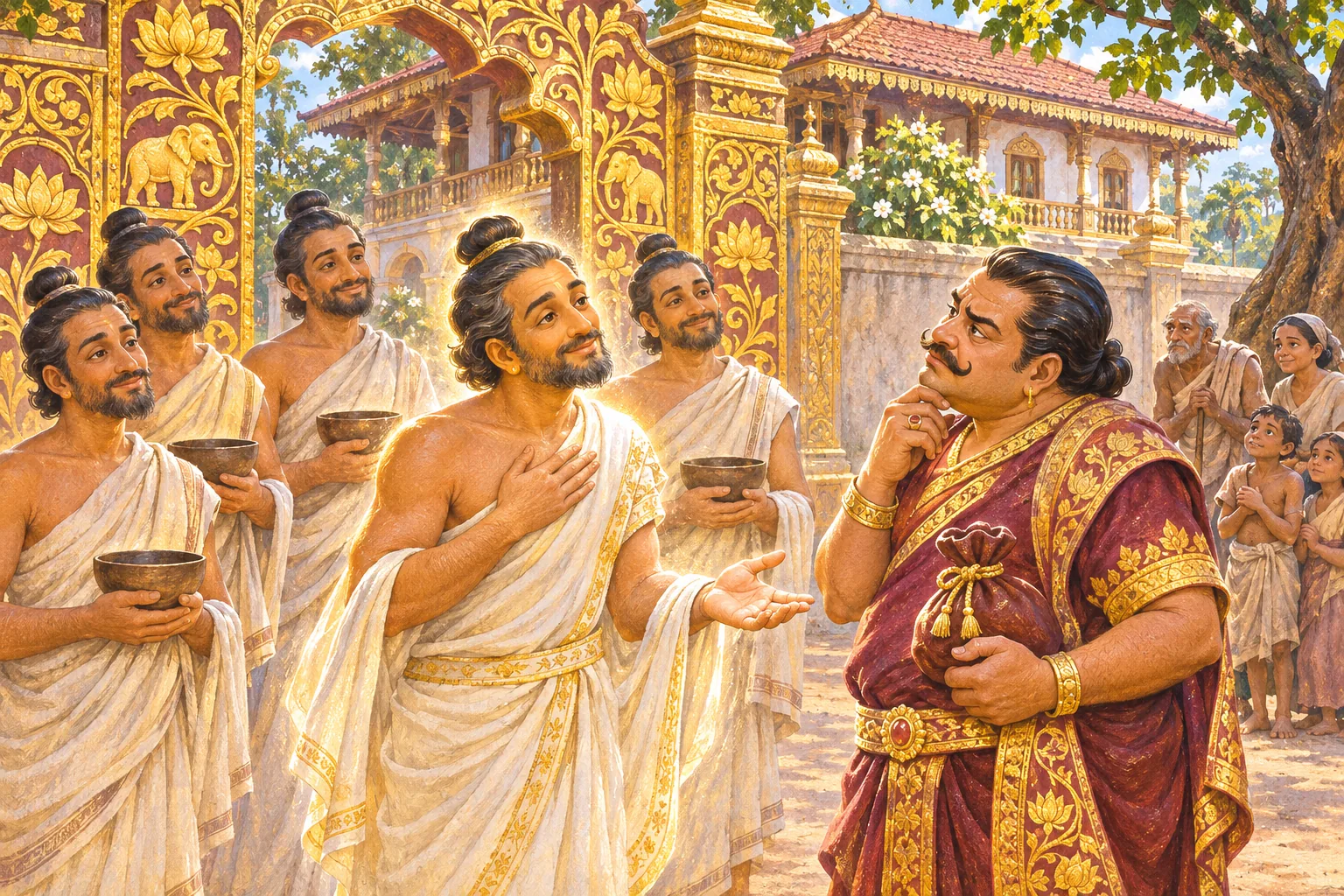
Then one of them spoke gently. “A person who shares, even a little, is happy now and later. A person who keeps everything is never satisfied.” Kosiya listened, feeling strangely uneasy.
ඊට පස්සේ ඔවුන්ගෙන් කෙනෙක් මෘදුව කතා කළා. “ටිකක් වුණත් බෙදාගන්න කෙනා දැනුත් පස්සෙත් සතුටින් ඉන්නවා. හැමදේම තියාගන්න කෙනා කවදාවත් තෘප්තිමත් වෙන්නේ නැහැ.” කෝසිය අමුතු නොසන්සුන්කමකින් ඇහුම්කන් දුන්නා.
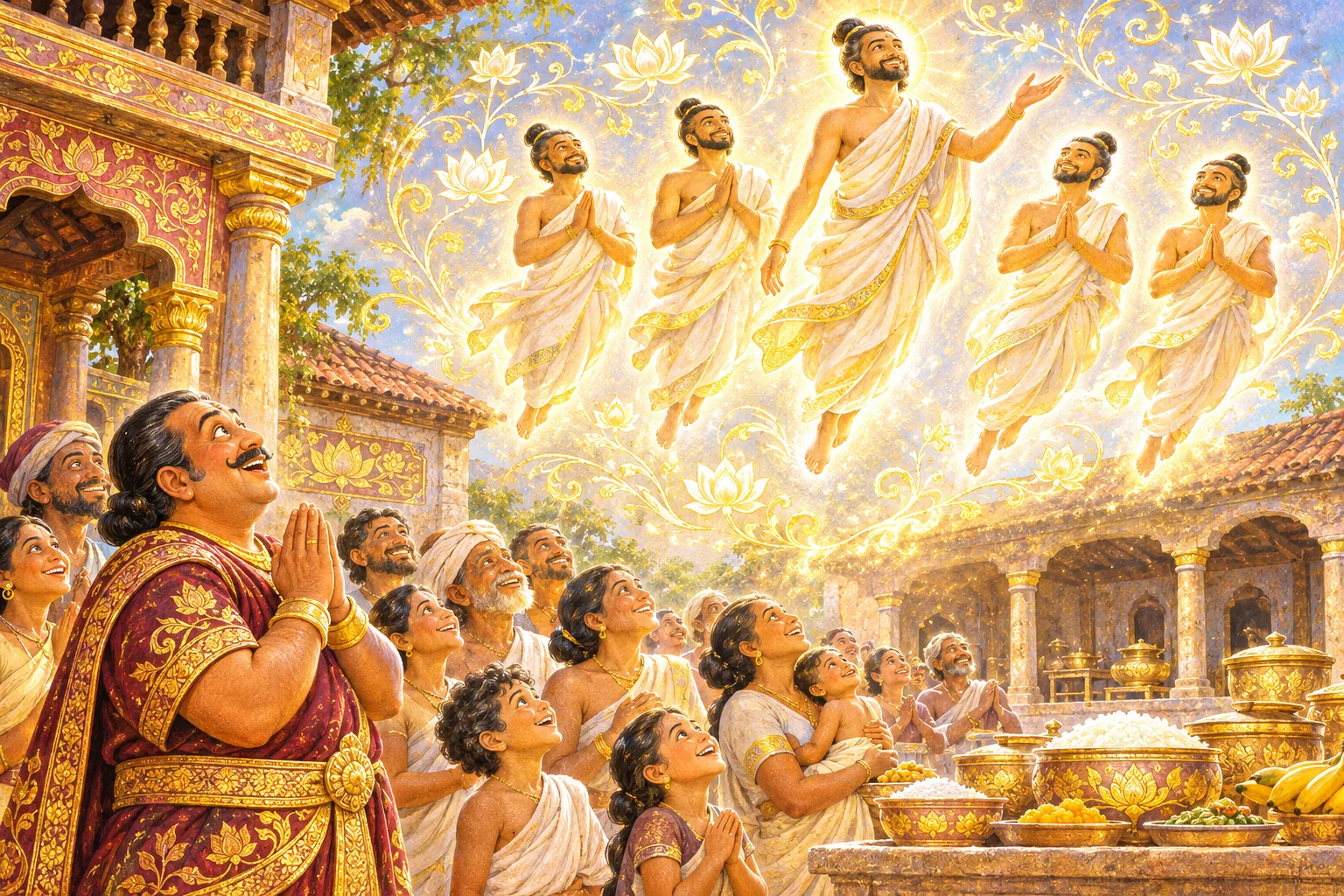
Suddenly the five visitors rose into the air, glowing with golden light. “We were once your family,” said Sakka. “Our giving made us happy. It can make you happy too.”
හදිසියේම අමුත්තන් පස්දෙනා රන්වන් ආලෝකයෙන් බබළමින් අහසට නැඟුණා. “අපි වරෙක ඔබේ පවුල,” ශක්රයා කීවා. “අපේ දීම අපව සතුටු කළා. ඒක ඔබවත් සතුටු කරන්න පුළුවන්.”
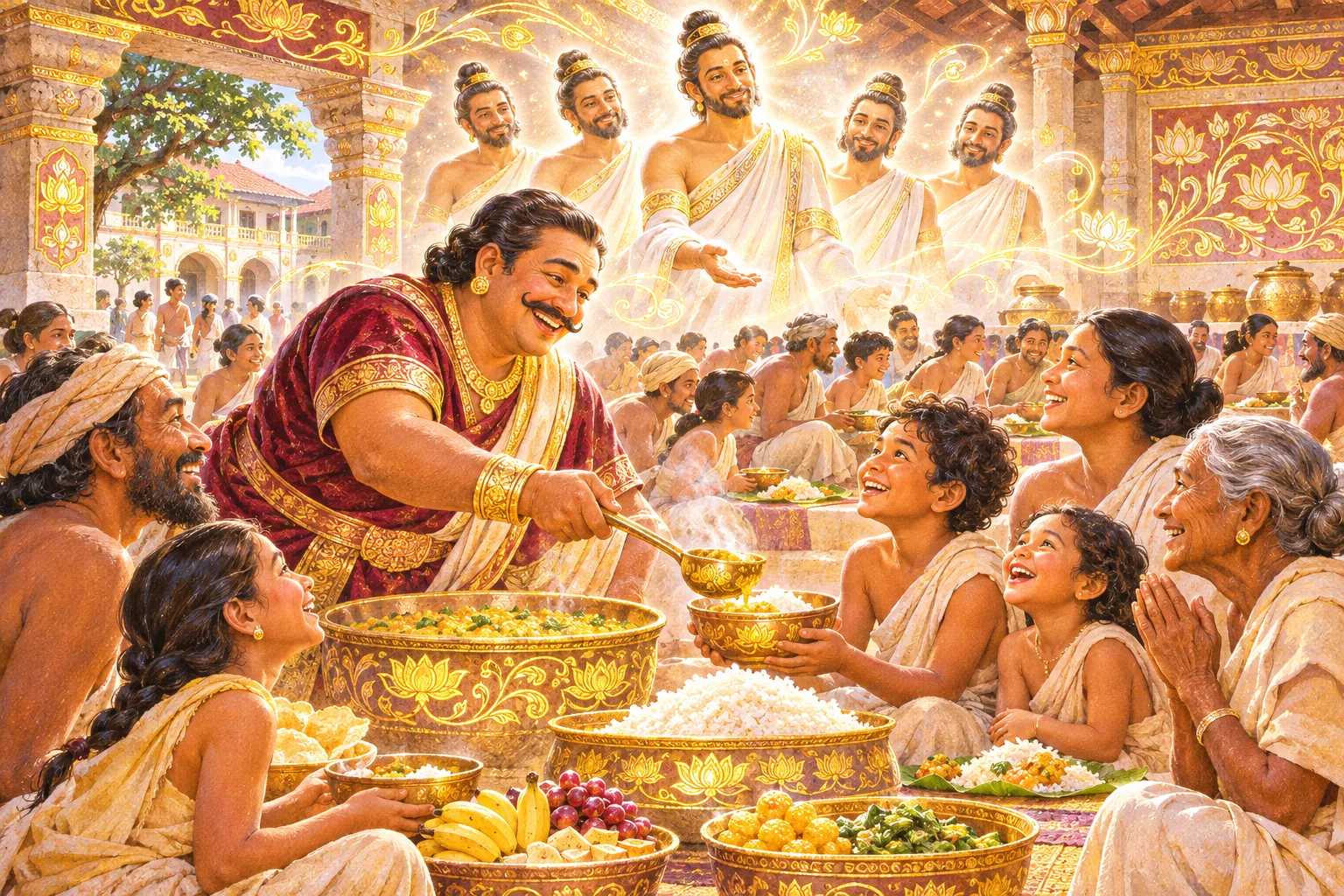
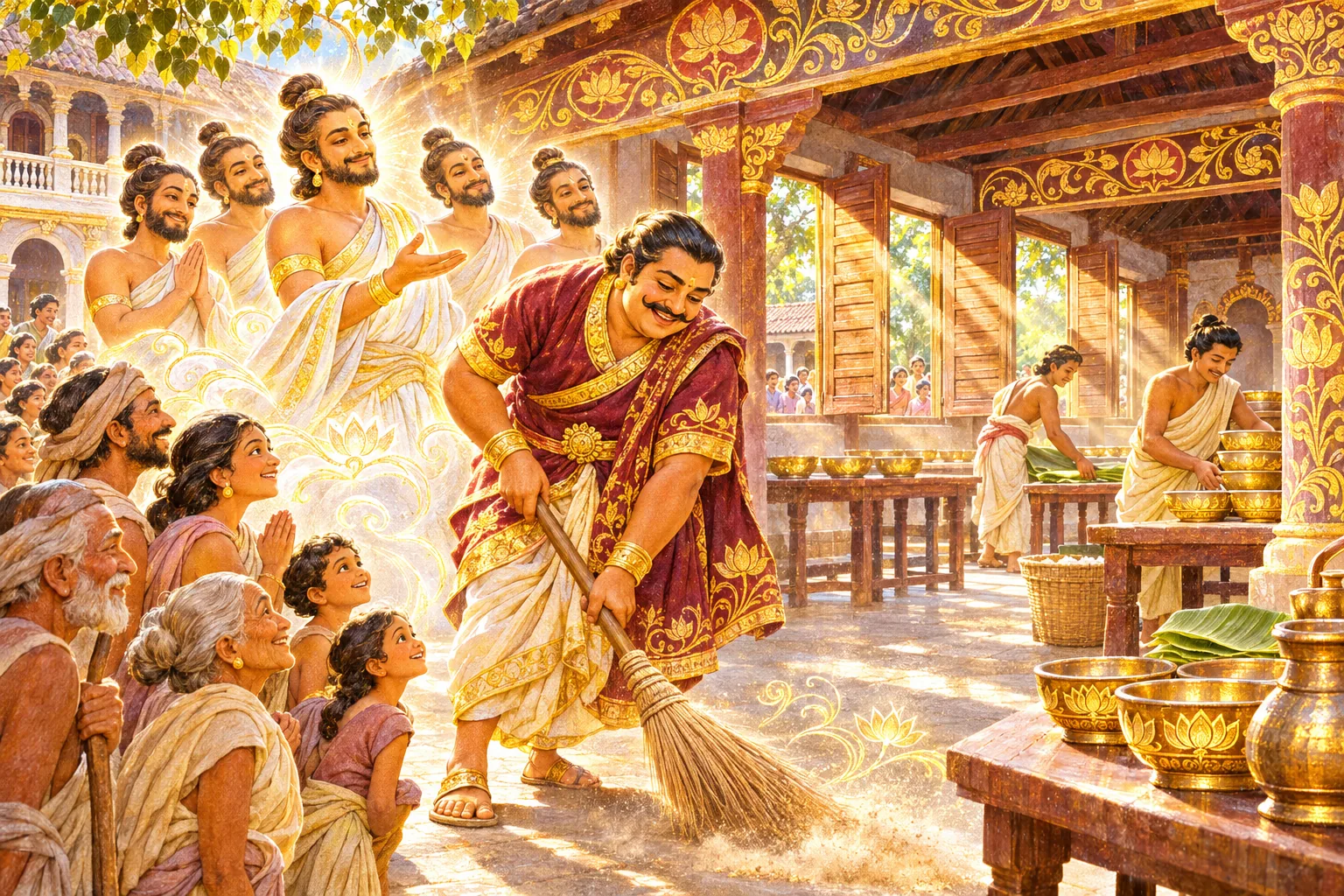
Kosiya was amazed. That very day he swept out the old hall and opened its doors. From then on, he served food to everyone who came, and he smiled more than he ever had before.
කෝසිය පුදුම වුණා. එදාම ඔහු පරණ ශාලාව අතුගාලා දොරවල් ඇරියා. එදා සිට ඔහු එන හැමෝටම කෑම බෙදුවා. ඔහු කලින් කවදාවත් නැති තරම් සිනාසුණා.
Who was who?
In the story, Sakka, the king of the gods, was the Bodhisatta, the Buddha in one of his past lives. In the original story the visitors pretend to choke on the poor food to expose Kosiya's meanness; here they simply teach him gently.
The lesson
Sharing what we have, even a little, brings happiness to others and to ourselves. Keeping everything for ourselves never makes us truly happy.
Let's talk
- What had Kosiya's family done for the poor?
- What did the visitors teach Kosiya?
- What could you share with someone this week?
කවුද කවුරුන් වූයේ?
කතාවේ දෙවියන්ගේ රජු වූ ශක්රයා බෝසතාණන් වහන්සේ, එනම් පෙර ආත්මයක බුදුරජාණන් වහන්සේයි. මුල් කතාවේ අමුත්තන් කෝසියගේ මසුරුකම හෙළි කරන්න නරක කෑම උගුරේ හිරවුණා වගේ රඟපානවා. මෙහි ඔවුන් ඔහුට මෘදුව උගන්වනවා විතරයි.
පාඩම
අප සතු දේ, ටිකක් වුණත්, බෙදාගැනීම අනිත් අයටත් අපටත් සතුට ගෙනෙනවා. හැමදේම අපටම තියාගැනීම කවදාවත් අපව ඇත්තටම සතුටු කරන්නේ නැහැ.
අපි කතා කරමු
- කෝසියගේ පවුල දුප්පතුන්ට කළේ මොකක්ද?
- අමුත්තන් කෝසියට ඉගැන්නුවේ මොකක්ද?
- මේ සතියේ ඔබට කෙනෙක් සමඟ බෙදාගන්න පුළුවන් මොනවාද?
Retold for children by Fablewings from the Biḷārikosiya Jātaka (Jātaka No. 450; English translation ed. E. B. Cowell, vol. IV, 1901, public domain) and the Sinhala Pansiya Panas Jātaka tradition. Illustrations made with AI assistance for Fablewings.