The Tempting Fruit
පොළඹවන පළතුරු
Phala Jātaka (No. 54) · ඵල ජාතකය (අංක 54)
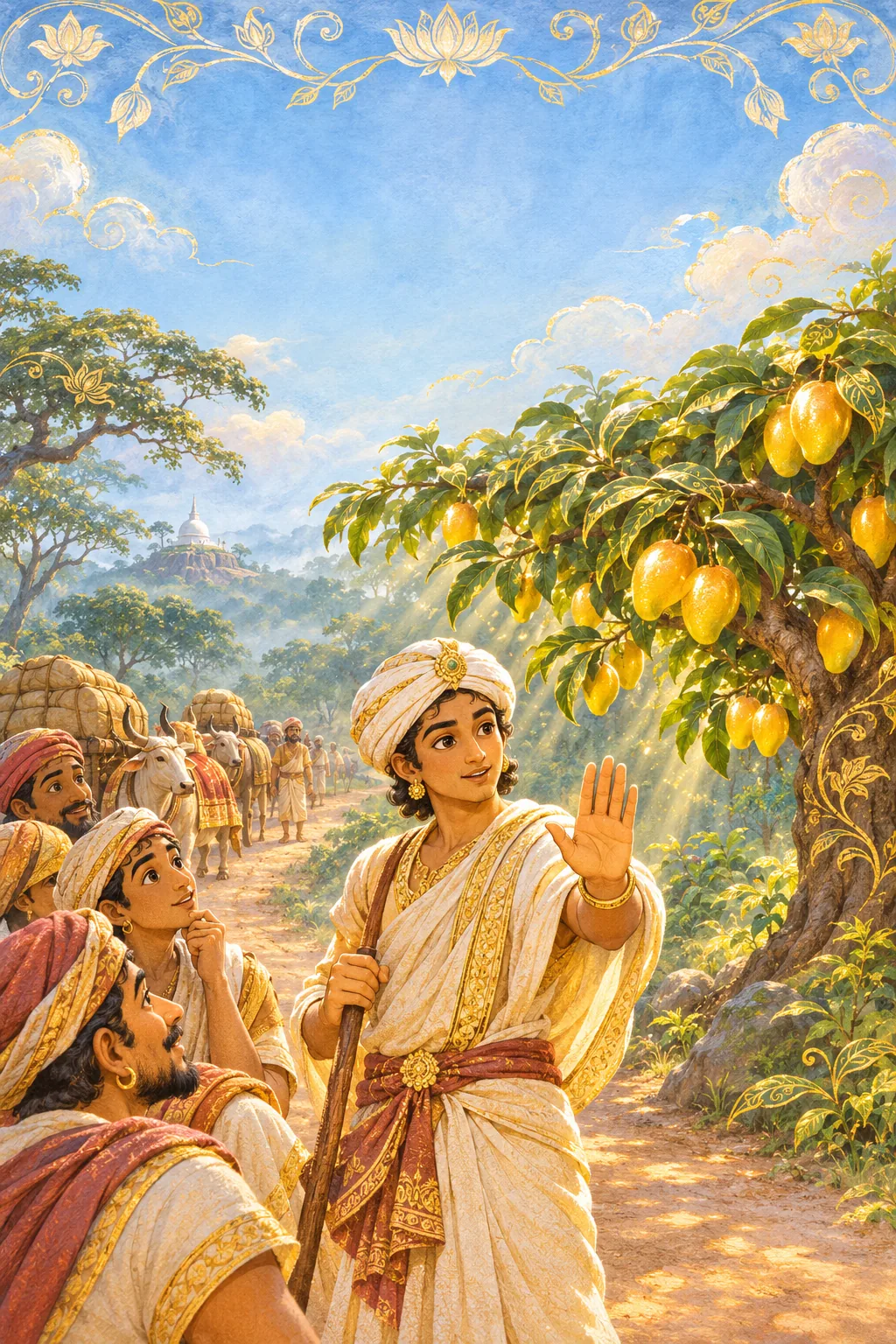
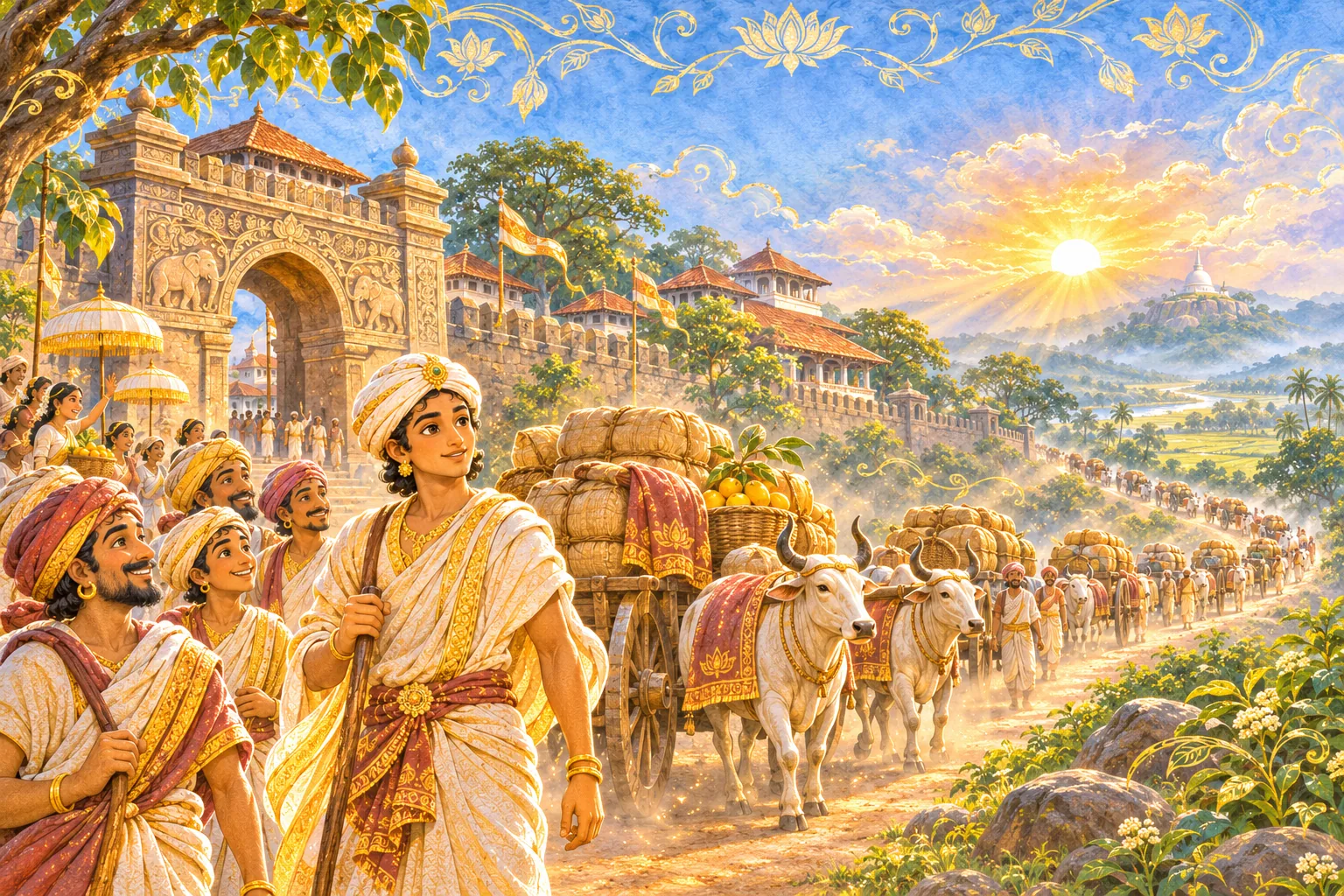
Long ago, a wise young merchant led a great caravan of ox carts out of the city of Benares. Five hundred carts creaked along the road, full of goods to sell in faraway towns.
බොහෝ කලකට පෙර, නුවණැති තරුණ වෙළෙන්දෙක් බරණැස් නුවරින් ගැල් පන්සියයක මහා ගැල් සාත්තුවක් පිටතට ගෙන ගියා. ඈත නගරවල විකුණන්න බඩු පුරවාගත් ගැල් කිරි කිරි හඬින් පාරේ ගියා.
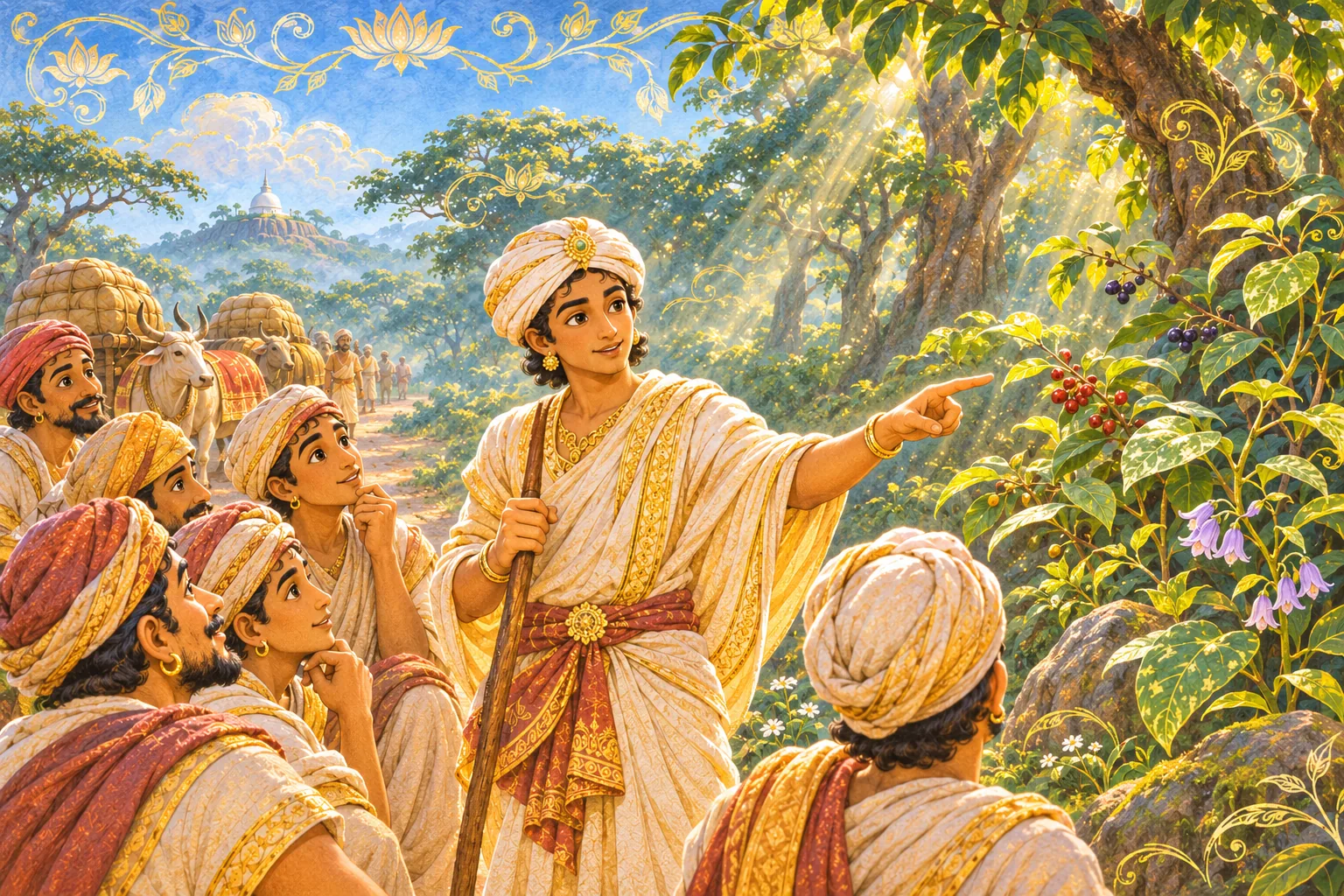
When they entered a great forest, he gathered his men. “In this forest grow fruits and leaves we do not know,” he said. “Some may be poisonous. Please, ask me before you eat anything new.”
ඔවුන් මහා වනයකට ඇතුළු වූ විට ඔහු තම මිනිසුන් රැස් කළා. “මේ වනයේ අප නොදන්නා පළතුරු සහ කොළ වැවෙනවා,” ඔහු කීවා. “සමහර ඒවා විෂ වෙන්න පුළුවන්. අලුත් දෙයක් කන්න කලින් කරුණාකර මගෙන් අහන්න.”
“We will,” they promised.
“අපි එහෙම කරන්නම්,” ඔවුන් පොරොන්දු වුණා.
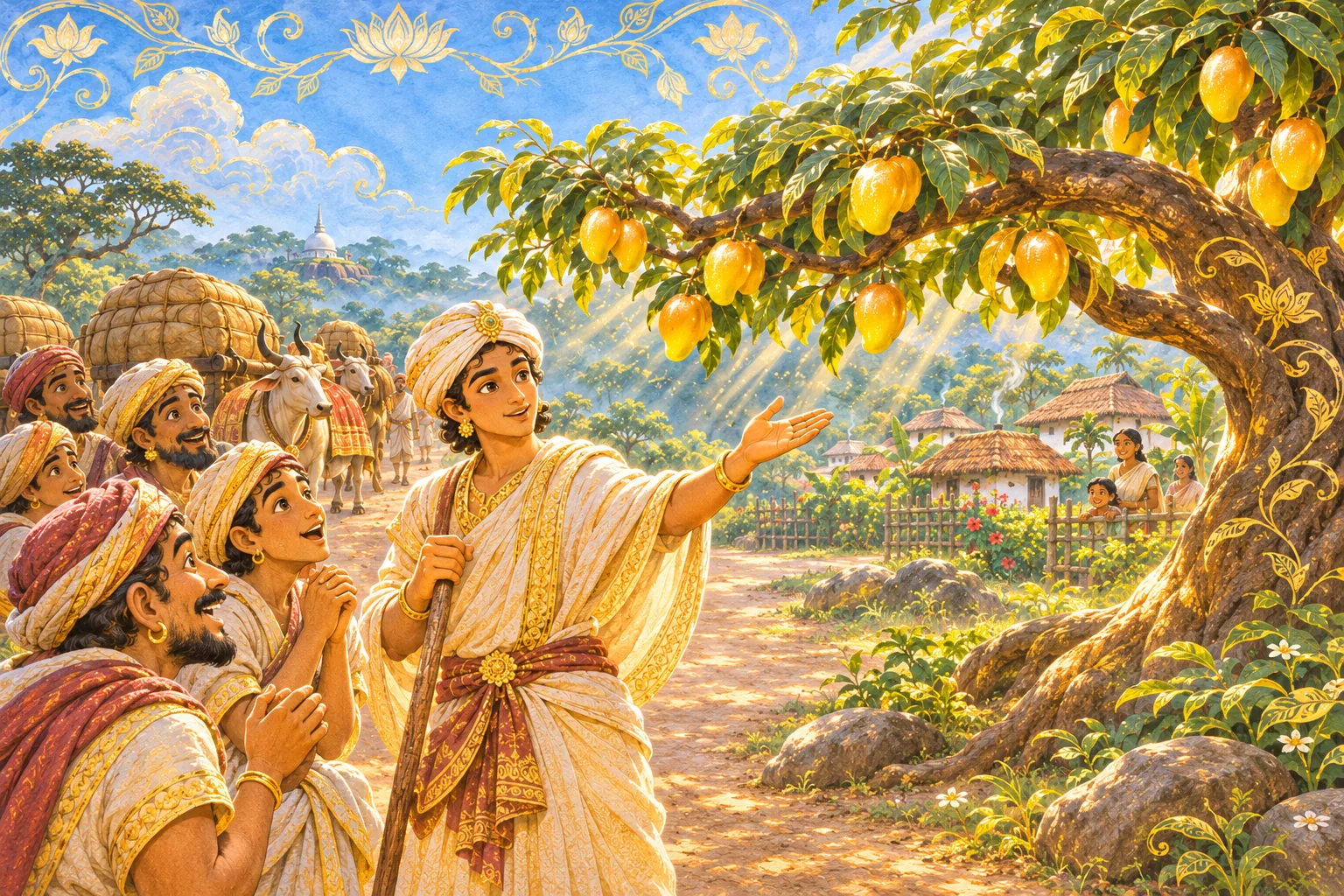
At the edge of a village they found a beautiful tree. Its branches hung low, heavy with golden fruit that looked and smelled just like ripe mangoes.
ගමක් අයිනේ ඔවුන්ට ලස්සන ගසක් හමු වුණා. ඉදුණු අඹ වගේම පෙනෙන, එවැනිම සුවඳ ඇති රන්වන් පළතුරු බරින් එහි අතු පහතට නැමී තිබුණා.
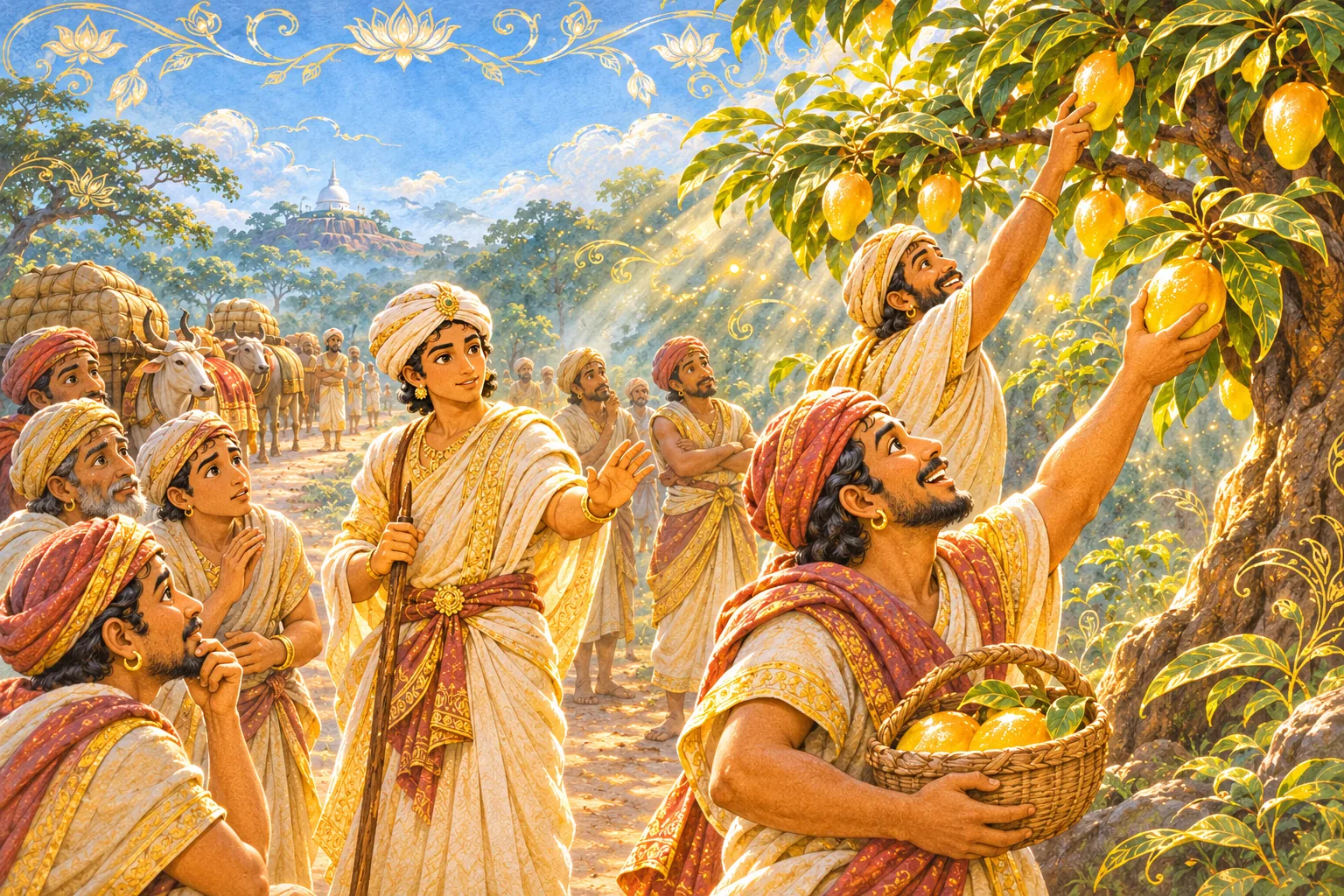
Some of the men were so hungry that they forgot their promise. They picked the fruit and began to eat.
සමහර මිනිසුන්ට කොච්චර බඩගිනිද කියනවා නම් ඔවුන්ට පොරොන්දුව අමතක වුණා. ඔවුන් පළතුරු කඩා කන්න පටන් ගත්තා.
Others remembered. “Let us wait and ask our leader first,” they said.
අනිත් අයට මතක් වුණා. “අපි ඉවසලා මුලින්ම නායකයාගෙන් අහමු,” ඔවුන් කීවා.
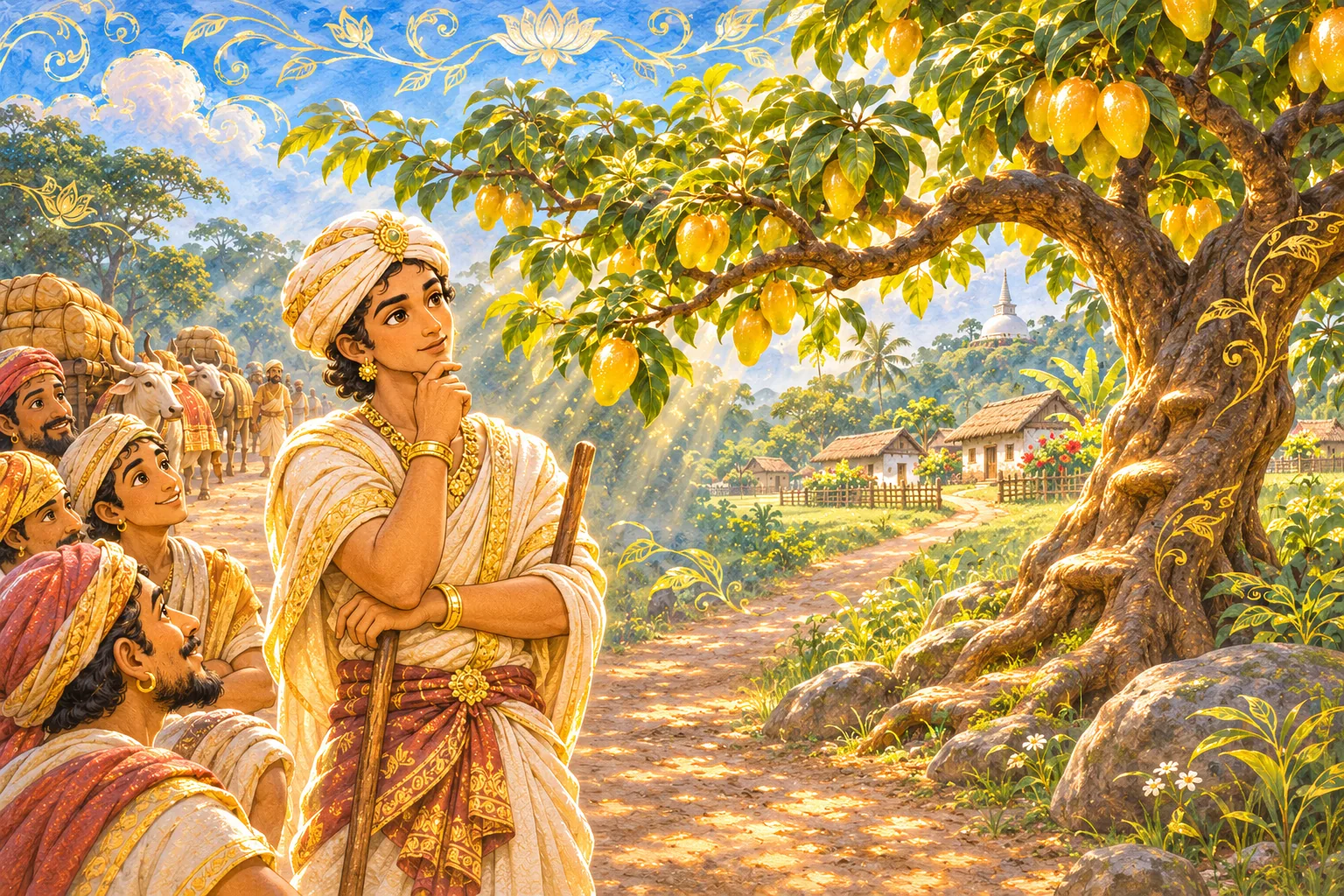
The wise merchant looked carefully at the tree. “This tree is easy to climb,” he thought. “It stands right beside a village. Yet not one fruit has been picked. The villagers must know something we do not.”
නුවණැති වෙළෙන්දා ගස දෙස හොඳින් බැලුවා. “මේ ගසට නගින්න පහසුයි,” ඔහු සිතුවා. “මේක ගමක් ළඟමයි තියෙන්නේ. ඒත් එක පළතුරක්වත් කඩලා නැහැ. ගම්මු අප නොදන්නා දෙයක් දන්නවා වෙන්න ඕනෑ.”
“This fruit is not a mango,” he said. “It is poison!”
“මේ පළතුරු අඹ නොවෙයි,” ඔහු කීවා. “මේවා විෂයි!”
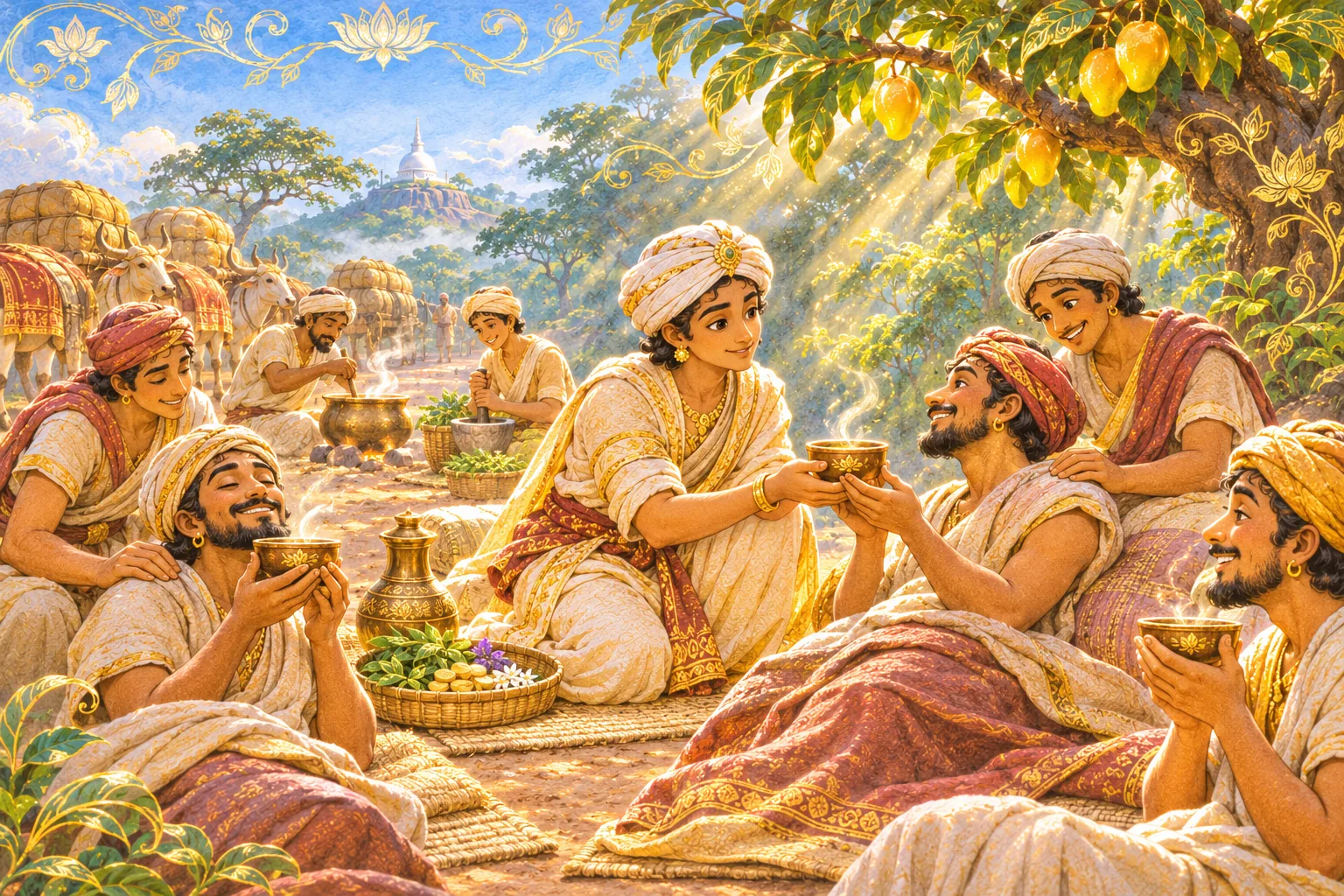
At once he made a herbal medicine that helped the men bring the fruit back up. He gave them sweet drinks and let them rest on mats.
ඔහු වහාම පළතුරු ආපසු පිට කරන්න උදව් වන ඖෂධ පානයක් සකස් කළා. ඔහු ඔවුන්ට පැණි රස පාන දී පැදුරුවල විවේක ගන්න ඉඩ දුන්නා.
Slowly they began to feel better, and soon they were smiling again.
ටිකෙන් ටික ඔවුන්ට සනීප වෙන්න පටන් ගත්තා. ඉක්මනින්ම ඔවුන් නැවත සිනාසෙන්න පටන් ගත්තා.
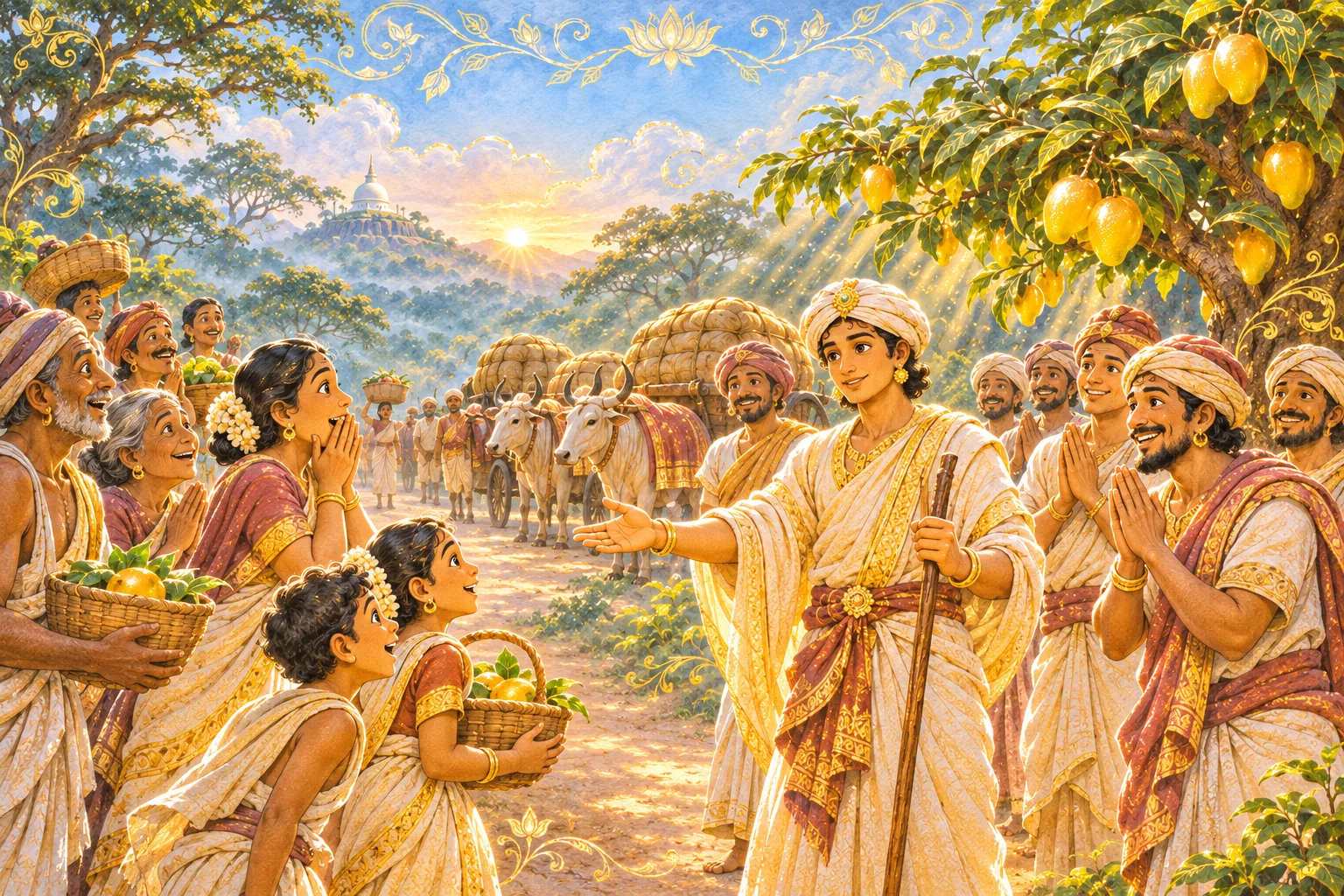
Early next morning, some villagers came to the tree. In the past, travellers who ate its fruit had fallen ill, and the villagers had taken their goods.
පසුදා උදේ පාන්දරම ගම්මු කිහිප දෙනෙක් ගස ළඟට ආවා. කලින් මේ පළතුරු කෑ මගීන් ලෙඩ වුණාම ගම්මු ඔවුන්ගේ බඩු අරගෙන ගියා.
But today every man in the caravan was safe and well! “How did you know?” they asked in surprise.
ඒත් අද ගැල් සාත්තුවේ හැම කෙනෙක්ම ආරක්ෂිතව, සනීපෙන් හිටියා! “ඔයා කොහොමද දැනගත්තේ?” ඔවුන් පුදුමයෙන් ඇහුවා.
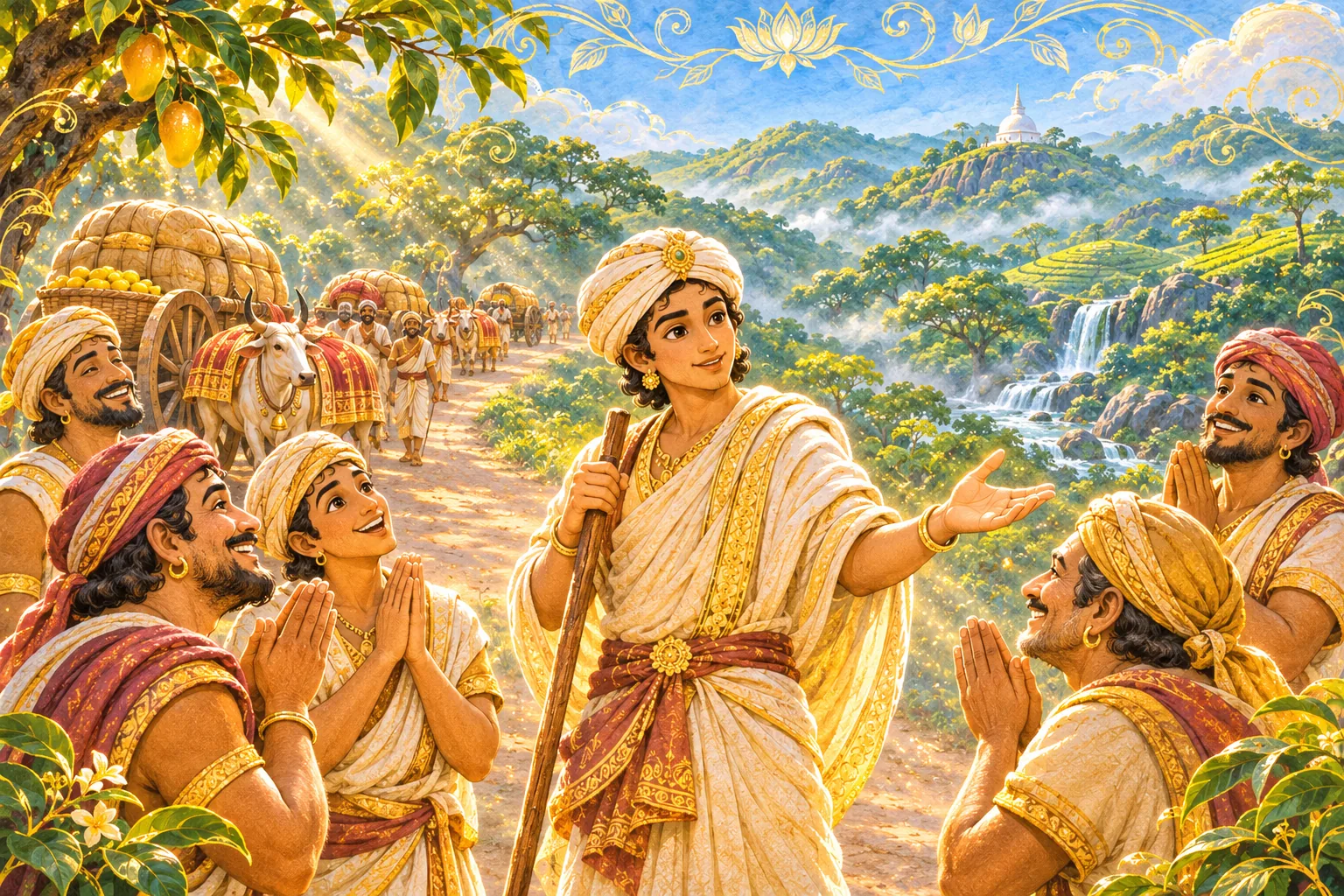
“A tree so easy to reach, yet full of fruit, told me the truth,” said the merchant.
“පහසුවෙන් අතට ගන්න පුළුවන් ගසක් පළතුරු පිරී තිබීමෙන්ම මට ඇත්ත කිව්වා,” වෙළෙන්දා කීවා.
The caravan travelled on safely, and the men thanked their leader. “From now on,” they said, “we will always ask before we eat.”
ගැල් සාත්තුව ආරක්ෂිතව ඉදිරියට ගියා. මිනිස්සු තම නායකයාට ස්තූති කළා. “මෙතැන් පටන්,” ඔවුන් කීවා, “කන්න කලින් අපි හැම විටම අහනවා.”
Who was who?
In the story, the wise caravan leader was the Bodhisatta, the Buddha in one of his past lives.
The lesson
Things that look good are not always good for us. Stop, look carefully and listen to those who know.
Let's talk
- Why did the merchant think the fruit was not safe?
- What did the men who waited do right?
- When should you ask a grown-up before eating or touching something?
කවුද කවුරුන් වූයේ?
කතාවේ නුවණැති ගැල් නායකයා බෝසතාණන් වහන්සේ, එනම් පෙර ආත්මයක බුදුරජාණන් වහන්සේයි.
පාඩම
හොඳට පෙනෙන හැම දෙයක්ම අපට හොඳ නැහැ. නැවතී, හොඳින් බලා, දන්නා අයට සවන් දෙන්න.
අපි කතා කරමු
- වෙළෙන්දා පළතුරු ආරක්ෂිත නැහැ කියා සිතුවේ ඇයි?
- ඉවසා සිටි මිනිසුන් කළ හරි දේ මොකක්ද?
- යමක් කන්න හෝ අල්ලන්න කලින් වැඩිහිටියෙකුගෙන් ඇසිය යුත්තේ කවදාද?
Retold for children by Fablewings from the Phala Jātaka (Jātaka No. 54; English translation ed. E. B. Cowell, vol. I, 1895, public domain) and the Sinhala Pansiya Panas Jātaka tradition. Illustrations made with AI assistance for Fablewings.