The Test of Goodness
යහපතේ පරීක්ෂණය
Sīlavīmaṁsana Jātaka (No. 86) · සීලවීමංසන ජාතකය (අංක 86)


The King of Benares had a wise and learned adviser. Everyone bowed to him, and the king honoured him above all others.
බරණැස් රජුට නුවණැති, උගත් උපදේශකයෙක් හිටියා. හැමෝම ඔහුට ආචාර කළා. රජු අන් සියල්ලන්ට වඩා ඔහුට ගෞරව කළා.
But the adviser wondered, “Do they respect me because I am clever and learned, or because I try to be good?”
නමුත් උපදේශකයා කල්පනා කළා, “ඔවුන් මට ගෞරව කරන්නේ මම දක්ෂ, උගත් නිසාද, නැත්නම් මම යහපත් වෙන්න උත්සාහ කරන නිසාද?”

He decided to find out with a careful test. One day, passing the royal treasurer’s table, he quietly picked up one coin.
ප්රවේශම් සහගත පරීක්ෂණයකින් එය සොයා බලන්න ඔහු තීරණය කළා. එක දවසක රාජ භාණ්ඩාගාරිකයාගේ මේසය පසුකර යද්දී ඔහු නිහඬව එක කාසියක් ගත්තා.
The treasurer saw, but said nothing. “The wise adviser must have a good reason,” he thought.
භාණ්ඩාගාරිකයාට එය පෙනුණා, නමුත් ඔහු කිසිවක් කීවේ නැහැ. “නුවණැති උපදේශකයාට හොඳ හේතුවක් ඇති,” ඔහු හිතුවා.

The next day, the adviser took another coin. Again the treasurer said nothing, though he frowned a little.
පසුදා උපදේශකයා තවත් කාසියක් ගත්තා. ඔහු ටිකක් නළල රැළි කළත් භාණ්ඩාගාරිකයා නැවතත් කිසිවක් කීවේ නැහැ.
On the third day, the adviser took a whole handful.
තුන්වන දවසේ උපදේශකයා අත පිරෙන්න ගත්තා.
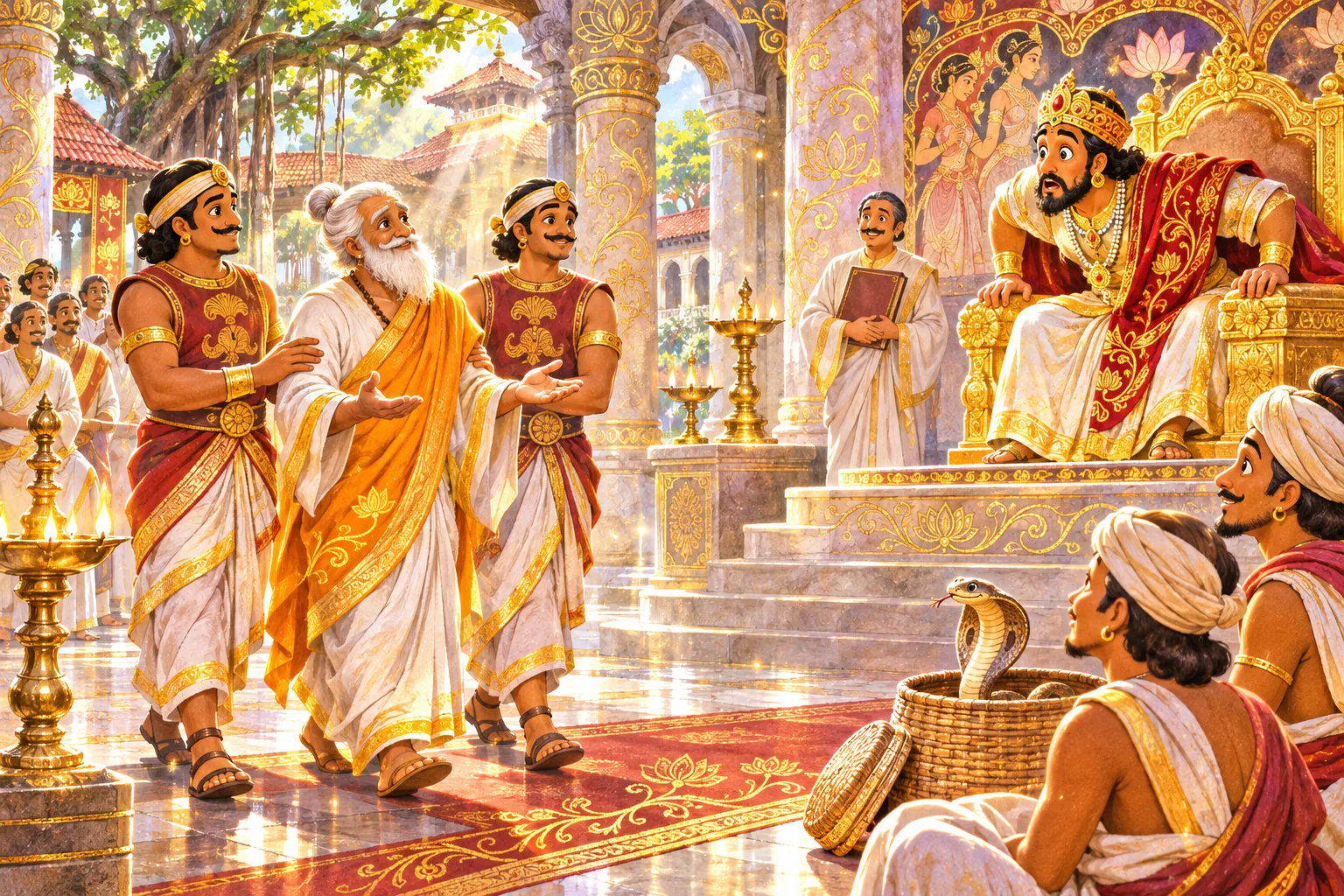
“Stop, thief!” cried the treasurer. “Three days in a row you have taken the king’s money!” Guards seized the adviser and brought him before the king.
“නවතින්න, හොරා!” භාණ්ඩාගාරිකයා කෑ ගැසුවා. “දවස් තුනක් පිට පිට ඔයා රජුගේ මුදල් ගත්තා!” ආරක්ෂකයෝ උපදේශකයා අල්ලාගෙන රජු ඉදිරියට ගෙනාවා.
“Is this true?” asked the king, shocked. “It is,” said the adviser calmly.
“මේක ඇත්තද?” කම්පනයට පත් රජු ඇසුවා. “ඇත්ත,” උපදේශකයා සන්සුන්ව කීවා.
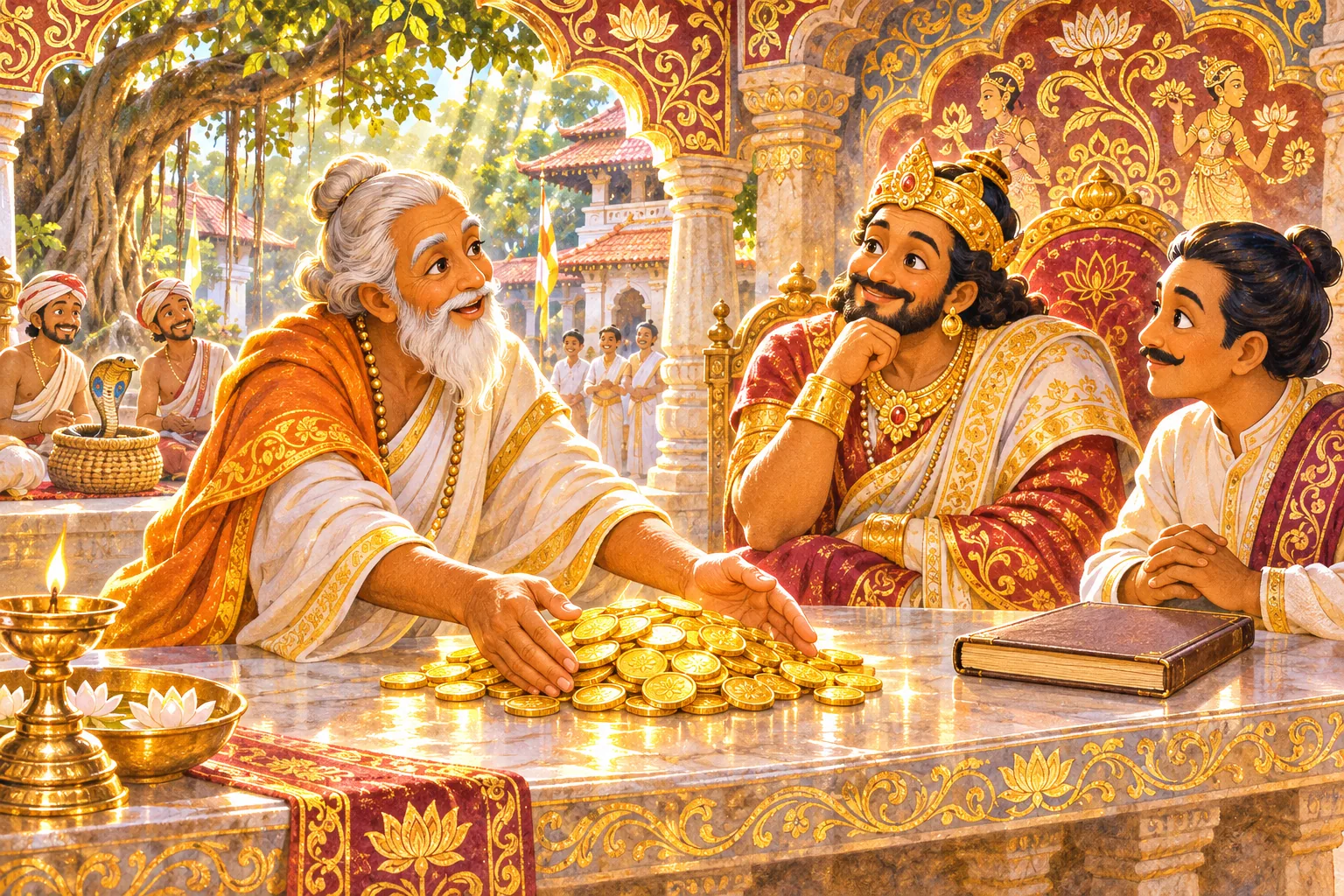
“But I did not want the money,” he said, and he gave every coin back. “I wanted to learn something.
“ඒත් මට මුදල් ඕනෑ වුණේ නැහැ,” ඔහු කීවා. ඔහු හැම කාසියක්ම ආපසු දුන්නා. “මට යමක් ඉගෙන ගන්න ඕනෑ වුණා.
Yesterday I was still learned and clever. But the moment I stopped being good, everyone turned against me.”
ඊයෙත් මම උගත්, දක්ෂ කෙනෙක්. ඒත් මම යහපත් වීම නැවැත්වූ සැණින් හැමෝම මට විරුද්ධ වුණා.”

On his way to the palace, the adviser had seen snake charmers with a cobra. When people came close, the charmers said, “Don’t worry, he’s a good snake. He won’t bite.”
මාලිගාවට එන අතරතුර උපදේශකයා නයෙකු සමඟ සිටි සර්ප නටවන්නන් දැක්කා. මිනිස්සු ළං වූ විට, නටවන්නෝ කීවා, “බය වෙන්න එපා, මේ හොඳ නයෙක්. දෂ්ට කරන්නේ නැහැ.”
“Even a snake,” he said, “is praised for being good, not for being clever.”
“සර්පයෙකු පවා,” ඔහු කීවා, “වර්ණනා කරන්නේ දක්ෂකම නිසා නොව යහපත නිසා.”

“So now I know,” said the adviser. “Learning is good, but goodness is the greatest treasure of all.”
“ඉතින් දැන් මම දන්නවා,” උපදේශකයා කීවා. “ඉගෙනීම හොඳයි, ඒත් යහපත සියල්ලටම වඩා ශ්රේෂ්ඨ නිධානයයි.”
The king was moved. He forgave him at once and honoured him more than ever.
රජුගේ හිත සැලුණා. ඔහු වහාම ඔහුට සමාව දී පෙරටත් වඩා ගෞරව කළා.
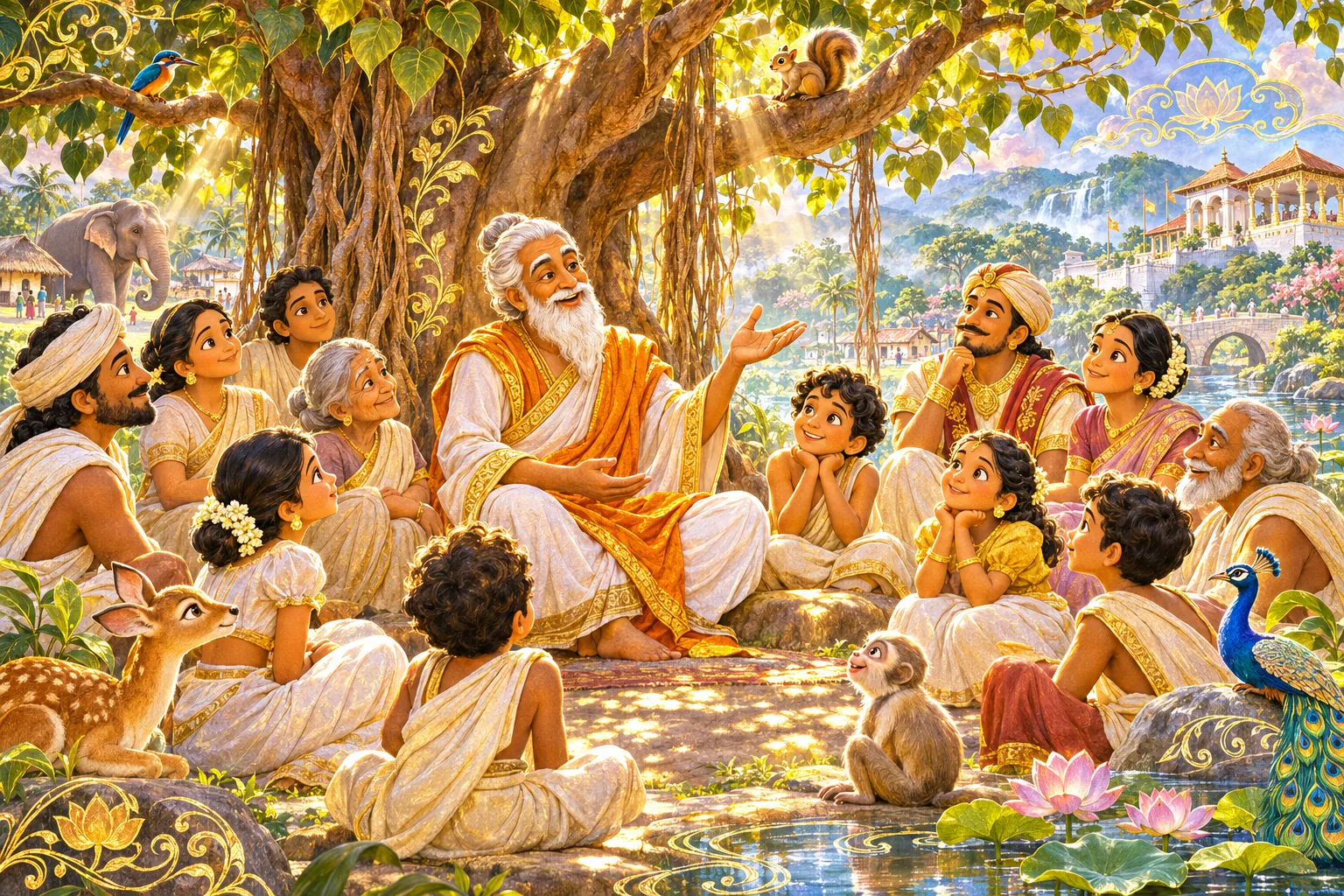
The wise adviser spent the rest of his life teaching that being kind, honest and good matters more than being clever.
නුවණැති උපදේශකයා තම ජීවිතයේ ඉතිරි කාලය කාරුණික, අවංක, යහපත් වීම දක්ෂ වීමට වඩා වැදගත් බව උගන්වමින් ගත කළා.
And the people of Benares never forgot his lesson.
බරණැස් ජනතාවට ඔහුගේ පාඩම කවදාවත් අමතක වුණේ නැහැ.
Who was who?
The Buddha told this story to teach that goodness is worth more than learning. The wise adviser was the Bodhisatta.
The lesson
Being clever is good, but being good is better. People trust goodness most of all.
Let's talk
- Why did the adviser take the coins?
- What did he learn from the snake charmers?
- Which matters more to you: being clever or being kind?
කවුද කවුරුන් වූයේ?
ඉගෙනීමට වඩා යහපත වටිනා බව කියා දීමට බුදුරජාණන් වහන්සේ මේ කතාව වදාළා. නුවණැති උපදේශකයා වූයේ බෝසතාණන් වහන්සේයි.
පාඩම
දක්ෂ වීම හොඳයි, ඒත් යහපත් වීම ඊටත් වඩා හොඳයි. මිනිස්සු සියල්ලටම වඩා යහපත විශ්වාස කරනවා.
අපි කතා කරමු
- උපදේශකයා කාසි ගත්තේ ඇයි?
- සර්ප නටවන්නන්ගෙන් ඔහු ඉගෙන ගත්තේ මොකක්ද?
- ඔබට වඩා වැදගත් මොකක්ද: දක්ෂ වීමද, කාරුණික වීමද?
Retold for children by Fablewings from the Sīlavīmaṁsana Jātaka (Jātaka No. 86; English translation ed. E. B. Cowell, vol. I, 1895, public domain) and the Sinhala Pansiya Panas Jātaka tradition. Illustrations made with AI assistance for Fablewings.