Wise and Wisest
පණ්ඩිත සහ අතිපණ්ඩිත
Kūṭavāṇija Jātaka (No. 98) · කූටවාණිජ ජාතකය (අංක 98)
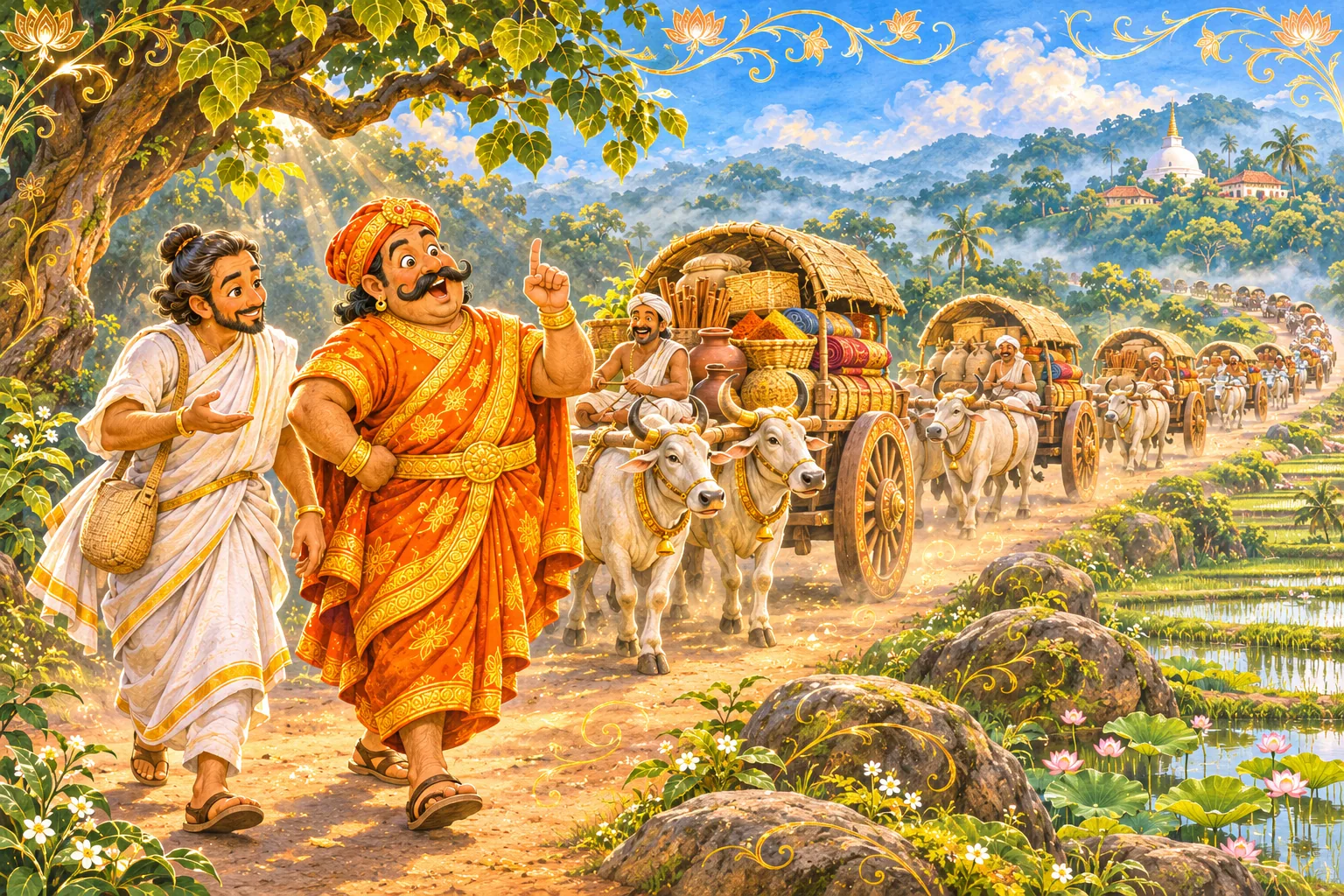
Two merchants went into business together. One was called Wise. The other was called Wisest, and he thought he was very clever indeed.
වෙළෙන්දන් දෙදෙනෙක් එකට ව්යාපාරයක් කළා. එක් අයෙකුගේ නම පණ්ඩිත. අනිකාගේ නම අතිපණ්ඩිත. ඔහු තමා ඉතා දක්ෂ යැයි සිතුවා.
Together they took five hundred carts of goods to sell in a faraway town.
ඔවුන් එකට ඈත නගරයක විකුණන්න බඩු පිරවූ ගැල් පන්සියයක් ගෙන ගියා.
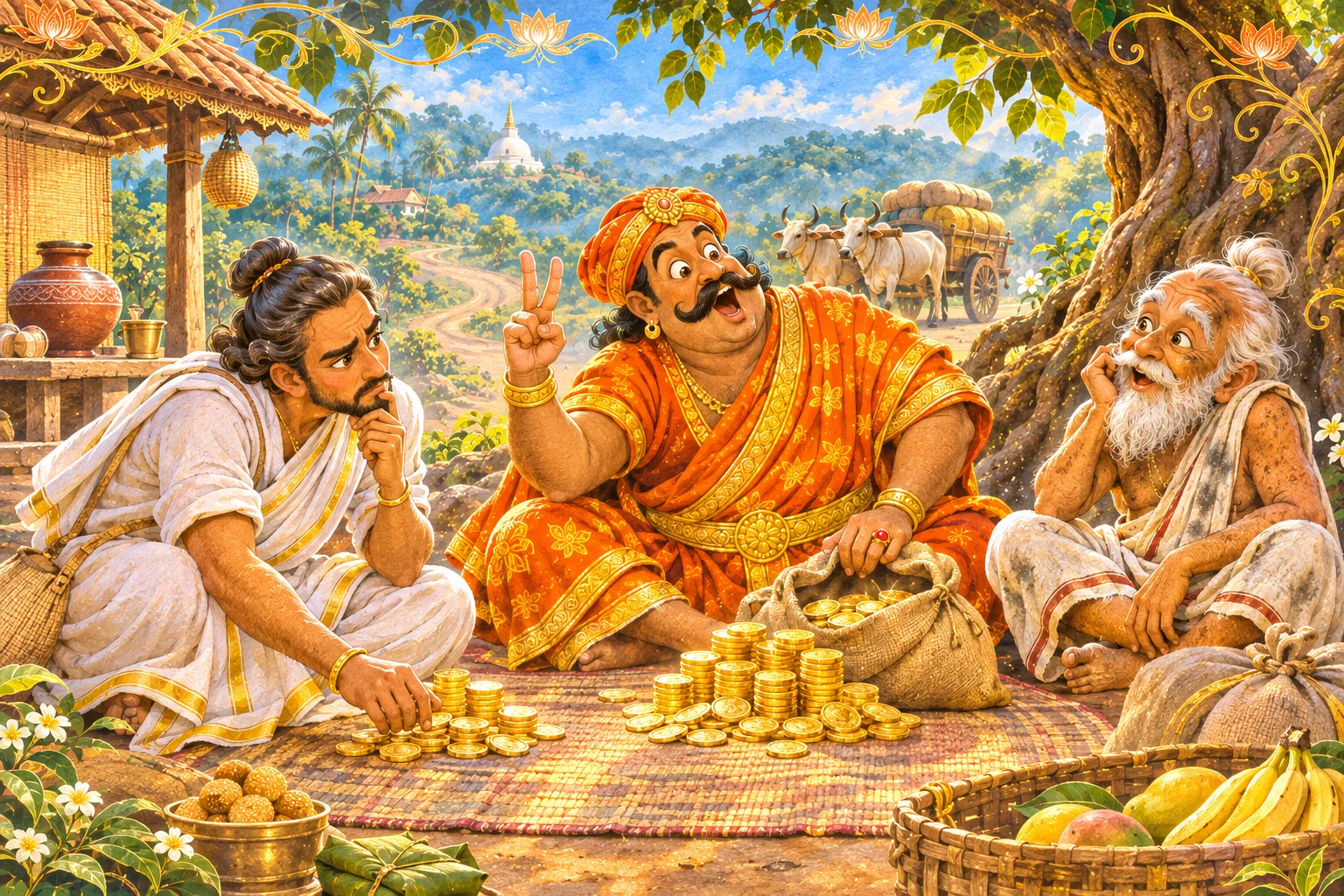
They sold everything and made a good profit. Wise said, “Let’s share it equally, half each.”
ඔවුන් සියල්ල විකුණා හොඳ ලාභයක් ලැබුවා. පණ්ඩිත කීවා, “අපි ඒක සමසේ බෙදා ගනිමු, භාගය බැගින්.”
“Oh no,” said Wisest. “You are only Wise, but I am Wisest. So I should get two shares, and you only one!”
“අනේ නැහැ,” අතිපණ්ඩිත කීවා. “ඔයා පණ්ඩිත විතරයි, ඒත් මම අතිපණ්ඩිත. ඉතින් මට කොටස් දෙකක්, ඔයාට එකක් විතරයි!”
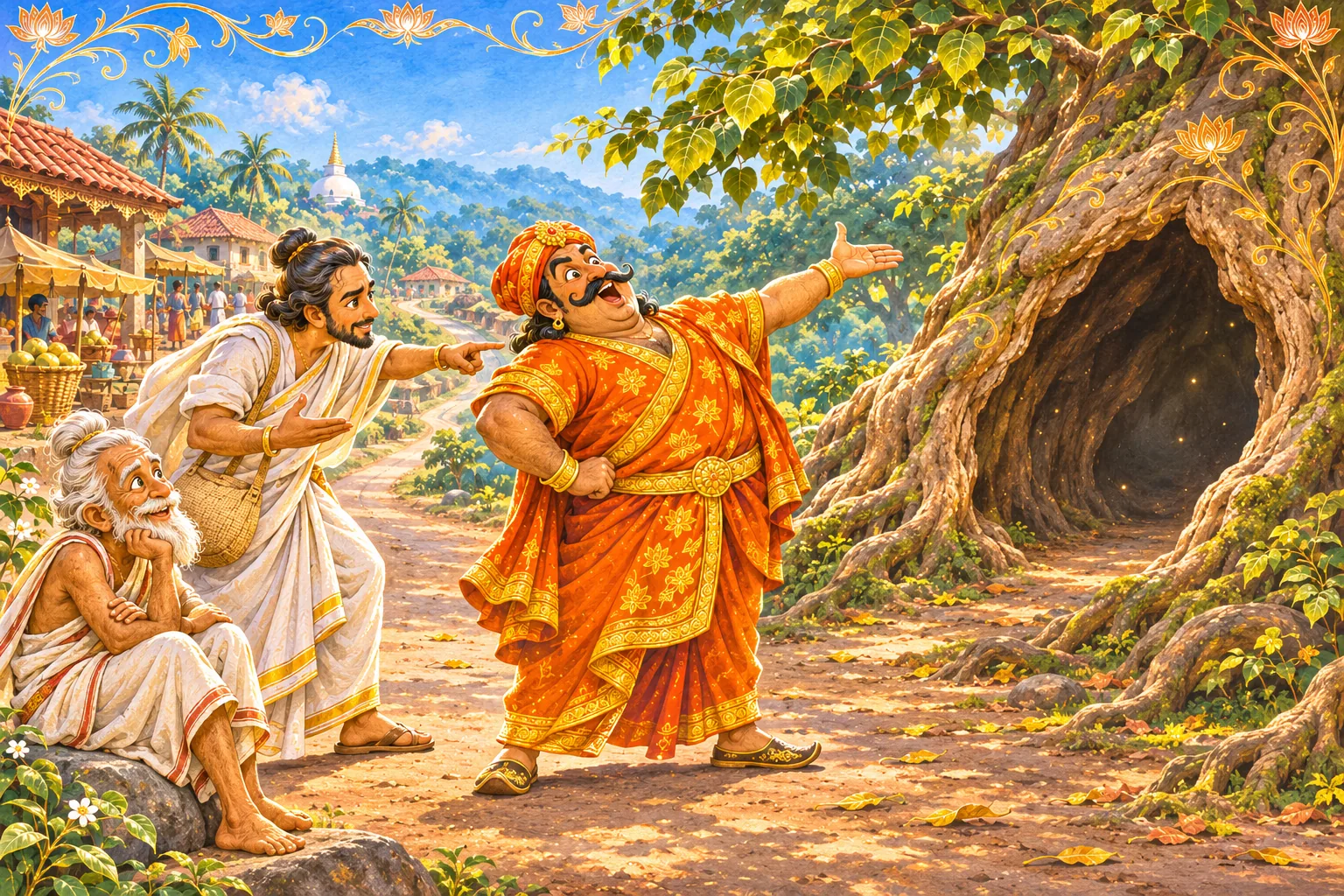
They argued and argued. At last Wisest said, “Let’s ask the spirit of the old tree by the road. It will tell us what is fair.”
ඔවුන් වාද කළා, වාද කළා. අන්තිමට අතිපණ්ඩිත කීවා, “අපි පාර අයිනේ තියෙන පරණ ගසේ දේවතාවාගෙන් අහමු. සාධාරණ දේ එයා අපට කියයි.”
Wise agreed.
පණ්ඩිත එකඟ වුණා.
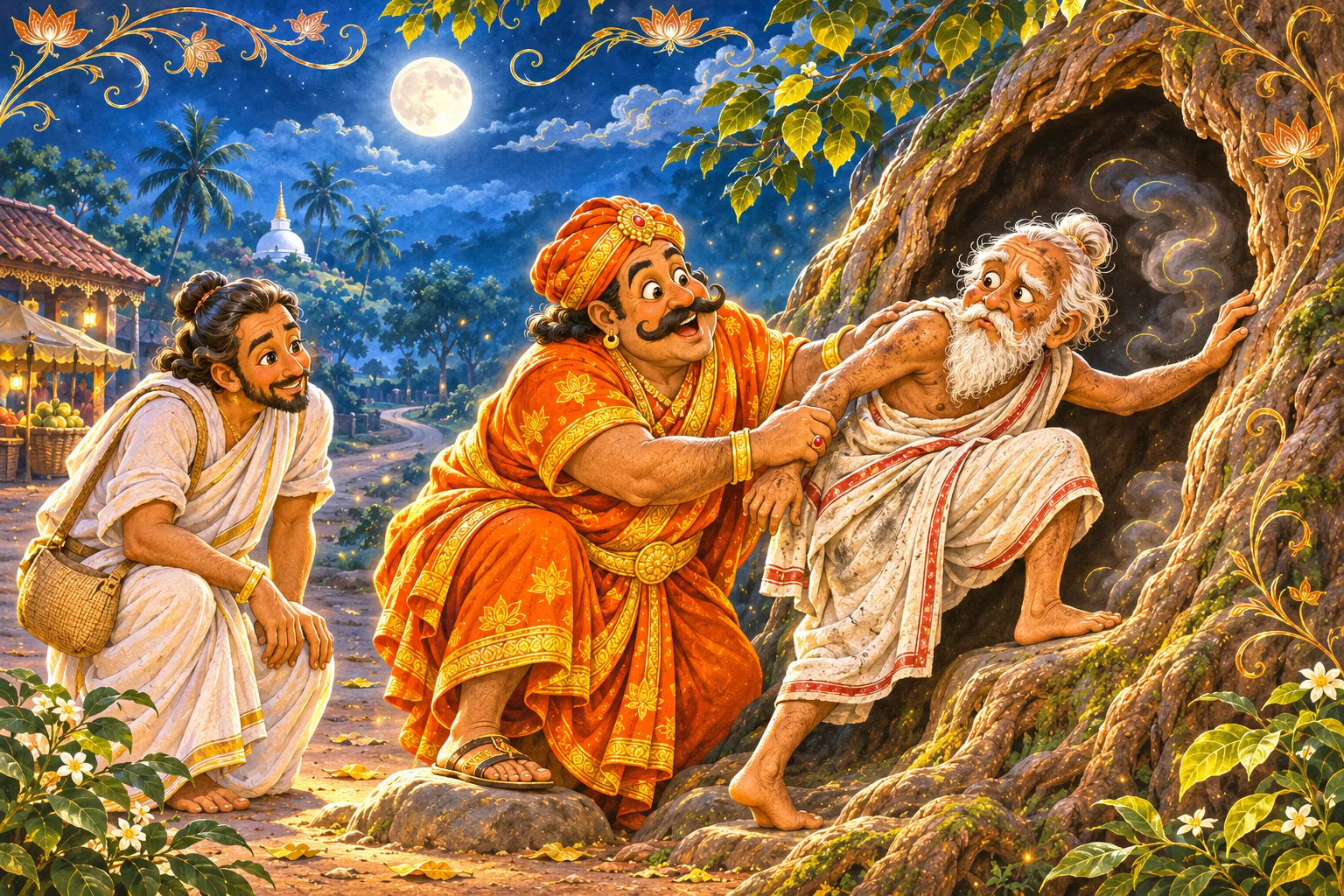
But that night, Wisest crept to his old father. “Father, please hide inside the hollow of the old tree,” he whispered. “Tomorrow, pretend to be the tree spirit and say I should get two shares.”
නමුත් එදින රාත්රියේ අතිපණ්ඩිත හොරෙන් තම මහලු පියා ළඟට ගියා. “තාත්තේ, කරුණාකරලා පරණ ගසේ කුහරය ඇතුළේ සැඟවෙන්න,” ඔහු මිමිණුවා. “හෙට ගස් දේවතාවා වගේ රඟපාලා මට කොටස් දෙකක් ලැබිය යුතුයි කියලා කියන්න.”
His father agreed, though he didn’t feel good about it.
ඔහුගේ පියා එකඟ වුණත් ඔහුට ඒ ගැන හොඳ හැඟීමක් තිබුණේ නැහැ.
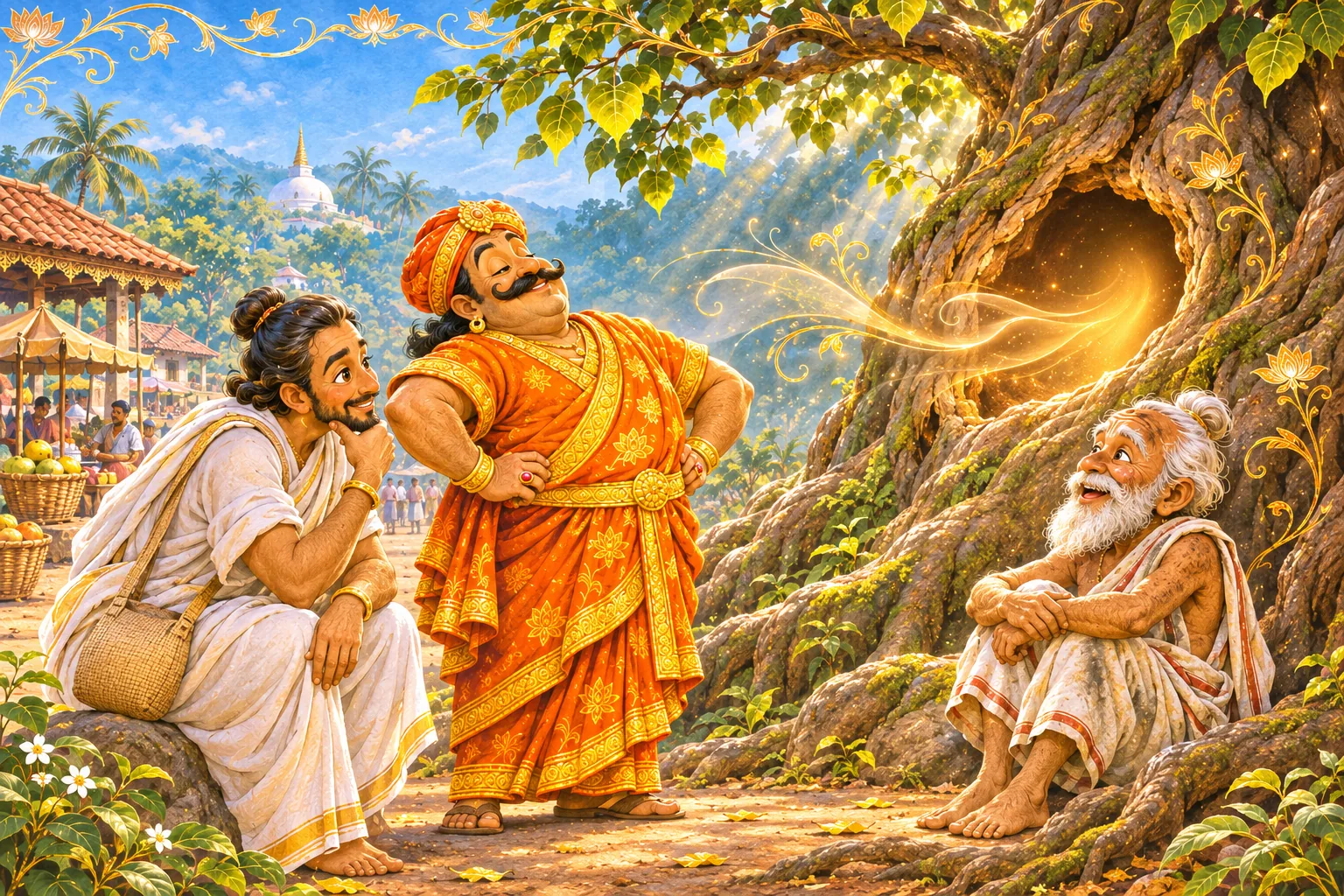
In the morning, the two merchants stood before the tree. “Spirit of the tree,” called Wisest, “who should get the bigger share?”
උදේ වෙළෙන්දන් දෙදෙනා ගස ඉදිරියේ සිටගත්තා. “ගස් දේවතාවනි,” අතිපණ්ඩිත කෑ ගැසුවා, “ලොකු කොටස ලැබිය යුත්තේ කාටද?”
A deep voice came from inside the trunk: “Wise gets one share. Wisest gets two!”
කඳ ඇතුළෙන් ගැඹුරු හඬක් ආවා: “පණ්ඩිතට එක කොටසයි. අතිපණ්ඩිතට දෙකයි!”
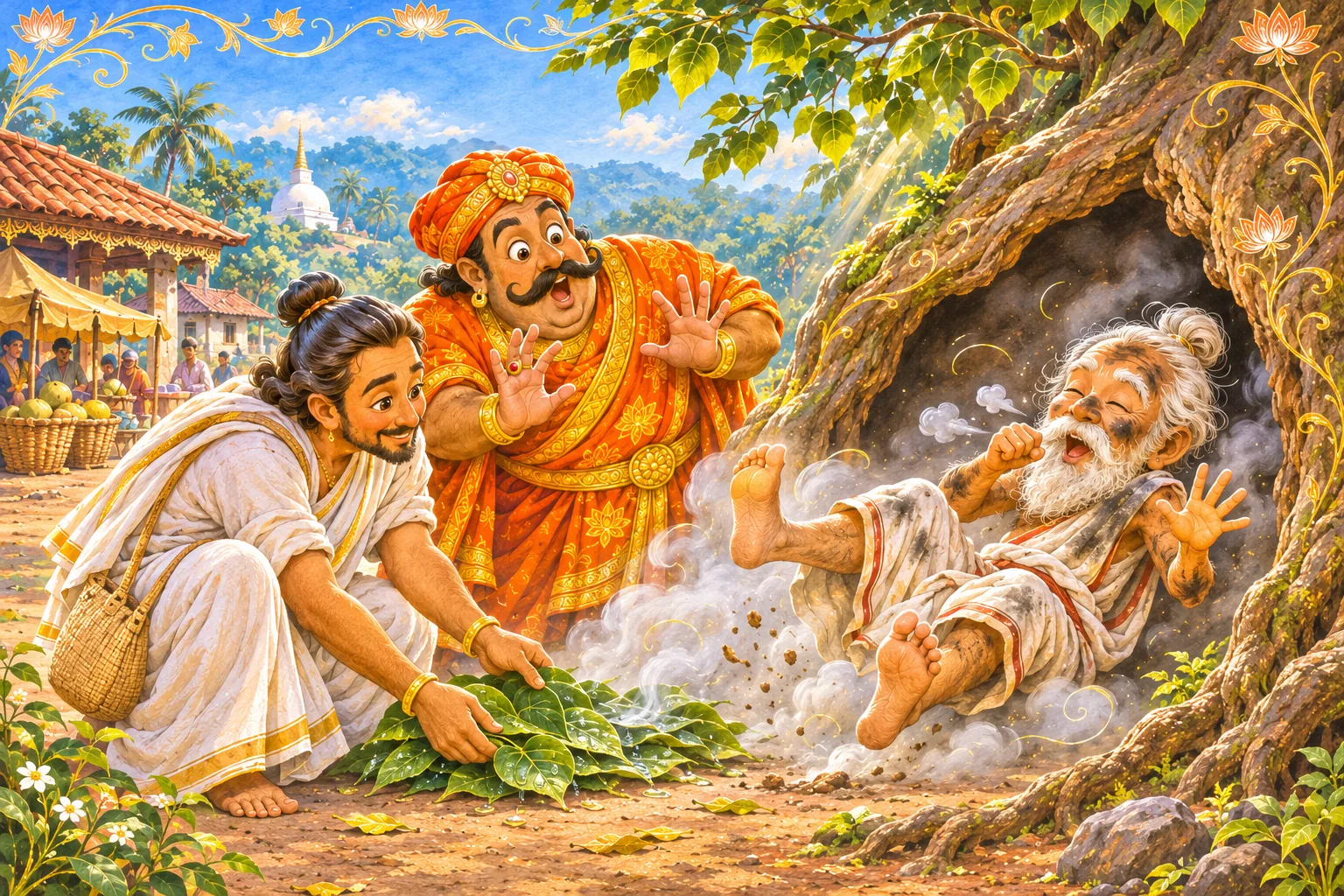
Wise thought, “A real tree spirit would be fair. This must be a trick.” He piled some damp leaves at the opening of the hollow and made a little smoke.
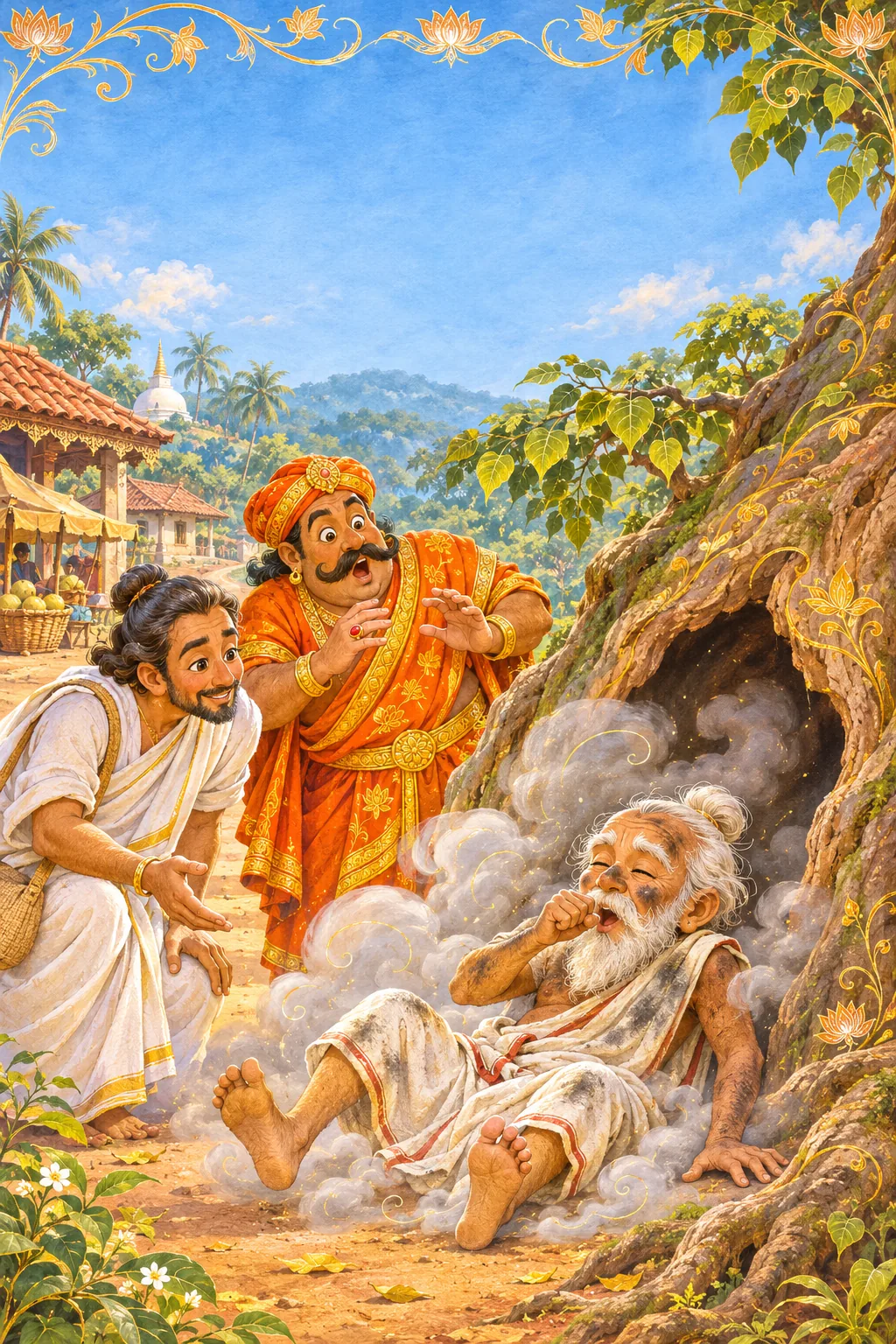
පණ්ඩිත හිතුවා, “සැබෑ ගස් දේවතාවෙක් සාධාරණයි. මේක උපක්රමයක් වෙන්න ඕනෑ.” ඔහු කුහරයේ කට ළඟ තෙත් කොළ ටිකක් ගොඩ කර පොඩි දුමක් ඇති කළා.
“Cough, cough!” Out tumbled Wisest’s father, covered in soot and blinking.
“කස්, කස්!” දැලි තැවරී, ඇස් පියාහරිමින් අතිපණ්ඩිතගේ පියා එළියට පෙරළී ආවා.
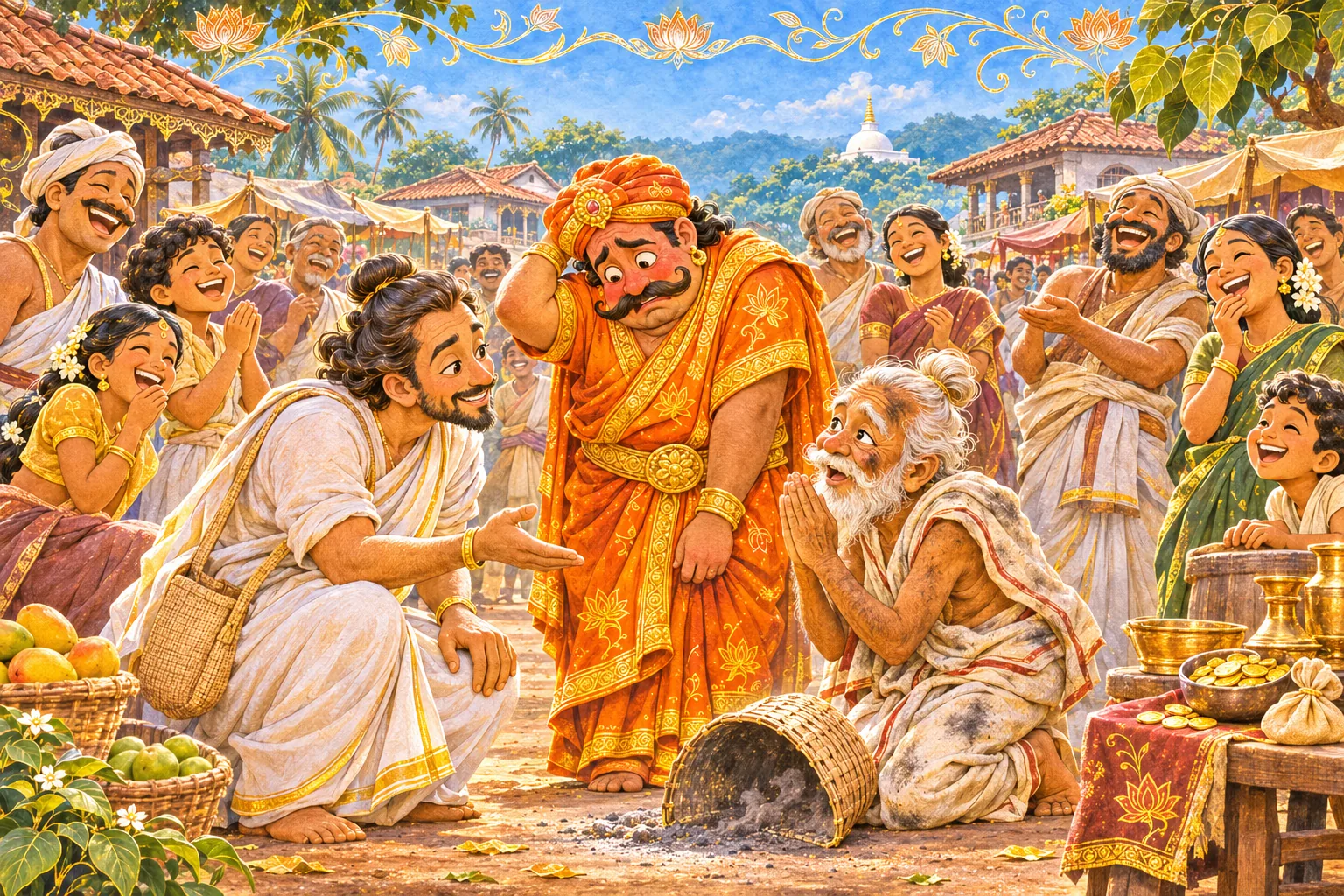
Everyone laughed, and Wisest turned red with shame. His father dusted himself off. “I am sorry,” he said. “I should never have helped you cheat.”
හැමෝම සිනාසුණා. අතිපණ්ඩිත ලැජ්ජාවෙන් රතු වුණා. ඔහුගේ පියා දූවිලි ගසා දැම්මා. “මට කනගාටුයි,” ඔහු කීවා. “වංචා කරන්න මම ඔයාට කවදාවත් උදව් කරන්න තිබුණේ නැහැ.”
“Being clever is not the same as being fair,” said Wise gently.
“දක්ෂ වීම සාධාරණ වීමට සමාන නොවේ,” පණ්ඩිත මෘදුව කීවා.
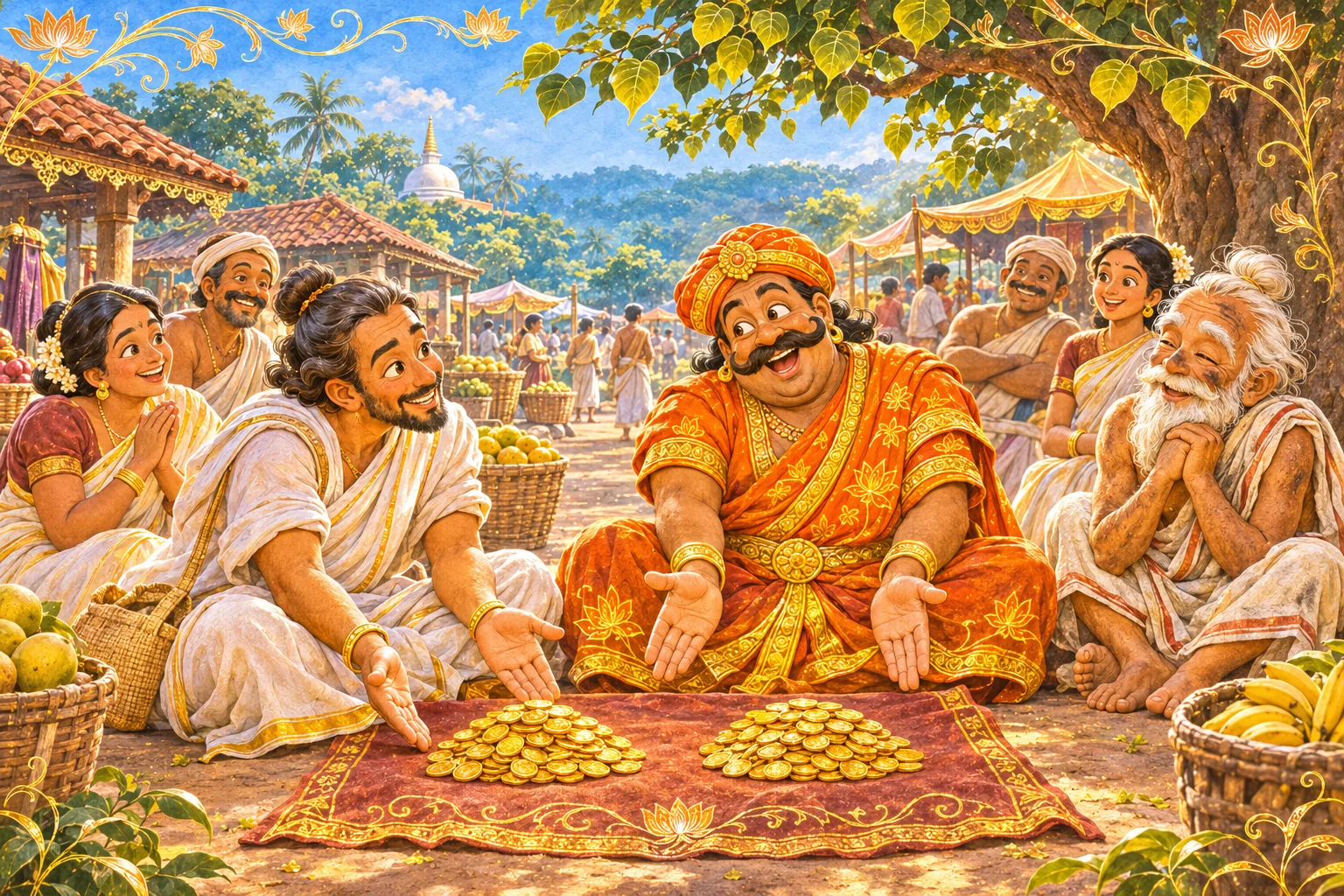
So the profit was shared equally, half and half, just as it should be.
ඉතින් ලාභය නිසි පරිදි සමසේ, භාගයට භාගය බෙදා ගත්තා.
And from that day, Wisest stopped calling himself Wisest, and tried instead to be honest.
එදා සිට අතිපණ්ඩිත තමාට අතිපණ්ඩිත කියා කීම නවත්වා, ඒ වෙනුවට අවංක වෙන්න උත්සාහ කළා.
Who was who?
The Buddha told this story about a dishonest merchant who tried to cheat his partner. The merchant called Wise was the Bodhisatta.
The lesson
Being clever is not the same as being fair. Tricks are found out in the end.
Let's talk
- Why did Wisest think he deserved two shares?
- How did Wise discover the trick?
- Why is being fair more important than being clever?
කවුද කවුරුන් වූයේ?
තම හවුල්කරුට වංචා කිරීමට උත්සාහ කළ අවංක නොවන වෙළෙන්දෙකු ගැන බුදුරජාණන් වහන්සේ මේ කතාව වදාළා. පණ්ඩිත නම් වෙළෙන්දා වූයේ බෝසතාණන් වහන්සේයි.
පාඩම
දක්ෂ වීම සාධාරණ වීමට සමාන නොවේ. උපක්රම අවසානයේ හෙළි වෙනවා.
අපි කතා කරමු
- තමාට කොටස් දෙකක් ලැබිය යුතු යැයි අතිපණ්ඩිත සිතුවේ ඇයි?
- පණ්ඩිත උපක්රමය සොයා ගත්තේ කොහොමද?
- දක්ෂ වීමට වඩා සාධාරණ වීම වැදගත් ඇයි?
Retold for children by Fablewings from the Kūṭavāṇija Jātaka (Jātaka No. 98; English translation ed. E. B. Cowell, vol. I, 1895, public domain) and the Sinhala Pansiya Panas Jātaka tradition. Illustrations made with AI assistance for Fablewings.