The Search and the Middle Way
සෙවීම සහ මධ්යම ප්රතිපදාව
Fablewings · ages 6–11
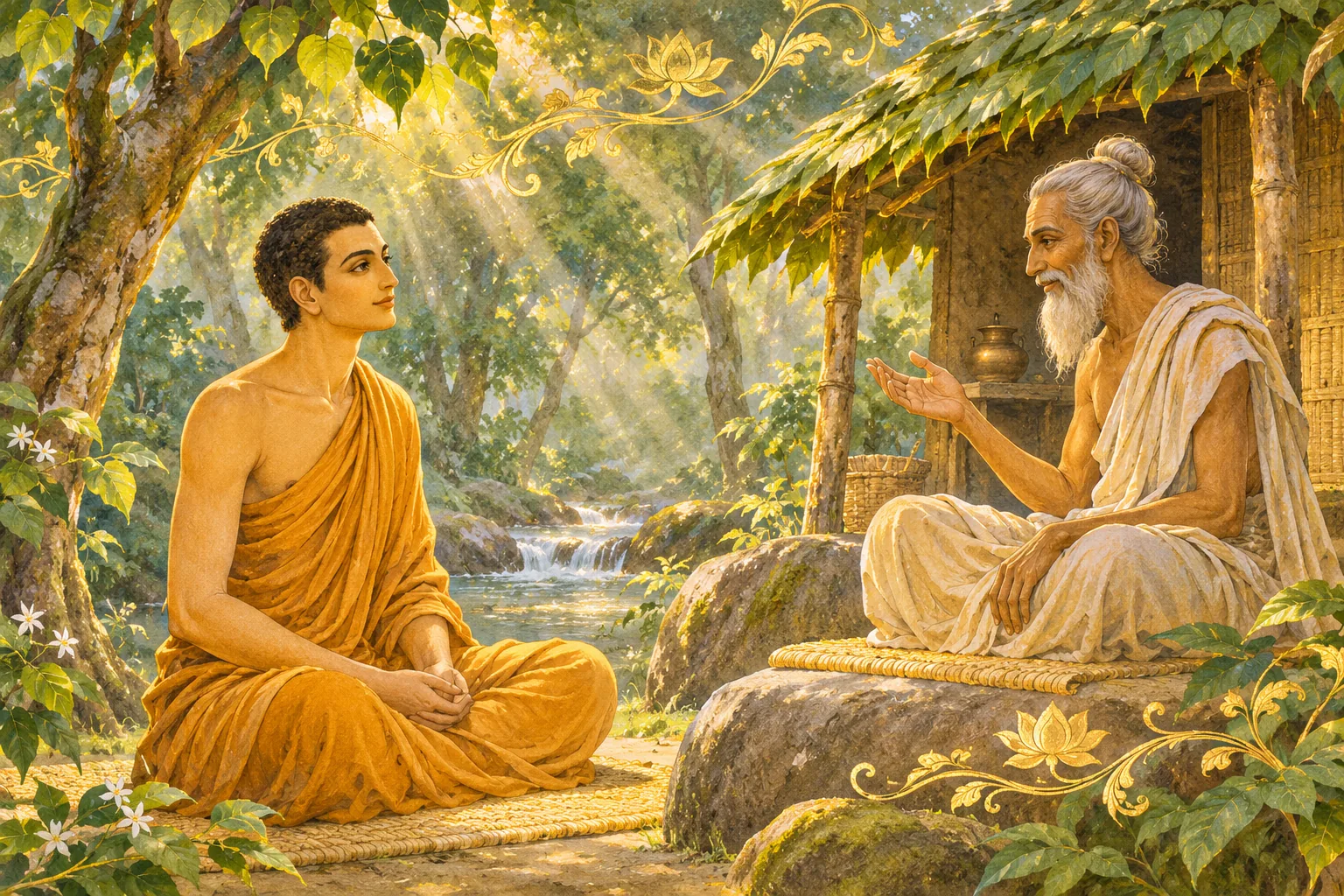
Siddhattha walked from place to place, looking for wise teachers. He studied with two famous teachers and learned everything they knew.
සිද්ධාර්ථ නුවණැති ගුරුවරුන් සොයමින් තැනින් තැනට ඇවිද්දා. ඔහු ප්රසිද්ධ ගුරුවරුන් දෙදෙනෙකු සමඟ ඉගෙන ගෙන ඔවුන් දැන සිටි සියල්ල ඉගෙන ගත්තා.
But he was still not satisfied. “This is not yet the end of sorrow,” he said, and he went on searching.
නමුත් ඔහු තවමත් සෑහීමකට පත් වුණේ නැහැ. “මෙය තවම දුකේ අවසානය නොවේ,” ඔහු කීවා. ඔහු දිගටම සෙව්වා.
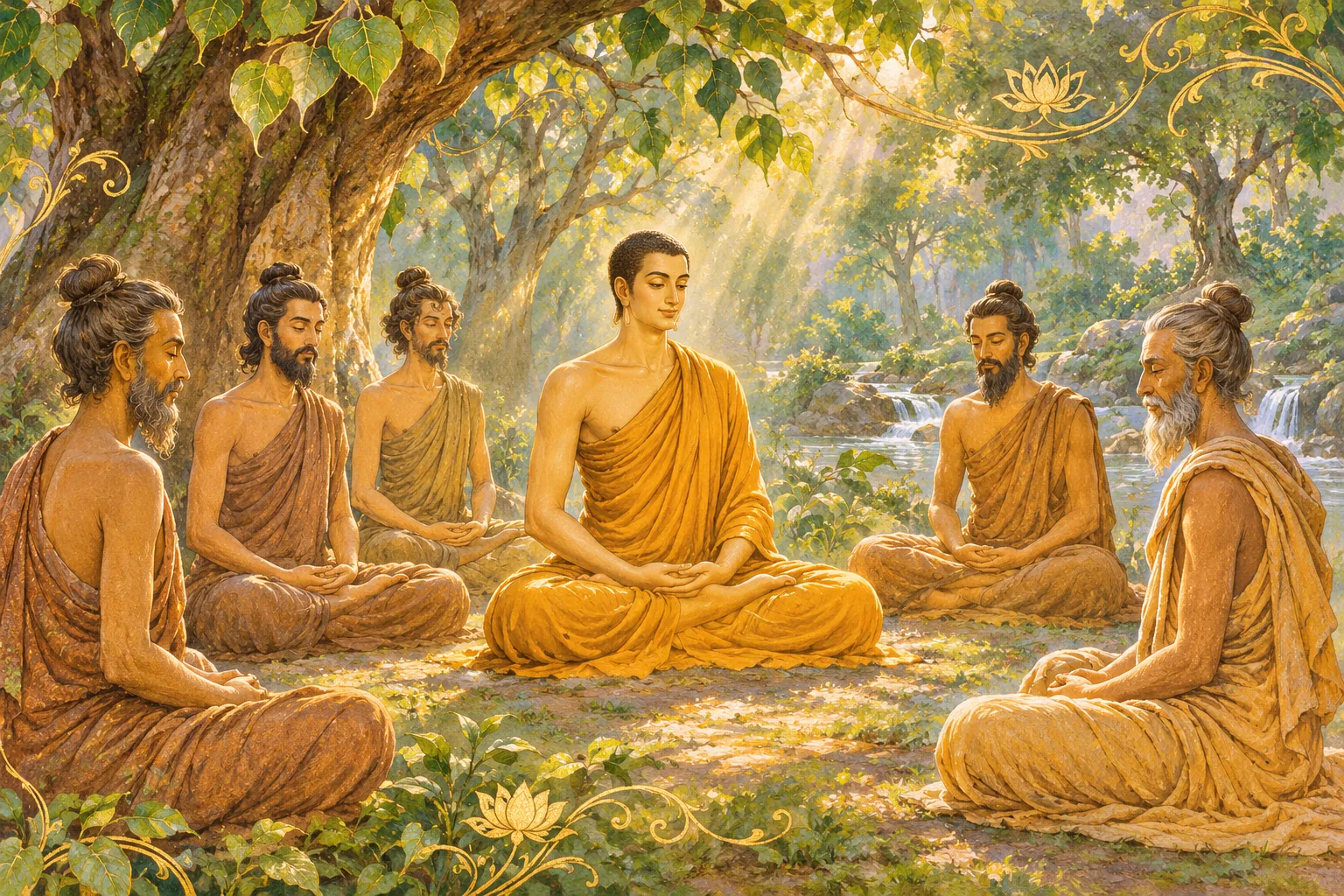
Five holy men joined him in the forest. In those days, many people believed that making the body suffer would free the mind.
පස් දෙනෙකු වූ පැවිද්දෝ වනයේදී ඔහු හා එක් වුණා. ඒ කාලයේ ශරීරයට දුක් දීමෙන් සිත නිදහස් වෙයි කියා බොහෝ දෙනා විශ්වාස කළා.
So for six long years, Siddhattha and his five friends ate almost nothing and lived very harshly.
ඉතින් දිගු අවුරුදු හයක් සිද්ධාර්ථ සහ ඔහුගේ මිතුරන් පස්දෙනා කිසිවක් පාහේ නොකා ඉතා දැඩි ලෙස ජීවත් වුණා.
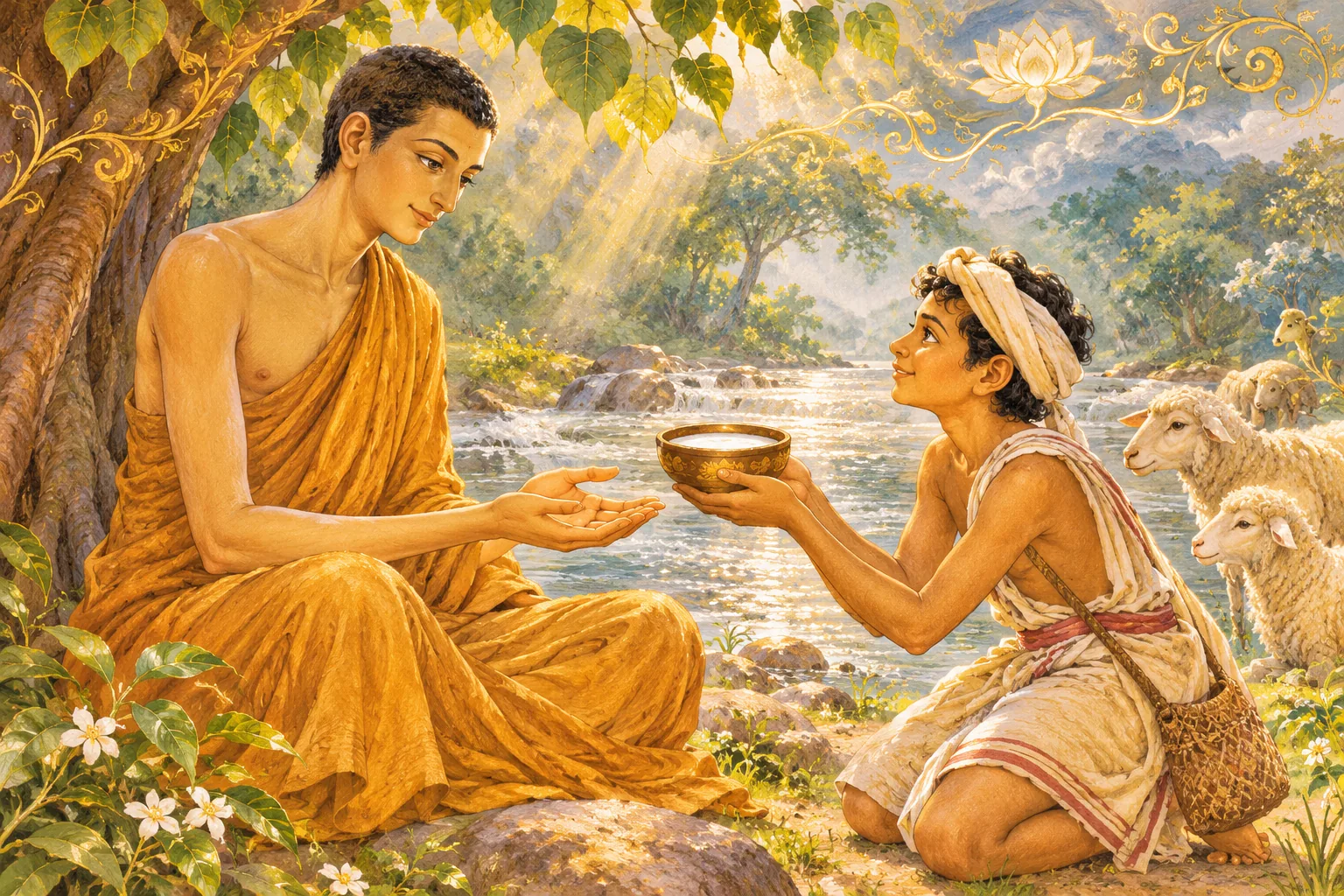
Siddhattha became very weak and thin. One day he fainted by the river, and a kind shepherd boy gave him a little milk.
සිද්ධාර්ථ ඉතා දුර්වල, කෙට්ටු වුණා. එක දවසක ඔහු ගඟ අසල ක්ලාන්ත වුණා. කාරුණික එඬේර කොලුවෙක් ඔහුට ටිකක් කිරි දුන්නා.
When he felt better, he thought, “Making my body suffer has not made my mind wise. There must be another way.”
සනීප වූ විට ඔහු හිතුවා, “මගේ ශරීරයට දුක් දීමෙන් මගේ සිත නුවණැති වුණේ නැහැ. වෙනත් මාර්ගයක් තිබිය යුතුයි.”
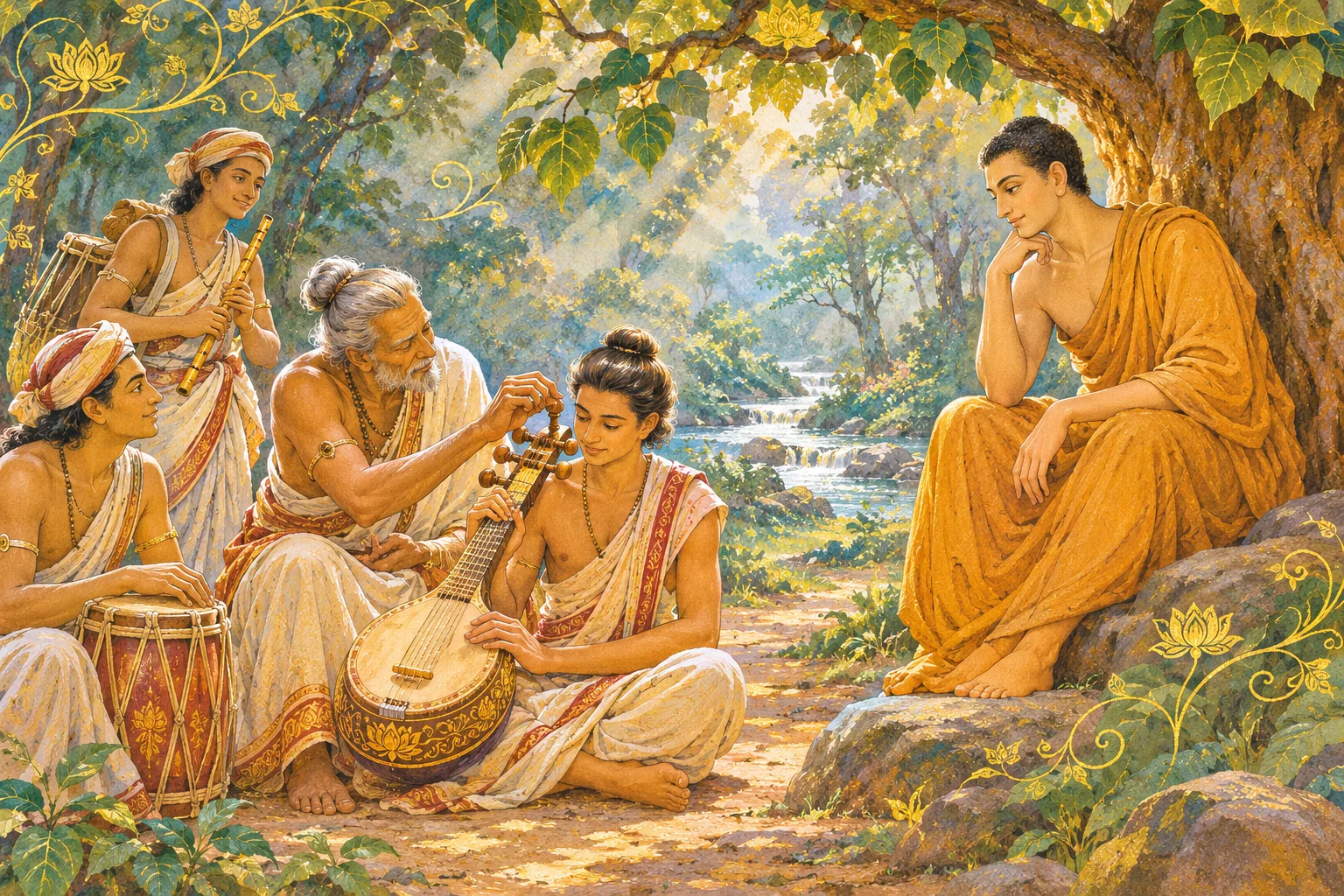
The old stories say that just then, a group of musicians passed by. One was teaching a student to play a stringed instrument.
එවෙලේම සංගීතඥයන් පිරිසක් පසු කර ගිය බව පැරණි කතාවල කියනවා. එක් අයෙක් ශිෂ්යයෙකුට තත් වාද්ය භාණ්ඩයක් වාදනය කරන්න උගන්වමින් සිටියා.
“If the string is too tight, it will snap,” said the teacher. “If it is too loose, it will not play. Tune it just right, and it makes beautiful music.”
“තත තද වැඩි නම් කැඩෙනවා,” ගුරුවරයා කීවා. “ලිහිල් වැඩි නම් නාද වෙන්නේ නැහැ. හරියටම සකස් කළොත් ලස්සන සංගීතයක් එනවා.”
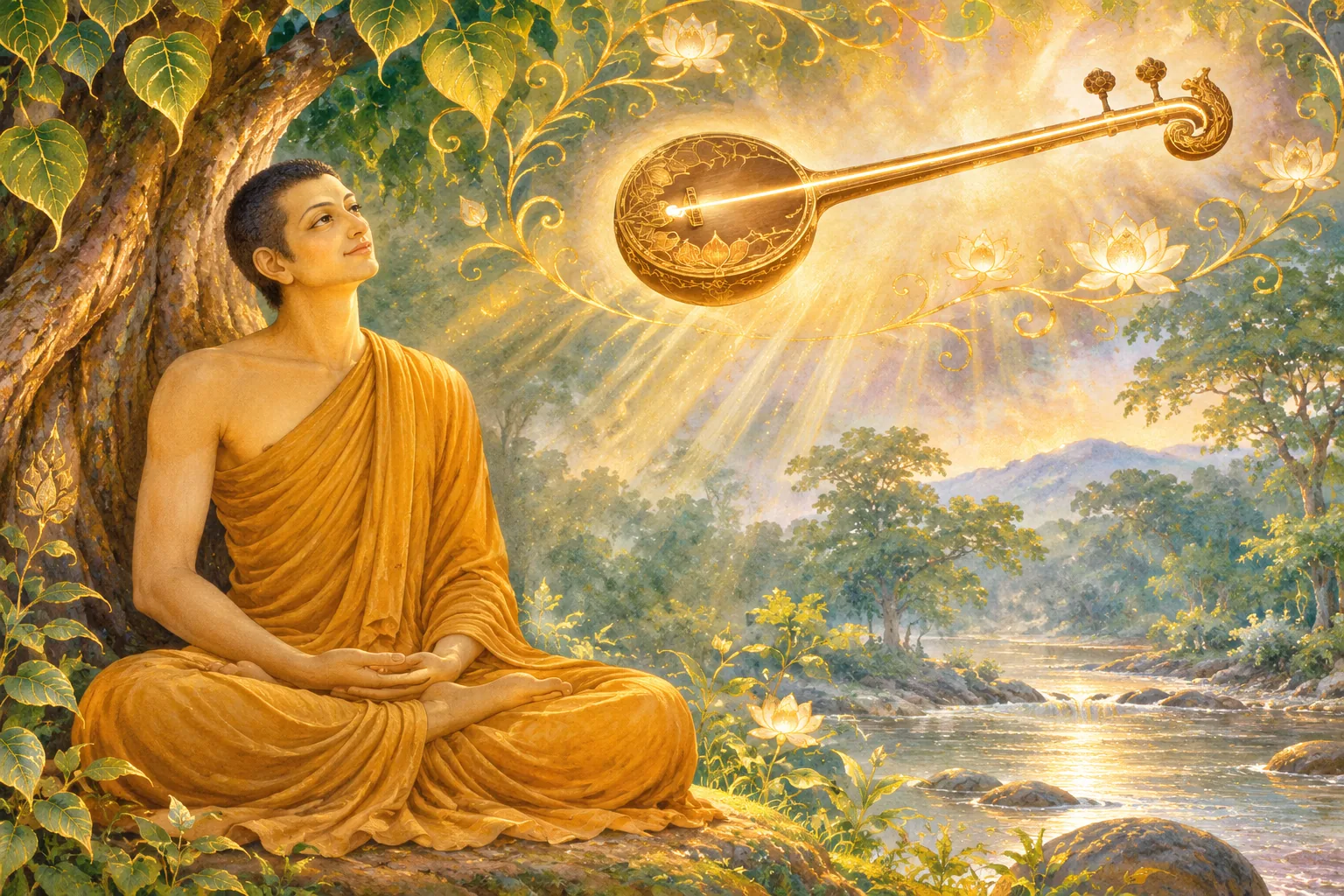
Siddhattha smiled. “That is the answer!” he thought. “Not too much comfort, like in the palace. Not too much hardship, like in the forest.
සිද්ධාර්ථ සිනාසුණා. “ඒක තමයි පිළිතුර!” ඔහු හිතුවා. “මාලිගාවේ වගේ අධික සැපයක් නොවේ. වනයේ වගේ අධික දුෂ්කරතාවයක් නොවේ.
The Middle Way, between the two, is the path to wisdom.”
මේ දෙක අතර ඇති මධ්යම මාර්ගය නුවණට යන මාර්ගයයි.”
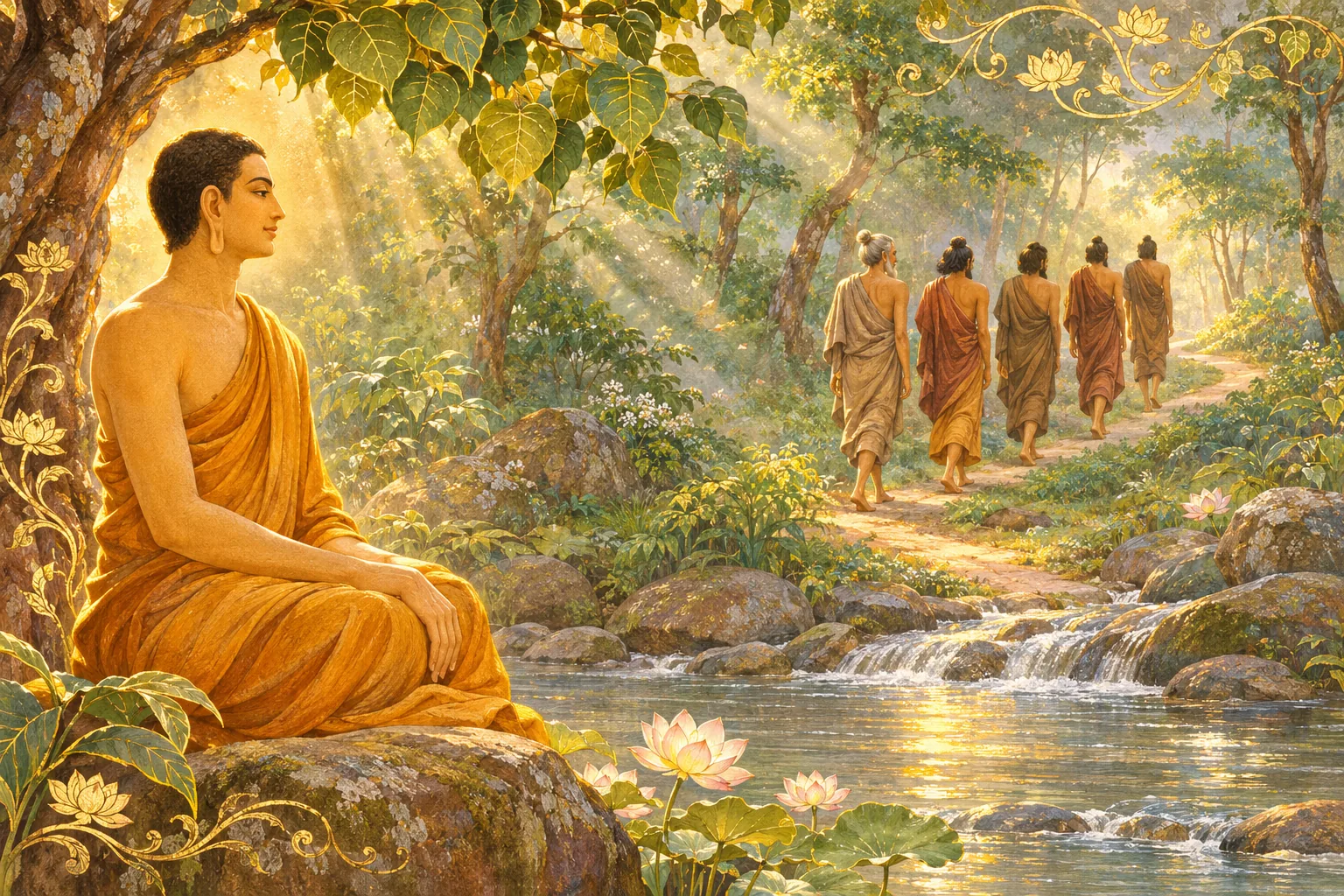
So he began to eat simple food again. But his five friends were disappointed. “He has given up,” they said, and they left him and went away to the Deer Park near Benares.
ඉතින් ඔහු නැවත සරල ආහාර ගන්න පටන් ගත්තා. නමුත් ඔහුගේ මිතුරන් පස්දෙනා කලකිරුණා. “ඔහු අත්හැරියා,” ඔවුන් කීවා. ඔවුන් ඔහුව අත්හැර බරණැස අසල මිගදාය උයනට ගියා.
Siddhattha was alone, but he was sure he was on the right path.
සිද්ධාර්ථ තනියම සිටියා, නමුත් ඔහු හරි මාර්ගයේ සිටින බව ඔහුට විශ්වාසයි.
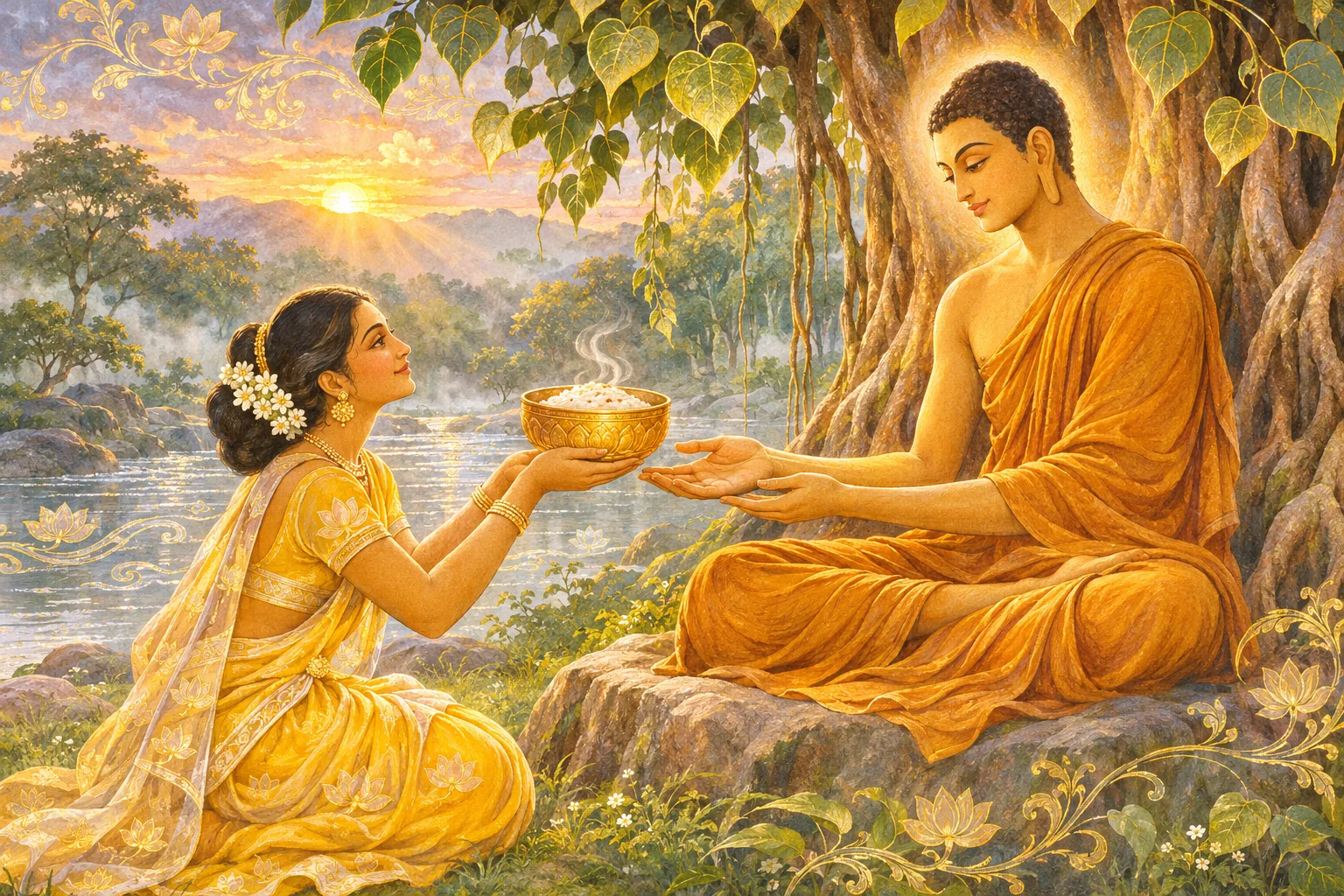
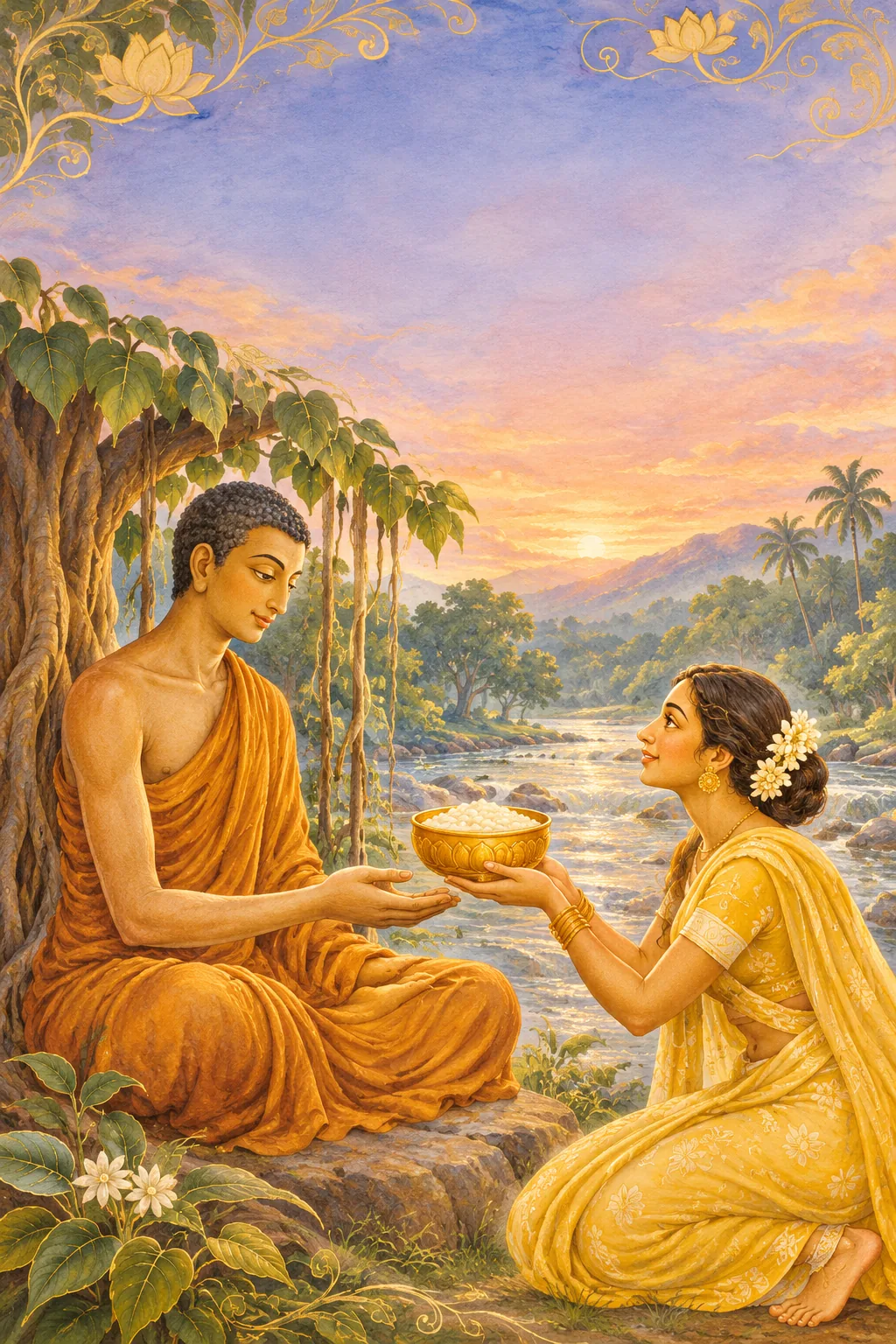
On the morning of the full moon of Vesak, a kind young woman named Sujātā came to the forest with a golden bowl of milk rice, which she had cooked with great care.
වෙසක් පුර පසළොස්වක උදෑසන සුජාතා නම් කාරුණික තරුණ කාන්තාවක් මහත් ප්රවේශමෙන් පිසූ කිරිබත් පිරුණු රන් පාත්රයක් රැගෙන වනයට ආවා.
She offered it to him with joy, thinking he was a forest god.
ඔහු වන දෙවියෙකු යැයි සිතා ඇය එය සතුටින් පූජා කළා.

Siddhattha ate the milk rice by the river Nerañjarā and felt strong again. Then he placed the golden bowl on the water.
සිද්ධාර්ථ නේරංජරා නදිය අසලදී කිරිබත් වළඳා නැවත ශක්තිමත් වුණා. ඉන්පසු ඔහු රන් පාත්රය වතුර මත තැබුවා.
“If I am to find the truth today,” he said, “let this bowl float upstream.” And the old stories say it did, against the current.
“මට අද සත්යය අවබෝධ වෙනවා නම්,” ඔහු කීවා, “මේ පාත්රය උඩුගං බලා පාවී යේවා.” එය සැඩ පහරට එරෙහිව එසේ ගිය බව පැරණි කතාවල කියනවා.
About this story
The Middle Way is one of the most important ideas in Buddhism: a balanced life, avoiding both too much comfort and too much hardship. The lute-string story is a much-loved traditional way of explaining it.
The lesson
Balance is wise. Too much or too little of anything is not good for us.
Let's talk
- What did the musician teach about the strings?
- What is the Middle Way?
- What gift did Sujātā bring?
මේ කතාව ගැන
මධ්යම ප්රතිපදාව බුදුදහමේ වැදගත්ම අදහස්වලින් එකක්: අධික සැපයත් අධික දුෂ්කරතාවයත් යන දෙකම මඟහැර සමබර ජීවිතයක් ගත කිරීම. වීණා තතේ කතාව එය පැහැදිලි කරන ආදරණීය පාරම්පරික ක්රමයක්.
පාඩම
සමබරතාව නුවණයි. ඕනෑම දෙයක් වැඩි වීම හෝ අඩු වීම අපට හොඳ නැහැ.
අපි කතා කරමු
- සංගීතඥයා තත් ගැන කියා දුන්නේ මොකක්ද?
- මධ්යම ප්රතිපදාව යනු කුමක්ද?
- සුජාතා ගෙනා තෑග්ග මොකක්ද?
Retold for children by Fablewings from the traditional life of the Buddha in the Pali texts and their commentaries (including the Nidānakathā), and the Sinhala Buddhist tradition. Illustrations made with AI assistance for Fablewings.