Treasures of a Happy Life
සතුටු ජීවිතයක නිධාන
Fablewings · ages 6–11
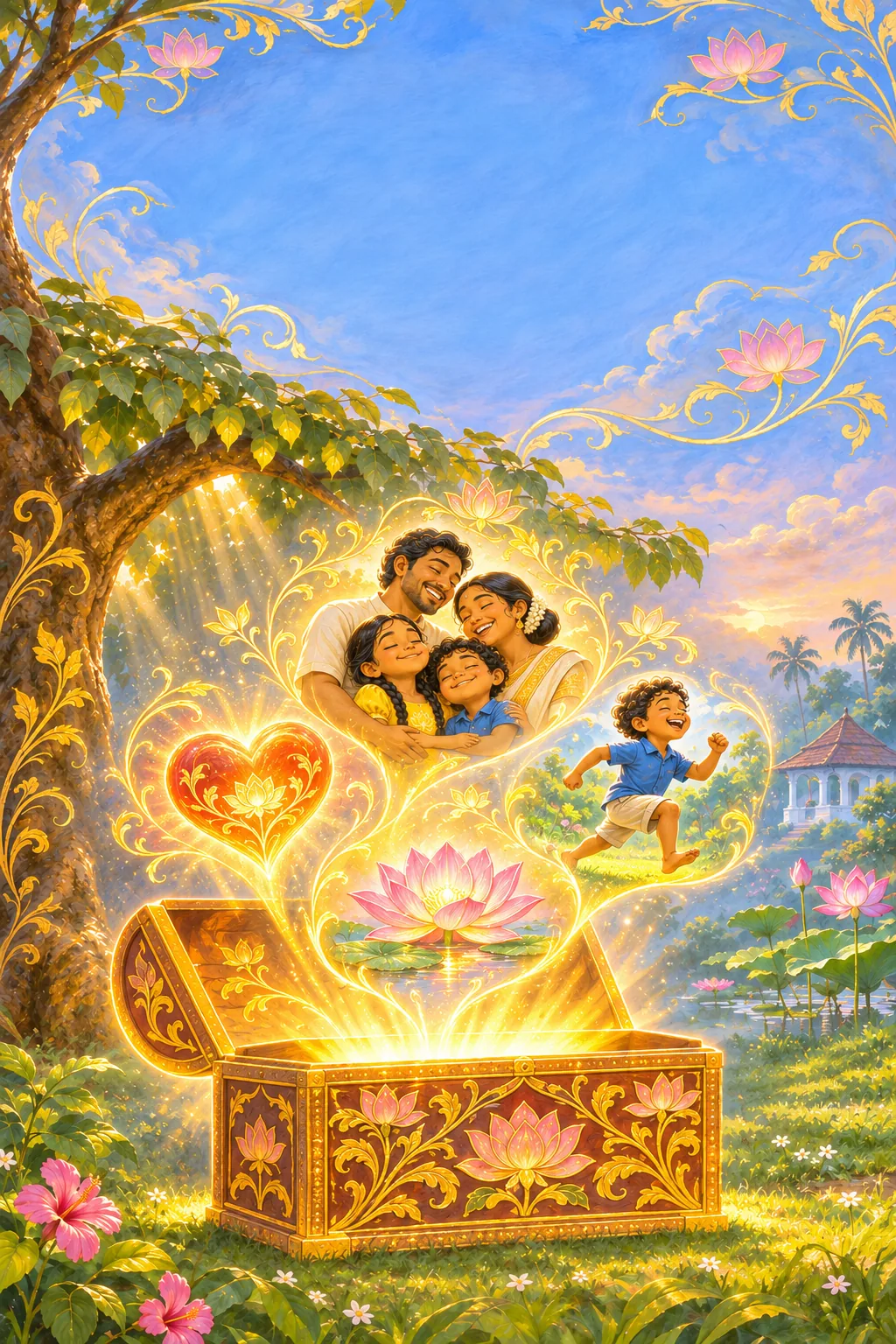
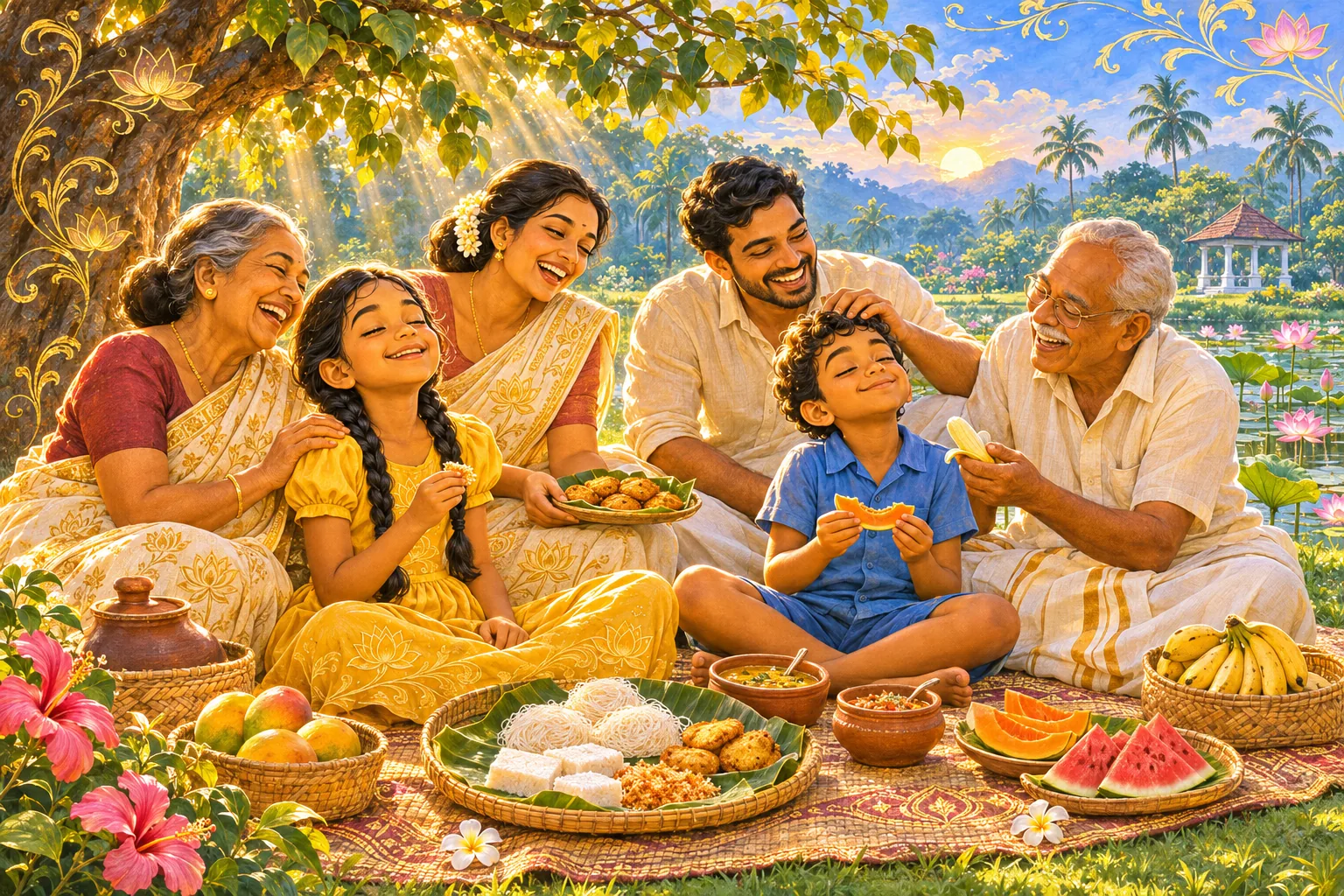
“Ārogyaparamā lābhā. Good health is the greatest gift. Being content is the greatest wealth. A trusted friend is the best family. Nibbāna, perfect peace, is the greatest happiness.”
“Ārogyaparamā lābhā. නිරෝගීකම උතුම් ලාභයයි. ලද දෙයින් සතුටු වීම උතුම් ධනයයි. විශ්වාසය උතුම් ඥාතියායි. නිවන උතුම් සැපයයි.”
Dhammapada, verse 204
ධම්මපදය, ගාථා 204
The best treasures are not things we can buy: being healthy, being happy with what we have, and having friends we can trust.
හොඳම නිධාන අපට මිලදී ගත හැකි දේවල් නොවේ: නිරෝගීව සිටීම, තමන් සතු දෙයින් සතුටු වීම සහ විශ්වාස කළ හැකි මිතුරන් සිටීම.
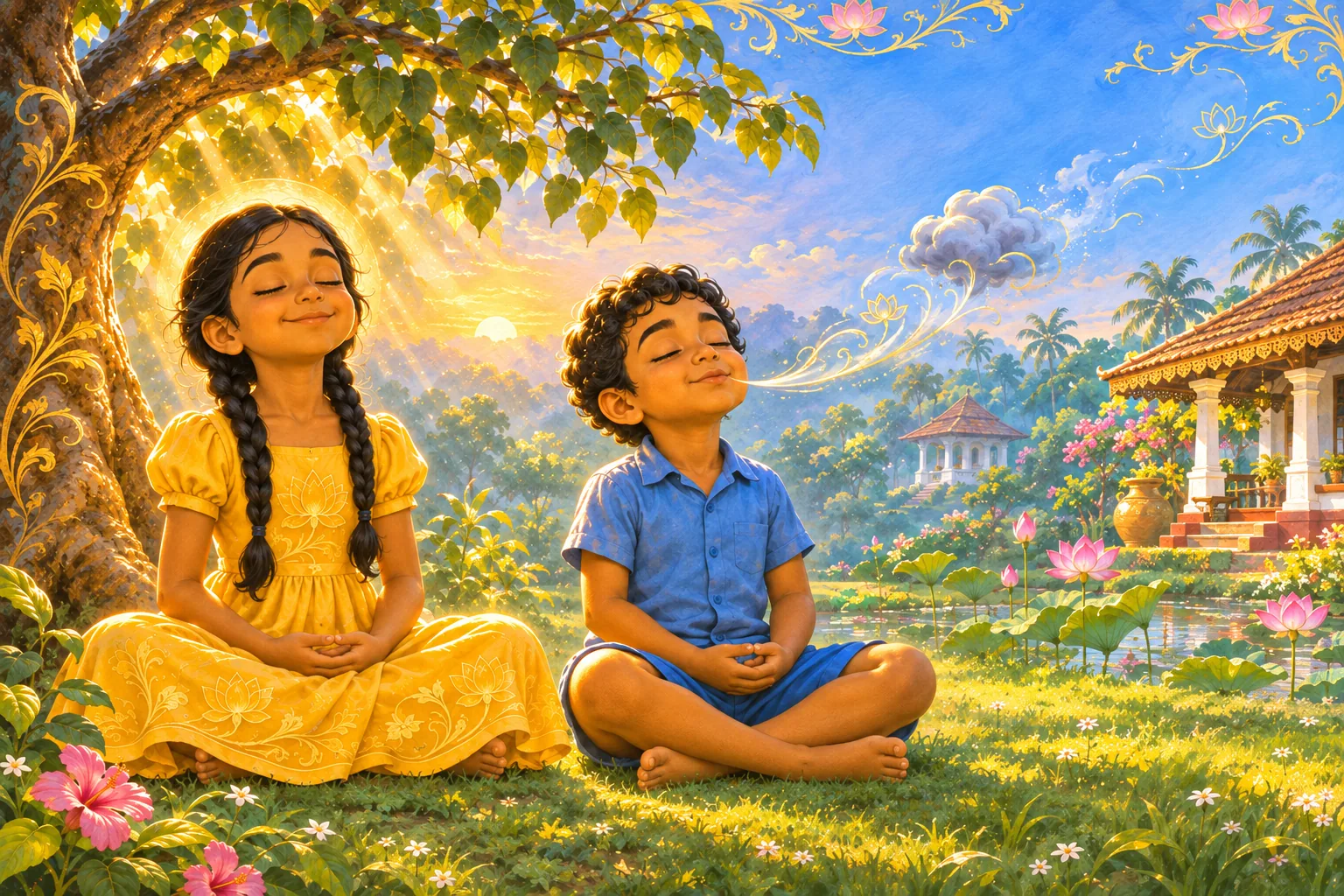
“Yo sahassaṃ sahassena. Someone might win a battle against a thousand times a thousand people. But the one who wins over himself is the greatest winner of all.”
“Yo sahassaṃ sahassena. යුද බිමේදී දහස් ගණනින් දහස් ගණනක් දිනන්නාට වඩා, තමා දිනන්නා උතුම් ජයග්රාහකයායි.”
Dhammapada, verse 103
ධම්මපදය, ගාථා 103
Being a winner isn’t about beating others. It is about being the boss of your own anger, greed and laziness.
ජයග්රාහකයෙක් වීම යනු අන් අය පැරදවීම නොවේ. එය ඔබේම කෝපය, ලෝභය සහ කම්මැලිකම පාලනය කිරීමයි.
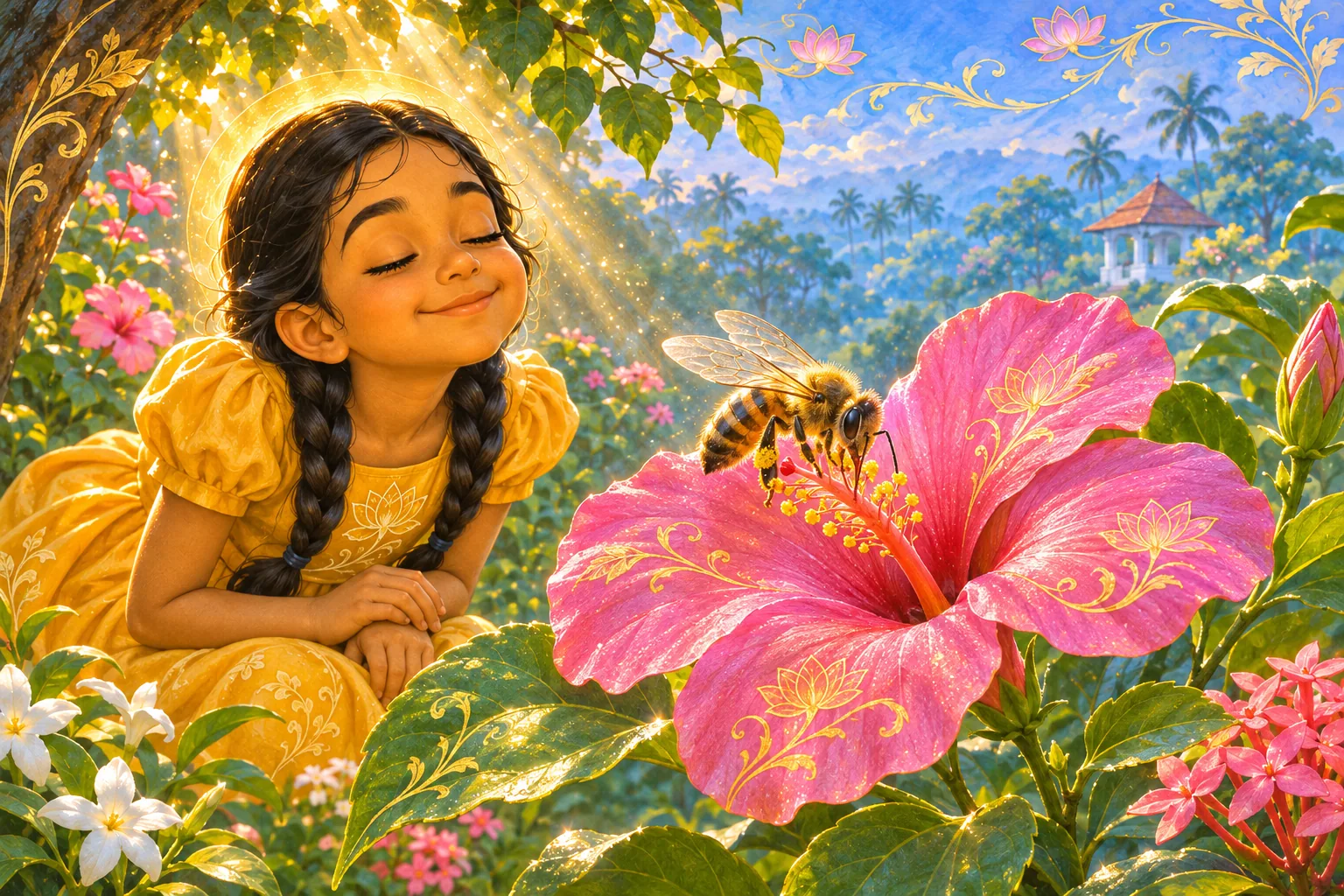
“A bee takes nectar from a flower without harming its colour or its scent, and flies away. In the same way, the wise move through the world gently.”
“මී මැස්සා මලේ පාටට හෝ සුවඳට හානි නොකර රොන් පමණක් ගෙන යනවා සේ, නුවණැත්තා ලෝකයේ මෘදුව හැසිරෙනවා.”
Dhammapada, verse 49
ධම්මපදය, ගාථා 49
Like a bee, we can take what we need and still leave everything around us beautiful and unharmed.
මී මැස්සෙකු වගේ, අපට අවශ්ය දේ ගෙන අප අවට සියල්ල ලස්සනට, හානියක් නැතිව තබා යන්න පුළුවන්.
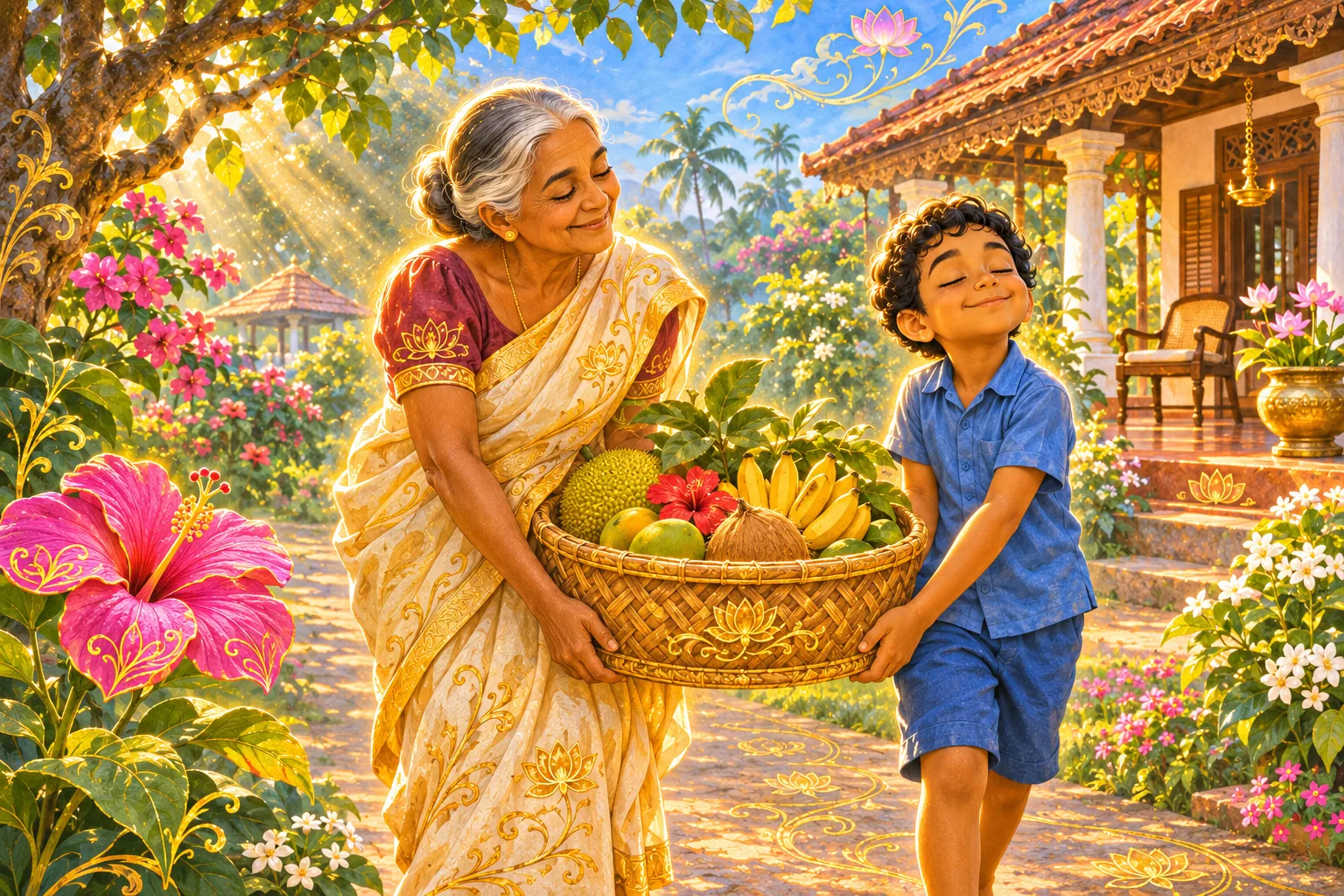
“A beautiful flower with no scent is like lovely words that are never put into action.”
“සුවඳ නැති ලස්සන මලක් වගේ, ක්රියාවට නොනංවන ලස්සන වචනත් ඵල නැහැ.”
Dhammapada, verse 51
ධම්මපදය, ගාථා 51
Saying “I’ll help” is nice. Actually helping is even better. Let your good words become good deeds.
“මම උදව් කරන්නම්” කීම හොඳයි. ඇත්තටම උදව් කිරීම ඊටත් වඩා හොඳයි. ඔබේ හොඳ වචන හොඳ ක්රියා බවට පත් වේවා.
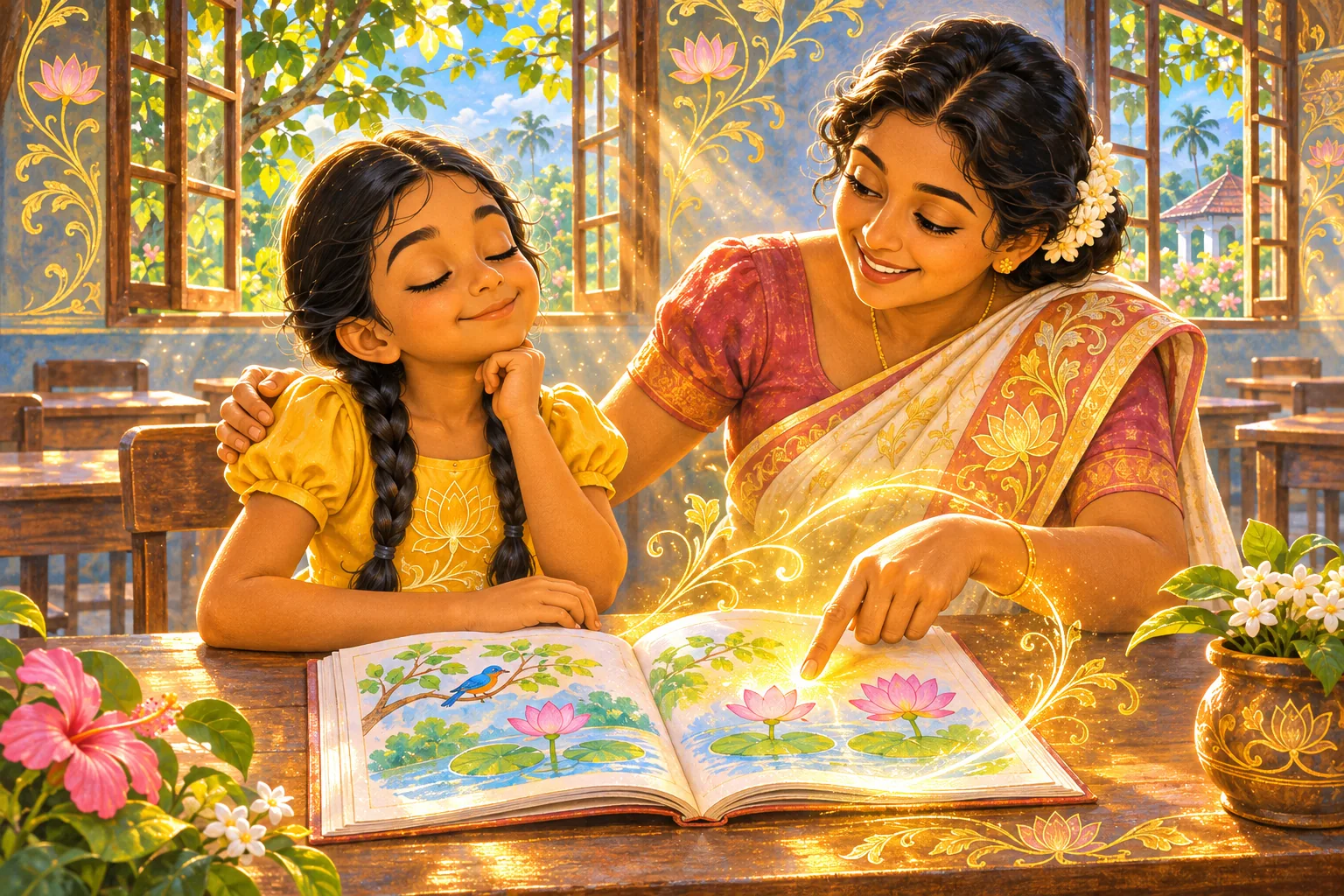
“If you meet a wise person who kindly shows you your mistakes, follow them as if they were showing you hidden treasure.”
“නිධානයක් පෙන්වා දෙන්නෙකු සේ, තමාගේ වැරදි පෙන්වා දෙන නුවණැත්තෙකු දුටු විට එවැනි අයෙකු ඇසුරු කරන්න.”
Dhammapada, verse 76
ධම්මපදය, ගාථා 76
When a parent, teacher or friend helps us see a mistake, they are giving us a gift, a treasure that helps us grow.
දෙමාපියෙක්, ගුරුවරයෙක් හෝ මිතුරෙක් අපට වැරැද්දක් දැකීමට උදව් කරන විට, ඔවුන් අපට තෑග්ගක් දෙනවා. අපට වැඩෙන්න උදව් වන නිධානයක්.
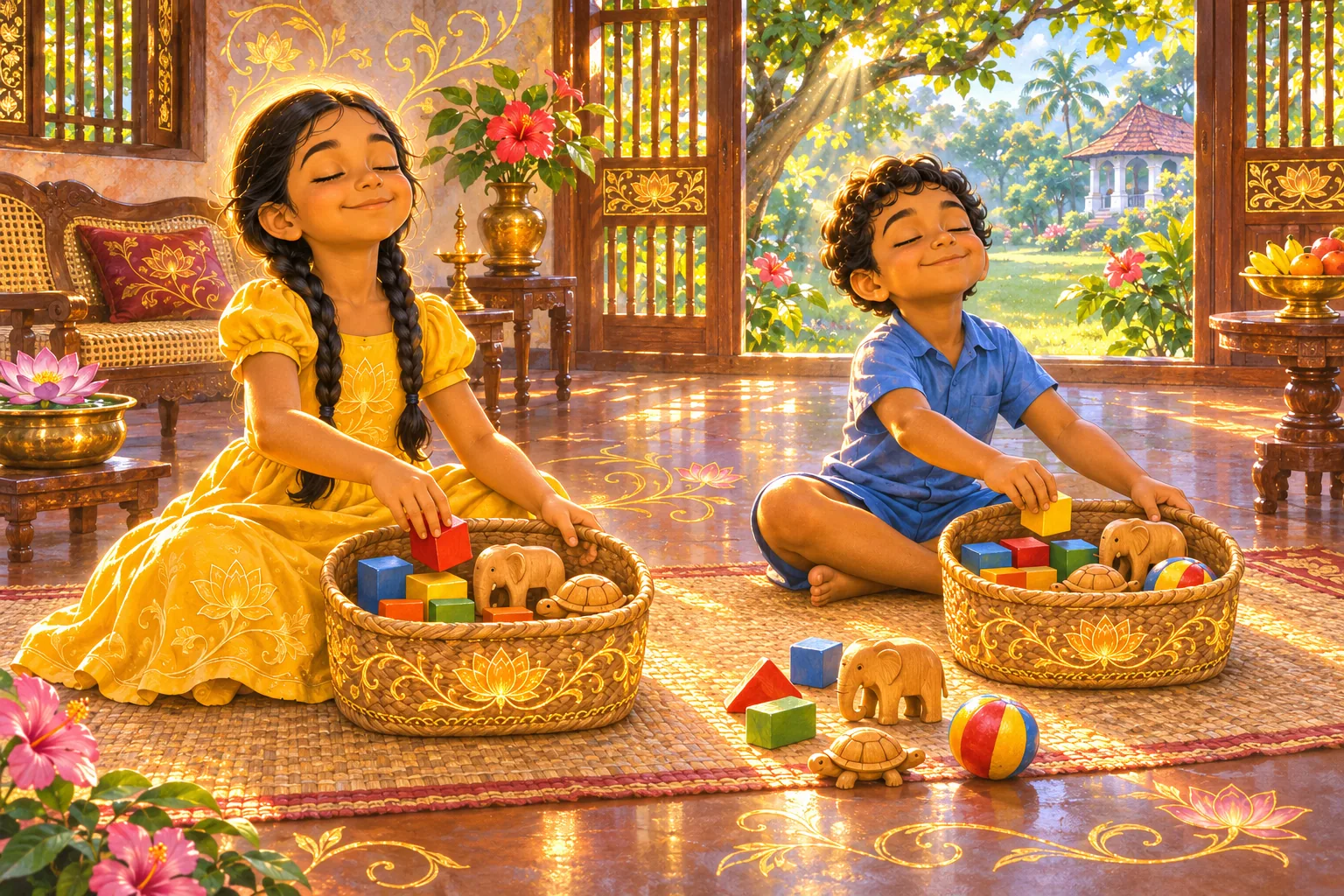
“First do what is right yourself, and then teach others. A wise person who does this will not be blamed.”
“පළමුව තමා යහපතෙහි පිහිටා, පසුව අන් අයට අනුශාසනා කරන්න. එවිට නුවණැත්තාට දොස් නොලැබේ.”
Dhammapada, verse 158
ධම්මපදය, ගාථා 158
If we want our friends to be kind, the best way is to be kind ourselves first.
අපේ මිතුරන් කාරුණික වෙනවාට අපි කැමති නම්, හොඳම මාර්ගය අපිම මුලින් කාරුණික වීමයි.
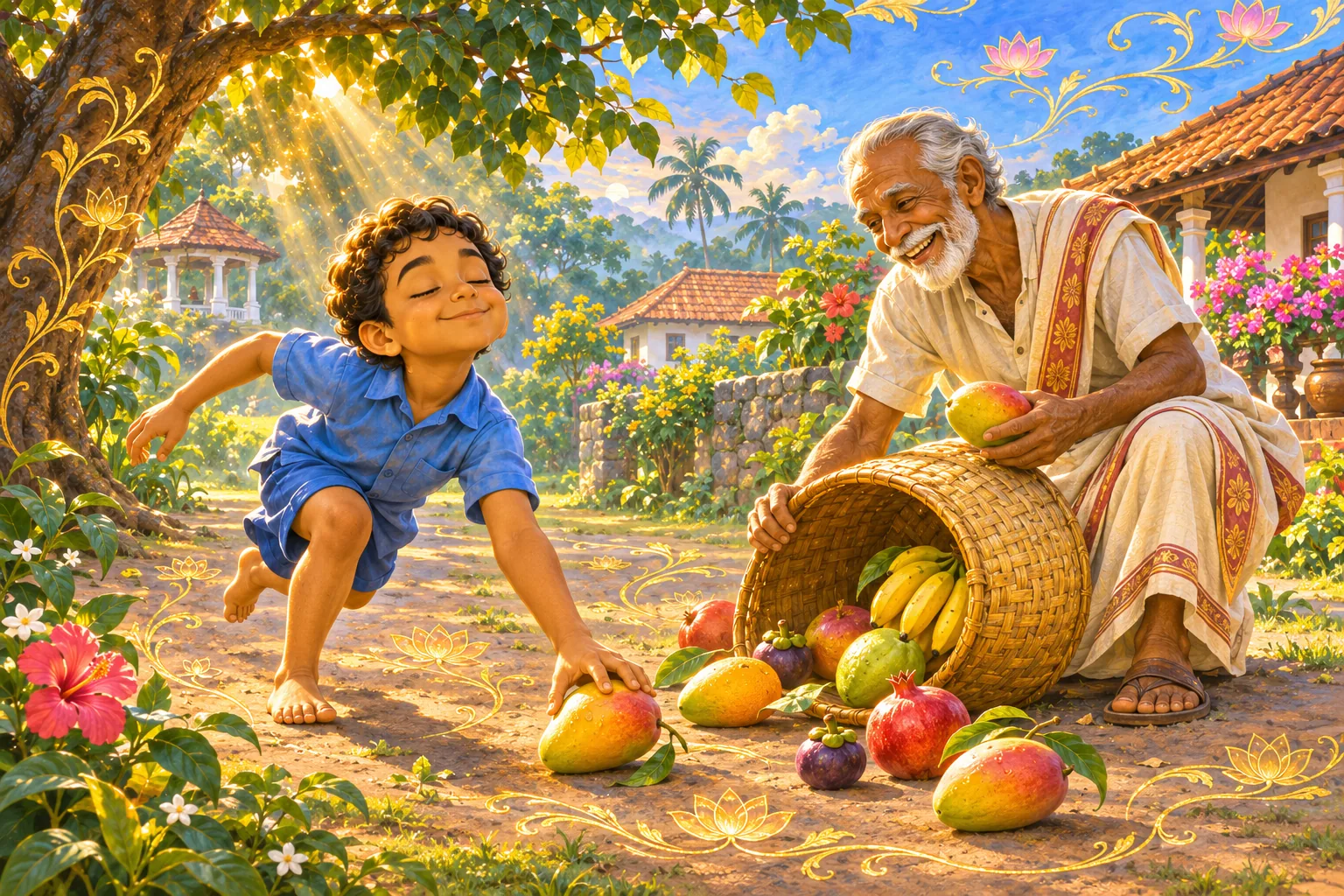
“Hurry to do good. Keep your mind away from wrong. If we are slow to do good, the mind can drift towards wrong.”
“යහපත කිරීමට ඉක්මන් වන්න. පවින් සිත වළක්වන්න. පින් කිරීමේ ප්රමාද වන්නාගේ සිත පවෙහි ඇලෙයි.”
Dhammapada, verse 116
ධම්මපදය, ගාථා 116
When you get the chance to do something kind, do it now! Good deeds are best done straight away.
කාරුණික දෙයක් කිරීමට අවස්ථාවක් ලැබුණු විට, දැන්ම කරන්න! යහපත් ක්රියා වහාම කිරීම හොඳම දෙයයි.
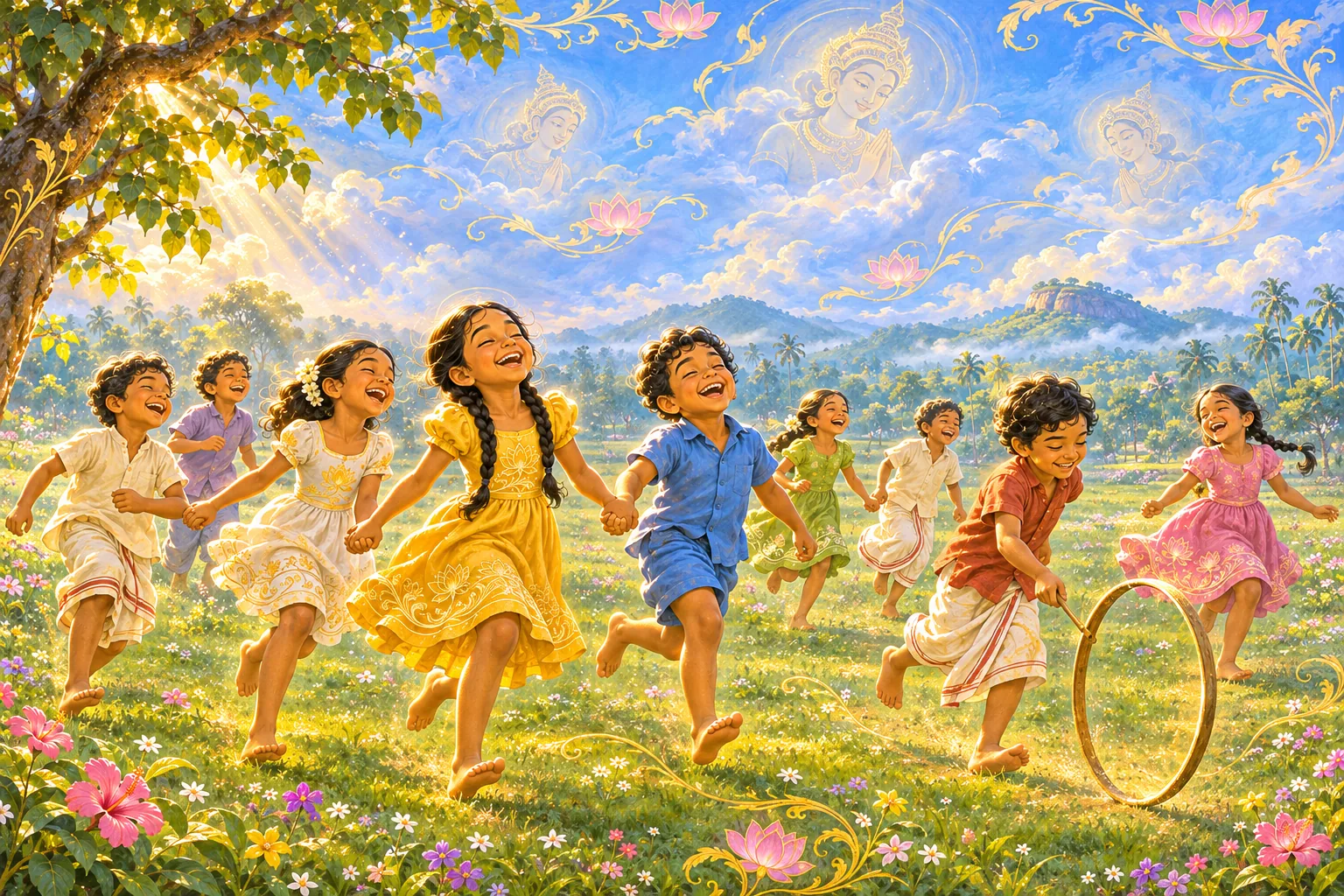
“How happily we live, we who cling to nothing. We shall feed on joy, like the shining gods.”
“කිසිවක් නැති අපි ඉතා සැපසේ ජීවත් වෙමු. ආභස්සර දෙවියන් සේ ප්රීතිය ආහාර කොට ගන්නෙමු.”
Dhammapada, verse 200
ධම්මපදය, ගාථා 200
Real happiness doesn’t come from having lots of things. It comes from a light, peaceful and joyful heart.
සැබෑ සතුට ලැබෙන්නේ බොහෝ දේවල් තිබීමෙන් නොවේ. එය ලැබෙන්නේ සැහැල්ලු, සාමකාමී, ප්රීතිමත් හදවතකින්.
About this story
These verses come from several chapters of the Dhammapada, including the Chapter on Happiness (Sukha Vagga) and the Chapter on Flowers (Puppha Vagga).
The lesson
The greatest treasures are health, contentment, good friends and a peaceful heart. Do good straight away, and let your good words become good deeds.
Let's talk
- What are the four greatest treasures in verse 204?
- How is a wise person like a bee?
- Why should we be thankful when someone shows us a mistake?
මේ කතාව ගැන
මෙම ගාථා සුඛ වග්ගය සහ පුප්ඵ වග්ගය ඇතුළු ධම්මපදයේ පරිච්ඡේද කිහිපයකින් ගත් ඒවායි.
පාඩම
උතුම්ම නිධාන නම් නිරෝගීකම, ලද දෙයින් සතුටු වීම, හොඳ මිතුරන් සහ සාමකාමී හදවතයි. වහාම යහපත කරන්න, ඔබේ හොඳ වචන හොඳ ක්රියා බවට පත් කරන්න.
අපි කතා කරමු
- 204 වන ගාථාවේ උතුම්ම නිධාන හතර මොනවද?
- නුවණැත්තා මී මැස්සෙකු වගේ වන්නේ කොහොමද?
- කෙනෙක් අපට වැරැද්දක් පෙන්වා දෙන විට අප කෘතඥ විය යුත්තේ ඇයි?
Verses from the Dhammapada (Khuddaka Nikāya, Pali Canon), put into simple words for children by Fablewings. These are free renderings with simple explanations, not word-for-word translations. Illustrations made with AI assistance for Fablewings.