Like a Lovely Flower
ලස්සන මලක් මෙන්
Fablewings · ages 5–11

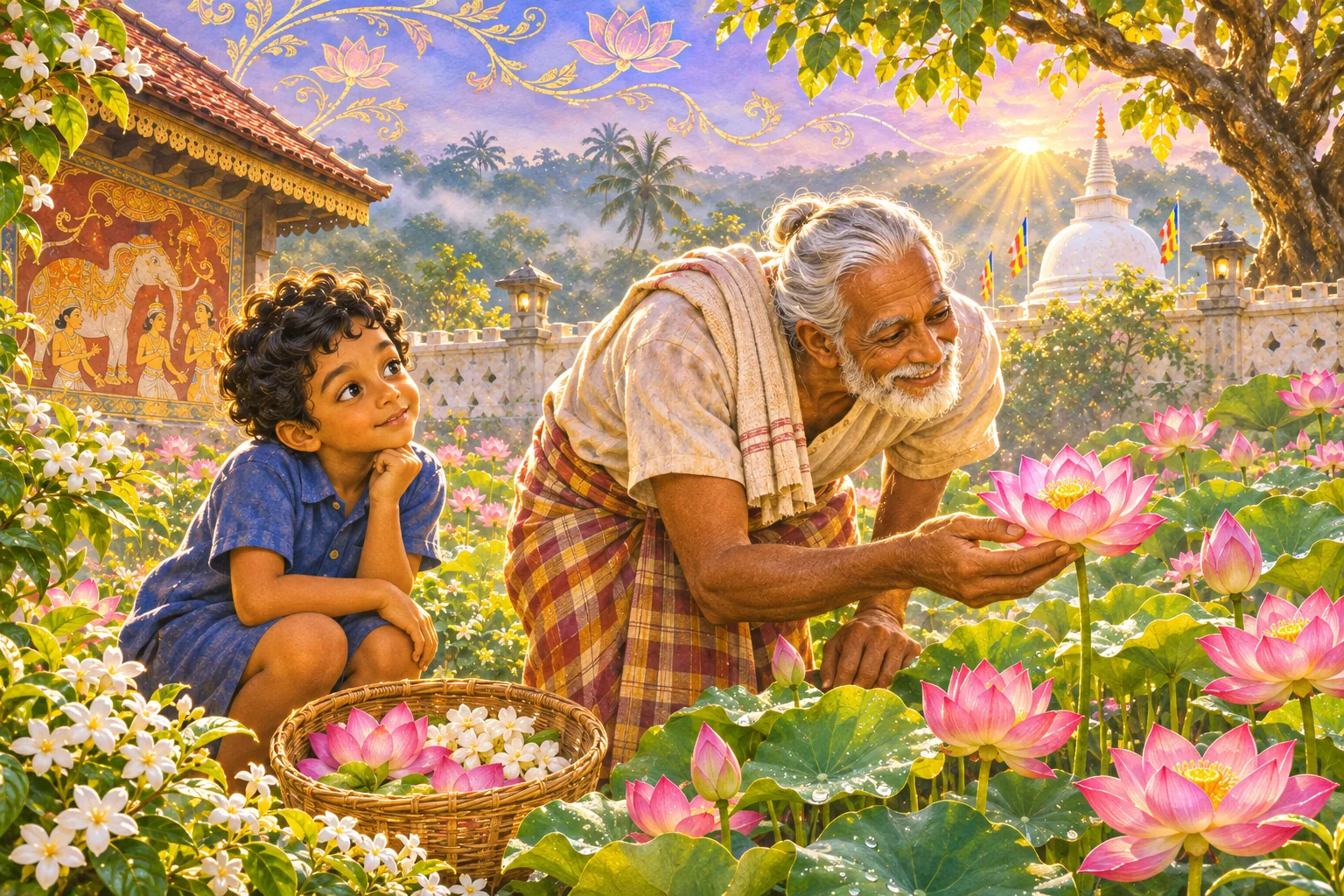
“Who will come to understand this world? Who will find the clear path of goodness, as a skilled gardener picks the finest flower?”
“මේ ලෝකය තේරුම් ගන්නේ කවුද? දක්ෂ මල්කරුවෙක් හොඳම මල තෝරන්නාක් මෙන්, යහපතේ පැහැදිලි මාවත සොයාගන්නේ කවුද?”
Dhammapada, verse 44
ධම්මපදය, ගාථා 44
The Buddha asks a big question. Who will learn to see clearly and choose what is good?
බුදුරජාණන් වහන්සේ ලොකු ප්රශ්නයක් අහනවා. පැහැදිලිව දැකලා යහපත තෝරාගන්න ඉගෙන ගන්නේ කවුද?

“The one who keeps learning will understand this world and find the clear path, as a skilled garland-maker picks the finest flowers.”
“දිගටම ඉගෙන ගන්නා තැනැත්තා, දක්ෂ මල් මාලාකරුවෙක් හොඳම මල් තෝරන්නාක් මෙන්, මේ ලෝකය තේරුම් ගෙන පැහැදිලි මාවත සොයා ගනී.”
Dhammapada, verse 45
ධම්මපදය, ගාථා 45
The answer is: someone who keeps learning and trying. Step by step, we can pick good thoughts like the best flowers for a garland.
පිළිතුර මෙයයි: දිගටම ඉගෙන ගන්න, උත්සාහ කරන කෙනා. මාලයකට හොඳම මල් තෝරන්නාක් මෙන්, පියවරෙන් පියවර අපට හොඳ සිතුවිලි තෝරාගන්න පුළුවන්.

“Do not look for the faults of others, at what they have done or not done. Look instead at what you yourself have done and not done.”
“අනුන්ගේ වැරදි, ඔවුන් කළ දේ හෝ නොකළ දේ නොබලන්න. ඒ වෙනුවට තමා කළ දේ සහ නොකළ දේ ගැන බලන්න.”
Dhammapada, verse 50
ධම්මපදය, ගාථා 50
It is easy to spot other people's mistakes. It is wiser, and kinder, to look at our own and make them better.
අනුන්ගේ වැරදි දකින එක ලේසියි. තමන්ගේ වැරදි දැකලා ඒවා හදාගන්න එක වඩා නුවණයි, වඩා කරුණාවන්තයි.

“Like a beautiful flower, bright in colour and sweet in scent, are the good words of one who also lives by them.”
“පැහැයෙන් යුතු, සුවඳින් යුතු ලස්සන මලක් මෙන්, යමෙක් කියන දේ කරන්නේ නම් ඔහුගේ යහපත් වචන ඵලදායී වේ.”
Dhammapada, verse 52
ධම්මපදය, ගාථා 52
When we say kind words and also do kind things, our goodness is like a flower that is lovely to see and lovely to smell.
අපි කරුණාවන්ත වචන කියලා කරුණාවන්ත දේවලුත් කරනකොට, අපේ යහපත්කම බලන්නත් ලස්සන, සුවඳත් ඇති මලක් වගෙයි.

“Sandalwood, tagara, lotus and jasmine: of all these sweet scents, the scent of goodness is the sweetest.”
“සඳුන්, තුවරලා, මානෙල් සහ දෑසමන්: මේ සියලු සුවඳට වඩා සීල සුවඳ උතුම්ය.”
Dhammapada, verse 55
ධම්මපදය, ගාථා 55
Flowers smell lovely for a while. A good heart is a sweetness that everyone around us can feel, every day.
මල් ටික වෙලාවක් සුවඳ දෙනවා. යහපත් හදවත අප අවට හැමෝටම, හැම දිනකම දැනෙන මිහිරක්.

“The scent of tagara and sandalwood is only faint. The scent of the good rises high, even to the gods.”
“තුවරලා සහ සඳුන් සුවඳ ස්වල්පයකි. සිල්වතුන්ගේ සුවඳ දෙවියන් අතරට පවා උසට හමයි.”
Dhammapada, verse 56
ධම්මපදය, ගාථා 56
A flower's scent fades with the wind. The goodness of a kind person travels far, and even the devas in heaven rejoice.
මලක සුවඳ සුළඟත් එක්ක නැති වෙනවා. කරුණාවන්ත කෙනෙකුගේ යහපත්කම බොහෝ දුර යනවා, දෙව්ලොව දෙවියනුත් සතුටු වෙනවා.

“As a lotus, sweet-scented and lovely, can grow up from a heap of rubbish by the roadside …”
“මහා මාර්ගය අසල දැමූ කසළ ගොඩක, සුවඳැති, සිත් අලවන නෙළුමක් හට ගන්නාක් මෙන් …”
Dhammapada, verse 58
ධම්මපදය, ගාථා 58
A lotus can grow from muddy, messy places and still be pure and beautiful. Goodness can grow anywhere.
නෙළුමක් මඩ සහිත, අපිරිසිදු තැනක හැදුණත් පිරිසිදුව ලස්සනට පිපෙනවා. යහපත්කම ඕනෑම තැනක හැදෙන්න පුළුවන්.

“… so, among ordinary people, a follower of the Buddha shines brightly with wisdom.”
“… එලෙසම පෘථග්ජනයන් අතර සම්බුද්ධ ශ්රාවකයා ප්රඥාවෙන් බබළයි.”
Dhammapada, verse 59
ධම්මපදය, ගාථා 59
Wherever we are, at home, at school or in a busy town, we can shine like a lotus by being wise and kind.
අපි කොතැන සිටියත්, ගෙදර, පාසලේ හෝ කලබල නගරයක, නුවණින් හා කරුණාවෙන් නෙළුමක් මෙන් බබළන්න පුළුවන්.
About this story
These verses come from the Puppha Vagga (the Chapter on Flowers) of the Dhammapada. The Buddha uses flowers, garlands, sweet scents and the lotus to show how goodness grows and spreads.
The lesson
Keep learning, look at your own actions before others', and let your kind words match your kind deeds. Like a lotus, goodness can bloom anywhere.
Let's talk
- Which flower would you choose to show goodness, and why?
- Why is it better to fix our own mistakes than to point at others' mistakes?
- How can you shine like a lotus at school this week?
මේ කතාව ගැන
මෙම ගාථා ධම්මපදයේ පුප්ඵ වග්ගයෙන් ගත් ඒවාය. යහපත්කම වැඩෙන හා පැතිරෙන ආකාරය පෙන්වීමට බුදුරජාණන් වහන්සේ මල්, මල් මාලා, සුවඳ සහ නෙළුම උපමා කරති.
පාඩම
දිගටම ඉගෙන ගන්න, අනුන්ගේ වැරදිවලට කලින් තමන්ගේ ක්රියා බලන්න, කරුණාවන්ත වචන කරුණාවන්ත ක්රියාවලට ගැළපෙන්නට ඉඩ දෙන්න. නෙළුමක් මෙන් යහපත්කම ඕනෑම තැනක පිපෙනවා.
අපි කතා කරමු
- යහපත්කම පෙන්වීමට ඔබ තෝරන්නේ කුමන මලද, ඇයි?
- අනුන්ගේ වැරදි පෙන්වනවාට වඩා තමන්ගේ වැරදි හදාගැනීම හොඳ ඇයි?
- මේ සතියේ පාසලේදී නෙළුමක් මෙන් බබළන්නේ කොහොමද?
Verses from the Dhammapada (Khuddaka Nikāya, Pali Canon), put into simple words for children by Fablewings. These are free renderings with simple explanations, not word-for-word translations. Illustrations made with AI assistance for Fablewings.